
Iran Dismisses Trump’s Post of Attack on Key Energy Hub of Kharg

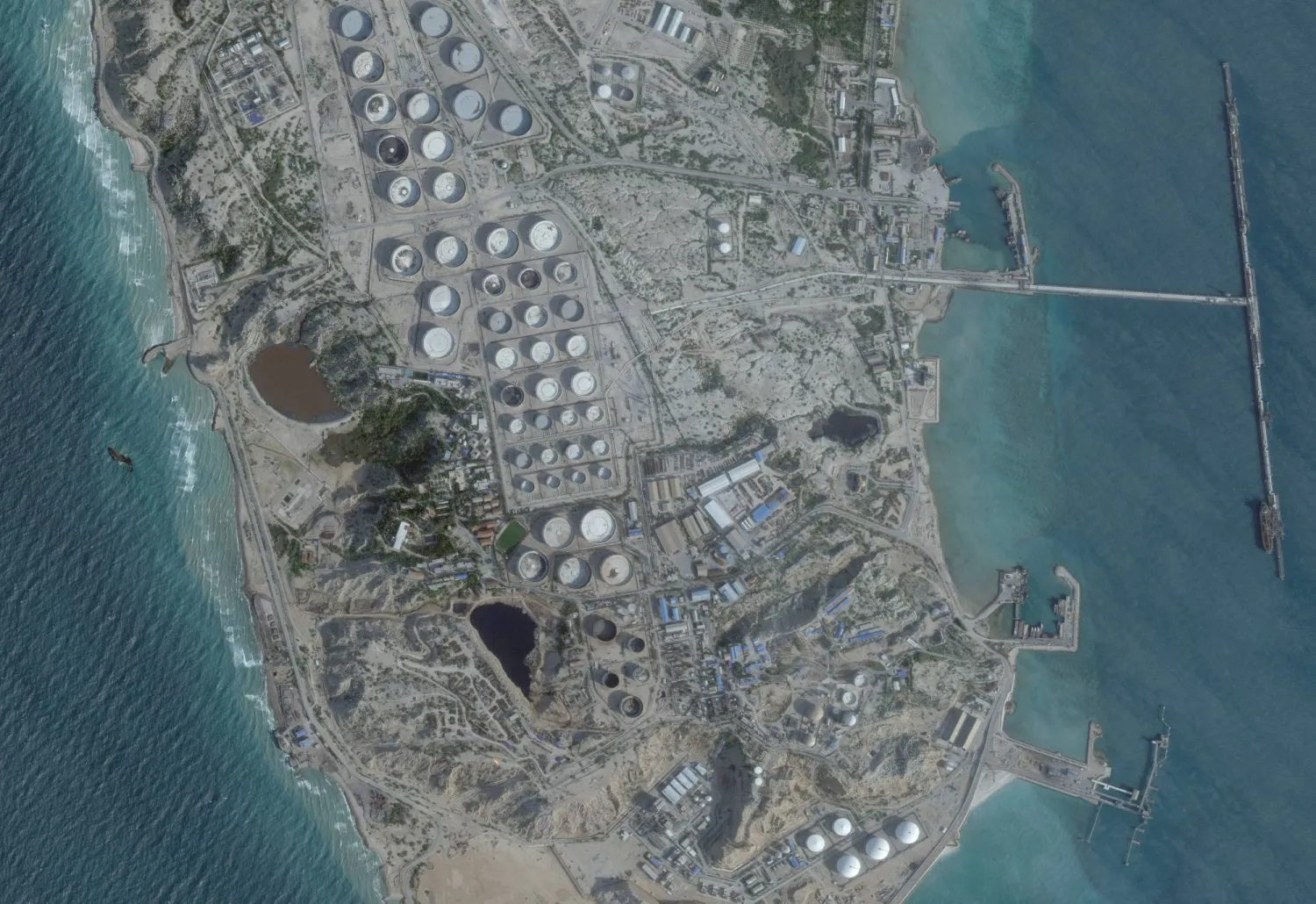
FILE PHOTO: A satellite image shows an oil terminal at Kharg Island, Iran, February 25, 2026. 2026 Planet Labs PBC/Handout via REUTERS
TT

Iran Dismisses Trump’s Post of Attack on Key Energy Hub of Kharg

FILE PHOTO: A satellite image shows an oil terminal at Kharg Island, Iran, February 25, 2026. 2026 Planet Labs PBC/Handout via REUTERS

An Iranian official dismissed as "laughable" on Monday a post by Donald Trump of an AI-generated video clip that the US president said showed Iran's oil hub Kharg Island being "blown to smithereens". 

Hours after Sunday's post, there was no evidence Kharg had been attacked. The White House and the US Defense Department did not immediately respond to Reuters requests for comment outside regular business hours. 

Trump's post came shortly after the US and Iran resumed hostilities for the first time since late July, further denting hopes for any early resolution of a conflict now in its sixth month and driving oil prices nearly 2% higher on Monday. 

US forces on Sunday struck two Iranian launchers on Iran's Larak Island, some 660 km (410 miles) east of Kharg, a US official said, prompting Iran to retaliate by attacking Jordan, according to Iranian media. 

"Kharg Island being blown to smithereens!!! President DJT," Trump had said on his Truth Social platform on Sunday, with no further details. 

Reuters confirmed that an accompanying video clip showing dramatic explosions was most likely synthetically generated, using software ‌that detects AI-manipulated imagery. 

"Trump’s ‌tweets are laughable and conditions in Kharg are calm and appropriate," Hamid Bovard, chief executive of government-run National Iranian ‌Oil Co, ⁠said on Monday. 

Oil ⁠operations have not stopped and workers were busy repairing previous damage and modernizing facilities, he added in comments cited by Nournews, a semi-official outlet close to Iran's top security body. 

IRAN VOWS TO RESPOND TO ANY ATTACKS 

Kharg handled 90% of Iran's oil exports before the war launched by US and Israeli attacks on February 28, and attacking it would severely disrupt energy trade and put huge pressure on the economy. 

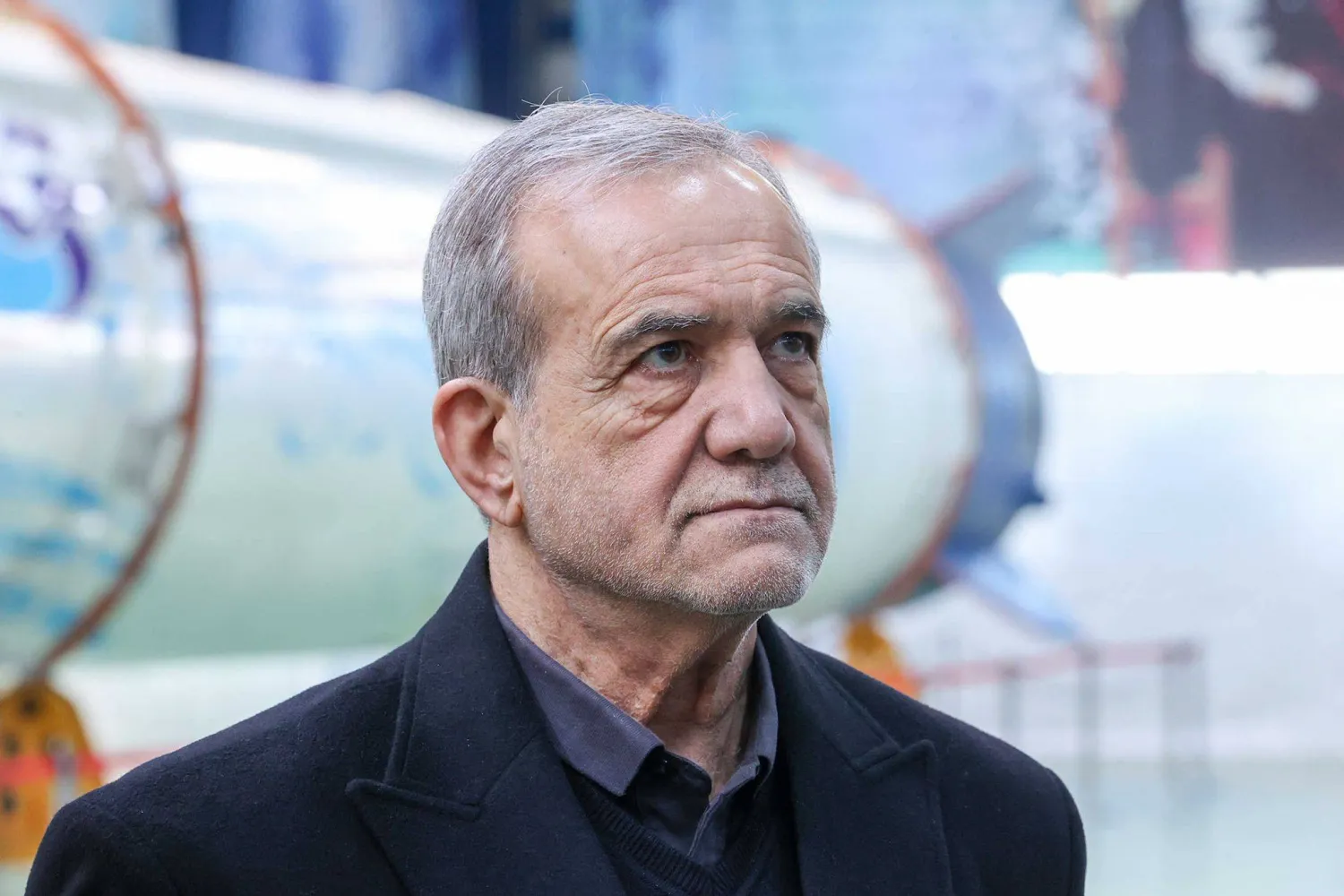
Iranian President Masoud Pezeshkian said his country was not seeking war but would respond decisively to any aggression. 

"We will never remain silent in the face of any aggression...," state media quoted him as saying on Monday ahead of a visit to Kyrgyzstan. 

It was not clear if he was speaking before or after Trump's post on Kharg Island. 

A US official said forces had attacked the Iranian launchers on Larak Island on Sunday after "Revolutionary Guard Corps forces were observed preparing to launch rockets with sea ⁠mines into the Strait of Hormuz". 

Larak is a small island in the strait near the strategic Iranian port of ‌Bandar Abbas. The strait, which normally handles a fifth of global crude oil and liquefied natural gas ‌shipments, has been effectively blocked since the start of the war. 

In a statement, the US Central Command said it took "limited, precise" action against minelaying forces of the Revolutionary Guards that ‌posed an "imminent threat" in the strait. It gave no details. 

In retaliation, as well as attacking Jordan, Iran's army said it had also struck ‌the Al Menhad air base in the United Arab Emirates early on Monday. However, the UAE's defense ministry dismissed that report as false. 

The UAE defense ministry later said its air force engaged a drone that had come from Iran over its territorial waters. 

The Revolutionary Guards used air defense missiles to shoot down a US drone that crashed in Gulf waters, the Mehr news agency said ‌on Monday, citing a statement from the elite force. 

A supertanker caught fire and was brought to a complete halt after being struck by two naval mines in the southern Strait of Hormuz, Iran state TV said, citing ⁠a Guards' statement. 

PILING ECONOMIC PRESSURE ON IRAN 

Trump has yet to achieve the objectives he set out at the start of the war: dismantling Iran's nuclear program, curbing its ability to attack regional rivals and creating conditions for Iranians to overthrow their clerical rulers. 

Sunday's return to hostilities followed weeks in which his administration has stepped up efforts to punish Tehran and its business partners with costly economic sanctions, shifting away from military options. 

US Treasury Secretary Scott Bessent told Reuters on Sunday new secondary sanctions were likely to be unveiled weekly in the effort to pressure Iran, with an initial focus on banks. 

Amid threats to shipping, the number of visible commodity vessels transiting the Strait of Hormuz dropped to five a day over the weekend, shipping data showed. 

The actual number could be higher as some vessels have switched off automatic identification systems to evade attacks. 

The Guards said the supertanker on fire after being hit by mines had been attempting to pass through the waterway illegally, but gave no details of the vessel or crew, according to a statement cited by state television. 

Last week, Trump said all mines had been detonated or removed from the international waters of the strait and Iran had been warned that any vessel placing new mines would be destroyed. Iran denied Trump's assertion. 


Russia Wants AI, Digital Cooperation with China, Putin Tells Xi

FILE - Russian President Vladimir Putin, left, gestures while speaking to Chinese President Xi Jinping during the Shanghai Cooperation Organization (SCO) summit in Samarkand, Uzbekistan, Sept. 16, 2022. (Sergei Bobylev, Sputnik, Kremlin Pool Photo via AP, File)
TT

Russia Wants AI, Digital Cooperation with China, Putin Tells Xi

FILE - Russian President Vladimir Putin, left, gestures while speaking to Chinese President Xi Jinping during the Shanghai Cooperation Organization (SCO) summit in Samarkand, Uzbekistan, Sept. 16, 2022. (Sergei Bobylev, Sputnik, Kremlin Pool Photo via AP, File)

Moscow aims to cooperate with Beijing in the field of artificial intelligence and digital innovation, Russian President Vladimir Putin told China's Xi Jinping on Monday as the leaders met in Kyrgyzstan.

They arrived in the central Asian country for a two-day summit of the Shanghai Cooperation Organisation (SCO), a regional bloc that seeks to serve as a counter-balance to the West.

Russia, with its troops bogged down in Ukraine, has deepened ties with its main oil customer China, which has never condemned Moscow for its four-and-a-half-year invasion.

"Cooperation is successfully developing on all fronts," Putin told Xi ahead of their talks.

They last met in May in Beijing.

"Digital innovations, including in artificial intelligence technologies, are also opening up new opportunities for the economic development of our countries," Putin said.

The Kremlin has in the past months sought to tighten its control over the online sphere, imposing intermittent mass internet shutdowns and restrictions on popular messaging apps.

Moscow is pushing Russians to embrace the state-backed Max messenger platform -- an unencrypted super-app similar to China's WeChat that critics say raises privacy and snooping concerns.

It has repeatedly threatened foreign-owned sites with bans, part of what rights advocates say is a broader attempt by authorities to control and monitor internet use.


Pentagon Signs 7-year Deals to Increase Missile Production

FILE - The Pentagon is seen from the air, July 15, 2026, in Washington. (AP Photo/Alex Brandon, File)
TT

Pentagon Signs 7-year Deals to Increase Missile Production

FILE - The Pentagon is seen from the air, July 15, 2026, in Washington. (AP Photo/Alex Brandon, File)

The Pentagon said on Monday it secured seven-year agreements with General Dynamics Ordnance and Tactical Systems (GD-OTS) and Lockheed Martin to increase missile production.

The agreements are designed to "increase production quantities and accelerate delivery schedules for critical missile subcomponents supporting the Terminal High Altitude Area Defense (THAAD) and Patriot Advanced Capability-3 Missile Segment Enhancement (PAC-3 MSE) interceptor programs," the Pentagon said.


Israel Signs Three-billion-euro Arms Export Deal with Greece

Greece to buy a defense system from Israel (Reuters)
TT

Israel Signs Three-billion-euro Arms Export Deal with Greece

Greece to buy a defense system from Israel (Reuters)

Israel's defense ministry announced Monday it had signed a deal with Athens worth approximately three billion euros (almost $3.5 billion) to set up the "Achilles Shield" aerial defense system for Greece. 

"Under the deal, Israel will build Greece a comprehensive, multi-layered air defense array, drawing entirely on Israeli-made systems and on the extensive operational experience Israel's defense establishment has gained during the war," the ministry said in a statement. 

"This is the largest defense export deal in the history of Israel-Greece relations, and one of the largest in the history of the State of Israel," it added. 

The deal was signed by the Israeli defense ministry's director general, Major General (Res.) Amir Baram, and his Greek counterpart, Ioannis Bouras, in Tel Aviv. 

A Greek defense ministry source had told AFP in late July about an upcoming purchase of Israeli-made anti-missile, anti-aircraft and anti-drone systems, part of a broader defense investment for the Achilles Shield of 4.2 billion euro ($4.8 billion). 

In a statement, the Greek Defense Ministry said the multi-billion euro purchase was part of "the greatest reform of its armed forces in its history". 

Greek Defense Minister Nikos Dendias was quoted in the statement as saying that recent technological developments "have long rendered existing defense doctrines completely obsolete". 

"Greece is the first country in the European Union to adopt" a multi-layered air defense system such as the Israeli one, he added. 

According to the Israeli Defense Ministry, the export deal includes the David's Sling, Barak MX and SPYDER interception systems, air surveillance radars, and "a new national command and control system". 

All the equipment is manufactured by Israeli defense contractors Rafael and Israel Aerospace Industries and its subsidiary ELTA Systems. 

A supplementary 26 million euro deal was also signed to provide Greece with Rafael's defense systems against drones, the ministry said. 

"Israel and Greece share common strategic interests and face shared regional challenges," said Defense Minister Israel Katz, quoted in the statement. 

"At a time when actors with hegemonic ambitions are seeking to expand their influence and undermine stability in the region, Israel and Greece will continue to deepen their defense and strategic cooperation," he said, in a likely reference to Türkiye. 

Greece is now one of only four European NATO members to spend at least three percent of GDP on its military, amid decades of tensions with neighboring Türkiye. 

Israel has also increasingly locked horns with Türkiye, having struck a disused military base in northwest Syria, claiming it wanted to avert Turkish troops deploying to the facility. 

In 2023, Israel signed a deal with Germany to provide the Arrow 3 anti-ballistic missile defense system, which was expanded in December for a total value of $6.5 billion, the country's largest-ever military export contract.