Israel Signs Three-billion-euro Arms Export Deal with Greece

Greece to buy a defense system from Israel (Reuters)
TT

Israel Signs Three-billion-euro Arms Export Deal with Greece

Greece to buy a defense system from Israel (Reuters)

Israel's defense ministry announced Monday it had signed a deal with Athens worth approximately three billion euros (almost $3.5 billion) to set up the "Achilles Shield" aerial defense system for Greece. 

"Under the deal, Israel will build Greece a comprehensive, multi-layered air defense array, drawing entirely on Israeli-made systems and on the extensive operational experience Israel's defense establishment has gained during the war," the ministry said in a statement. 

"This is the largest defense export deal in the history of Israel-Greece relations, and one of the largest in the history of the State of Israel," it added. 

The deal was signed by the Israeli defense ministry's director general, Major General (Res.) Amir Baram, and his Greek counterpart, Ioannis Bouras, in Tel Aviv. 

A Greek defense ministry source had told AFP in late July about an upcoming purchase of Israeli-made anti-missile, anti-aircraft and anti-drone systems, part of a broader defense investment for the Achilles Shield of 4.2 billion euro ($4.8 billion). 

In a statement, the Greek Defense Ministry said the multi-billion euro purchase was part of "the greatest reform of its armed forces in its history". 

Greek Defense Minister Nikos Dendias was quoted in the statement as saying that recent technological developments "have long rendered existing defense doctrines completely obsolete". 

"Greece is the first country in the European Union to adopt" a multi-layered air defense system such as the Israeli one, he added. 

According to the Israeli Defense Ministry, the export deal includes the David's Sling, Barak MX and SPYDER interception systems, air surveillance radars, and "a new national command and control system". 

All the equipment is manufactured by Israeli defense contractors Rafael and Israel Aerospace Industries and its subsidiary ELTA Systems. 

A supplementary 26 million euro deal was also signed to provide Greece with Rafael's defense systems against drones, the ministry said. 

"Israel and Greece share common strategic interests and face shared regional challenges," said Defense Minister Israel Katz, quoted in the statement. 

"At a time when actors with hegemonic ambitions are seeking to expand their influence and undermine stability in the region, Israel and Greece will continue to deepen their defense and strategic cooperation," he said, in a likely reference to Türkiye. 

Greece is now one of only four European NATO members to spend at least three percent of GDP on its military, amid decades of tensions with neighboring Türkiye. 

Israel has also increasingly locked horns with Türkiye, having struck a disused military base in northwest Syria, claiming it wanted to avert Turkish troops deploying to the facility. 

In 2023, Israel signed a deal with Germany to provide the Arrow 3 anti-ballistic missile defense system, which was expanded in December for a total value of $6.5 billion, the country's largest-ever military export contract. 


WHO Chief: Ebola Reminder of Urgent Need to Finish Pandemic Treaty

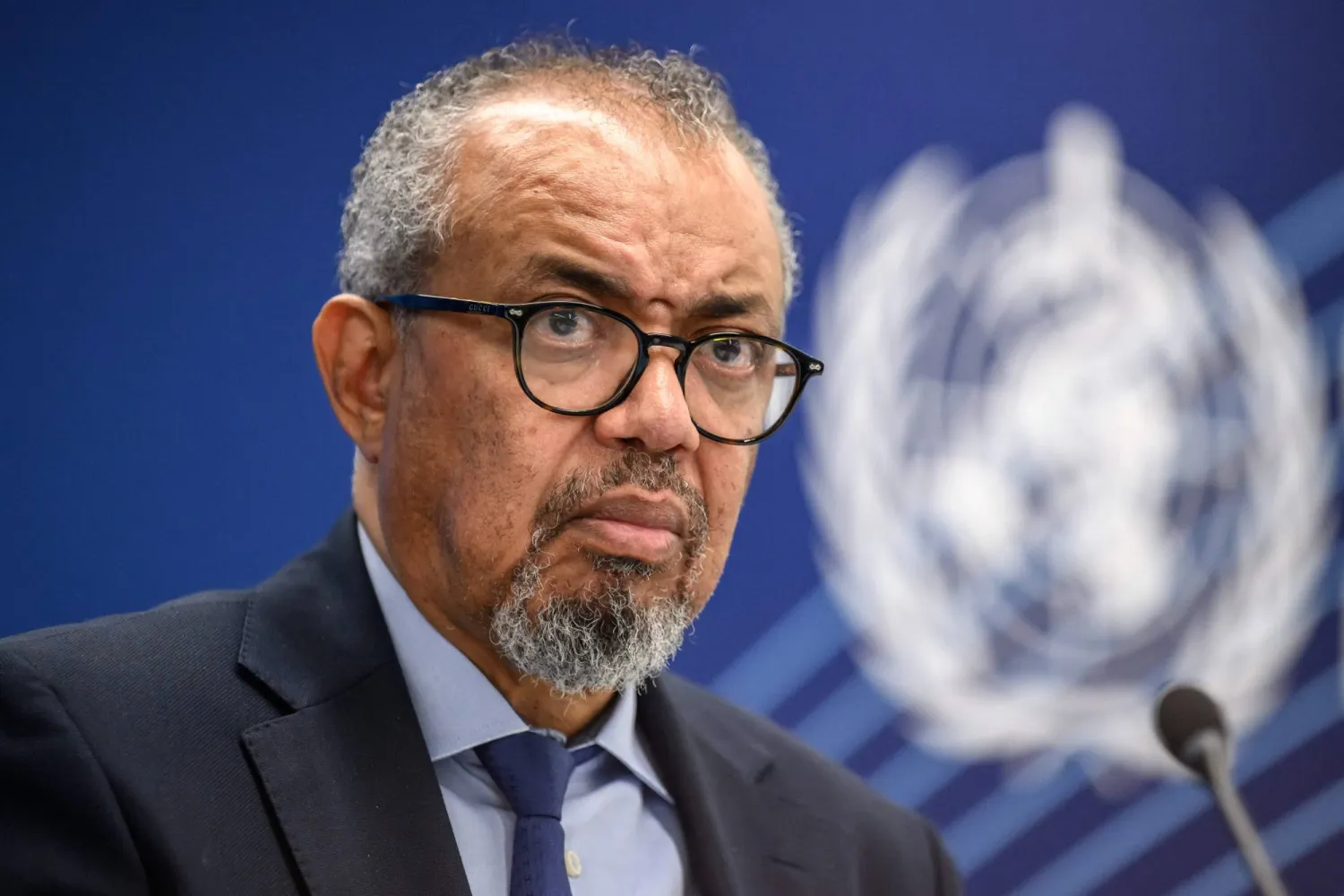
World Health Organization (WHO) Director-General Tedros Adhanom Ghebreyesus looks on during a press conference on global health issues, in Geneva, on October 7, 2026. (Photo by Fabrice COFFRINI / AFP)
TT

WHO Chief: Ebola Reminder of Urgent Need to Finish Pandemic Treaty

World Health Organization (WHO) Director-General Tedros Adhanom Ghebreyesus looks on during a press conference on global health issues, in Geneva, on October 7, 2026. (Photo by Fabrice COFFRINI / AFP)

Deadly outbreaks like the Ebola epidemic raging in the Democratic Republic of Congo show the urgent need to complete an international pandemic treaty, the World Health Organization chief said Monday.

Wealthy countries and developing nations remain at loggerheads over how an agreement, adopted last year as a framework to handle future Covid-like pandemics, will work in practice.

As the ninth meeting towards finalizing the deal opened in Geneva Monday, WHO chief Tedros Adhanom Ghebreyesus called on countries to "finish the job".

Pointing to several recent deadly disease outbreaks, he stressed that completing a pandemic treaty was "about protecting people".

"A pathogen threat anywhere can become a threat everywhere, to people of every country," he said, according to a written version of his statement.

"The outbreak of hantavirus earlier this year, and the ongoing Ebola epidemic in DRC remind us of this threat."

He was referring to the hantavirus outbreak that killed three people on a cruise ship in April and the latest Ebola outbreak, declared in May, which has killed nearly 5,000 people out of more than 10,000 infected mostly in the DRC.

It was vital, Tedros said, that the world learn the overarching lesson of the Covid-19 pandemic: "no country can protect itself from pandemics by acting alone".

When countries agreed in May 2025 to a Pandemic Agreement, they left out the tricky issue of how the key mechanism would operate to get the deal over the line.

The agreement's Pathogen Access and Benefit-Sharing (PABS) system covers how to share access to pathogens with pandemic potential, as well as benefits derived from them such as vaccines, tests and treatments.

"PABS is the last remaining piece of our puzzle," Tedros said.

During the Covid pandemic, he highlighted that "the world developed vaccines in record time, but too many countries were left waiting while others secured far more than they needed".

"That inequity cost lives, prolonged the pandemic and increased the risk of new variants emerging."

Completing the final piece of the pandemic treaty, he insisted, was "the key that will unlock the door to a safer future".


Russia Resumes Attacks on Ukraine's Kherson Region after Local Truce Ends

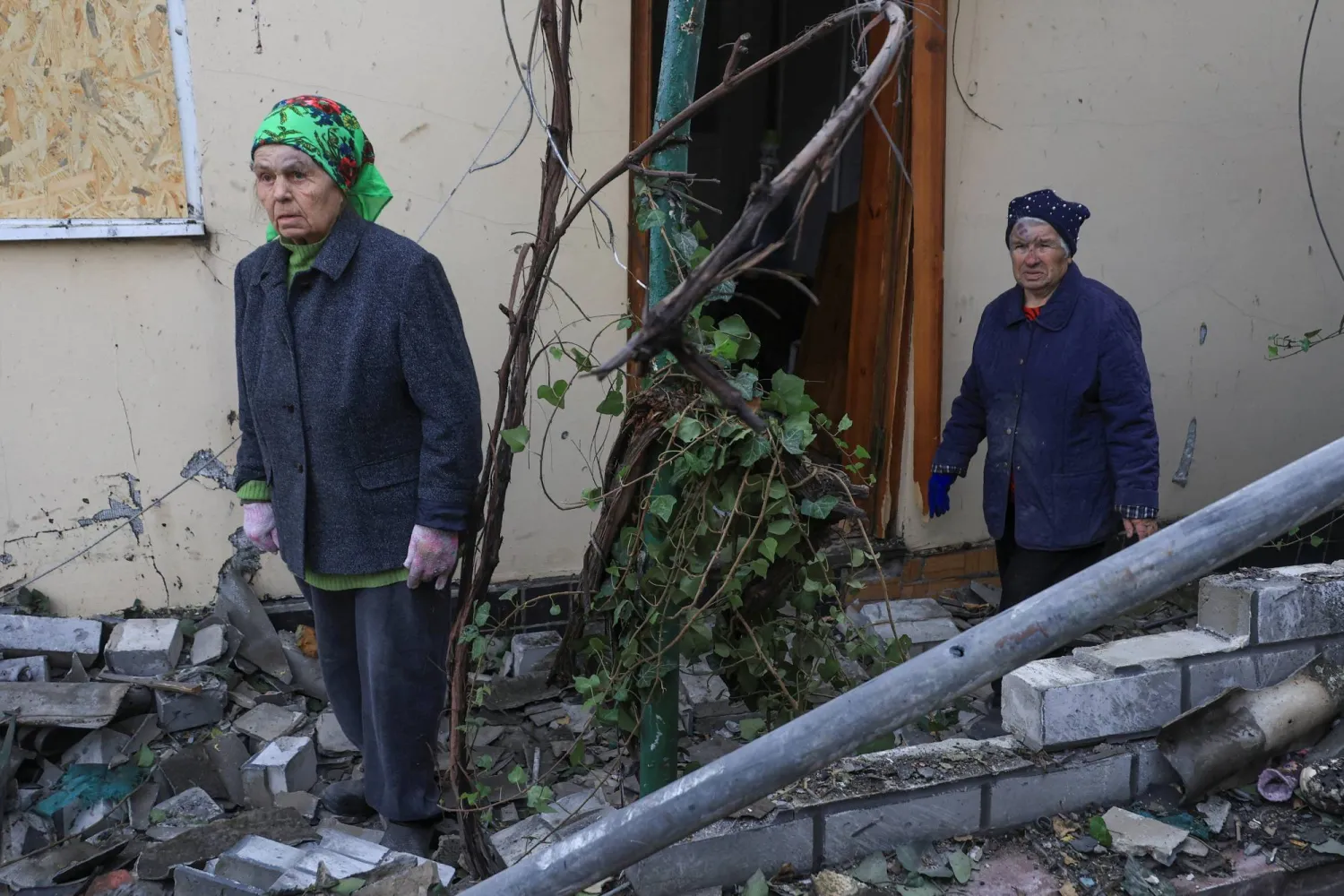
Women who are internally displaced persons from the Kherson region look on at the backyard of their house, which was damaged during a Russian drone strike, amid Russia's attack on Ukraine, in Odesa, Ukraine November 2, 2026. REUTERS/Nina Liashonok
TT

Russia Resumes Attacks on Ukraine's Kherson Region after Local Truce Ends

Women who are internally displaced persons from the Kherson region look on at the backyard of their house, which was damaged during a Russian drone strike, amid Russia's attack on Ukraine, in Odesa, Ukraine November 2, 2026. REUTERS/Nina Liashonok

Russia on Monday resumed attacks on Ukraine's Kherson region, after the end of a local ceasefire in the area, the longest truce in the war raging between the neighbors since 2022, Kyiv said.

A rare pause in fighting, brokered by US First Lady Melania Trump, ended on Sunday after starting on Tuesday. The ceasefire enabled a humanitarian mission to the Russian-occupied city of Oleshky and for hundreds of stranded citizens to leave, AFP said.

It was the longest pause in fighting between the neighbors in the war -- now in its fifth year -- which has killed hundreds of thousands and displaced millions.

"At around 8:00 am this morning, Russian occupiers attacked a car with a drone in the Korabelny city district" of Kherson, local authorities said in a statement, adding that a 62-year-old woman and 73-year-old man were wounded and hospitalized.

Russia refused a Ukrainian offer to extend the truce, a senior Ukrainian figure told AFP on Sunday.

Kherson's regional governor Oleksandr Prokudin had warned local people to be particularly vigilant when the ceasefire ended.

Ukraine's military alleged Russia used the pause in fighting to "fortify its positions".

Russian attacks also killed one person in Izium, a city in the country's north-eastern Kharkiv region, the local governor there said.

US-mediated talks between Russia and Ukraine are set to resume this month.

The Kremlin has repeatedly rejected calls for a wider ceasefire and said it intends to press on with its full-scale offensive to seize the rest of eastern Ukraine.


Iranians Have Left Doha Talks, Draft Proposal for US Deal Being Circulated, Official Says

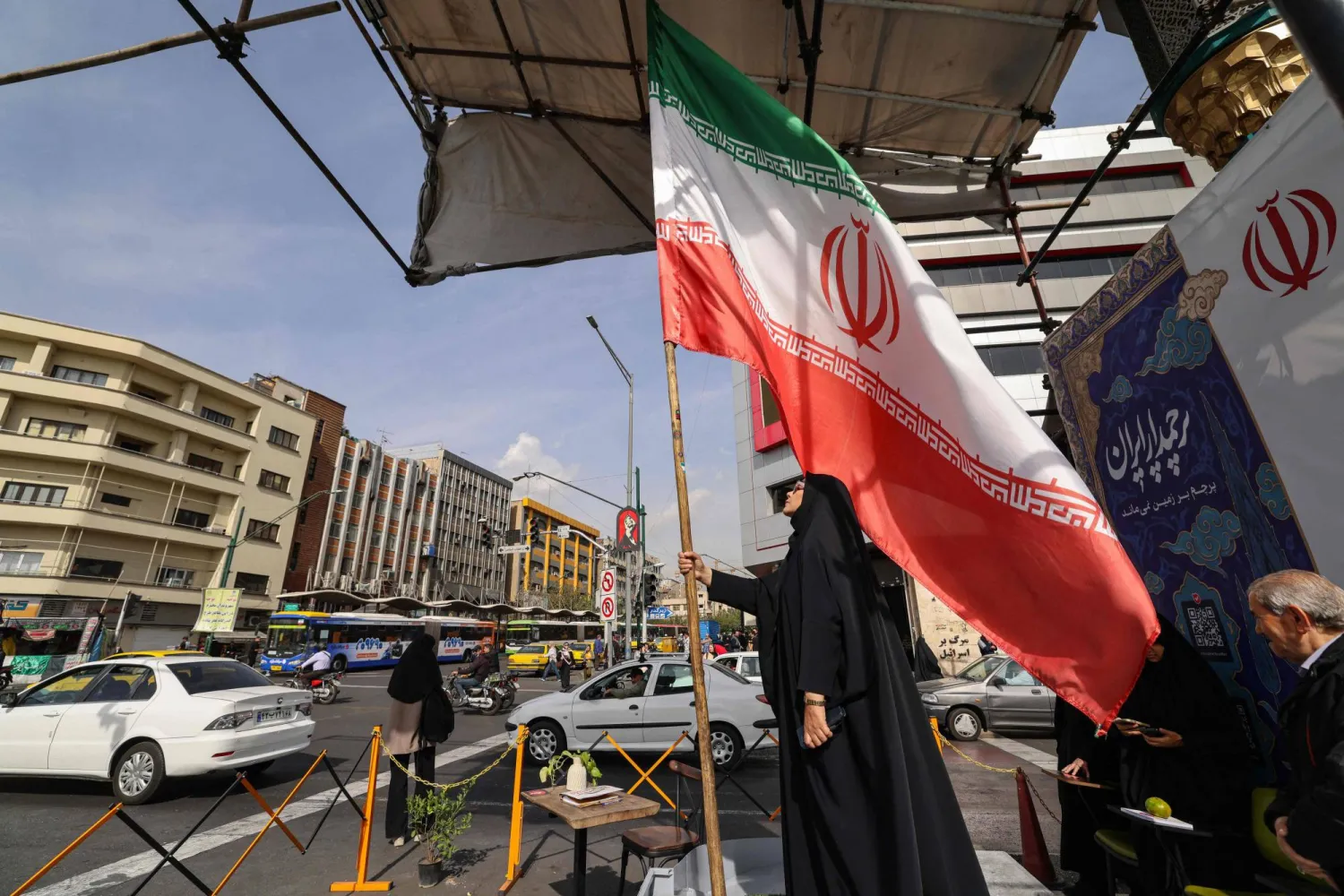
An Iranian woman holds Iran's national flag on a street in Tehran on November 1, 2026. (AFP)
TT

Iranians Have Left Doha Talks, Draft Proposal for US Deal Being Circulated, Official Says

An Iranian woman holds Iran's national flag on a street in Tehran on November 1, 2026. (AFP)

Iranian negotiators have left talks with Qatari mediators aimed at ending the war with the United States, and a draft proposal is being circulated with a follow-up meeting possible, an official briefed on the talks said on Monday.

The negotiators departed on Sunday, though not because of difficulties in the negotiations, the official said, without providing further details on the draft proposal.

Iran's foreign ministry spokesperson said the basis of the talks is a seven-step plan ‌Iran drew up ‌in September to reopen the Strait of ‌Hormuz ⁠and end the ⁠US naval blockade on Iran, with Tehran now suggesting that proposal could be implemented on a faster timeline under a deal.

The spokesperson, Esmaeil Baghaei, said deputy Foreign Minister Kazem Gharibabadi had been in Doha to facilitate the exchange of messages with Washington via Qatari intermediaries.

"Our demands have been ⁠articulated very clearly and transparently. These demands are ‌reasonable and logical: no final ‌agreement can be initiated, nor can the Strait of Hormuz be ‌reopened or secured, unless the US naval blockade ‌is brought to an end, Iran's demands are respected, and Iran’s legitimate requirements are addressed,” Baghaei said.

On Saturday, Qatari broadcaster Al Jazeera quoted Iran's Foreign Minister Abbas Araghchi as saying that under ‌a deal the Strait of Hormuz could be opened within a two-day timeline rather than within ⁠the seven ⁠days originally envisaged.

Iran's initial proposal was rejected by US President Donald Trump.

The latest round of diplomacy comes amid concerns that the conflict could escalate again after Tuesday's midterm elections in the United States. Asked about Tehran's view on the midterms, Baghaei said Tehran did not expect elections to "give birth to a new US."

Trump has said the United States would not launch new attacks on Iran before the vote and that talks with Tehran have been productive, though he has not ruled out further military action.