
Russian Air Attacks Kill 12 in Kyiv Region, on Sixth Day of Strikes

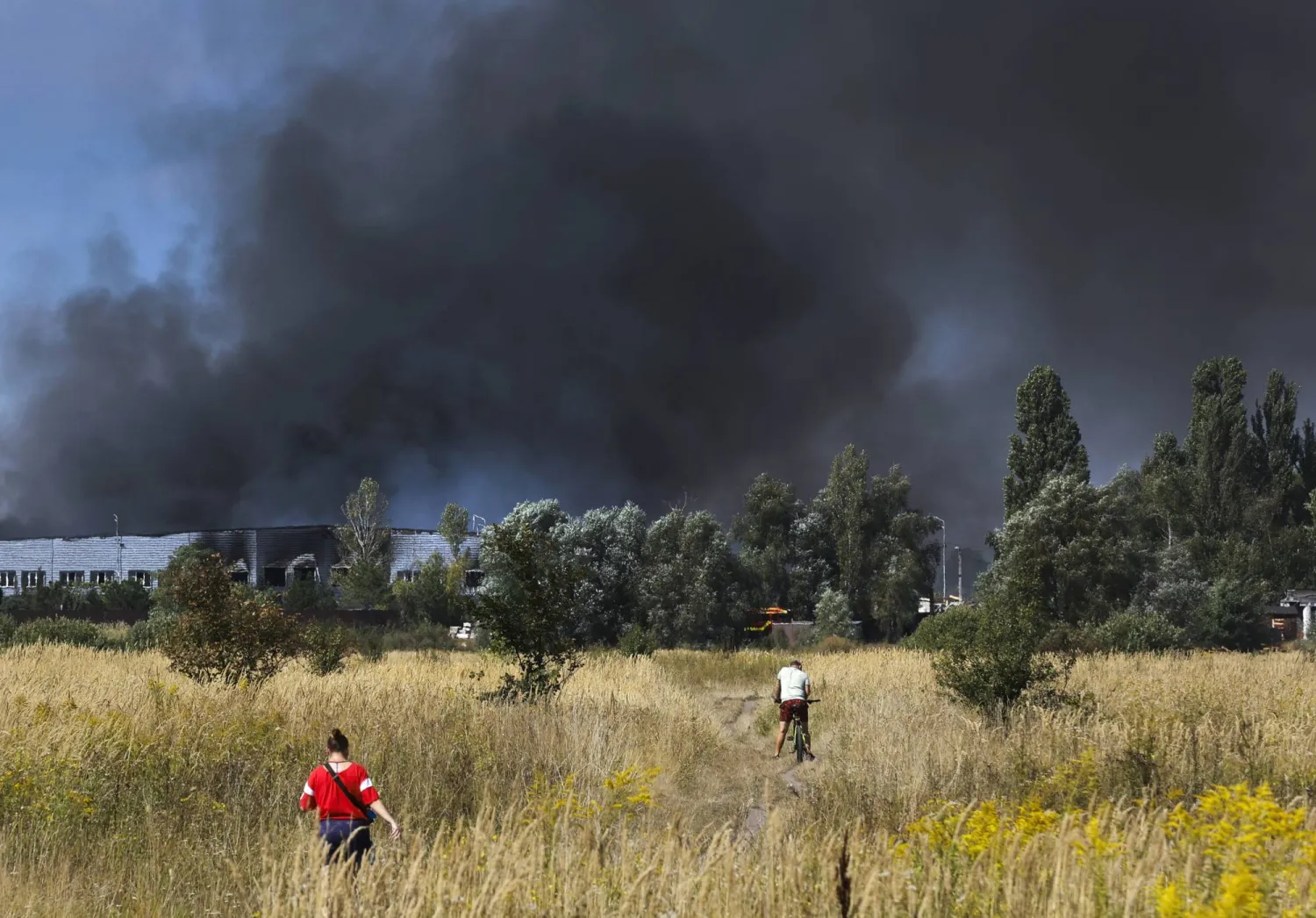
People walk on a field as smoke rises at the site of a Russian strike near Kyiv, Ukraine, 31 August 2026, amid the Russian invasion. (EPA)
TT

Russian Air Attacks Kill 12 in Kyiv Region, on Sixth Day of Strikes

People walk on a field as smoke rises at the site of a Russian strike near Kyiv, Ukraine, 31 August 2026, amid the Russian invasion. (EPA)

Russian air attacks killed 12 people and injured several more in Kyiv and the surrounding region early on Tuesday, authorities said, in the sixth consecutive day of strikes on the Ukrainian capital. 

Russia, which began its full-scale invasion of its smaller neighbor in 2022, has escalated its air attacks against Ukraine in recent months, as its progress has slowed dramatically on the battlefield. 

Swarms of drones have plagued Kyiv and nearby areas in the last five days, killing residents, damaging homes and warehouses. Many of them are newer versions, powered by jet engines, making them harder to intercept. The near round-the-clock attacks have upended daily routines for millions with hours-long air-raid alerts. 

More explosions were heard in the capital on Tuesday morning, a Reuters witness said. 

Ukraine's Foreign Minister Andrii Sybiha said Russian drones and ballistic missiles ‌had targeted residential ‌areas and railway infrastructure in the heavy overnight attacks. 

He called on Ukraine's allies to ‌increase ⁠economic pressure on Russia, ⁠and to renew discussions about using Russia's frozen assets overseas to provide funding for Ukraine's war effort. 

"It is time to signal (to) the Kremlin that imitating diplomacy does not work anymore," Sybiha said in a post on X. He urged allies to provide Ukraine with more air defenses, as it runs critically low on the US-made Patriot interceptors capable of stopping Russia's ballistic missiles. 

STRIKE ON RAILWAY FACILITIES IN KYIV 

In Kyiv, eight people were killed and fires broke out in different locations around the capital, emergency services said on the Telegram messaging app. Russian ballistic missile strikes on a railway depot and other railway facilities killed six employees, ⁠said the head of Ukrzaliznytsia state rail group, Oleksandr Pertsovskyi. 

In Boryspil outside Kyiv, four ‌people were killed and a further 13 injured in an attack that ‌hit a residential building and other sites, Governor Tymur Tkachenko said on Telegram. 

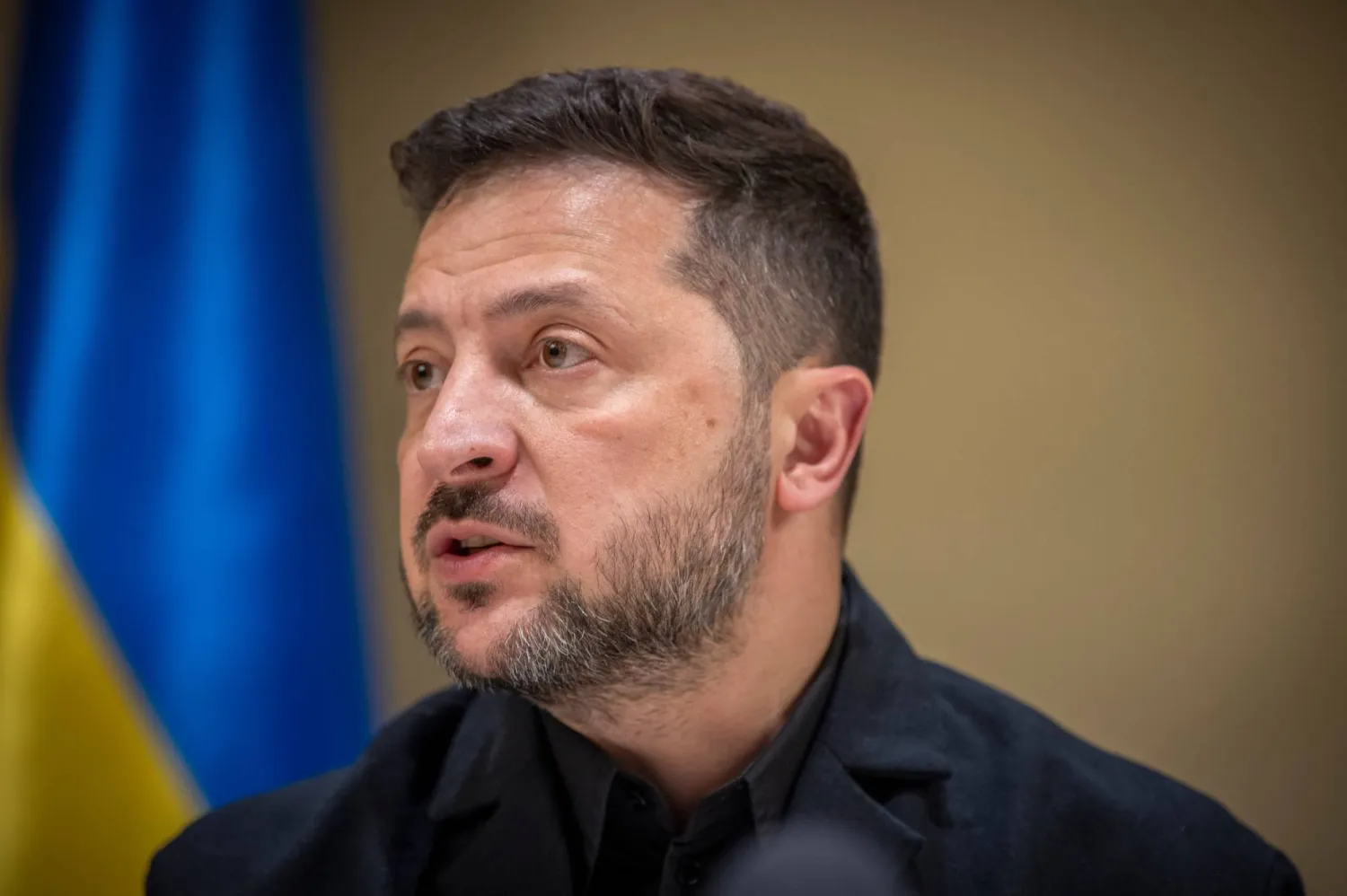
An Indian citizen was among those killed in Ukraine overnight, ‌President Volodymyr Zelenskiy said. 

The overnight barrage included a "significant number" of jet-powered drones and ballistic missiles, Zelenskiy said. 

Ukraine's air force ‌said it had been able to shoot down five ballistic missiles. Kyiv recently received a small batch of Patriot interceptors. 

The Russian strikes also targeted a border crossing with NATO-member Romania in the Black Sea region of Odesa, where repeated attacks on ports and ships have brought Ukraine's vital agricultural exports to a virtual halt, pressuring global food prices. 

Thousands of families there were left without electricity, Zelenskiy said. 

Estonia's defense forces ‌said drones used in a Ukrainian strike against Russia had briefly entered Estonian airspace. Estonian Defense Minister Hanno Pevkur said the incident — the latest of a series in ⁠recent months — showed how important ⁠it was to support Ukraine with air defense assets. 

Russia's defense ministry said Moscow hit military and energy facilities in Kyiv and Odesa overnight, as well as regions surrounding these cities. 

Ukraine has also increased its attacks on Russia, targeting oil facilities and logistics infrastructure to undermine Moscow's ability to wage war. 

Local governors said air attacks caused a fire in the port area of Ust-Luga, a major export outlet in the northwest, and damaged civilian facilities in the Samara region, home to a number of major oil refineries some 800 km (500 miles) southeast of Moscow. 

A civilian was also killed in an attack on Russia's Belgorod region, which borders Ukraine, the acting governor said. 

PEACE EFFORTS 

US-led peace talks stalled this year as Ukraine refused Russian demands to cede territory and as Washington has become increasingly preoccupied with the conflict with Iran. 

Zelenskiy said on Monday he had held a "detailed and constructive" call with US President Donald Trump's envoys, Steve Witkoff and Jared Kushner, and that the sides were working to finalize dates for a visit to Ukraine. 

Indian Prime Minister Narendra Modi told Russian President Vladimir Putin that the war needed to end for humanity's sake. The Kremlin leader said Moscow was "moving forward along this path". 


Rescuers Comb Through Mud and Debris as Nepal-China Floods Leave More Than 1,000 Dead

A boy uses a mobile phone to take photos of missing and deceased people pasted on wall outside Tribhuvan University Teaching Hospital, following flash floods and a mudslide, in Kathmandu, Nepal, September 1, 2026. (Reuters)
TT

Rescuers Comb Through Mud and Debris as Nepal-China Floods Leave More Than 1,000 Dead

A boy uses a mobile phone to take photos of missing and deceased people pasted on wall outside Tribhuvan University Teaching Hospital, following flash floods and a mudslide, in Kathmandu, Nepal, September 1, 2026. (Reuters)

Rescue teams with search dogs combed through mud, rocks and debris Tuesday in Nepal and China looking for thousands of people still missing after catastrophic flooding tore through communities across the Himalayas, leaving more than 1,000 dead.

Nepal’s disaster agency said Tuesday that 987 deaths had been counted there, with 3,916 people missing, including 583 foreigners. Chinese authorities, in their latest update on Sunday, reported 16 deaths and 546 people still missing, including 261 foreigners.

The scale of last week's disaster was hampering rescue efforts in both regions, with landslides, destroyed roads and widespread damage cutting off remote areas. Crews faced challenging conditions as they searched unstable terrain and piles of debris, raising fears the death toll could rise as rescuers reach isolated communities.

In Nepal, rescuers were racing to reach hundreds of workers believed to be trapped inside tunnels at hydropower projects damaged by the floods. About 900 workers are missing from 12 projects, with roughly 500 believed to be trapped in tunnels, according to Nepalese authorities.

Brig. Gen. Raja Ram Basnet, Nepal’s army spokesperson, said teams assisted by foreign experts were working at several hydropower projects. Visuals released by the army showed rescue teams entering dark, debris-filled tunnels, wading through mud and water and climbing over rocks as they searched for signs of life.

On the Chinese side, rescue crews scoured areas hit by mudslides, particularly around the Gyirong Port border crossing, which was destroyed.

Some rescuers, aided by search dogs, searched gaps among rocks and debris for signs of life. Other teams used heavy machinery to clear a major highway leading to Gyirong Port, hoping to clear the way for equipment, personnel and supplies to reach the disaster zone, according to China's state-run Global Times newspaper.

At least 11,814 people have been rescued so far, according to Nepalese authorities. Emergency crews were using helicopters and other aircraft to reach stranded communities in areas where roads and bridges have been destroyed by the flooding and landslides.

Authorities on Tuesday also stepped up efforts to provide assistance to survivors in areas where roads and other transportation routes had been damaged or cut off.

Chinese Foreign Ministry spokesperson Guo Jiakun said China’s second batch of relief supplies for Nepal was expected to ship Tuesday, including drones, DNA testing and water purification equipment. Chinese DNA testing experts will also help Nepal identity bodies, he said.

Bimal Sharma, a helicopter pilot who has been flying rescue and relief missions since the disaster began, said he was shocked to see the devastation in Timure, a border town close to Tibet that he has known for years.

“It felt like I was flying over an entirely different landscape,” he said.

Sharma said he has had little opportunity to speak with the people he rescued, but their expressions told him how deeply the disaster had affected them.

“I can see the pain in their eyes. It’s heartbreaking,” he said.

The Aug. 26 disaster began with a chain of events high in the Himalayas. A glacial collapse sent large amounts of rock, ice and meltwater into valleys below, triggering powerful floods downstream.

Scientists studying satellite imagery said the collapse appears to have involved the failure of bedrock beneath a glacier in the Himalayan region. The rockfall was powerful enough to register as a magnitude 5.2 seismic event.

The resulting surge of water and debris entered rivers that flow through valleys in Tibet and Nepal, causing them to rise rapidly. Floodwaters swept away homes, buildings, roads and bridges and carried mud and rocks downstream.

Nepal's Prime Minister Balendra Shah said that the disaster highlighted the need for action to combat climate change.

“This incident has indicated that the risks we face in the Himalayan region are increasing with climate change,” Shah said in a social media post Monday night. “Therefore, this region must be alert, and at the same time, it is time for us to strongly raise the issue of disasters caused by climate change before the international community.”


China Warns of ‘Consequences’ Over Taiwan Presence at Pacific Leaders Meeting

The flags of Pacific Island nations during the 55th Pacific Islands Forum Leaders Meeting in Koror, Palau, September 1, 2026. (AAP/ Mick Tsikas via Reuters)
TT

China Warns of ‘Consequences’ Over Taiwan Presence at Pacific Leaders Meeting

The flags of Pacific Island nations during the 55th Pacific Islands Forum Leaders Meeting in Koror, Palau, September 1, 2026. (AAP/ Mick Tsikas via Reuters)

China said it had serious concerns about Taiwan's presence at the annual Pacific Islands Forum in Palau, warning of "consequences" after the democratically ruled island attended the group's opening ceremony on Monday.

China views Taiwan as its own territory, and China-Taiwan tensions have featured prominently at the meeting, which is intended to demonstrate regional unity.

"There will always be consequences," Qian Bo, China's special envoy for Pacific island affairs, said of Taiwan attending the event.

"It's not a ‌threat," he said ‌without specifying what the consequences would be.

"This is objected to ‌by ⁠all, so this ⁠should not have happened. We think it's very inappropriate to do so," he told reporters on Monday after an opening ceremony in Palau, an archipelago of over 500 islands that has maintained diplomatic ties with Taiwan.

Australian Prime Minister Anthony Albanese said "the Pacific Islands Forum determines what happens here, not any other country," when asked by reporters about the Chinese envoy's remarks.

"This is primarily a gathering of the Pacific family ... and I look forward to the engagement," ⁠Albanese said on Tuesday.

New Zealand's Foreign Minister, Winston Peters, echoed ‌this sentiment, saying the group does not take ‌instructions from countries outside of it.

"Taiwan is honored to serve as a partner in the Pacific, continuing ‌to stand with everyone and work together to make the Pacific more prosperous ‌and peaceful," Foreign Minister Lin Chia-lung said on Monday.

Lin Chia-lung was invited for meetings and side events held alongside the forum. Taiwan is not a formal dialogue partner of the forum like China, but a development partner. The US, EU, Britain, Canada, India and Japan are also among ‌the 21 dialogue partners of the forum.

China has gradually whittled away the number of Pacific Island countries with formal ties to ⁠Taipei, with only ⁠three remaining — Palau, Tuvalu and the Marshall Islands.

The leaders of Fiji, Vanuatu, Samoa, Solomon Islands and Kiribati did not attend the gathering of the 18-member group that counts Australia, New Zealand and Pacific island nations as members. Ministers are attending in their place.

Though China is Australia's largest trading partner, Canberra remains wary of Beijing's expanding influence in the Pacific and has stepped up security and development ties with island nations to deter any permanent Chinese military presence in the region.

Australia, New Zealand and the United States have long considered the South Pacific to fall within their sphere of influence.

In the latest sign of that effort, New Zealand and the US, in a joint statement released on Tuesday during the summit, said they would jointly fund a major upgrade of a World War Two port on a Cook Islands' atoll.


Israel PM’s Wife Shares Conspiracy Theory About Opposition Figure

Israel's Prime Minister Benjamin Netanyahu (L) and his wife Sara Netanyahu stand during a welcome ceremony for India's Prime Minister Narendra Modi at the Ben Gurion airport near Tel Aviv on February 25, 2026. (AFP)
TT

Israel PM’s Wife Shares Conspiracy Theory About Opposition Figure

Israel's Prime Minister Benjamin Netanyahu (L) and his wife Sara Netanyahu stand during a welcome ceremony for India's Prime Minister Narendra Modi at the Ben Gurion airport near Tel Aviv on February 25, 2026. (AFP)

Sara Netanyahu, the wife of the Israeli prime minister, has claimed an opposition figure was aware of the plan for Hamas's October 7, 2023 attack before it happened.

Her remarks, which triggered outrage across Israel's opposition, highlight the country's deep political polarization ahead of close-fought elections to be held on October 27.

In a television interview broadcast on Monday evening, Sara Netanyahu lashed out at Yair Golan, the former deputy military chief of staff who heads Israel's center-left Democrats party.

She suggested Golan was "already dressed and ready" at dawn on October 7, 2023, "while others knew nothing, including the prime minister".

Sara Netanyahu's interview was broadcast on Israel's Channel 14, which is close to the government. The comments triggered swift outrage from the opposition.

Golan's party said it strongly condemned the "vile and deceitful" remarks.

"Spreading conspiracies against Major General Yair Golan, and smearing his heroism on October 7, is crossing a red line that borders on insanity," it wrote on X.

Gadi Eisenkot, a former army chief who has emerged as the frontrunner to challenge Netanyahu, slammed the "mad conspiracy of betrayal" spread by the prime minister's wife.

In a post on X, he said the comments were "intended only to stoke hatred and perpetuate Netanyahu's rule".

Sara Netanyahu's accusations reflect recurrent conspiracy theories among a part of the Israeli political class.

According to a poll conducted for Channel 13 in August, 40 percent of Israelis, and 63 percent of voters for the current right-wing coalition, believe that internal treason led to the October 7 attack -- the deadliest day in Israel's history.

Netanyahu, Israel's longest-serving prime minister who has billed himself as the guarantor of the country's safety, has deflected blame for the attack, saying that security officials should have woken him from his sleep.

Hamas's attack on Israel resulted in the deaths of 1,221 people, according to an AFP tally based on official Israeli figures. Fighters also took 251 hostages -- 44 of them already dead -- into Gaza.

Israel responded with a massive offensive in Gaza that has killed at least 73,454 people, according to the Palestinian territory's health ministry, which operates under Hamas authority and whose figures are considered reliable by the United Nations.