Peru Cuts Ties with Iran, Accusing Tehran of Escalating Middle East War

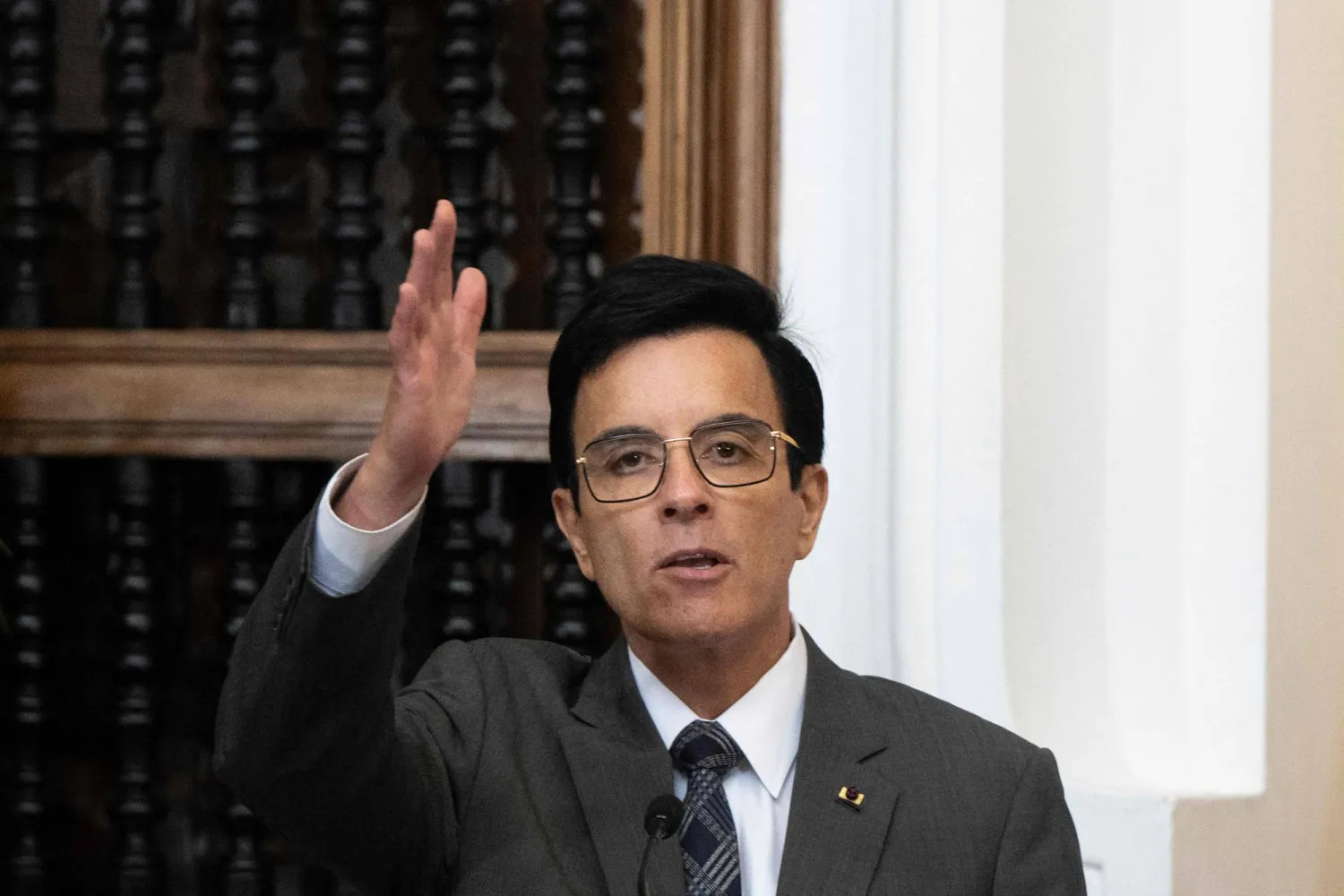
Peruvian Foreign Minister Carlos Espa gestures during his presentation ceremony at the Foreign Ministry building in Lima on July 31, 2026. (AFP)
TT

Peru Cuts Ties with Iran, Accusing Tehran of Escalating Middle East War

Peruvian Foreign Minister Carlos Espa gestures during his presentation ceremony at the Foreign Ministry building in Lima on July 31, 2026. (AFP)

Peru's Foreign Ministry said Tuesday it has severed diplomatic relations with Iran, accusing Tehran of inciting "an escalation of conflicts" in the Middle East and hindering maritime transit in the Strait of Hormuz.

Citing a historic pacifist stance, the Peruvian government "has made the decision to sever diplomatic relations with Iran," the ministry said in a statement.

The war in the Middle East has restarted in recent days, with new US attacks on Iran on Sunday, and retaliatory tit-for-tat strikes since then.

"Peru views with deep concern the severe restrictions imposed by the Iranian regime, as well as the disruption of international trade through the Strait of Hormuz," the ministry said in a statement.

Peru also accused Iran of obstructing the work of the International Atomic Energy Agency, saying Tehran had denied inspectors access to nuclear facilities on different occasions and hindered verification needed to prevent the production of nuclear weapons.

Despite severing diplomatic ties, Peru said consular relations would remain in place to protect the interests and nationals of both countries, in accordance with the relevant Vienna conventions.

Peru's conservative President Keiko Fujimori campaigned on iron-fist security policies and took steps to join US President Donald Trump's Shield of Americas initiative days after taking office July 28, signaling a willingness to work with Washington.

A few days ago, Peru's neighbor Chile announced the closure of its embassy in Tehran, but did not decide to sever ties for economic and security reasons.

Peru's statement came as the US launched a barrage of airstrikes against Iran on Tuesday, prompting Iranian retaliation, in the most serious escalation in weeks in a conflict that has driven up global energy prices.


Teen Sentenced to 20 Years for UK Murder Plot Tied to Iran-linked Group

A red double-decker bus rides past as a Union Jack flag flutters on the Victoria Tower at the Houses of Parliament in London, Britain, October 15, 2026. REUTERS/Isabel Infantes
TT

Teen Sentenced to 20 Years for UK Murder Plot Tied to Iran-linked Group

A red double-decker bus rides past as a Union Jack flag flutters on the Victoria Tower at the Houses of Parliament in London, Britain, October 15, 2026. REUTERS/Isabel Infantes

A Norwegian teenager who planned to commit murder in Britain after being recruited by a Swedish organized crime group linked to the Iranian government was on Friday sentenced to 20 years' detention.

Johannes Natland, now 19, was arrested in a hotel room in Huddersfield, northern England, in March ⁠2025 with two ⁠firearms and ammunition in his possession.

Natland was recruited by the Foxtrot Network, a Swedish organized crime group used by the Iranian state and sanctioned by ⁠both Britain and the United States, prosecutors said.

He admitted possessing a semi-automatic pistol, a revolver and ammunition, but denied conspiracy to murder and claimed he did not intend to carry out the plan.

But he was convicted in July after a retrial ⁠and ⁠was sentenced at London's Woolwich Crown Court to detention for 20 years.

Natland was the latest young adult to stand trial in Britain and elsewhere over serious criminal acts allegedly carried out after being recruited online for money, often as an unwitting proxy for a foreign state.


UN: Millions May Be Forced to Move as Climate Change Hits South Asia

International Organization for Migration (IOM) chief Amy Pope, seen here in 2023, warned of a lack of urgency globally about the risks that vulnerable communities are facing. Fabrice COFFRINI / AFP
TT

UN: Millions May Be Forced to Move as Climate Change Hits South Asia

International Organization for Migration (IOM) chief Amy Pope, seen here in 2023, warned of a lack of urgency globally about the risks that vulnerable communities are facing. Fabrice COFFRINI / AFP

Climate change is threatening livelihoods and forcing people from their homes across South Asia, but technology and government action could help limit the damage, the UN migration chief told AFP on Friday.

Rising seas, flooding and drought threaten homes and farmland, Amy Pope, Director General of the International Organization for Migration (IOM), said during a visit to New Delhi.

In the Himalayas, she pointed to Nepal's August 26 disaster, when a mountain and glacier collapse triggered deadly flooding, where IOM sent humanitarian aid to help.

In a worst-case scenario, up to 40.5 million people in South Asia may be forced to move by 2050, according to IOM.

"When they can't produce food, when they can't feed their livestock, it increases the likelihood of displacement," said Pope. "The first adaptation is often for people to move."

Pope said climate change was also accelerating urbanization in India.

"As people seek shelter from heat, they're going into urban centers," she said.

- 'Migration as a tool' -

The risks are particularly acute in South Asia, where vast populations and limited resources leave many communities vulnerable.

"There's a lack of urgency globally about the risks that vulnerable communities are facing," Pope said, warning that funding to help residents prepare for climate change remained inadequate.

"The cost of a humanitarian disaster is in the billions. The cost of investing in some of the resilience measures can be far less," she said.

Better data and artificial intelligence could help governments identify communities at risk before disaster strikes, Pope said.

"With the advancements in AI forecasting, you can now better anticipate those communities that are at high risk of displacement," Pope said.

By combining weather forecasts with information about local livelihoods, authorities can identify which communities most need help.

"If you know a community is at risk, we don't need to wait until they're displaced to respond," she said.

Measures could include improving farming methods, training people for other jobs and, where necessary, relocating communities repeatedly hit by floods or drought.

Finding the money for such programs is a major obstacle, Pope said, with governments often struggling to navigate the systems available to fund climate adaptation.

India's investments in early-warning systems, disaster response and technology offer grounds for optimism, she said. But no government can meet the scale of the challenge alone.

International migration can also help people earn a living while filling labor shortages abroad.

South Asia already has established migration routes, offering opportunities to build on existing links.

"Here we have government partners who recognize both the threats to their communities but they're also using migration as a tool for development," Pope said.

She warned that growing demand for workers must be matched by safe, legal routes to employment.

Otherwise, migrants risk exploitation by traffickers and smugglers, including through fraudulent overseas job offers.

India's technological capacity could also help its workers compete internationally as artificial intelligence reshapes employment, Pope said.

AI could threaten some jobs, particularly those involving routine analysis of documents and reports, but other sectors still rely heavily on human labor.

"If we can marry that capacity with the labor mobility, so that the workers are being skilled for those jobs as they're emerging, they will be ahead," Pope said.

"This is a place where I have more optimism than in places where we're dealing with the most acute crises," she said.



Iran President Says Conflict in Mideast Amounts to 'Ecocide'

Iranian President Masoud Pezeshkian visits an exhibition that showcases the defense ministry's latest advancements in defense and space in Tehran. Photo: -/Iranian Presidency/dpa
TT

Iran President Says Conflict in Mideast Amounts to 'Ecocide'

Iranian President Masoud Pezeshkian visits an exhibition that showcases the defense ministry's latest advancements in defense and space in Tehran. Photo: -/Iranian Presidency/dpa

Iran's President Masoud Pezeshkian on Friday urged countries to condemn what he called "ecocide" in the Middle East caused by "wars of aggression".

Pezeshkian said the conflicts in Gaza and the wider Middle East had inflicted a significant toll on nature that extended beyond borders and required "international solutions", AFP said.

"What has occurred in our region as a result of wars of aggression is ecocide, or environmental genocide, and it must be condemned," Pezeshkian told a nature summit in Armenia attended by UN Secretary-General Antonio Guterres.