US Pressure on Iran Starting to Tell, as Sanctions and Blockade Bite

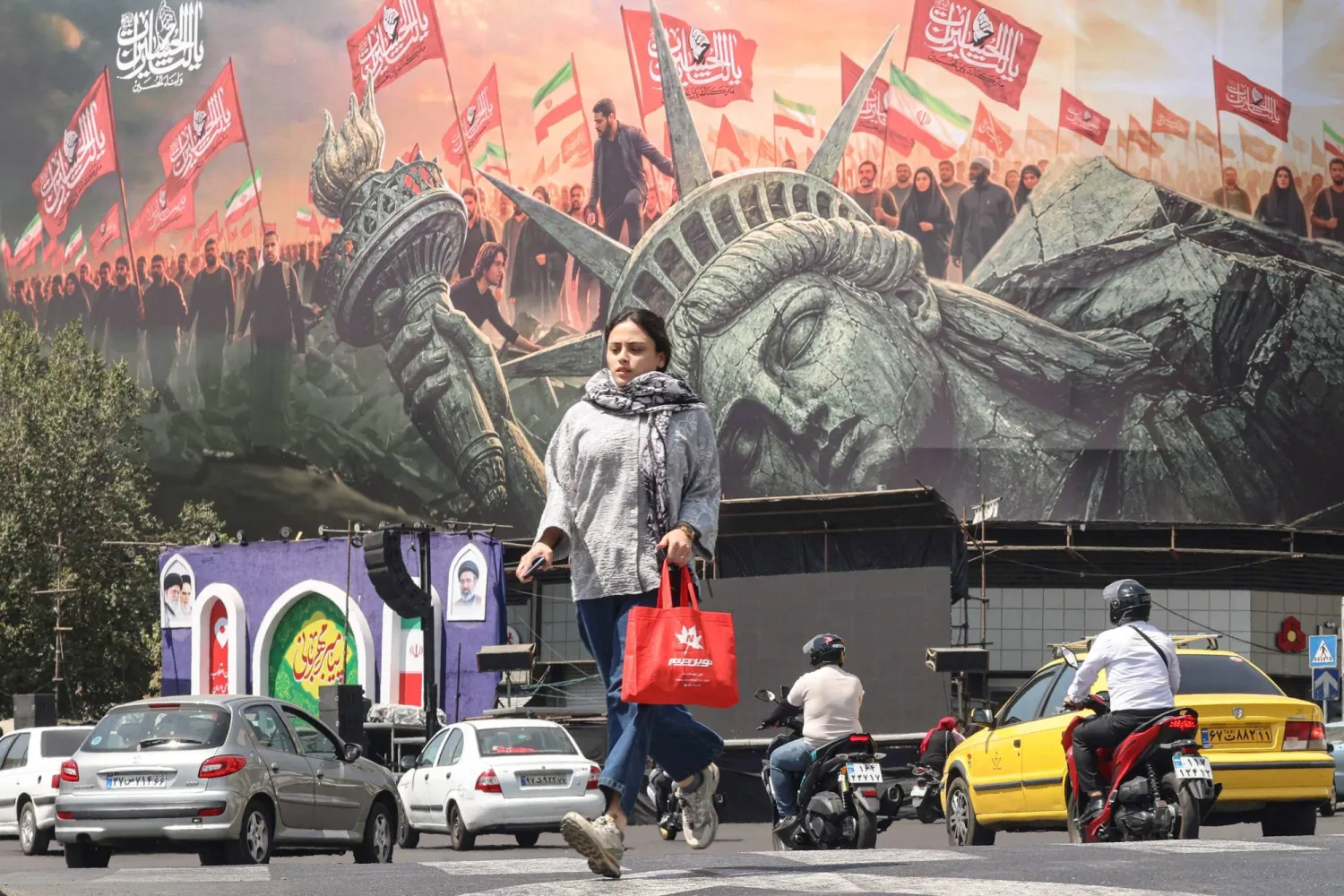
A woman crosses as motorists drive past an anti-US billboard at Enghelab Square in Tehran on September 2, 2026. (AFP)
TT

US Pressure on Iran Starting to Tell, as Sanctions and Blockade Bite

A woman crosses as motorists drive past an anti-US billboard at Enghelab Square in Tehran on September 2, 2026. (AFP)

A US campaign to throttle Iran's economy by blockading its oil exports and stopping sanctions evasion is growing increasingly difficult to withstand, three senior Iranian sources said.

Washington has in recent weeks sought to ratchet up the economic pressure on Tehran, in an effort to extract concessions in any future negotiation that six months of conflict have so far failed to secure.

Although Iran's clerical rulers managed to bypass sanctions for decades, the latest US moves have left them in a far more sensitive position, with few remaining channels to secure foreign currency or buy goods, the sources said.

In particular, the effort to stop Iran accessing international financing networks in other countries it has long used to keep its economy functioning poses a real and urgent threat, the sources said.

Any sign the economic campaign may break a months-long deadlock in the conflict will likely cheer US planners, though Iran has also warned it could respond to the pressure with military escalation, raising the stakes at a key moment.

PETROL STOCKS LOW AS CURRENCY COLLAPSES

The war has erupted back into open fighting this week, with US attacks along Iran's Gulf coast prompting retaliatory Iranian strikes at Arab states.

Neither side ‌has signaled yet it ‌is ready to make the concessions demanded by the other, leaving the war in a costly stalemate - though ‌one that ⁠may be shifting.

While ⁠more energy is flowing to international markets through the Strait of Hormuz despite Iranian efforts to continue disrupting the seaway, the US blockade of Iranian oil exports has entirely cut off Tehran's main source of revenue.

Adding to Iran's problems, the economy was already deep in crisis before the conflict, with a cratering currency and spiraling inflation, while months of bombing have run up a massive bill to rebuild damaged industry and infrastructure.

Meanwhile, the country's financial squeeze is itself biting into Tehran's efforts to get around the sanctions regime, leaving less cash to pay the high premiums required to skirt sanctions illicitly, the sources said.

The rial has fallen to record lows over recent days and one senior source said Iran only has another two months' supply of gasoline, which has to be imported despite domestic oil production because of limited refining capacity.

Iran's ⁠rulers are keenly aware of the potential risks of an economic meltdown and the possibility of it reigniting ‌the nationwide mass protests it put down in January by killing thousands of demonstrators.

"They are under very, ‌very severe economic pressure. They're losing control of the Straits. It's really a question of if they choose to negotiate and I think they'll have to," said Ali Ansari, modern ‌history professor at St Andrews University in Scotland.

The war is also entering a new phase, with each side trying to influence each other's politics.

Iran ‌hopes the threat of inflation will deter the US administration before midterm elections in November, while Washington aims to push Iranians to revolt, a senior Iranian official said.

BLOCKADE AND SECONDARY SANCTIONS SQUEEZING TEHRAN

The latest US measures expanded secondary sanctions that target countries doing business with Iran in a bid to stop it clearing dollar transactions needed for both oil sales and to finance crucial imports of goods and raw materials.

That effort is making Iran's existing sanctions evasion networks - front companies, unregistered tankers and smuggling - too expensive to use, the ‌three senior sources said.

Iranian crude loadings have fallen this month to about 260,000 barrels a day, from about 1.7 million a year earlier, according to data from commodity analytics firm Kpler, with only a trickle still moving ⁠off terminals for distribution by truck, train ⁠or smaller boats over the Caspian Sea.

Tehran says it still has tens of millions of barrels stored in tankers outside the blockade zone that it can sell, but the new sanctions mean intermediaries are stepping back or demanding more money, one of the officials said.

Total trade has fallen between 25% and 35%, with imports hit harder than exports, President Masoud Pezeshkian has said, one of several top officials warning in recent weeks about Iran's rapidly deteriorating situation.

US pressure and Iran's own attacks have meanwhile disrupted one of the main conduits for Iranian trade - the United Arab Emirates, which said on August 19 that all commercial exchange and financial dealings with Tehran were halted until further notice.

“If those channels stay closed, a supplier wants cash, a deal is routed through another country and a shipment arrives later and dearer,” said an Iranian trader in Tehran who deals in imported goods.

The currency has collapsed in value from around 1 million rials to the dollar a year ago to over 2.2 million rials now.

The internal impact is very painful. Official figures put 12-month average inflation at 69.9% with food, beverages and tobacco prices rising at nearly twice that rate.

Official unemployment rose to 9.1% in the spring, while the number of those in work fell by about 450,000 from a year earlier amid a wider fall in labor force participation.

Even for those still in work, the average monthly salary of around $125 a month comes nowhere near meeting basic household spending requirements that come to around $450 a month according to official data.

"We are getting poorer every day," said Mahnaz, a 34-year-old private-sector employee in Tehran who asked that her family name not be used.


Iran FM Says No Negotiations Since ‘Shock’ of US Midterms

25 September 2026, US, Bronx: Iranian Foreign Minister Abbas Araghchi delivers a statement during a press conference at Security Council encounter at UN Headquarters in New York. (dpa)
TT

Iran FM Says No Negotiations Since ‘Shock’ of US Midterms

25 September 2026, US, Bronx: Iranian Foreign Minister Abbas Araghchi delivers a statement during a press conference at Security Council encounter at UN Headquarters in New York. (dpa)

Iranian Foreign Minister Abbas Araghchi said on Sunday that mediators striving for a peace deal between the US and Iran had not travelled at all since the "shock" of the US midterm elections.

"We now have to see how long it will take for them to digest these results, in order to determine how we are going to move forward," the top Iranian diplomat told state TV following the elections in which the Republican Party of US President Donald Trump suffered heavy losses.

Various regional powers, including Qatar and Pakistan, have been trying for months without success to bring a definitive halt to the war launched by the United States and Israel in late February.

Outright fighting has largely subsided, but Iran continues in its efforts to blockade the Strait of Hormuz, vital to global energy supplies, while the US Navy maintains its own counterblockade of Iranian ports.

"For the past few days, there has been no more travel (by mediators), and the reason for this is the shock that the election results in the United States have caused to everyone."

He said it would "take some time before the atmosphere is favorable for the resumption of mediator travel" and called for patience.

Earlier, Aragchi posted on X: "American voters have made their choice. Time for the White House to make its own."

He called on Washington to accept previously articulated Iranian demands or "choose war, and see our alert and battle-hardened warriors rain down hell".

In September, Iran proposed a seven-day plan to reopen the strait, with demands including ending the war on all fronts, unfreezing Iranian assets, lifting oil sanctions and ending its counter-blockade of Iranian ports.

It later proposed doing so in just two days, an offer Araghchi repeated in his X post on Sunday.


Trump Says He Is Highly Unlikely to Order Iran Strikes if Talks Progress

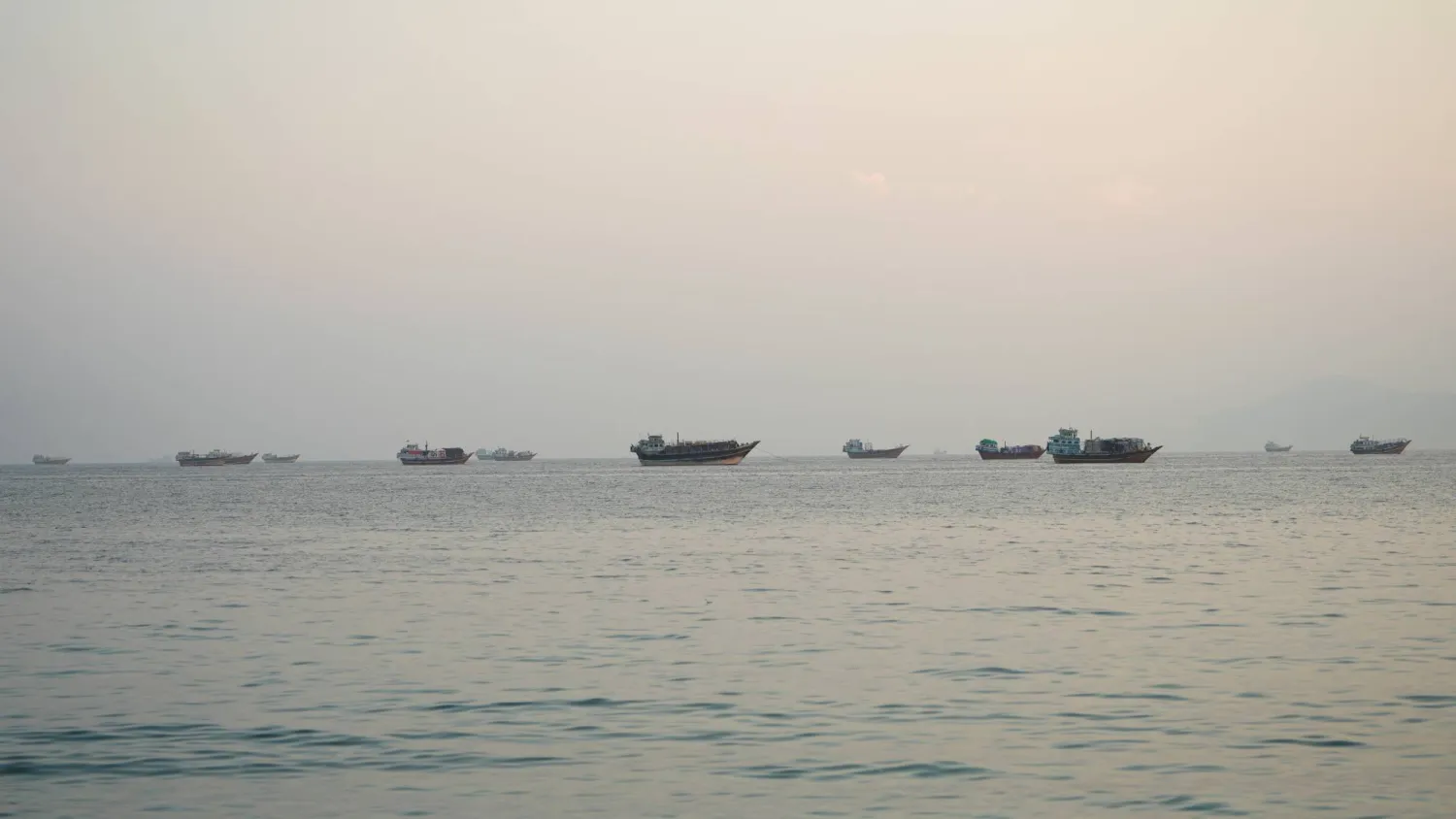
 Vessels at the Strait of Hormuz, as seen from Musandam, Oman, November 3, 2026. (Reuters)
Vessels at the Strait of Hormuz, as seen from Musandam, Oman, November 3, 2026. (Reuters)
TT

Trump Says He Is Highly Unlikely to Order Iran Strikes if Talks Progress

 Vessels at the Strait of Hormuz, as seen from Musandam, Oman, November 3, 2026. (Reuters)
Vessels at the Strait of Hormuz, as seen from Musandam, Oman, November 3, 2026. (Reuters)

US President Donald Trump on Sunday said he was highly unlikely to order fresh attacks on Iran as long as talks to end the conflict progress, even as both countries reported that shipping had been hit in or near the Strait of Hormuz. 

"It depends on whether or not they sign a very strong agreement," Trump told CNN in a phone interview. "The answer is, highly unlikely it's going to be necessary." 

CNN did not specify exactly what it had asked Trump, who also said that if strikes resume, the US has identified potential infrastructure targets, including 38 bridges "that we can knock down in literally one hour." 

Trump had hinted at renewing major attacks on Iran after last week's US midterm elections, but there has been no sign of a large-scale US military operation. Iran has said it would respond by striking US and Israeli targets. 

Iranian media suggested that explosions in southern Iran on Saturday were related to Iranian military activities ‌rather than US strikes. 

Iran's state ‌television said officials had not confirmed any missile strikes on Iranian territory following blasts heard ‌in several ⁠areas, including on ⁠Qeshm Island in the strait. 

Both the US and Iran have continued strikes on vessels in the Strait of Hormuz, however, restricting exports of energy and other commodities vital to the world economy. 

Iran's state television said the evening explosions might be related to Iranian military activity in the waterway, where Iran said two vessels had hit mines and a third had caught fire. 

The US said its air force had disabled a vessel in the Gulf of Oman beyond the strait. 

Tasnim news agency said two missiles had struck Qeshm Island, with no official information on possible damage. Neither Iran nor the US has commented on that report. Washington said on November 2 that it had struck the island in a limited defensive measure against ⁠Iranians using surface-to-air missiles against US assets. 

COMMERCIAL VESSEL, OIL TANKERS HIT 

Since the US and Israel began ‌attacks on Iran in February, Tehran has sought the upper hand by hitting vessels ‌in the Strait of Hormuz to block Gulf energy exports, while US forces began blockading movements to and from Iranian ports in April. 

The US military ‌said on Saturday evening that its air force had fired at the stern of a commercial vessel in the Gulf of Oman, ‌disabling it as it tried to get through the blockade. 

Iran's Revolutionary Guards Navy said two oil tankers had caught fire after hitting mines while attempting to pass through an "unauthorized route" in the Strait of Hormuz. A third tanker had also suffered an explosion and caught fire, the semi-official Fars news agency reported later. 

Reuters was not able to confirm any of the reported strikes. 

Monitors from the United Kingdom Maritime Trade Operations said a bulk carrier and military ‌forces were involved in an incident in the Gulf of Oman, approximately 18 nautical miles east of the United Arab Emirates' city of Khor Fakkan, with damage unknown. It was unclear if ⁠it was related to the reported US ⁠attack. 

Qatar, which has been mediating in talks to try to end the conflict that has shaken the world economy, on Saturday denied reports that the US and Iran had failed to reach a deal. 

The Qatari prime minister had affirmed that both sides were continuing to work toward an agreement, it said. 

Iran has submitted a nuclear proposal to Washington through Qatar, a senior Iranian official told Reuters on Thursday, saying the US was reviewing it but discussions would depend on Washington first meeting Tehran's seven demands. 

These include sanctions relief, access to frozen assets and war reparations, while Washington insists nuclear issues must feature in initial talks. 

On Saturday, the US military said it was launching a task force to crack down on the movement of advanced weapons and other sanctioned material to Iran via its land borders and the Caspian Sea — part of economic measures to try to pressure Tehran. 

The Revolutionary Guards dismissed the plan as "wordplay," saying it would not work because Tehran had made preparations and communicated closely with its neighbors. 


Trump Says Elections Were ‘Giant Step Back in History' for US

 US President Donald Trump speaks to members of the media at President Donald J. Trump International Airport in Palm Beach, Florida, US, November 6, 2026. (Reuters)
US President Donald Trump speaks to members of the media at President Donald J. Trump International Airport in Palm Beach, Florida, US, November 6, 2026. (Reuters)
TT

Trump Says Elections Were ‘Giant Step Back in History' for US

 US President Donald Trump speaks to members of the media at President Donald J. Trump International Airport in Palm Beach, Florida, US, November 6, 2026. (Reuters)
US President Donald Trump speaks to members of the media at President Donald J. Trump International Airport in Palm Beach, Florida, US, November 6, 2026. (Reuters)

President Donald Trump vowed Sunday to bounce back stronger from a massive midterm elections loss that he called a "giant step back in history" for the United States.

Democrats captured both chambers of Congress in last Tuesday's midterms that dealt historic losses for Trump's Republican Party in states they had dominated for decades.

"America took a giant step back in History with the results of the last Election," Trump said in a post on Truth Social, saying that the stock market that had grown during his tenure took a loss after the vote.

"But have no fear, we will be back, BIGGER AND STRONGER THAN EVER BEFORE!"

While Republican lawmakers have been licking their wounds over the setback, Trump has sounded defiant and on Friday appointed hardline advisor Stephen Miller as his new chief of staff, signaling a bare-knuckle fightback.

Democrats have pledged to hold the Trump administration to account and fight "every step of the way" against Miller, architect of Trump's tough immigration policy.