


Properties Linked to Iran’s Supreme Leader Go Up for Sale in London

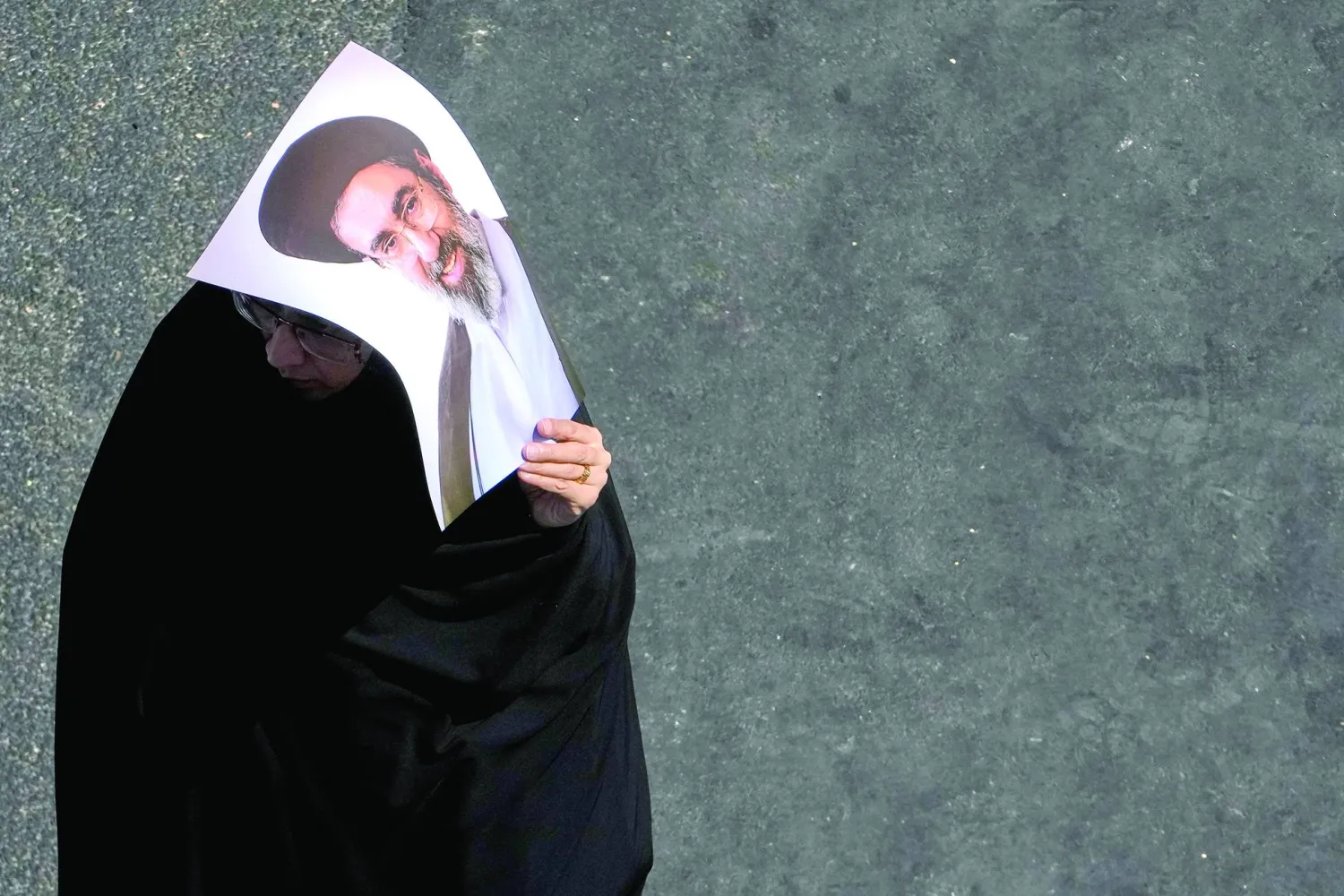
An Iranian woman carries a poster of the Supreme Leader Mojtaba Khamenei at a rally in Tehran, Iran, Tuesday, Aug. 4, 2026. (AP)
TT

Properties Linked to Iran’s Supreme Leader Go Up for Sale in London

An Iranian woman carries a poster of the Supreme Leader Mojtaba Khamenei at a rally in Tehran, Iran, Tuesday, Aug. 4, 2026. (AP)

Two luxury apartments linked to Iran’s Leader Mojtaba Khamenei in London have been put up for sale when an Iranian banker, believed to be the leader’s frontman, defaults on mortgages after being sanctioned by the US, The Sunday Times reported.

The luxury London penthouses, bought by banker Ali Ansari in 2014 and 2016 for a combined £36 million, are located at 3a Palace Green, in an exclusive development overlooking Kensington Palace and close to the official residence of the Prince and Princess of Wales, according to the report.

Mojtaba Khamenei, 56, was appointed Iran’s supreme leader in February after his father and predecessor, Ali, was killed in the opening strikes of the US-Israeli war with Iran on February 28.

Mojtaba has not been seen or heard publicly, rendering his current condition and circumstances unknown.

In July, Ansari, 57, was sanctioned by the US Treasury as Khamenei's “key financier.”

The treasury said that Ansari “oversees a sprawling global network of assets benefiting Iran's leader, Mojtaba Khamenei, and other regime elites.”

The Treasury also accused the Iranian businessman of using numerous shell companies and bank accounts across several jurisdictions to build an overseas portfolio of real estate and commercial interests.

It said the network stretched across Britain, Germany, Luxembourg, Spain, Cyprus and the UAE and alleged that many of the financial interests held in Ansari’s name were ultimately for the benefit of Khamenei, his family, other Iranian elites and the Iranian Revolutionary Guards Corps (IRGC). Ansari denies the accusations.

Britain had sanctioned Ansari in October 2025, imposing an asset freeze, travel ban and director disqualification after accusing him of financially supporting IRGC activities.

The British sanctions came days after Ayandeh, the private bank Ansari’s family set up in Iran more than a decade ago, was dissolved by Iran's central bank due to longstanding debts and regulatory issues.

The state-owned Melli Bank has absorbed the bank’s assets.

Founded in 2012, Ayandeh Bank had a network of 270 branches across the country. But it had been crippled by debt, with accumulated losses amounting to the equivalent of about $5.2 billion and roughly $2.9 billion in debts.

The Sunday Times reported that the British government authorized the two properties to be sold after Ansari defaulted on their mortgages.

Private lenders who financed the purchases have appointed receivers to recover what they are owed. Any money left after the lenders are repaid is expected to be frozen while Ansari remains under sanctions, according to the newspaper.

One of the properties is a five-bedroom duplex that spreads across the sixth and seventh floor. Originally purchased in 2016 for £19 million, it is now being offered for just under £12 million, according to the report.

The second penthouse, spread over the seventh and eighth floors of the same building, was bought for £16.75 million in 2014 and has also entered receivership.

The Sunday Times said since the purchase of both apartments, neither Khamenei nor Ansari have been sighted at the Palace Green development.

Last year, The Sunday Times revealed that Ansari had quietly amassed a property portfolio worth more than £140 million across London's most elite districts, including several properties on The Bishops Avenue in Hampstead, valued at £73 million and a £33.7 million mansion on an exclusive London street.



Trump Expects New Iran Talks Despite Rejecting Deal Offer

Iranian missiles are displayed on a street in Tehran, Iran, September 27, 2026. Majid Asgaripour/WANA (West Asia News Agency) via Reuters
TT

Trump Expects New Iran Talks Despite Rejecting Deal Offer

Iranian missiles are displayed on a street in Tehran, Iran, September 27, 2026. Majid Asgaripour/WANA (West Asia News Agency) via Reuters

US President Donald Trump said Sunday that he expects talks with Iran to resume in the coming week, despite his rejection of a truce proposal put forward by Tehran.

Iranian officials brought with them to the UN General Assembly in New York a plan for a seven-day truce followed by the reopening of the Strait of Hormuz shipping channel.

Trump dismissed the plan and has mused on resuming full-scale air strikes on Iranian targets, but he told the news platform Axios that he expects negotiations to resume.

"They want to make a deal, but it is not the deal that I want to make," Trump told Axios. "It is what we would have maybe agreed to a year ago."

"They overplayed their hand," Trump said, in the interview published Sunday.

Citing sources familiar with the matter, Axios reported that indirect talks between Washington and Tehran could take place as early as Monday.

On Sunday, Iran was still standing by its conditions for reopening the Strait of Hormuz, leaving the Gulf front of the Middle East war locked in a stalemate, while fighting rages in Yemen.

- 'We will not back down' -

Hormuz is a key chokepoint for the world's energy supplies and is now central to the conflict between Washington and Tehran, which was started nearly seven months ago when the US and Israel launched a wave of strikes against Iran.

Iran's plan called for a cessation of all hostilities in the Middle East, including in Lebanon, according to Foreign Minister Abbas Araghchi, and a return to the conditions in an earlier ceasefire deal that fell apart.

That agreement, which collapsed during fighting over Hormuz, called for the release of frozen Iranian assets, the lifting of sanctions on Iranian oil and an end to the US naval blockade.

"Our conditions are clear, and any move toward reopening the Strait of Hormuz is contingent upon these conditions being fulfilled. We will not back down from them," Araghchi said on Sunday, state broadcaster IRIB reported.

"We have never closed the door to diplomacy or negotiations, but at the same time, we have never backed down from our rights."

Washington's ambassador to the UN, Mike Waltz, accused Tehran of demanding too much in exchange for a return to the negotiating table.

"This was, I think, a pretty cynical attempt to put something on the table that they knew was unacceptable. To ask for the release of the blockade, the sanctions, international sanctions and access to billions in assets, just to talk," he told NBC News in an interview broadcast Sunday.

"I think it's kind of common sense that the president doesn't have a lot of confidence this time after we just tried a few months ago."

Iran's Revolutionary Guards meanwhile said that they seized an American submersible drone on Sunday in the Strait of Hormuz.

It said the underwater vehicle was being used "for espionage purposes", adding that it was "now in the hands of the force's specialists for data recovery".

- 'Tool for pressure' -

Washington and Tehran signed a memorandum of understanding in June aimed at ending the war, reopening the strait and launching talks on Iran's nuclear program.

But the deal broke down shortly afterwards when Iran fired on commercial ships in Hormuz that it accused of deviating from its approved route through the waterway.

Iran requires ships to obtain authorization before passage, citing security and sovereignty reasons.

Ships that refuse to comply are regularly targeted, while the United States sporadically bombs Iranian coastal areas in retaliation.

Araghchi said at the UN that Iran has conveyed to the United States, through Qatar, a concrete seven-day plan, adding: "The choice now rests with the United States."

Hossein Mohebi, a spokesman for Iran's Revolutionary Guards, was quoted by Tasnim news agency as saying: "We will not cease punishing the US until Iran's seven conditions are met."

Mohebi had told AFP in an exclusive interview on Tuesday that ending hostilities in Yemen was also among Tehran's demands.


Iran Insists on Diplomatic Solution after Trump Rejects Peace Plan

Iranians walk near an anti-Trump billboard in Tehran, Iran, 19 August 2026. EPA/ABEDIN TAHERKENAREH
TT

Iran Insists on Diplomatic Solution after Trump Rejects Peace Plan

Iranians walk near an anti-Trump billboard in Tehran, Iran, 19 August 2026. EPA/ABEDIN TAHERKENAREH

Iran on Sunday insisted that only diplomacy can solve its conflict with the United States and Israel after US President Donald Trump said he rejected an Iranian proposal to reopen the Strait of Hormuz and end fighting.

"Our conditions are clear, and any move toward reopening the Strait of Hormuz is contingent on these conditions being met," Iranian Foreign Minister Abbas Araghchi posted on social media. "Only a negotiated solution can get them out of this deadlock."

Iran announced a peace proposal last week at the UN General Assembly in New York, saying it had been transmitted to the Americans via Qatari mediators. Trump said on Saturday he rejected the plan and argued that desperation was driving the Iranians’ push for an agreement on the key waterway.

"They want to make a deal to open ‌the Hormuz Strait immediately ‌because they're losing so badly," Trump told reporters at the White House.

Despite Trump's public ‌statements, ⁠mediators facilitating Iran's talks ⁠with the United States have not officially relayed a US rejection of the plan, according to Araghchi.

"We are waiting for the mediators to convey the definitive views to us, and we will make a decision based on them," Araghchi posted.

The US has imposed an economic blockade on Iran to put pressure on Tehran to stop Iranian attacks on vessels in the Strait of Hormuz, which have drastically reduced shipping through the area even as Trump repeatedly asserts that the US controls the waterway.

The Wall Street Journal first reported that Trump had rejected the Iranian proposal, citing unnamed US officials.

It said Trump was privately skeptical that Iran ⁠would meet his demands and had told his staff that he sees a renewed bombing campaign ‌as likely after the November US midterm elections.

A US official had said ‌earlier that discussions with Iran through mediators were "positive and constructive".

CONFLICT HAS DISRUPTED OIL FLOWS, HARMED GLOBAL ECONOMY

Araghchi told reporters at the United Nations on Friday the proposed deal would trigger a seven-day countdown to reopening the strait and a pause in regional fighting.

"If there is seriousness on the US side to come to a deal and reopen the Strait of Hormuz, everything is now prepared," Araghchi said. If the US were to agree, ‌the warring parties could start wider talks "on mutually agreed subjects."

That could potentially include discussions of Iran's nuclear program. Trump has said Tehran must never acquire a nuclear bomb, while ⁠a senior Iranian official ⁠told Reuters that Iran would show no flexibility over its nuclear program even if the US accepted its peace deal.

Iran would grant no concessions over its rights, including enriching uranium or shipping its highly enriched uranium out of the country, the official said.

Iranian President Masoud Pezeshkian, in an interview with the CBS show "Face the Nation", said Tehran was ready for talks on its nuclear program and other issues, but would not accept "bullying or coercion".

"Iran is not seeking war, but will defend itself against pressure, threats and attacks,” Pezeshkian said, adding that it had already agreed that "we're not supposed to develop nuclear weapons".

Previous attempts at diplomacy have failed to end the war, which began on February 28 with US and Israeli attacks.

Since then the war has alternated between pauses and renewed strikes, killing thousands while degrading the conventional forces of Iran and damaging its already ailing economy.


Russia Says It Struck Military Infrastructure, Vessel in Ukraine

In this photo provided by the Ukrainian Emergency Service, an emergency services personnel works to extinguish a fire following a Russian air attack in Odesa, Ukraine, Thursday, Sept. 17, 2026. (Ukrainian Emergency Service via AP)
TT

Russia Says It Struck Military Infrastructure, Vessel in Ukraine

In this photo provided by the Ukrainian Emergency Service, an emergency services personnel works to extinguish a fire following a Russian air attack in Odesa, Ukraine, Thursday, Sept. 17, 2026. (Ukrainian Emergency Service via AP)

The Russian defense ministry said on Sunday its forces had carried out overnight drone strikes on logistics centers, port and transport infrastructure, as well as ‌communications centers ‌and vessels ‌that ⁠Moscow said were linked to ⁠the Ukrainian military.

The ministry said the strikes hit a data center in ⁠Kyiv, logistic hubs in the ‌Kyiv ‌and Odesa regions, ‌two drone storages in ‌Mykolaiv, headquarters of a naval base as well as of ‌the State Border Guard Service of Ukraine and ⁠four ⁠military storages in the Kiliya port, and a cargo ship carrying military and dual-use goods to the port of Odesa.

Reuters could not independently verify the claims.