South Korea's Expanded Espionage Law Takes Effect amid Push to Protect Chip Technology

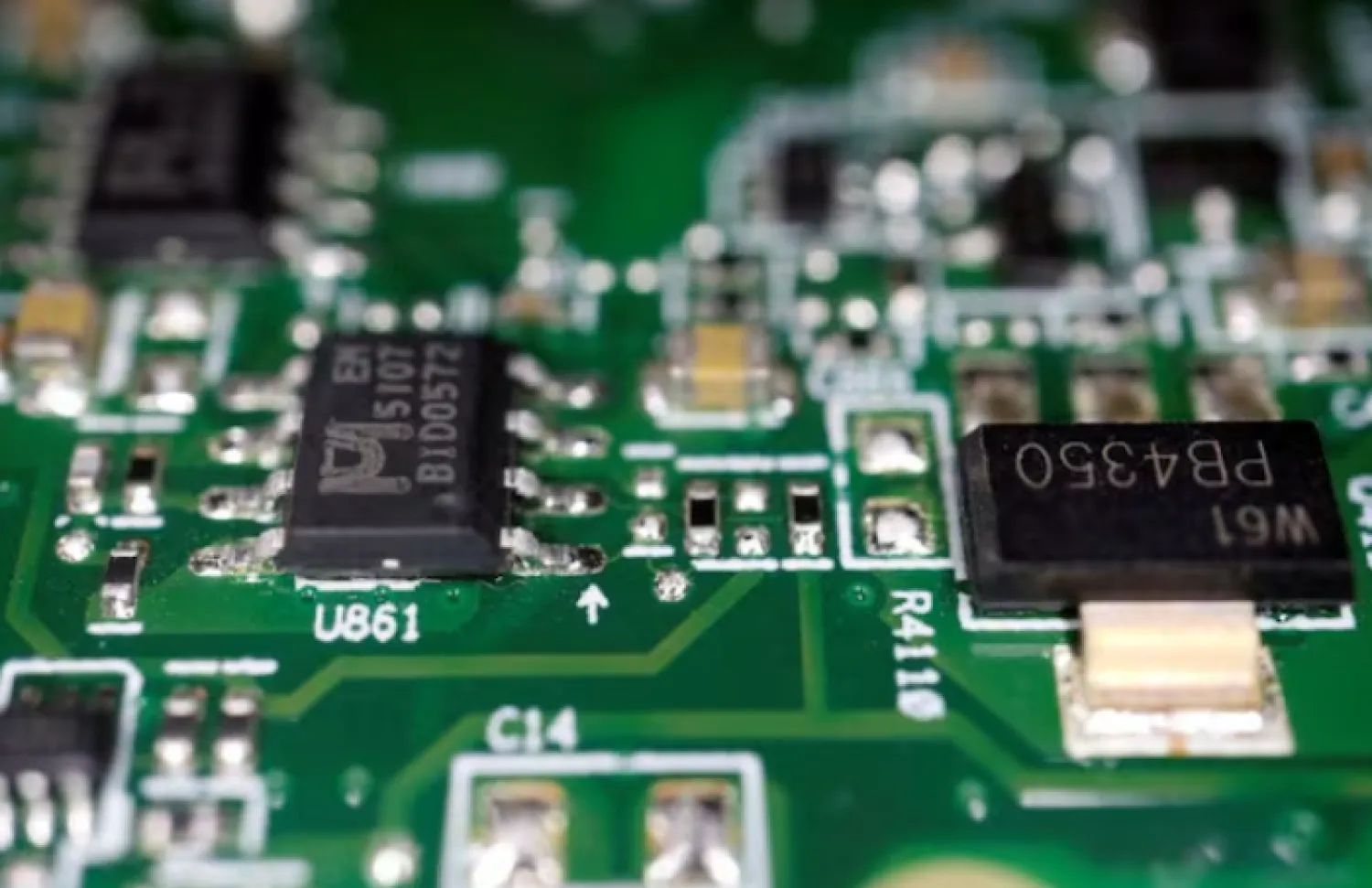
Semiconductor chips are seen on a printed circuit board in this illustration picture taken February 17, 2023. REUTERS/Florence Lo/Illustration
TT

South Korea's Expanded Espionage Law Takes Effect amid Push to Protect Chip Technology

Semiconductor chips are seen on a printed circuit board in this illustration picture taken February 17, 2023. REUTERS/Florence Lo/Illustration

South Korea's expanded espionage law ‌takes effect on Sunday, broadening espionage offences beyond acts involving North Korea to include all foreign countries as Seoul seeks to protect key technologies amid intensifying competition in semiconductors and other strategic industries.

Here are more details:

* The National Assembly passed the revised Criminal Act on February 26 after years of criticism that existing laws were ill-suited to punish technology and industrial espionage involving non-North Korean actors.

* The amendment creates a new offence covering espionage for a foreign country or equivalent organization, carrying a ‌minimum sentence of three ‌years in prison. Existing provisions for espionage ‌benefiting ⁠an "enemy state" remain ⁠in place.

* Under the previous law, espionage charges generally applied only to acts benefiting North Korea, forcing prosecutors in many cases involving foreign governments or companies to rely on other industrial technology or trade-secret laws.

* The National Intelligence Service welcomed the amendment when it was passed, saying it would strengthen South ⁠Korea's ability to prevent leaks of strategic technologies ‌such as semiconductors, displays, batteries and ‌AI.

* Legal and security experts cited the change as closing a longstanding ‌loophole that often left advanced industrial technology leak cases subject ‌to lighter penalties, with supporters arguing it will strengthen deterrence against industrial espionage.

* The amendment was promulgated on March 12 and takes effect after a six-month grace period on September 13.

* The change follows ‌high-profile technology leak cases, including the indictment last year of five former Samsung Electronics employees accused ⁠of transferring ⁠key dynamic random-access memory (DRAM) chip technology to Chinese memory maker CXMT. Samsung and CXMT did not comment at the time.

* Asked whether the law, which does not specify any country, could be seen as targeting Beijing, Chinese foreign ministry spokesperson Mao Ning said China requires its enterprises to conduct international cooperation in accordance with international rules and laws. "At the same time, to this end, we believe that all countries should safeguard the normal investment and business activities of enterprises and provide a fair, just, and non-discriminatory business environment," Mao told a regular news briefing on Friday.


Reports: 10 Dead in Crash Between 2 Spanish Trains in Toledo Province

Two people sit below an information screen with a message stating that the high-speed train line between Madrid and Andalucia has been interrupted following the collision of two high-speed trains between the towns of Mora and Orgaz, at the Atocha train station in Madrid, Spain, October 28, 2026. (Reuters)
TT

Reports: 10 Dead in Crash Between 2 Spanish Trains in Toledo Province

Two people sit below an information screen with a message stating that the high-speed train line between Madrid and Andalucia has been interrupted following the collision of two high-speed trains between the towns of Mora and Orgaz, at the Atocha train station in Madrid, Spain, October 28, 2026. (Reuters)

Spain’s state-owned news agency and other local media say at least 10 people have died in a crash between two trains in central Spain.

Spain’s rail system operator ADIF said the crash occurred Wednesday morning in the province of Toledo. Rail service is suspended between Madrid, Ciudad Real and Andalusia.

TVE is reporting that the accident was between two high-speed trains heading in the same direction and that one ran into the tail of the other, knocking two of its cars off the track.

The mayor of the nearby town of Urda, Manuel Galán, told Spanish state broadcaster TVE that passengers had been injured and that civil protection authorities had asked his town hall to prepare a sports pavilion to attend to passengers.

The mayor of another nearby village, Jesús Pérez of Los Yébenes, told TVE that it appeared that the accident was "serious.”

The regional president of Castilla La Mancha, Emiliano García-Page, wrote on X that he is on his way to the crash site.

In January, 45 people died in southern Spain when a train jumped the track and hit an oncoming train. The crash was the deadliest in Spain since a 2013 crash that killed 80 people. The January incident shook the confidence the European country has in its extensive high-speed rail network.


Palestinian Activist Khalil Returns to Columbia After US Detention

 Algerian-Palestinian activist Mahmoud Khalil is pictured during an interview with AFP in New York on October 26, 2026. (AFP)
Algerian-Palestinian activist Mahmoud Khalil is pictured during an interview with AFP in New York on October 26, 2026. (AFP)
TT

Palestinian Activist Khalil Returns to Columbia After US Detention

 Algerian-Palestinian activist Mahmoud Khalil is pictured during an interview with AFP in New York on October 26, 2026. (AFP)
Algerian-Palestinian activist Mahmoud Khalil is pictured during an interview with AFP in New York on October 26, 2026. (AFP)

Mahmoud Khalil, a figurehead of Gaza war protests in the United States, returned Tuesday to Columbia University for the first time since his 2025 arrest under President Donald Trump's crackdown on pro-Palestinian activists.

The 31-year-old told AFP his presence for an event on his new memoir, attended by around 100 people, was a "victory," as he accused Columbia of seeking "to erase me, to erase any Palestinian voices on campus."

He has slammed the Ivy League institution for its response to the 2024 student demonstrations, which included allowing New York police to clear protesters from its Manhattan campus in a heavy-handed operation.

Columbia said at the time the protests were a safety threat.

Khalil has also accused the university of failing to protect him from harassment ahead of his arrest by US immigration authorities and three-month detention without criminal charge, before his release in June 2025.

"Columbia could have been an example for how to have difficult conversations on campus, how to respond to such a protest, how to be aligned with human rights and with international law," Khalil told AFP in an interview.

"They chose the total opposite. They chose brutality. They chose repression," he said.

Some Jewish groups on social media had opposed Khalil's return. A spokesperson for Columbia said the college is "committed to rigorous debate, inquiry, and respectful dialogue across differing perspectives."

"Columbia supports the right of faculty members to organize academic events. An invitation to speak does not signify university endorsement of a speaker's views," they said in a statement carried by US media.


Local Ukraine Ceasefire Holds for Second Day

 A woman walks on a sidewalk beneath anti-drone nets stretched over a street during a local ceasefire related to evacuation efforts in Oleshky, in Kherson, Ukraine, Tuesday, Oct. 27, 2026. (AP)
A woman walks on a sidewalk beneath anti-drone nets stretched over a street during a local ceasefire related to evacuation efforts in Oleshky, in Kherson, Ukraine, Tuesday, Oct. 27, 2026. (AP)
TT

Local Ukraine Ceasefire Holds for Second Day

 A woman walks on a sidewalk beneath anti-drone nets stretched over a street during a local ceasefire related to evacuation efforts in Oleshky, in Kherson, Ukraine, Tuesday, Oct. 27, 2026. (AP)
A woman walks on a sidewalk beneath anti-drone nets stretched over a street during a local ceasefire related to evacuation efforts in Oleshky, in Kherson, Ukraine, Tuesday, Oct. 27, 2026. (AP)

A US-brokered local ceasefire in southern Ukraine was holding for a second day, both sides said on Wednesday, as hopes grew that vital food and medicine would be able to reach stranded residents.

Locals in the city of Oleshky, under Russian occupation in Ukraine's southern Kherson region, have faced food, water and medicine shortages for months, caught in the crossfire between both sides.

Some of the estimated 2,000 still there had resorted to hunting and eating pigeons, former residents who are still in touch with those in the city told AFP.

The human rights ombudsmen of both Russia and Ukraine said Wednesday that the truce, which came into effect early Tuesday morning, was still holding.

"30 hours of the ceasefire in Oleshky have passed without a single incident," said Ukraine's Dmytro Lubinets.

"No incidents have been recorded in the 30 hours of the ceasefire in Oleshky," Russia's Yana Lantratova said in a similarly worded statement.

The planned truce was announced by US First Lady Melania Trump after months of mounting international concern over the fate of residents in the city.

It remains unclear how many citizens will choose to leave, or what route they will have to take.

Crossing the frontline -- marked by the Dnipro river -- is all but impossible, and Russian-installed officials have indicated they could have to travel through Russian-occupied Crimea.

Russian officials said most of those who wanted to flee had already done so.

A senior Ukrainian official also told AFP that many people in the city wanted to stay, so the ceasefire operation was designed to allow humanitarian supplies into the city.

Oleshky was captured by Russian forces as the start of their 2022 invasion.

David Arakhamia, a Ukrainian lawmaker who took part in peace negotiations with Russia in 2022, described the ceasefire as the "biggest de-escalation since 2022".

Previous short-lived truces in the war -- such as to mark Orthodox Easter -- have seen drop-offs in aerial attacks but been marred by accusations of widespread violations by both sides.