Qatari Mediators Press Peace Deal between US and Iran

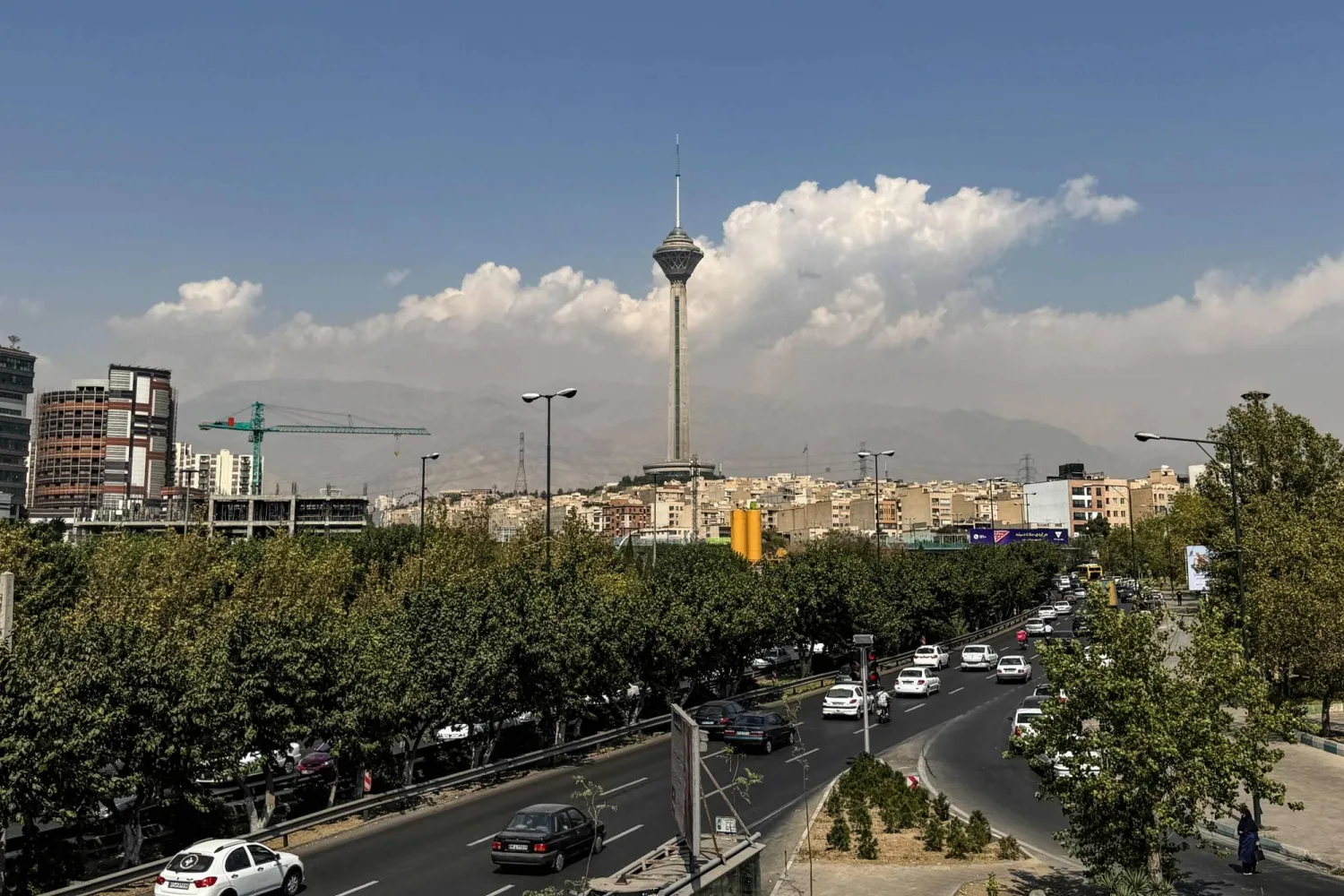
This photo shows a general view of Milad Tower in Tehran on September 27, 2026. (AFP)
TT

Qatari Mediators Press Peace Deal between US and Iran

This photo shows a general view of Milad Tower in Tehran on September 27, 2026. (AFP)

Qatar said on Tuesday it hopes that shuttle diplomacy between Iran and the US can lead to a breakthrough despite US President Donald Trump's denial of media reports that he was willing to ease sanctions and release frozen funds in exchange for Iranian concessions on its nuclear program.

"We are exchanging messages between the parties, and we're working towards establishing a common ground in order to get into a deal that would save all of us from the repercussions of the conflict," Qatari Foreign Ministry spokesperson Majed al-Ansari told reporters.

The US and Iran have failed to find an off-ramp from their war, now in its eighth month. Negotiations appeared to intensify during last week's UN General Assembly meeting in New York, but have so far not yielded any agreement ‌to reopen the Strait ‌of Hormuz.

US and Iranian officials spoke separately with Qatari mediators on Monday. It was unclear if another exchange took place on Tuesday.

Trump repeated his position that Iran must not obtain a nuclear weapon and that the war would be over soon.

The conflict has degraded Iran's conventional forces and damaged its already ailing economy, but Tehran has fought back with missile and drone strikes on US allies in the Gulf and by restricting oil tanker traffic in the strategic Strait of Hormuz, which has pushed up world energy prices.

"I don't know if they are going to give up yet but they'll give up," Trump told ⁠reporters on Tuesday.

"They are doing very poorly," he added.

On Monday night, Trump took to ‌social media to deny reports by Axios and CNN, citing unidentified US ‌officials, that Trump was willing to give Iran sanctions relief and release frozen Iranian funds as part of a final deal on the condition ‌that Iran showed "concrete progress" on the nuclear issue.

"This is untrue. I offered them NOTHING," Trump wrote on Truth Social.

Trump has cited ‌preventing Tehran from acquiring a nuclear bomb as a central goal of the war, along with ending its ability to attack its neighbors and creating conditions for Iranians to topple their leadership.

Iran does not have nuclear weapons and denies it wants to develop them, but argues it has the right to a nuclear program for civilian purposes.

Iranian President Masoud Pezeshkian, in an interview with the CBS show "Face the Nation" that ‌aired on Sunday, said Tehran was ready for talks on its nuclear program and other issues, but would not accept "bullying or coercion."

IRANIAN PEACE PROPOSAL

At the United Nations General Assembly ⁠last week, Iran floated a peace ⁠proposal that would trigger a seven-day countdown to reopening the strait and a pause in fighting.

Trump on Saturday rejected the plan although Iranian Foreign Minister Abbas Araghchi said on Sunday that Washington had not officially relayed a US rejection through mediators.

The war has killed thousands of people and severely disrupted global energy supplies, fueling inflation.

Oil prices settled 2.5% lower on Tuesday as investors focused on signs of recovering crude exports from the Middle East, but prices were still on track for monthly gains on lingering concern about supply disruptions.

The US government on Tuesday offered to loan energy companies up to 40 million barrels of oil from the Strategic Petroleum Reserve, the last US batch of crude from a global deal to unleash reserves in the wake of the Iran war.

The United States also stepped up its economic pressure on Iran, sanctioning 10 individuals and entities, including some based in China, Hong Kong and Pakistan, saying they helped Iran procure weapons and components.


Powerful Earthquake in China’s Tibet Region Collapses Hundreds of Homes, Kills at Least 16 People

 In this photo released by Xinhua News Agency, firefighters inspect an earthquake-hit village houses in Baqen County of Nagqu City in China's Tibet autonomous region, on Friday, Oct. 23, 2026. (Xinhua via AP)
In this photo released by Xinhua News Agency, firefighters inspect an earthquake-hit village houses in Baqen County of Nagqu City in China's Tibet autonomous region, on Friday, Oct. 23, 2026. (Xinhua via AP)
TT

Powerful Earthquake in China’s Tibet Region Collapses Hundreds of Homes, Kills at Least 16 People

 In this photo released by Xinhua News Agency, firefighters inspect an earthquake-hit village houses in Baqen County of Nagqu City in China's Tibet autonomous region, on Friday, Oct. 23, 2026. (Xinhua via AP)
In this photo released by Xinhua News Agency, firefighters inspect an earthquake-hit village houses in Baqen County of Nagqu City in China's Tibet autonomous region, on Friday, Oct. 23, 2026. (Xinhua via AP)

A magnitude 7 earthquake hit China's Tibet region on Thursday evening, killing at least 16 people, injuring 54 and collapsing hundreds of homes in the northern regional city of Nagqu, official media said.

Search and rescue efforts continued following the collapse of at least 339 homes and 20 livestock sheds, the Nagqu media office said, citing city government officials.

More than 1,600 people from the local county were deployed for rescue efforts. Supplies including 1,000 prefabricated housing units, around 3,000 tents and folding beds, as well as flashlights and winter clothing arrived in the region.

The US Geological Survey said the quake occurred at 10:33 p.m. local time, with its epicenter 191 kilometers (119 miles) east-northeast of Nagqu, in a sparsely populated, high-altitude area of northern Tibet. It put the earthquake’s depth at 18 kilometers (11 miles).

The US agency recorded at least seven aftershocks with magnitude between 4.3 and 5.2, all of them with a depth of 10 kilometers (6 miles) , according to its website

China’s official news agency Xinhua said on Friday that communication in some areas hit by the quake was down. Local railway authorities have taken emergency actions to halt trains passing through the region.

The earthquake also caused rockfalls that have forced local authorities to close a section of National Highway 317, allowing only emergency, rescue and official support vehicles through as crews worked to clear debris, according to Xinhua.

Intermittent snows are expected in the earthquake region over the next three days, Xinhua said.

It was the biggest earthquake in the region in the last five years, China's national broadcaster CCTV said.

Chinese President Xi Jinping called for all-out efforts in rescue operations and medical relief work.


South Korea Proposes Talks with North Korea on Land Border Again

In a photo taken on December 3, 2018 a South Korean soldier stands before the Military Demarcation Line (MDL) separating North and South Korea, on the southern side of the Demilitarized Zone (DMZ) in South Korea's Cheorwon county. (AFP)
TT

South Korea Proposes Talks with North Korea on Land Border Again

In a photo taken on December 3, 2018 a South Korean soldier stands before the Military Demarcation Line (MDL) separating North and South Korea, on the southern side of the Demilitarized Zone (DMZ) in South Korea's Cheorwon county. (AFP)

South Korea's defense ministry again proposed on Friday military talks with North Korea in order to agree on the exact location of the land border between the two Koreas and to reduce the ‌risk of accidental ‌clashes.

The proposal, announced ‌by ⁠Deputy Minister for ⁠National Defense Policy Kim Hong-cheol, follows a landmine explosion in the demilitarized zone (DMZ) last month that injured South Korean soldiers.

North Korean troops have been ⁠building tactical roads and fences ‌and ‌laying mines near the Military Demarcation ‌Line (MDL) in the DMZ separating ‌the two Koreas in recent years.

Kim said the North's troops had crossed the line in ‌the process.

The ministry proposed talks last November to resolve differences ⁠over ⁠where the line lies, but Pyongyang has not responded.

South Korean military had concluded that North Korea had buried the mines south of the MDL that caused the blast that seriously injured two South Korean soldiers in September. Pyongyang has rejected those findings.


Netanyahu’s Somalia Map Revives Fears of Partition

From the Somali capital, Mogadishu (Reuters)
TT

Netanyahu’s Somalia Map Revives Fears of Partition

From the Somali capital, Mogadishu (Reuters)

A map unveiled by Israeli Prime Minister Benjamin Netanyahu has sparked outrage in Somalia, which accused him of undermining its sovereignty and territorial integrity by depicting Puntland and Somaliland as separate states.

The map has reignited fears of partition in a country already grappling with deep divisions. Puntland remains at odds with the federal government, while Israel recognized the breakaway region of Somaliland several months ago.

Somalia rejects the map

Somalia's federal government "categorically rejected" what it called a "misleading map" displayed during Netanyahu's news conference on Sunday, saying it portrayed the country as fragmented.

It condemned the move as "a flagrant violation of Somalia's sovereignty, territorial integrity and internationally recognized borders."

In a statement issued by the Information Ministry on Wednesday evening, the government reaffirmed its unwavering commitment to national sovereignty and the unity of its territory and people.

It stressed that Somaliland and Puntland remain "integral and inseparable parts of the unified, sovereign Somali state."

The government warned that any attempt by foreign officials or outside parties to redraw Somalia's political map, misrepresent its borders or undermine its territorial unity would constitute a direct violation of international law and diplomatic norms.

It urged the international community and its partners to respect Somalia's independence and territorial integrity, pledging to uphold its constitutional duty to defend the country's sovereignty and national unity.

Netanyahu displayed the map, titled "Geopolitical Alliances in the Middle East," during an Israeli national security briefing on Oct. 18. It placed Puntland and Somaliland in geopolitical categories linked to Israel.

For Mogadishu, the controversy goes beyond the map itself.

Abdulwali Jama Barre, an African affairs expert and co-founder of the Somali Academy of Leadership and Global Affairs, said the government's response underscored its determination to preserve Somalia's unity and reject any treatment of its regions as independent states.

But Barre drew a distinction between the map's depiction and formal recognition of independence.

"Showing Somali territories under separate geopolitical classifications does not, in itself, mean the map formally declared them independent states," he told Asharq Al-Awsat.

"However, the Somali government viewed the depiction as fragmenting the country's political map and undermining its internationally recognized borders."

Barre said the dispute carried particular weight given Somaliland's contested political status, its ties with Israel and fears in Mogadishu that foreign involvement could weaken Somalia's unity.

The deeper concern, he said, is that foreign powers could increasingly treat Somali regions as entities separate from the federal state.

That risk would grow if symbolic gestures were followed by concrete steps or new formal arrangements amid the country's existing political disputes, he added.

Deep divisions

Somaliland's strategic location adds another dimension to the dispute.

The breakaway region stretches along 740 kilometers of the Gulf of Aden coastline, occupying a key position at the junction of the Indian Ocean and the Red Sea in the Horn of Africa. It is also home to the strategically important Port of Berbera.

Since breaking away from Somalia in 1991, Somaliland had failed to secure international recognition until Israel recognized it, a decision Mogadishu firmly rejects, with Arab countries backing its position.

The map controversy comes as tensions between Somalia's federal government and Puntland remain unresolved.

In May, Puntland President Said Abdullahi Deni declared that he no longer recognized Hassan Sheikh Mohamud as Somalia's legitimate president, accusing him of illegally abusing his presidential powers.

Deni called for an urgent gathering of Somalia's political parties to agree on an inclusive electoral process.

The dispute is part of a broader rift between Puntland and Mogadishu. Over the past year, the regional administration has repeatedly challenged Mohamud's positions and refused dialogue with him.

Deni has also joined the opposition Somali Future Council, which is demanding the government's departure.

At the time, Somalia's federal Interior Minister Ali Yusuf Ali, known as Hosh, sharply criticized Deni, calling him "an obstacle to the state, the country's unity and its development."

Barre warned that such internal divisions must be addressed through constitutional and political dialogue to prevent disputes between Mogadishu and regional administrations, particularly Puntland, from becoming an arena for foreign competition.

He urged Mogadishu to pursue diplomatic action on several fronts, beginning with a formal protest to Israel and a request for clarification about the map and the circumstances in which it was presented.

Somalia should also raise the matter with the United Nations, African Union, Arab League and Organization of Islamic Cooperation, seeking assurances of respect for its sovereignty and territorial integrity, he said.

At home, Barre stressed the need for renewed dialogue between the federal government and regional administrations, especially Puntland, to resolve their differences within an agreed constitutional framework.