G20 Trade Officials Meet under Shadow of Tariffs, Overcapacity

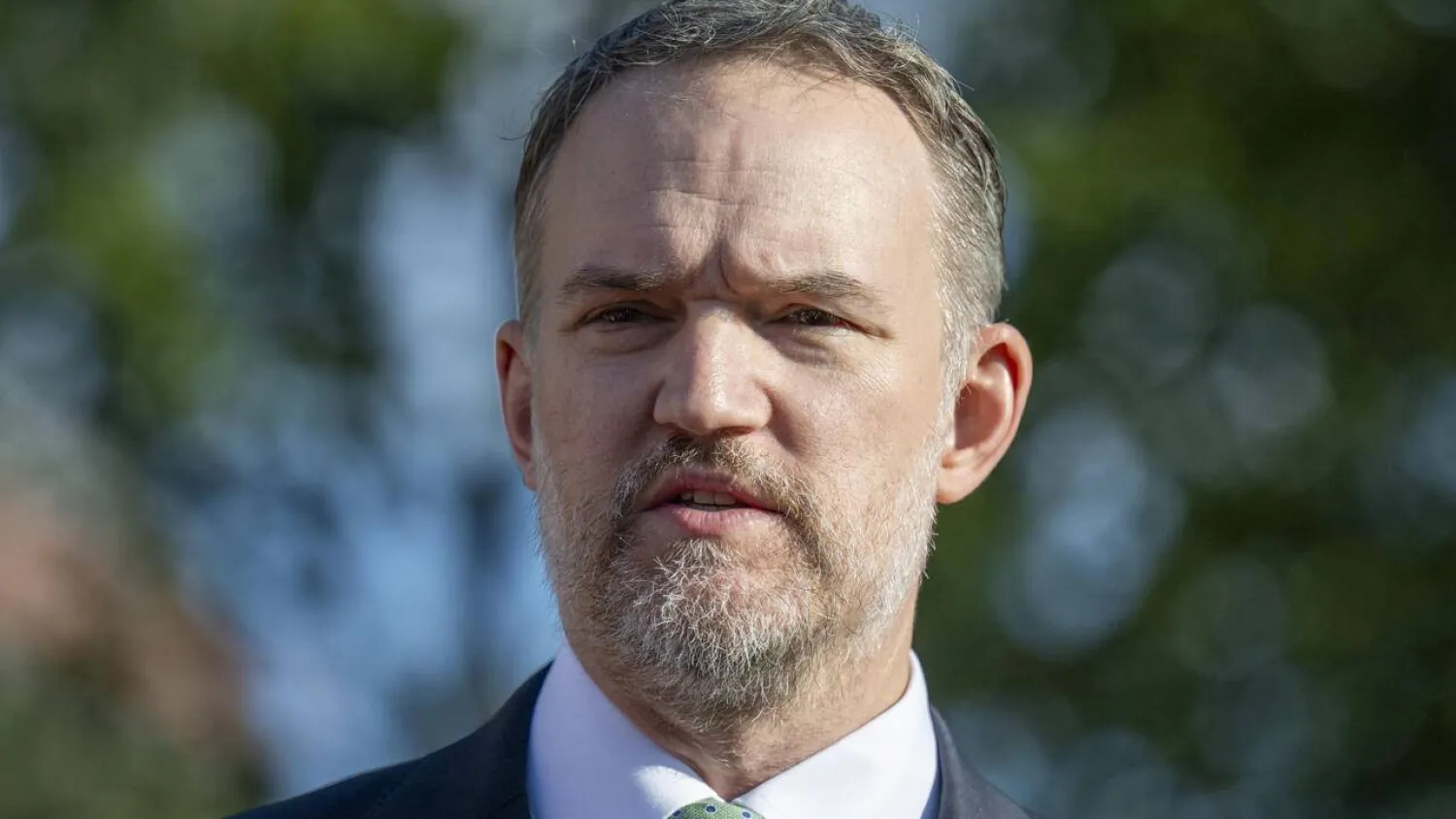
US Trade Representative Jamieson Greer is hosting counterparts from G20 countries in Milwaukee for two days of talks. Jim WATSON / AFP/File
TT

G20 Trade Officials Meet under Shadow of Tariffs, Overcapacity

US Trade Representative Jamieson Greer is hosting counterparts from G20 countries in Milwaukee for two days of talks. Jim WATSON / AFP/File

G20 trade ministers are set to open talks Wednesday in the United States, in meetings strained by President Donald Trump's tariffs as Washington targets partners regarding forced labor and overcapacity.

The gathering of officials from the Group of 20 major economies -- which includes China, India, Russia, Japan, Germany and France -- takes place in the Midwestern city of Milwaukee.

But analysts expect the two days of talks to be deadlocked as Trump's tariffs weigh on relationships while China rejects concerns about its exports, which critics see as driven by excess industrial capacity.

US Trade Representative Jamieson Greer defended Washington's approach at a Tuesday roundtable in Milwaukee, saying the administration "is not anti-trade."

He added that countries are facing similar challenges with global overcapacity and "non-market policies."

This week, key US trading partners like Canada and the European Union are also expected to push for deeper trade ties outside the United States.

"Don't expect any breakthroughs in Milwaukee," Josh Lipsky of the Atlantic Council think tank told AFP, noting Trump's preference for bilateral negotiations.

Even as G20 partners will be anxious to find ways to cooperate with the world's biggest economy, "they will also be under pressure to voice their concerns with tariffs," added former US trade official Wendy Cutler, now at the Asia Society Policy Institute.

The United States holds the rotating presidency of the G20, which comprises 19 nations plus the EU and the African Union.

- 'Unfairly targeted' -

Trump has unleashed a barrage of tariffs on trading partners since last year, separately targeting sectors like steel and autos.

Although the Supreme Court struck down Trump's country-specific tariffs in February, Washington has since alleged insufficient action against forced labor to slap new tariffs on 60 economies.

These include China, India and the EU.

The president's sectoral duties remain intact too, straining ties.

And Washington is investigating 16 partners over excess industrial capacity, a complaint commonly levied at China. Critics say this floods markets, unfairly suppressing prices.

But ongoing US probes go beyond the world's number two economy, bringing the threat of more tariffs to the EU and G20 countries like Japan and South Korea.

Cutler expects some countries will "mince no words" regarding the investigation, feeling "they are being unfairly targeted."

China "will continue to deny the issue of exporting overproduction," by trying to convince others that it is doing good by providing high-quality and low-priced goods, she said.

"This will be a hard sell," Cutler told AFP, as countries see employment and commercial fallout from waves of Chinese imports.

"Meanwhile, members are wondering how much they should agree to with the Trump administration, given trade policy could change in the US after 2028," Lipsky said, referring to the next US presidential election.

- Diversifying -

With Trump's trade wars, all eyes are on G20 members' efforts to deepen trade ties outside the US, or strike deals with his administration.

Canada and the EU are expected to try and boost trade and investment with others, as a spat between Ottawa and Washington intensifies.

Canada's international trade minister Maninder Sidhu stressed Ottawa's support for "open, predictable and rules-based trade."

He plans to speak with partners to "reinforce a multilateral trading system," as officials try to diversify an economy they see as too reliant on an increasingly protectionist United States.

Others like India could finalize a long-awaited trade deal with the United States. Observers are also monitoring for signs of further pressure on Iran.

Outside the G20, workers and activists are protesting what they see as the Trump administration's broken promises to improve conditions for workers, farmers and smaller businesses.

John Drew, who chairs the political arm of the United Auto Workers union in Wisconsin, laments the loss of manufacturing jobs in the state.

While the UAW does not rule out using targeted duties to protect jobs, he said, Trump's sweeping "use of tariffs has done nothing to bring back jobs and rebuild manufacturing."


Army Spokesman: Iranian Forces 'Stronger' Than at Beginning of War

Iranian Army spokesman Mohammad Akraminia (Daneshjoo file photo)
TT

Army Spokesman: Iranian Forces 'Stronger' Than at Beginning of War

Iranian Army spokesman Mohammad Akraminia (Daneshjoo file photo)

Iran's military is "stronger" and more motivated than it was when the United States and Israel started the war in February, Iranian state media reported on Saturday, citing an army spokesman.

"Today, the Islamic Republic's armed forces... having gained experience from direct confrontation with the United States and the Israeli regime, are on higher alert and are stronger than they were at the beginning of the war," Mohammad Akraminia said, according to the state news agency IRNA.

"They now possess greater motivation, commitment, and self-confidence."

The war, which began when the United States and Israel carried out a massive wave of strikes in late February, has been deadlocked for months.

Tehran has sought to limit traffic through the Strait of Hormuz, which normally carries about one-fifth of global oil consumption.

According to AFP, Akraminia said that Iranian armed forces retained control over the strategic waterway and that it would remain closed until the United States accepted Tehran's demands.

"Under the order of the Supreme Leader, the response of the armed forces will be immediate, effective, and without geographical limitations," he added.

US President Donald Trump this week confirmed new strikes on Iran, after American media reported attacks on Iran's Qeshm Island in the Strait of Hormuz.

On Saturday, the local Tasnim news agency reported that two missiles had struck Qeshm, adding that there was no official information so far on the damage.

Iranian state television reported two explosions on the island.

The Iranian army said early Saturday that its air defenses had "struck and destroyed" a US drone that was flying over the island, according to state media. It did not say whether the island was attacked.


US Military Carries Out New Targeted Strikes on Iran

A banner depicting US President Donald Trump, Israeli Prime Minister Benjamin Netanyahu, US Vice President JD Vance and US Special Envoy Steve Witkoff is displayed as a woman walks on a street in Tehran, Iran, November 4, 2026. Majid Asgaripour/WANA (West Asia News Agency) via REUTERS
TT

US Military Carries Out New Targeted Strikes on Iran

A banner depicting US President Donald Trump, Israeli Prime Minister Benjamin Netanyahu, US Vice President JD Vance and US Special Envoy Steve Witkoff is displayed as a woman walks on a street in Tehran, Iran, November 4, 2026. Majid Asgaripour/WANA (West Asia News Agency) via REUTERS

President Donald Trump said the US military on Friday carried out new limited strikes on Iran, targeting an Iranian air defense system.

Iranian state media reported the sound of two explosions in the Suza area of Qeshm Island, which is in the crucial waterway for oil shipments.

Trump in an exchange with reporters described the military action as “minor."

“They knocked out -- they built a little bit of an anti-aircraft device and we knocked it out in about 15 minutes, maybe five," Trump told reporters shortly after arriving in West Palm Beach, Florida, on Friday evening.

Trump did not offer further details about the target. But US officials have reported that most of Iran’s air defense systems were destroyed or severely degraded during a June 2025 bombardment by Israel and in the early stages of the current conflict. US officials have assessed that Iran would try to rebuild them and other military infrastructure over time.

The US military also reported carrying out what it described as defensive strikes on Monday. Explosions were heard on the islands of Qeshm and Hengam in the strategic Strait of Hormuz, and in the nearby mainland area of Bandar Abbas.

Friday's strikes are the first since Trump’s Republican Party was dealt a stunning repudiation in Tuesday’s midterm elections in the US.


Trump Names Miller Chief of Staff after Midterms Rout

US President Donald Trump and Stephen Miller (AFP)
TT

Trump Names Miller Chief of Staff after Midterms Rout

US President Donald Trump and Stephen Miller (AFP)

US President Donald Trump on Friday named Stephen Miller, architect of his hardline immigration policy, as his new chief of staff, signaling a bare-knuckle fightback after Republicans were hammered in the midterms.

Ultra-loyalist Miller, 41, will replace Susie Wiles, who becomes the first major White House casualty from the Democratic landslide earlier this week.

Democrats pledged they would fight "every step of the way" against Miller, who became synonymous with scenes of masked immigration agents committing violence after he backed federal agents who shot and killed two Americans.

"I wanted to make a change," Trump told reporters at the White House when asked why he named Miller to replace Wiles.

"Sometimes in life you have to make moves."

Trump's move was particularly startling as he had repeatedly insisted before the midterms that there was "zero chance" of replacing Wiles.

A White House official told AFP that Wiles had resigned on Thursday night.

But naming the combative Miller was the clearest possible signal from Trump that the gloves are now off after his brief conciliatory gestures to Democrats in the wake of the Republican midterms collapse.

"He's a great fighter," Trump said later at the airport in West Palm Beach, Florida, where he was accompanied by Miller. "He's been with me right from the beginning...and he's very loyal."

Known for his sharp suits and sunglasses, Miller has been one of Trump's closest aides for decades, pushing nativist policies that gelled with Trump's "America First" agenda.

As Trump's deputy chief of staff for policy and homeland security advisor, he was the brains behind the mass deportation program that defined the first year of the president's second term.

But he faced widespread criticism after the deadly shootings of two protesters by immigration agents in Minneapolis in January -- incidents that sparked mass demonstrations.

"Stephen Miller is the architect of the most barbaric, inhumane policies of this administration. Trump couldn't have made a worse choice," Minority Leader Chuck Schumer posted on X.

"Our Democratic majorities will fight him every step of the way."

In a post on Truth Social earlier announcing Miller's appointment, Trump described him as "one of my most trusted advisors."

Trump said Wiles had "done an outstanding job" and would be "moving over to the Trump Political Operation. I want to thank her for her service as Chief of Staff -- She has done a great job!"

White House communications director Steven Cheung said Miller was a "Trump OG, someone who has been with the President since the very beginning.

"He will help the Administration deliver on monumental victories for the rest of this historic second term."

Top administration figures also praised Wiles, the first female White House chief of staff, whom Trump dubbed the "ice maiden" for maintaining discipline in the West Wing.

For most of the last two years, the 69-year-old had largely prevented the chaotic staff movements and infighting that marred Trump's first term.

But as the midterms loomed the writing was increasingly on the wall for Wiles, who announced recently that she had been given the all-clear from breast cancer.

"Serving President Trump in the White House has been the honor of a lifetime," Wiles said in a statement on X, adding that Friday would be her last day in her job.

"I'm so proud to have been a part of what we've accomplished together from securing our border and cutting taxes to strengthening our economy and putting America First."

Major figures in Trump's Make America Great Again (MAGA) movement -- reeling since the midterms -- hailed Miller's appointment.

"It's Miller Time," posted right-wing journalist Jack Posobiec, referring to a famous slogan for an American beer brand.

Trump sat with CBS News program "60 Minutes" for an interview that airs Sunday, and in published excerpts he said he expects to make a "little bit" of additional staff changes.

"I'll...be doing maybe a few changes. I don't wanna mention who," he said.