Trump Approves Execution of 2009 Military Base Shooter by Firing Squad

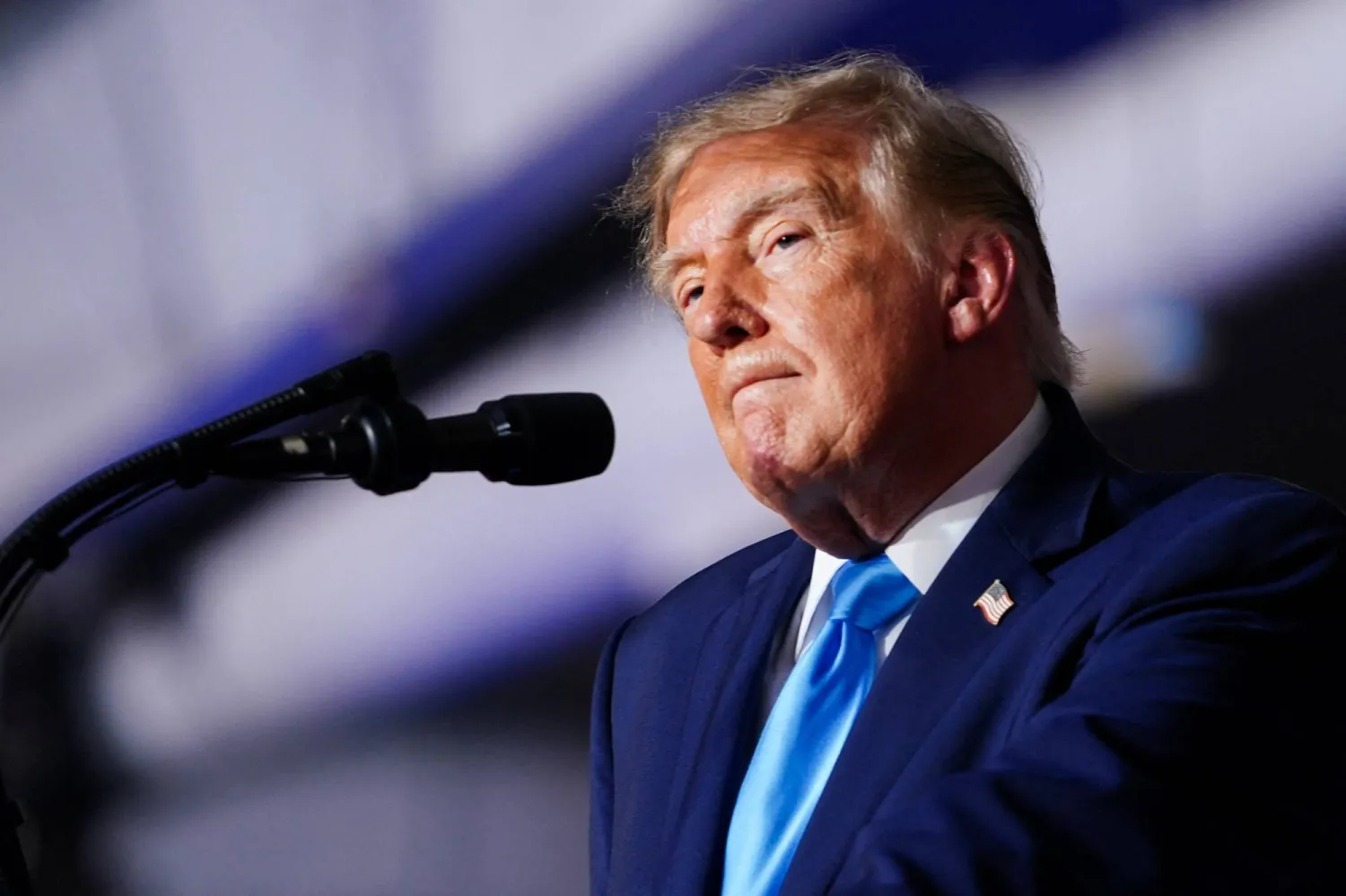
US President Donald Trump during a rally at Pinnacle Bank Expo Center in Grand Island, Nebraska, US, October 5, 2026. REUTERS/Nathan Howard
TT

Trump Approves Execution of 2009 Military Base Shooter by Firing Squad

US President Donald Trump during a rally at Pinnacle Bank Expo Center in Grand Island, Nebraska, US, October 5, 2026. REUTERS/Nathan Howard

US President Donald Trump has approved the execution by firing squad of Nidal Hasan, a US Army psychiatrist who shot dead 13 people at a military base in 2009, the Pentagon said on Monday.

Hasan’s execution for the attack at Fort Hood in Texas, which also wounded more than two dozen people, will be the first carried out by the US military since 1961.

Defense Secretary Pete Hegseth “has recommended – and President Donald J Trump has approved – death by US Army firing squad for convicted terrorist Nidal Malik Hasan,” Pentagon spokesman Sean Parnell said in a post on X.

“The Secretary of the Army will set the time and place of the execution. Judgement day for Hasan has finally come,” Parnell added.

Hasan was sentenced to death by a military jury in 2013 for carrying out the Al-Qaeda inspired mass shooting at Fort Hood, according to AFP.

He chose to conduct his own defense during the trial but called no witnesses and gave no testimony, and made no attempt to deny the charges. Court-appointed defense attorneys expressed concern that he was seeking execution.

Hasan, US-born Muslim of Palestinian descent, opened fire on November 5, 2009, at a medical facility in the sprawling Fort Hood base, which served as a staging point for soldiers to deploy to combat zones in Iraq and Afghanistan.

Twelve of the dead and 30 of the wounded were soldiers. Hasan was shot and partially paralyzed by a civilian police officer who responded to the attack.

The court that convicted Hasan was told that he was opposed to the US military's occupations of Iraq and Afghanistan, and that he had spoken online with an alleged Al-Qaeda figure, radical cleric Anwar al-Awlaki, an American citizen subsequently killed in a US drone strike in Yemen.


Australian Soldier Dies, 5 Others Injured During Training Exercise

Australian army soldiers (Reuters file photo)
TT

Australian Soldier Dies, 5 Others Injured During Training Exercise

Australian army soldiers (Reuters file photo)

An Australian army soldier has died and five others have been injured during a training exercise in the Northern Territory ⁠of Australia, the Defense Department said on Tuesday.

The incident occurred at the Mount Bundey Training Area on October 5, the department said in a media statement ⁠on its website.

Five other Australian Army soldiers were injured, it added. No further details ⁠of the incident were available, according to Reuters.

“Next of kin has been notified. ⁠Defense will provide further updates when possible,” ⁠the statement said.


War-weary Northern Israelis Rethink Loyalty to Netanyahu before Election

Nahariya resident Maxim Zarbaylov says he is considering not backing Netanyahu for the first time. JACK GUEZ / AFP
TT

War-weary Northern Israelis Rethink Loyalty to Netanyahu before Election

Nahariya resident Maxim Zarbaylov says he is considering not backing Netanyahu for the first time. JACK GUEZ / AFP

On Israel's border with Lebanon where Hezbollah fired thousands of rockets and drones, previous backers of Prime Minister Benjamin Netanyahu say they are rethinking how they will vote in the first election since the war.

"Many I know were right-wing and were Bibi supporters, and today they're not," said plant nursery owner Sigal Malachi, using a nickname for Israel's longest-serving premier.

In traditional strongholds of Netanyahu support, many told AFP they could no longer back his right-wing government in the October 27 vote, accusing it of failing to secure a lasting quiet with the militants.

Hezbollah, an Iran-backed Lebanese militant group, began firing into Israel in October 2023 in support of Hamas following the deadliest-ever attack on the country.

The barrages altered life in northern communities, displacing tens of thousands of Israelis and forcing people like Malachi to close shop for several years.

Northern Israelis are accustomed to incoming fire from the Lebanese side of the border, but they say that round of conflict was more intense.

"We grew up with Katyushas (rockets) and bombs," said Malachi, whose plant nursery reopened in March.

"This war was different."

She described that "if you went outside, within a second you'd be running" for shelter.

The war was halted with a fragile ceasefire in November 2024, but evacuees were not allowed home until early 2025.

Life began slowly returning to normal, until the northern front reopened after the outbreak of the Iran war.

Maxim Zarbaylov, who was born in the former Soviet Union but has long lived in Nahariya, the northernmost Israeli town on the Mediterranean, is among those wavering.

"All my life I voted for (Likud), for Bibi Netanyahu... But this year I want to vote for (Gadi) Eisenkot," he said, referring to the former military chief who is Netanyahu's main election rival.

Hezbollah has repeatedly dragged Lebanon into conflicts with Israel, most recently in March with rocket fire at Israel in support of Iran.

Israel has in turn seized what it calls a "security zone" in Lebanon, where authorities say Israeli attacks have killed more than 4,300 people.

At least 48 Israeli civilians and 30 soldiers have died on the Lebanese front since 2023.

- 'Psychological catastrophe' -

The prolonged violence has left border residents in limbo.

"After October 7 we don't sleep well anymore," Malachi said.

"I've thought about leaving. But the roots are so deep that I'm staying."

In Shlomi, an Israeli border town, the enemy is a tangible presence behind a hill.

Shadi Tuma, who owns a supermarket there, prides himself on running the only one that remained open.

"This area is under a trauma we haven't seen before. There's anger. The government is unable to provide a comprehensive response," he said.

"It's a huge psychological catastrophe. Not everyone is able to cope with a war that lasts three years."

The war has cracked the local support base for Netanyahu, Tuma said.

In the last elections in 2022, the premier's Likud party won 43 percent of the vote in Shlomi, compared with 23 percent nationwide.

Residents who backed Netanyahu "now want change because they no longer trust this government," Tuma said.

He said the high cost of living was a major complaint.

"Many people I see are struggling to make it to the end of the month."

For Tuma, the conflict is also personal.

He was born in Lebanon, the son of a fighter with the South Lebanon Army, a militia that fought alongside Israel in the 1980s and that had many fighters granted Israeli citizenship.

- 'Feel protected' -

The war could have shifted longstanding political loyalties in towns like Nahariya, a sleepy resort of about 70,000 people.

In 2022, 38 percent of voters there chose Likud.

But Zarbaylov says there is anger over the failure to stop Hamas' unprecedented assault on the country.

"What happened on October 7, Bibi could have prevented it, but he didn't," he said.

"The army, the top commanders, the chief of staff, could have prevented it."

Others believe only the current hawkish coalition can protect them.

Patrice Haddad retired to Nahariya from Paris a year ago, drawn by the town's "charm".

Israel's "Law of Return" allows any Jew anywhere in the world to immigrate and automatically receive citizenship.

Adjusting to life under the rockets was not simple at first.

"We were told we had 30 seconds to find shelter" after sirens blared, he said. "In reality, sometimes we only had 15, sometimes less."

For his first election as an Israeli, he has made his choice.

"The left in Israel has done a lot of harm, it wanted to give up territories," he said.

"It's important to vote for the right, because for me, with a government like Netanyahu's, we will feel protected."



Iran President Says Talks with US ‘Meaningless’

Iranian women volunteers receive military training at a military training center for ordinary citizens at Imam Hussein Square in central Tehran, Iran, October 4, 2026. Majid Asgaripour/WANA (West Asia News Agency) via Reuters
TT

Iran President Says Talks with US ‘Meaningless’

Iranian women volunteers receive military training at a military training center for ordinary citizens at Imam Hussein Square in central Tehran, Iran, October 4, 2026. Majid Asgaripour/WANA (West Asia News Agency) via Reuters

Iranian President Masoud Pezeshkian said Monday that negotiations with the United States were "meaningless" and only resulted in renewed attacks, state media reported, with progress on ending the Middle East war stalled for months.

"So far, they have attacked us three times after talks, and this shows that they are not seeking dialogue; rather, their goal is to overthrow the Islamic Republic of Iran," Pezeshkian was quoted as saying by the state news agency IRNA.

"With an enemy that every day resorts to assassination, sanctions, pressure and threats, and that breaks its commitments, negotiations are meaningless."

The Middle East war was started in late February by the US and Israel when they launched a wave of surprise attacks on Iran, even as Washington and Tehran were in the midst of negotiations on Iran's nuclear program.

The warring parties agreed a memorandum of understanding in June that spelled out a framework for a permanent resolution to the conflict, but Iranian attacks on vessels in the Strait of Hormuz prompted a return to US military operations.

Negotiations have effectively been at an impasse since then, and recent indirect talks between the US and Iran on the sidelines of the UN General Assembly failed to produce a breakthrough.

Washington in recent weeks has dialed back military operations in favor of economic pressure, and has not struck Iran since September 1.

On Sunday, Iran's top diplomat insisted the United States' war against Tehran would not be resolved by military means.

Vowing a stronger defense if any attacks resumed, Foreign Minister Abbas Araghchi said: "There is no military solution, nor any solution based on new sanctions."

"Only negotiations based on justice and fairness" could end the conflict, he added.

The United States and Israel have said the war is necessary to prevent Iran from acquiring nuclear weapons -- a goal it has long denied pursuing -- though the focus soon shifted to reopening the Strait of Hormuz after its closure sent shockwaves through world energy markets.

Iran has sought to impose its control over the vital shipping lane since the start of the war, striking vessels that attempt to transit without its authorization.

The US has imposed its own counterblockade of Iranian ports, and has also struck vessels it accuses of violating it.

A tanker was struck while attempting to transit the waterway on Sunday, while another turned back on Monday after being threatened with attack by Iranian forces, according to the British maritime agency UKMTO.