UN Health Agency Wants More Details from Russia on Suspected Pneumonic Plague Case

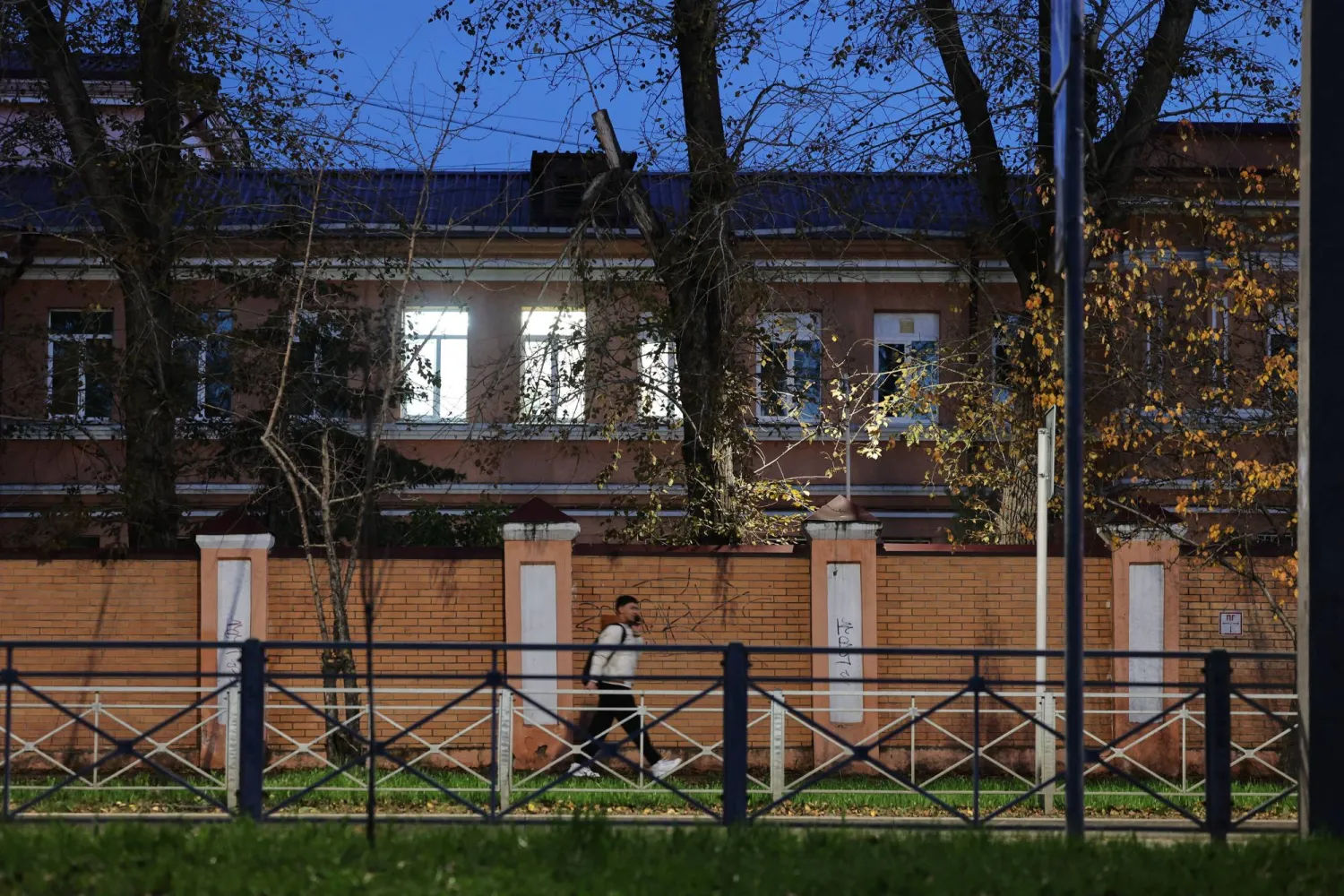
 A man walks past the building of the Irkutsk Anti-Plague Research Institute of Siberia and the Far East in Irkutsk, Russia, on Wednesday, Oct. 7, 2026. (AP)
A man walks past the building of the Irkutsk Anti-Plague Research Institute of Siberia and the Far East in Irkutsk, Russia, on Wednesday, Oct. 7, 2026. (AP)
TT

UN Health Agency Wants More Details from Russia on Suspected Pneumonic Plague Case

 A man walks past the building of the Irkutsk Anti-Plague Research Institute of Siberia and the Far East in Irkutsk, Russia, on Wednesday, Oct. 7, 2026. (AP)
A man walks past the building of the Irkutsk Anti-Plague Research Institute of Siberia and the Far East in Irkutsk, Russia, on Wednesday, Oct. 7, 2026. (AP)

A top official with the World Health Organization said Wednesday it doesn’t know how a lab worker in Siberia died, and she urged Russia to provide more information about a case that prompted global concerns about suspected pneumonic plague.

Maria Van Kerkhove, WHO director of Epidemic and Pandemic Management, said the UN health agency doesn’t know what the “causative agent” was behind the woman’s Oct. 2 death, which unconfirmed reports in Russia blamed on pneumonic plague — a less common but severe form of plague that can spread from person to person.

In its tersely worded statements, Russia's public health watchdog, Rospotrebnadzor, does not link the case to pneumonic plague, saying only that the lab worker had contracted pneumonia of “unknown” origin and that “extensive” testing found no evidence her illness was caused by any of the pathogens she worked with at the Irkutsk Anti-Plague Research Institute of Siberia and the Far East.

“We don’t understand how she was infected,” Van Kerkhove said. “We need information in a timely way. We need regular information. We need answers to the follow-up of the questions that we have asked.”

“We have posed these questions to our colleagues in the Russian Federation. In fairness, they have responded. We’ve gone back with more questions,” she said.

The comments suggested the UN health agency has more questions than answers about the situation at the lab, which focuses on plague and was founded about a century ago to study the disease in Siberia, where it occurs naturally in wild animals.

Russia has released little information about the case

Russian authorities have kept a tight lid on information about the case, which has been surrounded by secrecy.

While it has raised global concerns, Russian state TV and other national state-controlled media have largely steered clear of the subject. Some news outlets withdrew earlier reports about the case.

Rospotrebnadzor said Sunday the lab worker was diagnosed with “pneumonia of unknown etiology,” meaning its origin was not known.

A state TV station in Irkutsk reported she died Oct. 2 in a hospital in Shelekhov, a town just outside Irkutsk. Officials have quarantined that hospital and were monitoring the worker's contacts.

Russia has said the pneumonia initially presented as a “typical” acute respiratory viral infection, the WHO has said, acknowledging that pneumonia is commonplace.

WHO Director-General Tedros Adhanom Ghebreyesus said Russian authorities had indicated that no case of plague had recently been reported in the Irkutsk region, and that they had placed about 200 contacts in quarantine.

Russia says preventive measures are underway

US President Donald Trump said he would discuss the issue during a call with Russian President Vladimir Putin because Wednesday is the Kremlin leader's 74th birthday.

“They’re sharing it a little bit with our people. We expect them to share it a lot with our people,” Trump said.

Kremlin spokesman Dmitry Peskov said earlier Wednesday that a Putin-Trump call hasn’t been set yet but could be organized quickly.

Asked if the incident was a sign that plague might be developed as a bioweapon, Trump said, “We don’t think so. We’re going to find out soon enough, but we don’t think so.”

When asked if the situation was similar to dealing with China on COVID-19 in his first term, Trump suggested Russia was staying relatively quiet, just as China did before the virus turned into a pandemic. “China didn’t say much and Russia is not saying much either, but they do say they have it very much under control,” he said.

Dr. Erica Schwartz, director of the US Centers for Disease Control and Prevention, said the threat to the US “is extremely low.” She travel from that area of Russia to the US each year is limited — and mostly comes through New York’s John F. Kennedy International Airport.

Government agencies are working “to make sure that we know exactly if anyone from that area comes into the United States,” Schwartz said during a Wall Street Journal health forum Wednesday.

Russian health authorities reported a full range of preventive measures had been carried out, including tracing the dead woman’s contacts, medical monitoring and lab tests, the WHO said.

The Geneva-based organization cited media reports that a second employee had pneumonia of undetermined cause.

Health experts urge more Russian openness

Peskov referred all questions to Rospotrebnadzor, which does not mention suspected plague in its reports and has not responded to a request for comment.

In its latest statement Tuesday, the agency said that “the sanitary and epidemiological situation in the Irkutsk region, the cities of Irkutsk and Shelekhov is calm.” Authorities were completing a “complex of prophylactic measures and medical observation over contacts,” it said, adding that so far they have found two cases of COVID-19 and two cases of rhinovirus.

“No other infectious pathogens have been found among contacts,” it said.

Judy Twigg, professor of political science at Virginia Commonwealth University, noted that while the measures taken by Russian health authorities “have been swift and serious,” officials sought to play down the situation and “any statements that strayed from that party line ... were edited or deleted within hours.”

“What we are watching is less a failure to respond than a failure of candor,” Twigg said in written comments.

Vasily Vlassov, professor at the department of healthcare administration and economics at Russia’s Higher School of Economics, said the measures taken appeared “sensible,” focusing on treating the sick, isolating them and their contacts, looking for new cases and carrying out disinfection.

He said it wasn't clear whether more transparency was possible if those dealing with the situation didn’t have enough certainty, and “maybe, they still don’t.” Deceiving the public, however, “always turns out to be harmful,” he said.

Distrust of Russia’s official narrative is “natural” and “almost inevitable,” Vlassov said.

In the Soviet era, dangerous outbreaks of infection had “a thick veil of secrecy — people were told nothing.”

The lab worker who died was described as highly diligent

The news outlet Lyudi Baikala — or “People of Baikal” — identified the dead lab worker as Darya Shipilova, 28, and said she first was hospitalized with cold symptoms Sept. 29 and died three days later.

It quoted colleagues as saying she was a highly qualified and diligent researcher. They also emphasized that security rules at the facility are extremely strict.

The report quoted Shipilova's neighbors as saying disinfection experts did several cleanups of her apartment, leaving a strong antiseptic smell.

Shipilova’s mother, who worked as a doctor in the past, described her daughter as hard-working and dedicated, according to independent Russian news outlet Glubina, adding that she had not gotten official documents describing the cause of death.

Twigg noted that Russia criminalized “false information” about threats to public safety in 2020 amid the COVID-19 pandemic, “so silence is the one safe move for everyone below the top.”

“Personalist regimes without electoral accountability tend to treat bad news as a loyalty problem rather than focusing on the actual problem to be addressed,” she said.

She warned that “the public’s understandable reaction to the lack of information carries real dangers.”

“A government that is not believed when it says ‘there is no outbreak’ will not be believed when it must actually say ‘there is one; do the following.’ We saw this with COVID,” she said.

Pneumonic plague and the more well-known bubonic plague — also called the Black Death — are caused by the same bacteria, said Simon Clarke of the University of Reading in the UK Pneumonic plague results from breathing in the bacteria, causing an infection in the lungs.

The bacterium, called Yersinia pestis, has not been eliminated, but it is not spread very easily and it is treatable with antibiotics.


Iran FM Says No Negotiations Since ‘Shock’ of US Midterms

25 September 2026, US, Bronx: Iranian Foreign Minister Abbas Araghchi delivers a statement during a press conference at Security Council encounter at UN Headquarters in New York. (dpa)
TT

Iran FM Says No Negotiations Since ‘Shock’ of US Midterms

25 September 2026, US, Bronx: Iranian Foreign Minister Abbas Araghchi delivers a statement during a press conference at Security Council encounter at UN Headquarters in New York. (dpa)

Iranian Foreign Minister Abbas Araghchi said on Sunday that mediators striving for a peace deal between the US and Iran had not travelled at all since the "shock" of the US midterm elections.

"We now have to see how long it will take for them to digest these results, in order to determine how we are going to move forward," the top Iranian diplomat told state TV following the elections in which the Republican Party of US President Donald Trump suffered heavy losses.

Various regional powers, including Qatar and Pakistan, have been trying for months without success to bring a definitive halt to the war launched by the United States and Israel in late February.

Outright fighting has largely subsided, but Iran continues in its efforts to blockade the Strait of Hormuz, vital to global energy supplies, while the US Navy maintains its own counterblockade of Iranian ports.

"For the past few days, there has been no more travel (by mediators), and the reason for this is the shock that the election results in the United States have caused to everyone."

He said it would "take some time before the atmosphere is favorable for the resumption of mediator travel" and called for patience.

Earlier, Aragchi posted on X: "American voters have made their choice. Time for the White House to make its own."

He called on Washington to accept previously articulated Iranian demands or "choose war, and see our alert and battle-hardened warriors rain down hell".

In September, Iran proposed a seven-day plan to reopen the strait, with demands including ending the war on all fronts, unfreezing Iranian assets, lifting oil sanctions and ending its counter-blockade of Iranian ports.

It later proposed doing so in just two days, an offer Araghchi repeated in his X post on Sunday.


Trump Says He Is Highly Unlikely to Order Iran Strikes if Talks Progress

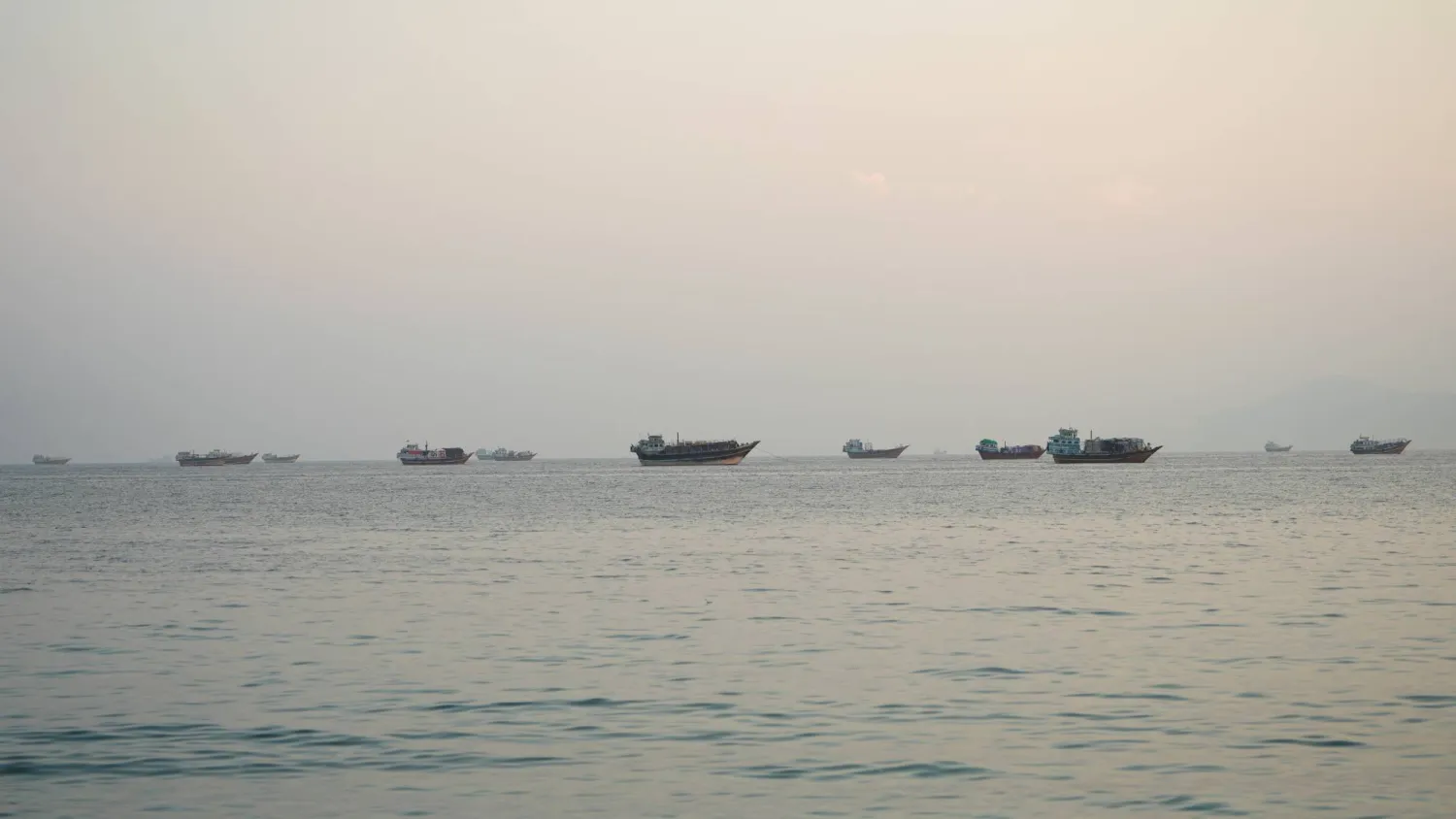
 Vessels at the Strait of Hormuz, as seen from Musandam, Oman, November 3, 2026. (Reuters)
Vessels at the Strait of Hormuz, as seen from Musandam, Oman, November 3, 2026. (Reuters)
TT

Trump Says He Is Highly Unlikely to Order Iran Strikes if Talks Progress

 Vessels at the Strait of Hormuz, as seen from Musandam, Oman, November 3, 2026. (Reuters)
Vessels at the Strait of Hormuz, as seen from Musandam, Oman, November 3, 2026. (Reuters)

US President Donald Trump on Sunday said he was highly unlikely to order fresh attacks on Iran as long as talks to end the conflict progress, even as both countries reported that shipping had been hit in or near the Strait of Hormuz. 

"It depends on whether or not they sign a very strong agreement," Trump told CNN in a phone interview. "The answer is, highly unlikely it's going to be necessary." 

CNN did not specify exactly what it had asked Trump, who also said that if strikes resume, the US has identified potential infrastructure targets, including 38 bridges "that we can knock down in literally one hour." 

Trump had hinted at renewing major attacks on Iran after last week's US midterm elections, but there has been no sign of a large-scale US military operation. Iran has said it would respond by striking US and Israeli targets. 

Iranian media suggested that explosions in southern Iran on Saturday were related to Iranian military activities ‌rather than US strikes. 

Iran's state ‌television said officials had not confirmed any missile strikes on Iranian territory following blasts heard ‌in several ⁠areas, including on ⁠Qeshm Island in the strait. 

Both the US and Iran have continued strikes on vessels in the Strait of Hormuz, however, restricting exports of energy and other commodities vital to the world economy. 

Iran's state television said the evening explosions might be related to Iranian military activity in the waterway, where Iran said two vessels had hit mines and a third had caught fire. 

The US said its air force had disabled a vessel in the Gulf of Oman beyond the strait. 

Tasnim news agency said two missiles had struck Qeshm Island, with no official information on possible damage. Neither Iran nor the US has commented on that report. Washington said on November 2 that it had struck the island in a limited defensive measure against ⁠Iranians using surface-to-air missiles against US assets. 

COMMERCIAL VESSEL, OIL TANKERS HIT 

Since the US and Israel began ‌attacks on Iran in February, Tehran has sought the upper hand by hitting vessels ‌in the Strait of Hormuz to block Gulf energy exports, while US forces began blockading movements to and from Iranian ports in April. 

The US military ‌said on Saturday evening that its air force had fired at the stern of a commercial vessel in the Gulf of Oman, ‌disabling it as it tried to get through the blockade. 

Iran's Revolutionary Guards Navy said two oil tankers had caught fire after hitting mines while attempting to pass through an "unauthorized route" in the Strait of Hormuz. A third tanker had also suffered an explosion and caught fire, the semi-official Fars news agency reported later. 

Reuters was not able to confirm any of the reported strikes. 

Monitors from the United Kingdom Maritime Trade Operations said a bulk carrier and military ‌forces were involved in an incident in the Gulf of Oman, approximately 18 nautical miles east of the United Arab Emirates' city of Khor Fakkan, with damage unknown. It was unclear if ⁠it was related to the reported US ⁠attack. 

Qatar, which has been mediating in talks to try to end the conflict that has shaken the world economy, on Saturday denied reports that the US and Iran had failed to reach a deal. 

The Qatari prime minister had affirmed that both sides were continuing to work toward an agreement, it said. 

Iran has submitted a nuclear proposal to Washington through Qatar, a senior Iranian official told Reuters on Thursday, saying the US was reviewing it but discussions would depend on Washington first meeting Tehran's seven demands. 

These include sanctions relief, access to frozen assets and war reparations, while Washington insists nuclear issues must feature in initial talks. 

On Saturday, the US military said it was launching a task force to crack down on the movement of advanced weapons and other sanctioned material to Iran via its land borders and the Caspian Sea — part of economic measures to try to pressure Tehran. 

The Revolutionary Guards dismissed the plan as "wordplay," saying it would not work because Tehran had made preparations and communicated closely with its neighbors. 


Trump Says Elections Were ‘Giant Step Back in History' for US

 US President Donald Trump speaks to members of the media at President Donald J. Trump International Airport in Palm Beach, Florida, US, November 6, 2026. (Reuters)
US President Donald Trump speaks to members of the media at President Donald J. Trump International Airport in Palm Beach, Florida, US, November 6, 2026. (Reuters)
TT

Trump Says Elections Were ‘Giant Step Back in History' for US

 US President Donald Trump speaks to members of the media at President Donald J. Trump International Airport in Palm Beach, Florida, US, November 6, 2026. (Reuters)
US President Donald Trump speaks to members of the media at President Donald J. Trump International Airport in Palm Beach, Florida, US, November 6, 2026. (Reuters)

President Donald Trump vowed Sunday to bounce back stronger from a massive midterm elections loss that he called a "giant step back in history" for the United States.

Democrats captured both chambers of Congress in last Tuesday's midterms that dealt historic losses for Trump's Republican Party in states they had dominated for decades.

"America took a giant step back in History with the results of the last Election," Trump said in a post on Truth Social, saying that the stock market that had grown during his tenure took a loss after the vote.

"But have no fear, we will be back, BIGGER AND STRONGER THAN EVER BEFORE!"

While Republican lawmakers have been licking their wounds over the setback, Trump has sounded defiant and on Friday appointed hardline advisor Stephen Miller as his new chief of staff, signaling a bare-knuckle fightback.

Democrats have pledged to hold the Trump administration to account and fight "every step of the way" against Miller, architect of Trump's tough immigration policy.