Israel’s Eisenkot Vows Unity as Netanyahu Paints Him as Soft on Iran

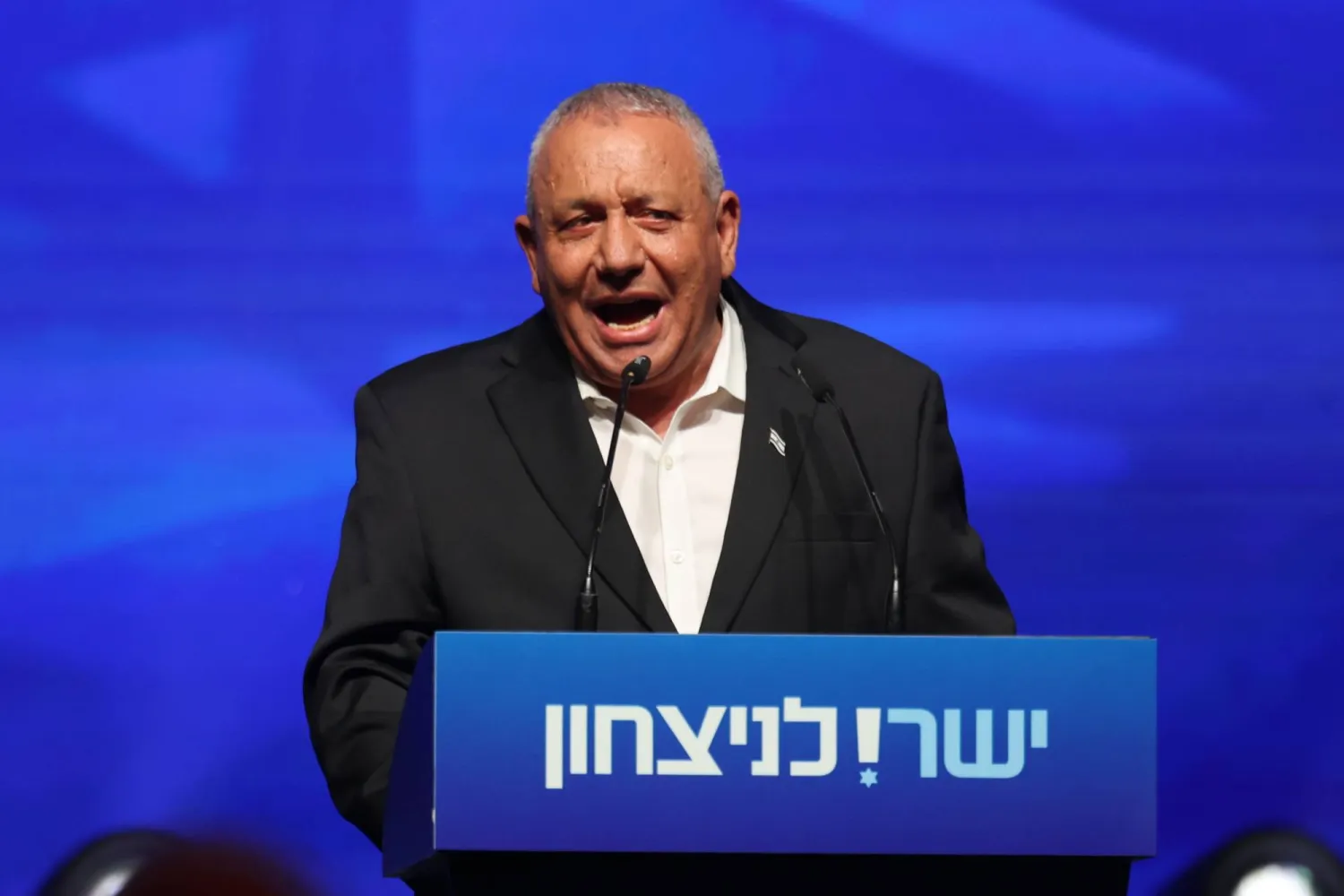
Leader of the Yashar party and former Israeli military chief, Gadi Eisenkot delivers a speech during the party's final countdown campaign rally in Tel Aviv, Israel, 25 October 2026. (EPA)
TT

Israel’s Eisenkot Vows Unity as Netanyahu Paints Him as Soft on Iran

Leader of the Yashar party and former Israeli military chief, Gadi Eisenkot delivers a speech during the party's final countdown campaign rally in Tel Aviv, Israel, 25 October 2026. (EPA)

Israeli election contender Gadi Eisenkot on Sunday vowed to unite the country as he held his final major rally before the vote, while Prime Minister Benjamin Netanyahu received fresh backing from US President Donald Trump.

Netanyahu has campaigned heavily on his security credentials, but Eisenkot has cast him as unfit to lead and pledged a state commission of inquiry into the failings that led to Hamas's October 7, 2023 attack under the incumbent's watch.

Polls had shown Netanyahu and Eisenkot running neck and neck before a ban on new polling took effect in the three days before Tuesday's vote.

On Sunday, Trump urged Israelis to vote for Netanyahu, citing the US-Israel war against Iran as an example of "winning together".

"When you go to the Polls please remember that Bibi has been an outstanding Warrior Prime Minister," Trump wrote on his Truth Social platform, using Netanyahu's nickname.

At his event, Eisenkot pledged to heal divisions inside Israeli society after Netanyahu's divisive tenure, and voiced "a commitment to security and the economy".

"Our goal is not for one side to defeat the other. That is not our way," he said on Sunday to an audience of hundreds.

"We will work to bring all Israelis together again -- those who voted for us and those who did not."

A relative newcomer to politics -- in contrast with Netanyahu and his 30 years on the scene -- Eisenkot's pledge to unite Israelis has resonated with some voters, and for many the ex-army chief's plain-spokenness is part of his appeal.

In his speech, Eisenkot said he would "always look you in the eye and tell the truth", and pledged to "take responsibility for both successes and failures".

He also appealed directly to wavering supporters of Netanyahu's Likud party, urging them to change course.

"Deep down, you too know that Israel cannot go on like this," he said. "Israel needs change."

Netanyahu's critics accuse him of putting his political survival above the greater good, and he is currently facing trial on corruption charges, which he denies.

Rally attendee Chen Sharon, an army reservist, said she wanted "people that I can count on" in office.

"We need someone that we can actually believe his values and what he represents to us," she said.

- 'A catastrophe for Israel' -

Over the course of the campaign Netanyahu has played to Israeli voters' opposition to the creation of a Palestinian state, and posters have been splashed across the country with the slogan "Either the Right or Palestine".

Netanyahu also touted the still-unresolved war that he launched against Iran alongside Trump, seeking to tar his main rival as being soft on Tehran.

Appearing after Eisenkot's rally on Channel 14, Netanyahu again suggested the ex-general and his allies "want to create a Palestinian state, a catastrophe for Israel".

"They will not destroy Iran's nuclear program," he told a boisterous studio audience. "We've done 90 percent of the work, 10 percent remains. Who is going to do it? Eisenkot and the Muslim Brotherhood? No. Only I can do it."

Eisenkot has said he is opposed to a Palestinian state, but has vowed to crack down on extremist West Bank settlers who have attacked Palestinians with impunity.

Netanyahu on Sunday posted an AI-generated image of a mushroom cloud engulfing Tel Aviv, alongside text attributed to a right-wing political commentator calling Iran an existential threat and arguing that all the other issues discussed this election season were trivial in comparison.

In a post on X addressing Netanyahu on Saturday, Eisenkot accused the premier of playing up the Iran threat when it suited him politically.

"You have once again failed spectacularly and blatantly to achieve the war objectives you yourself set," he added.

Longtime opposition leader Yair Lapid, who has promised to join a coalition with Eisenkot, said Netanyahu had "lost his grip".

"Yesterday, Netanyahu announced that US security aid was over and that sanctions would crush our economy. This morning, he posted a video in which an atomic bomb lands on Tel Aviv," he said on X.

"This man has lost his grip. We absolutely must send him home."


NATO Chief Pledges to Defend Poland after Russian Missile Incursion

FILE PHOTO: NATO Secretary General Mark Rutte speaks to the media on the day of the Ukraine Defense Contact Group meeting at NATO headquarters in Brussels, Belgium,  November 17, 2026. REUTERS/Stephanie Lecocq/File Photo
FILE PHOTO: NATO Secretary General Mark Rutte speaks to the media on the day of the Ukraine Defense Contact Group meeting at NATO headquarters in Brussels, Belgium, November 17, 2026. REUTERS/Stephanie Lecocq/File Photo
TT

NATO Chief Pledges to Defend Poland after Russian Missile Incursion

FILE PHOTO: NATO Secretary General Mark Rutte speaks to the media on the day of the Ukraine Defense Contact Group meeting at NATO headquarters in Brussels, Belgium,  November 17, 2026. REUTERS/Stephanie Lecocq/File Photo
FILE PHOTO: NATO Secretary General Mark Rutte speaks to the media on the day of the Ukraine Defense Contact Group meeting at NATO headquarters in Brussels, Belgium, November 17, 2026. REUTERS/Stephanie Lecocq/File Photo

NATO Secretary General Mark Rutte on Saturday pledged to defend Poland after Russian missiles landed in the country, with the alliance's top decision-making body set to discuss the incident.

Warsaw said two Russian missiles hit its southeast on Friday, accusing the Kremlin of "intentional provocation" near where thousands of European troops are holding exercises.

Rutte, on a visit to Warsaw, said the alliance would determine what happened in the incident to identify any vulnerabilities, and pledged to defend Polish territory, in remarks to Polish media.

On Friday Rutte condemned what he said were "grave violations", calling the incident "clearly dangerous".

NATO's main political decision-making body will discuss the incident in Brussels on Monday "as part of regular consultations among allies", an alliance official told AFP.

Poland will be represented by its deputy defense minister, Pawel Zalewski, according to Polish public radio.

Polish Prime Minister Donald Tusk said on Friday that Warsaw would ask NATO to strengthen its detection and surveillance systems over Poland, as Russia frequently launches waves of missiles and drones at western Ukraine, near the Polish border.

The Institute for the Study of War (ISW), a US think tank, said it believed Russia "intentionally fired missiles and drones into Polish airspace".

The gesture was timed to coincide with exercises by the "Coalition of the Willing" taking place in Poland, the ISW said.

"Coalition of the Willing" refers to a group of Ukraine's European backers who are prepared to send peacekeeping troops to the country.


French Protesters Rally Again Over Living Costs, Public Services

Protesters carry banners and placards during an anti-government demonstration in Paris, France, 21 November 2026. EPA/MOHAMMED BADRA
TT

French Protesters Rally Again Over Living Costs, Public Services

Protesters carry banners and placards during an anti-government demonstration in Paris, France, 21 November 2026. EPA/MOHAMMED BADRA

France saw nationwide demonstrations for the sixth weekend in a row on Saturday, as protesters took to the streets to demand better public services and express anger over the rising cost of living and inequality.

The protest movement, sparked in mid-September by high school students demanding better learning conditions, fueled a nationwide campaign against soaring prices, inadequate public services and police brutality that spread across Europe, even as turnout in France has dwindled.

Several thousand people gathered in central Paris's Place de la Republique square in a festive atmosphere, with musicians playing, food trucks, costumes and homemade signs.

Flags and vests of trade unions and left-wing parties mingled with those of student organizations and the Yellow Vest movement, which is marking its anniversary eight years after it rattled President Emmanuel Macron's government.

On Friday crowds rallied across multiple countries to vent anger over issues from high living costs to military spending and the climate crisis, ramping up pressure on political leaders they accuse of ignoring the concerns of young people.

"I want to live, not survive," read one placard held by a protester in Paris.

Another read: "No to the license to kill", in reference to a law adopted by France's parliament on Friday increasing protection for law enforcement officers using their weapons -- heavily criticized by the left.

The protests have been largely peaceful but have seen fringe violence and accusations of police brutality.

At least 31 people have been seriously injured by security forces since the protests began, according to a count by AFP based on direct testimonies, victims' lawyers and NGO records. Authorities have not provided an official toll.

Last month, some rallies across France degenerated into clashes between riot police and demonstrators, with shops looted and buildings attacked and torched.

Interior Minister Laurent Nunez had warned regional authorities to be "particularly vigilant regarding the groups most hostile to law enforcement" after the police law was adopted.

Protesters marched on Saturday in cities from Lille in the north to Marseille in the south and Lyon in the southeast.

Clashes broke out on the sidelines of some protests as people set fire to vehicles and bins and police fired tear gas.

The interior ministry had said the demonstrations began in a "generally calm" atmosphere and turnout was "down compared to previous days".


Qatari Delegation Visits Tehran, Pezeshkian Admits that Iran Faces Tough Economic War

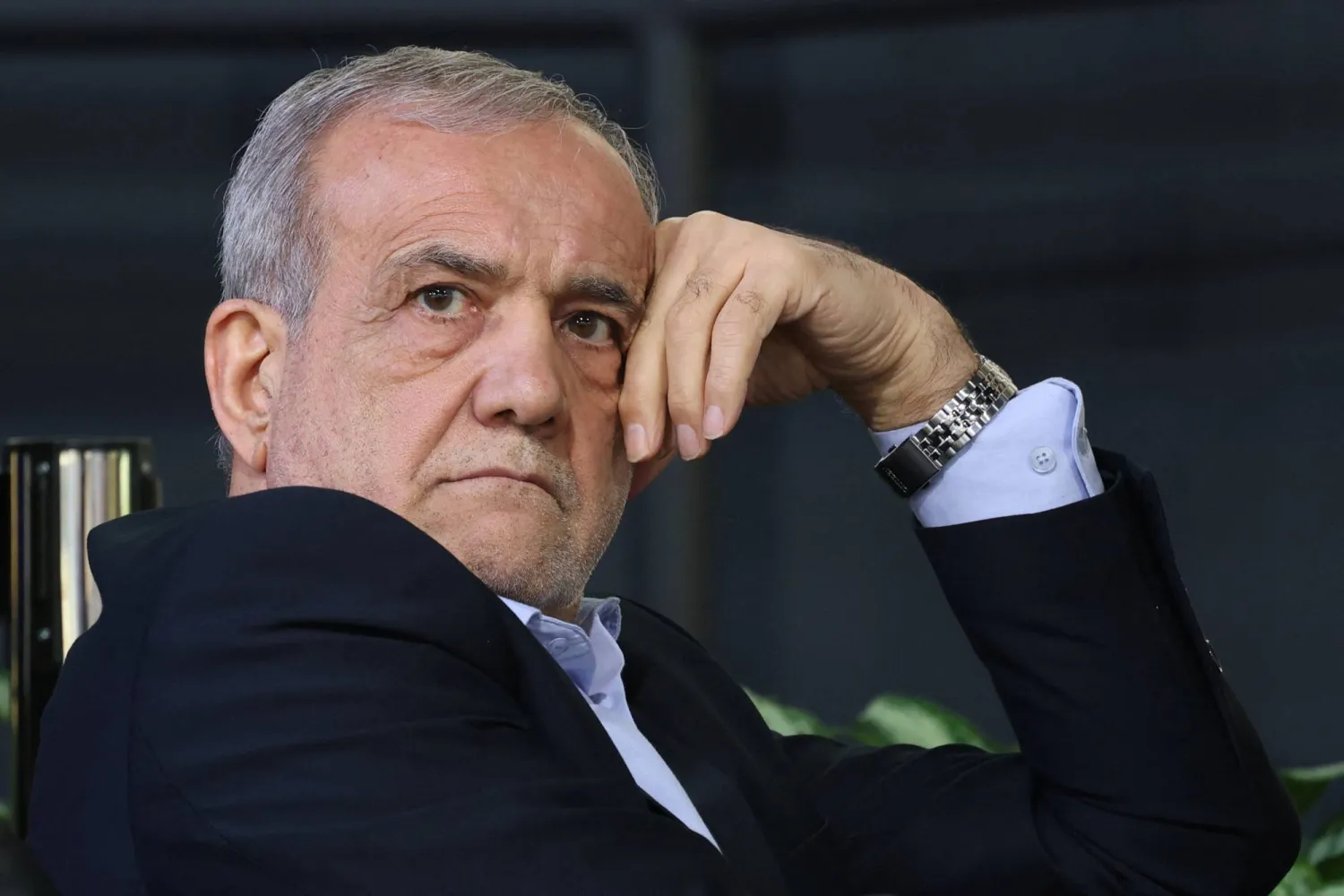
Iranian President Masoud Pezeshkian waits to make a speech during the UN Climate Change Conference (COP31) in Antalya, November 11, 2026. REUTERS/Murad Sezer
TT

Qatari Delegation Visits Tehran, Pezeshkian Admits that Iran Faces Tough Economic War

Iranian President Masoud Pezeshkian waits to make a speech during the UN Climate Change Conference (COP31) in Antalya, November 11, 2026. REUTERS/Murad Sezer

A Qatari delegation held talks in Tehran on Friday night, an Iranian official said, as diplomatic efforts continued to end the war.

Iranian Deputy Foreign Minister Kazem Gharibabadi said Tehran remained in contact with mediators.

"We are in contact with mediators, including the Qataris, both in person and virtually, and are holding ⁠the necessary discussions to see whether another opportunity can be given to diplomacy," Gharibabadi said, according to the semi-official Tasnim news agency.

Gharibabadi echoed remarks by Iranian Foreign Minister Abbas Araghchi in an interview with the state-owned Iran newspaper that Tehran still hoped diplomacy could end its war with the United States.

US President Donald Trump has said Iran wanted a deal, but one that was not acceptable to him.

In an interview published on Saturday by the state-run Iran Daily newspaper, Araghchi reiterated that Tehran would not allow its stockpiles of enriched uranium to leave the country.

"I believe a solution can be found, but we have clear red lines: the material will not be taken out of the country," he said.

Meanwhile, Iranian President Masoud Pezeshkian said on Saturday that Iran is facing a tough economic war.

“We are in a silent war, which is much more difficult than a war in which missiles are launched and destruction is carried out.

“It is an economic war that you, the economic activists, are dealing with, and it is not a simple war,” Pezeshkian told a meeting of investors and producers, according to Iran’s state-run news agency IRNA.