
Israelis Vote in a Pivotal Election Centered on Netanyahu’s Leadership, Oct. 7 and Its Aftermath

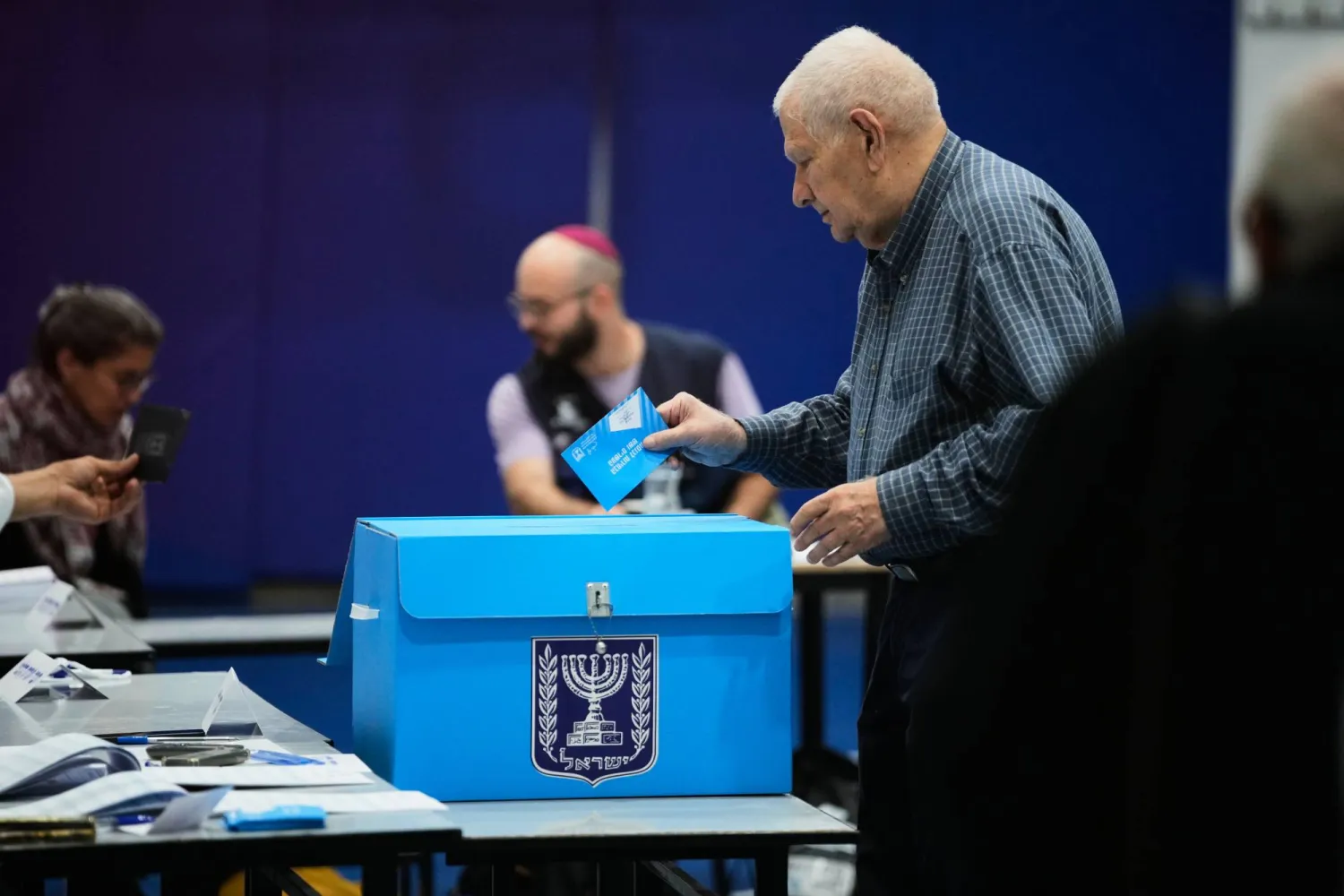
A man casts his ballot at a polling station during Israel's general election in Jerusalem, Tuesday, Oct. 27, 2026. (AP Photo/Ohad Zwigenberg)
TT

Israelis Vote in a Pivotal Election Centered on Netanyahu’s Leadership, Oct. 7 and Its Aftermath

A man casts his ballot at a polling station during Israel's general election in Jerusalem, Tuesday, Oct. 27, 2026. (AP Photo/Ohad Zwigenberg)

Israelis are voting in a pivotal election Tuesday as their country wrestles with unresolved wars, lingering grief and anger over Hamas' Oct. 7, 2023, attack, and deep divisions over its longest-serving leader, Prime Minister Benjamin Netanyahu. 

Netanyahu, who voted just after midday, faces an array of parties seeking to drive him from power. Opinion polls have suggested a tight race with his main rival, former military chief Gadi Eisenkot. 

Nearly 56% of eligible voters had cast ballots by 4 p.m., the highest turnout by that point since at least 1973, according to the Central Elections Committee. Exit polls late Tuesday will provide the first indication of how Israelis voted, with official results tallied in the coming days. 

The race is widely seen as a referendum on Netanyahu’s nearly unbroken 17-year rule, which had left Israelis bitterly divided on a host of issues even before the deadliest attack in its history. The resulting wars in Gaza, Lebanon and Iran, along with settler violence in the occupied West Bank, have stoked worldwide outrage, straining ties with Israel’s closest allies and fueling a rise in antisemitism. 

Among Israelis, the election is widely seen as a struggle over the character of the state, pitting Netanyahu and his ultranationalist and religious allies against those seeking to preserve its liberal and secular foundations. 

Over 7 million people are eligible to vote, and tens of thousands have reportedly arrived from overseas. 

Arab turnout could be crucial In Israel's fragmented parliamentary politics, no single party has ever won an outright parliamentary majority. There is a chance that neither Netanyahu's coalition nor the group of parties hoping to remove him has enough support for a majority. That could set off weeks of negotiations before a leader is declared. 

“This is a very moving and fateful moment,” Netanyahu said. He told journalists after voting that he believes the Arab parties that could make or break the election “are receiving massive, truly massive, support. They are heading to the polls in unprecedented numbers.” 

Netanyahu in past elections has warned of high Arab turnout to energize his own right-wing voters. While he did not provide evidence for his latest claim, turnout appeared to have increased significantly in Arab communities, according to data from the Central Elections Committee. 

Eisenkot encouraged voters to ignore Netanyahu's “scare tactics.” 

Israel's Arab-led parties could emerge as kingmakers — if other parties agree to join forces with them. 

“Our vote will change the government,” Mansour Abbas, head of the Islamist Ra’am party. Arabs in Israel make up about 20% of the population. 

Israel’s far-right national security minister, Itamar Ben-Gvir, known for taunting Palestinian detainees and saying some Palestinians in Gaza are “not even people,” warned that “it will be Mansour Abbas’ government” if Netanyahu and his allies don’t win. 

The higher turnout in Arab communities and liberal bastions could spell trouble for Netanyahu, said Ofer Kenig, a research fellow at the Israel Democracy Institute, a Jerusalem think tank. 

“But Netanyahu has before managed to mobilize voters in the dying hours of the election day, so a lot of caution is needed," he added. 

Some voters' emotions ran high. In Kiryat Shmona, a Netanyahu stronghold near the border with Lebanon, one man kicked and tore down a poster of Eisenkot. 

The election is Israel's first national vote since the Oct. 7 attack that sparked the war in Gaza and related conflicts. In Tel Aviv, families of some killed on Oct. 7 or former hostages held a moment of silence. “Remember all those whose voices are no more,” said Yona Adam, whose daughter Mapal Adam was killed. 

Around 330,000 young Israelis, many facing compulsory military service under the shadow of war, are eligible to vote for the first time. 

Eisenkot started the day by visiting communities attacked on Oct. 7. “If someone in the government had a shred of responsibility, they would start the morning here” in the communities near Gaza, he said. 

Standing in a cheering crowd, Eisenkot called on all Israelis to vote to get rid of “the worst government Israel has known.” He noted that victory wasn’t certain, adding that “we are on perhaps the most critical day since the founding of the state.” 

There were scattered allegations of irregularities and issues at polling stations, but Dean Livne, the acting director-general of the elections commission, said the number of complaints was so far much lower than in previous elections. 

Security, military conscription and integrity are top issues Israel has found itself increasingly isolated over its conduct in Gaza and the West Bank. Public support among Americans has plummeted, and partners in Europe and elsewhere have slapped sanctions on Israel. Netanyahu faces an international arrest warrant over alleged crimes against humanity in Gaza, allegations he denies. 

Also hanging over the election are lingering tensions with Iran. Netanyahu ramped up threats ahead of the vote, warning Tehran it would face “a devastating blow” if it attacked Israel. 

Netanyahu's supporters see him as a steady hand and a consummate statesman who has led Israel through a war of redemption after the country's darkest hour. They think he is protecting Israel's security and Jewish identity in the face of international pressure and liberal elites at home. 

His detractors see him as a polarizing leader who, beset by an ongoing corruption trial, dragged out the war in Gaza and its hostage crisis for political reasons. They say he is undermining Israel's independent judiciary and weakening its democratic underpinnings. And they accuse him of abetting a system that has allowed ultra-Orthodox religious Jews to avoid military conscription. 

“The present government is driving the country into the ground,” voter Angela Bengur said in Jerusalem. 

Eisenkot is viewed by supporters as a capable leader with sterling security credentials who, along with his likely governing partners, could act as a bulwark against creeping illiberalism. As someone personally touched by the conflict — his son and two nephews were killed in Gaza — his backers believe that he feels deeply the pain that still courses through Israel. 

Parties that likely would support Eisenkot have vowed to improve Israel's international standing and work to conscript ultra-Orthodox men while bolstering the independence of the judiciary. 


Waller to Asharq Al-Awsat: Britain Is Working to Restrict the Flow of Weapons to the Houthis

The British destroyer HMS Dragon sails toward the Strait of Hormuz. (Royal Navy on X)
TT

Waller to Asharq Al-Awsat: Britain Is Working to Restrict the Flow of Weapons to the Houthis

The British destroyer HMS Dragon sails toward the Strait of Hormuz. (Royal Navy on X)

The British government's Arabic-language spokesperson for the Middle East and North Africa, Jocelyn Waller, stressed that her country is working through the UN Security Council to restrict the flow of weapons to the Houthis as part of its efforts to contain the escalation in Yemen, stressing the need to reach a political solution that ends the cycle of violence in the country.

In an interview with Asharq Al-Awsat, Waller said the Houthis chose to resume destructive fighting in Yemen, describing their attacks inside the country and on Saudi Arabia as “unacceptable”, and calling on parties supplying the group with weapons to halt their shipments.

Waller addressed the growing security challenges facing the Middle East, praising the resilience of Gulf states in confronting attacks and threats targeting their vital infrastructure.

She also underlined London's commitment to the diplomatic track to reach a sustainable settlement with Iran, as well as continued pressure to preserve the prospects of a two-state solution to the Palestinian-Israeli conflict, including through sanctions targeting Israeli settlement activity.

Deterring the Houthis

Speaking about the renewed fighting in Yemen, Waller said London is translating its positions into practical measures, pointing to the sanctions her country imposed on November 24 against the Houthi group and four of its senior officials.

Britain is working through the Security Council to restrict the flow of weapons, while supporting Saudi Arabia's defenses to protect its citizens from the reckless attacks launched by the Houthis, she added.

Waller pointed to the worsening humanitarian crisis in Yemen, noting that the United Kingdom is providing £104 million (about $136 million) in humanitarian aid this year, including £10 million ($13.1 million) to meet emergency needs. She stressed the necessity of ensuring aid reaches civilians and releasing relief workers detained by the Houthis.

Waller stressed that her country's goal remains reaching a political solution rather than continuing an endless cycle of violence, adding that Yemenis deserve security, institutions that provide them with services, and a future where wars are not repeated.

Broad partnership with the Gulf

Waller praised the efforts of Gulf countries in confronting the security threats in the region, recalling her personal experience in Saudi Arabia, where she lived for five years focusing her work on the Yemen file.

She noted that she lived in Riyadh for five years with her work centered on Yemen, adding that her two children were born in the Saudi capital and that these ties helped shape her understanding of the importance of security for families, communities, and the region's ambitions.

She added that during her presence in the Gulf amid the crisis, she witnessed the scale of efforts made by the region's defense forces to protect citizens and residents, including thousands of Britons.

The UK stood with its Gulf partners by contributing to air defense missions and providing equipment and personnel to bolster their air defenses, she stressed.

Waller added that the British-Gulf partnership is not limited to confronting security threats, citing the free trade agreement Britain reached with the Gulf Cooperation Council (GCC) last May, becoming the first G7 country to reach such an agreement with the bloc.

The agreement embodies her country's confidence in the future of the Gulf and reflects the breadth of a partnership encompassing education, investment, and innovation, describing the Gulf as a strategic partner and a formidable diplomatic force, she remarked.

Iranian attacks

On the prospects of reaching a settlement with Iran, Waller said that diplomacy remains the only path to achieving a sustainable resolution, stressing that Tehran must not possess a nuclear weapon, and that its nuclear commitments must be strict, verifiable, and fully implemented.

She praised ongoing mediation efforts by countries, including Qatar and Pakistan, underscoring London's support for de-escalation efforts, restoring safe passage through the Strait of Hormuz, and reaching a lasting agreement.

However, she stressed that adhering to the diplomatic track does not mean overlooking Iranian attacks, describing Iran's recent targeting of Bahrain and Kuwait as unacceptable.

She noted that her country continues to provide defensive support to its regional partners and is leading, together with France, a multinational defensive initiative to help restore navigation through the Strait of Hormuz.

Defense and diplomacy serve the same purpose of protecting people and creating the conditions for lasting stability, she remarked.

Pressure on Israel

On British policy toward Israel, Waller noted that measures taken by London should be measured by their impact, noting that evaluating the effectiveness of sanctions takes time.

She explained that the sanctions announced by London on November 17 targeted eight companies involved in illegal settlement expansion, aiming to undermine their ability to secure financing and support the construction of further settlement facilities.

These measures send a clear message to companies considering bidding to participate in the E1 settlement project not to take part in destroying the two-state solution, she went on to say.

She noted progress on the legislation London announced last September, which prohibits the provision of services and trade between British companies and illegal settlements.

In response to a question about her country's readiness to escalate its measures should Israeli policies continue, Waller avoided speculating on additional sanctions for fear of undermining their effectiveness, but stressed that holding high office grants no exceptions, recalling that her country had previously imposed sanctions on two Israeli ministers.

Britain's goal remains ensuring the establishment of a viable and sovereign Palestinian state living next to a secure Israel, she said, noting continued work with international and regional partners to preserve the chances of achieving this goal.

The future of Gaza

Regarding the deteriorating humanitarian situation in the Gaza Strip, which Waller described as a man-made humanitarian catastrophe, she said her country adopts an approach combining diplomatic pressure, targeted sanctions, and aid delivery, citing sanctions imposed by London this month on a group of Israeli extremists obstructing the entry of aid convoys, in addition to mobilizing more than 50 countries to demand the lifting of restrictions on humanitarian aid entry.

She noted that Britain's £88 million ($115.3 million) humanitarian and early recovery support package helps provide healthcare, clean water, and basic services in the Gaza Strip and the West Bank, including £5 million (about $6.6 million) announced by London this month to support UNICEF efforts in responding to winter humanitarian needs.

She added that her country is also pressing to allow the entry of equipment needed to clear rubble and open roads in the Strip.

Waller linked Gaza's reconstruction efforts to establishing political foundations, underlining her country's support for implementing the 20-point plan and handing over administration of the Strip to the Palestinians, while stressing that Hamas can have no role in governing Gaza in the future.

Britain can contribute to peace-building efforts based on its expertise, including its experience in Northern Ireland, while supporting Palestinians in taking a leading role in managing their affairs, she remarked.

Interconnected security challenges

When asked about the most prominent challenges she has observed since assuming her post about a year ago amid escalating turmoil in the Middle East, Waller pointed to the accelerating pace of events, the interconnectedness of crises, and the spillover of their repercussions beyond the region.

She cited the impact of disrupted navigation in the Strait of Hormuz on energy supplies, food security, and living costs worldwide, saying that Middle East stability represents a shared international interest. She also tied her country's ability to influence events to its cooperation with partners, listening to regional states, maintaining relations with them, and translating diplomatic moves into tangible actions.

She stressed that Britain's responsibility lies in deploying its diplomatic, humanitarian, and defensive tools in a coherent manner, grounded in international law and the interests of the peoples living through these crises.


Ukraine’s Attack on Russian Ship in Libya Was Not Coordinated with Partners, Zelenskiy Says

Ukraine's President Volodymyr Zelenskiy speaks to the media at the beginning of a meeting with British Defense Secretary Wes Streeting in Kyiv, amid Russia's attack on Ukraine, November 21, 2026. (Reuters)
TT

Ukraine’s Attack on Russian Ship in Libya Was Not Coordinated with Partners, Zelenskiy Says

Ukraine's President Volodymyr Zelenskiy speaks to the media at the beginning of a meeting with British Defense Secretary Wes Streeting in Kyiv, amid Russia's attack on Ukraine, November 21, 2026. (Reuters)

President ‌Volodymyr Zelenskiy said that Ukraine's operation that sank a Russian warship at a Libyan naval base had been carried out without prior coordination with European allies.

Zelenskiy said late on Friday that he confirmed this during a phone call with Italian Prime Minister Giorgia Meloni.

"We discussed the ‌issues we ‌are dealing with right ‌now, ⁠and it’s important that ⁠we understand each other," Zelenskiy said in a post on X.

"I confirmed that the recent operation in Libya was conducted without prior coordination with our European partners."

Meloni has ⁠warned Ukraine against allowing the ‌war with Russia, ‌which is in its fifth year ‌after Russia's full-scale invasion in February ‌2022, to spill into the Mediterranean Sea.

Ukraine said this month that its naval drones had sunk the Russian warship ‌Merkury at a naval base in Benghazi and had ⁠also hit ⁠a Russian cargo vessel off Libya’s coast, which Kyiv said had been used to transport weapons.

Ukraine has said that the operation was directed at Moscow's military and not at Libya itself.

"I also stressed our commitment to making sure our respective authorities share all necessary information and maintain direct, regular, and effective communication," Zelenskiy said.


An Explosion at a School in Eastern Afghanistan Kills 7, Wounds More than 90

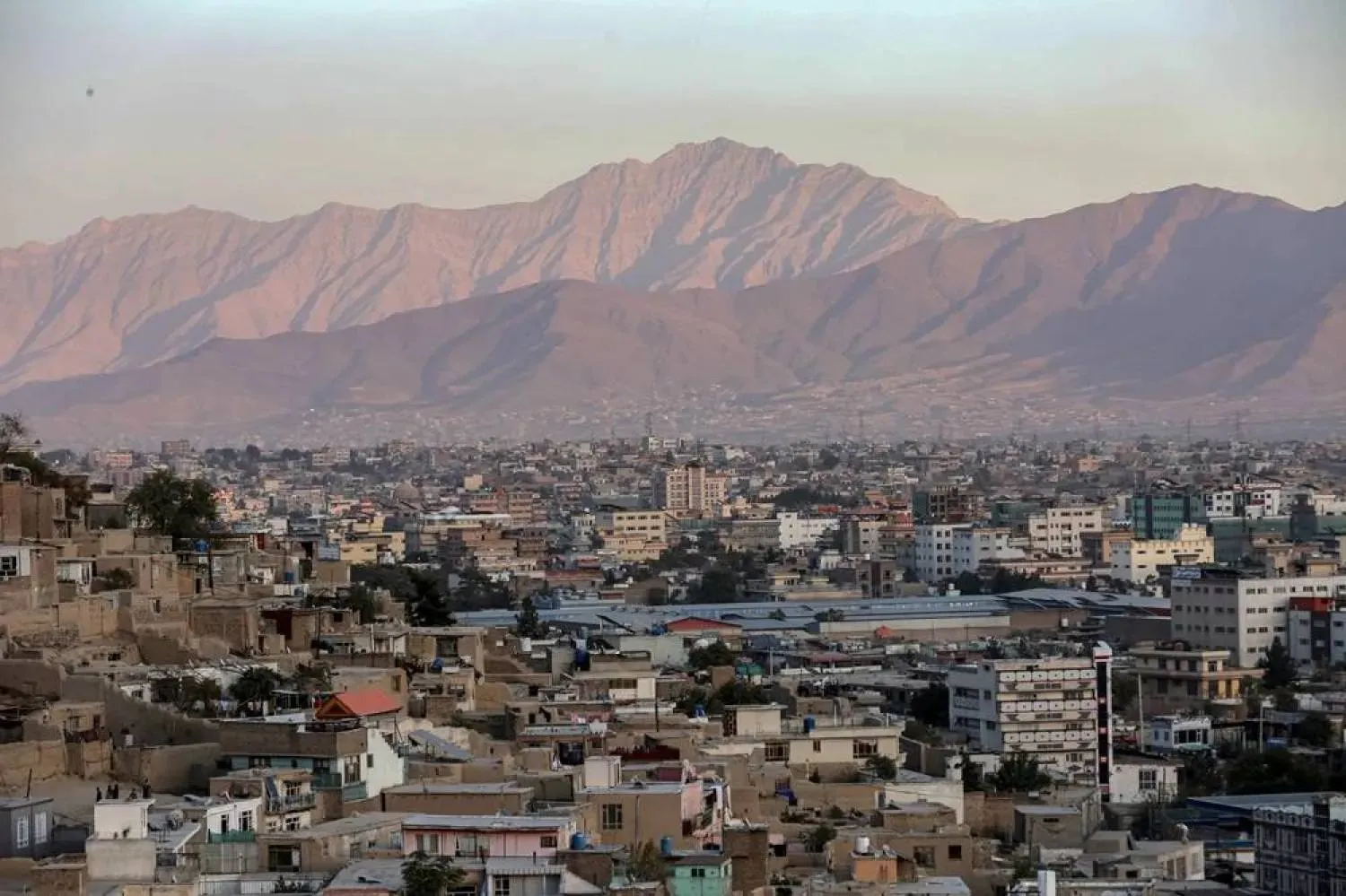
File photo: The city's skyline is framed by mountain peaks in Kabul, Afghanistan, 22 October 2026. (EPA)
TT

An Explosion at a School in Eastern Afghanistan Kills 7, Wounds More than 90

File photo: The city's skyline is framed by mountain peaks in Kabul, Afghanistan, 22 October 2026. (EPA)

An explosion at a school in the eastern Afghan province of Kunar Saturday killed seven people and wounded more than 90, the province’s culture and information director said, adding that the blast appeared to have originated in a neighboring depot for explosives. 

Sami ul Haq Bayan said initial information indicated the blast at the school on the outskirts of the provincial capital, Asadabad, occurred due to negligence at the depot storing explosives belonging to mining companies. An investigation into the incident was underway, he said. 

Up to 15 of the wounded remain in hospital, while the rest were discharged after treatment, he added. 

Earlier, Kunar Provincial Police Headquarters spokesperson Farid Dehqan said the explosion occurred at 10 a.m. at a school in the Andar Ser area on the outskirts of Asadabad. 

Footage posted on social media showed cars bringing wounded children to the emergency department of a hospital in Asadabad, as well as images of the school building, part of which appeared to have collapsed. 

Mining is a major industry in Afghanistan, a country that is rich in raw materials, including iron ore, copper, lead, zinc, gold, coal and precious stones. But safety standards at the mining companies are often poor, leading to accidents. 

Gemstone mining is on the rise in Kunar, with various companies extracting precious stones which are subsequently sold at auction. 

In August, a hand grenade attack at a school complex in the Afghan capital, Kabul, wounded more than 40 children aged between 9 and 14.