What’s Ahead as Votes Are Counted in an Israeli Election with No Clear Winner

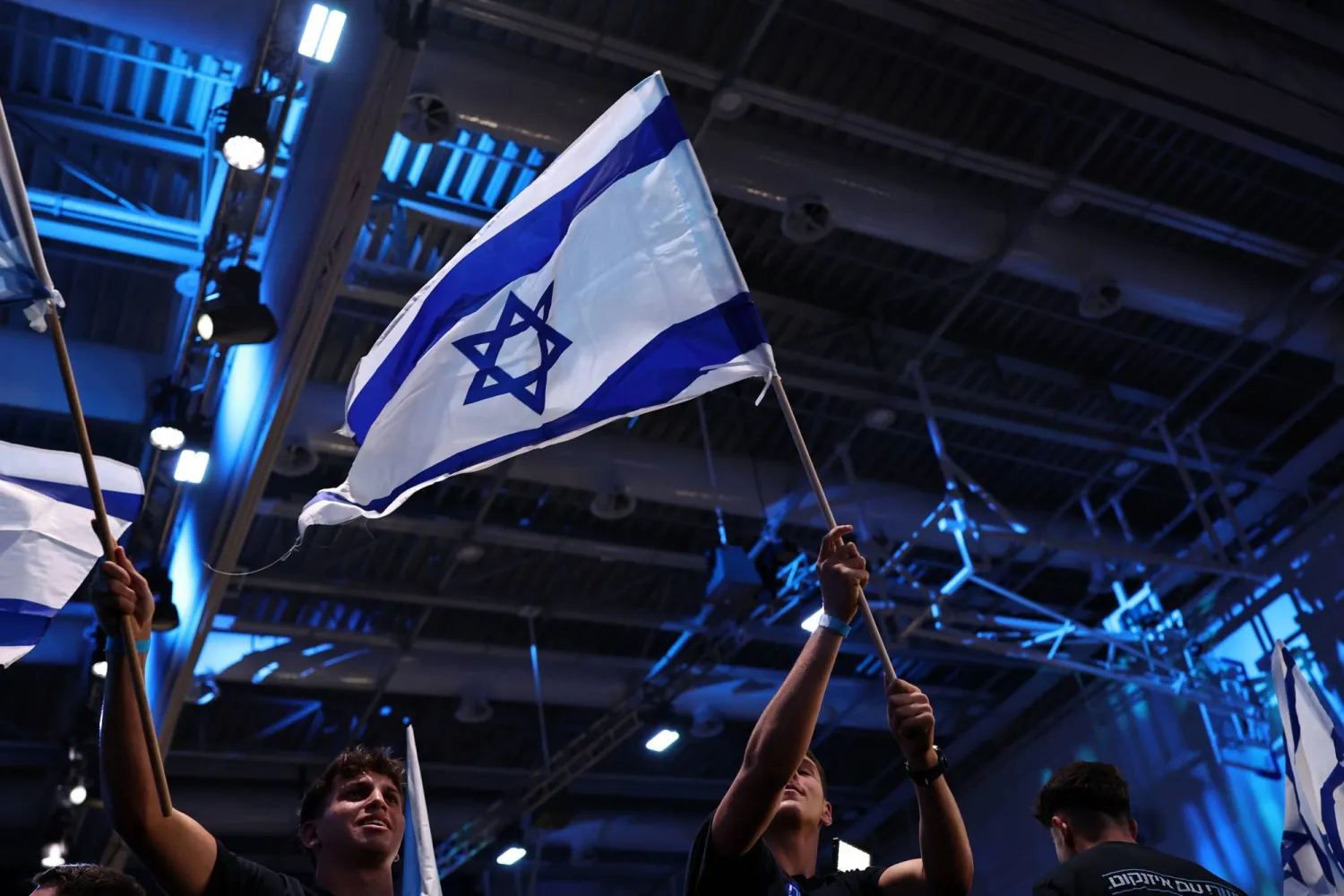
Supporters of the Yashar party of the former Israeli military chief Gadi Eisenkot react to the first exit polls, in Tel Aviv, Israel, 27 October 2026. (EPA)
TT

What’s Ahead as Votes Are Counted in an Israeli Election with No Clear Winner

Supporters of the Yashar party of the former Israeli military chief Gadi Eisenkot react to the first exit polls, in Tel Aviv, Israel, 27 October 2026. (EPA)

Israelis appear to have handed a rebuke to Prime Minister Benjamin Netanyahu in national elections, but what’s next is uncertain as exit polls suggest there's no clear winner and no obvious path to a governing majority.

The election was widely seen as a referendum on Netanyahu, the country’s longest-serving prime minister, who gave a defiant speech to his supporters just after 3 a.m. on Wednesday in Jerusalem.

His party, Likud, appears to have gotten the most votes. But the exit polls by major Israeli TV stations indicate that support for his religious-national coalition dropped significantly.

The exit polls suggested his opponents — led by Netanyahu’s chief rival, Gadi Eisenkot, who also rallied exuberant supporters in Tel Aviv early on Wednesday — could secure a solid majority in the next parliament. But whether those disparate parties, which include Arab-led parties, can form a government is uncertain. It would likely take weeks of haggling or possibly new elections.

Here are some key points to know on Wednesday morning, hours after the polls closed in Israel.

Exit polls suggest no clear winner and complex power-jockeying ahead

In Israel, voters choose not individuals but parties. Since no party has ever captured a parliamentary majority on its own, party leaders must agree to come together in a governing coalition.

Exit polls indicate that Netanyahu's bloc of supporters won about 51 seats in parliament, approximately the same as the bloc led by Eisenkot, a former military chief of staff. That would leave each side well below the 61 seats needed to form a government with a parliamentary majority.

The exit polls suggested that Arab-led parties captured the remaining 19 seats.
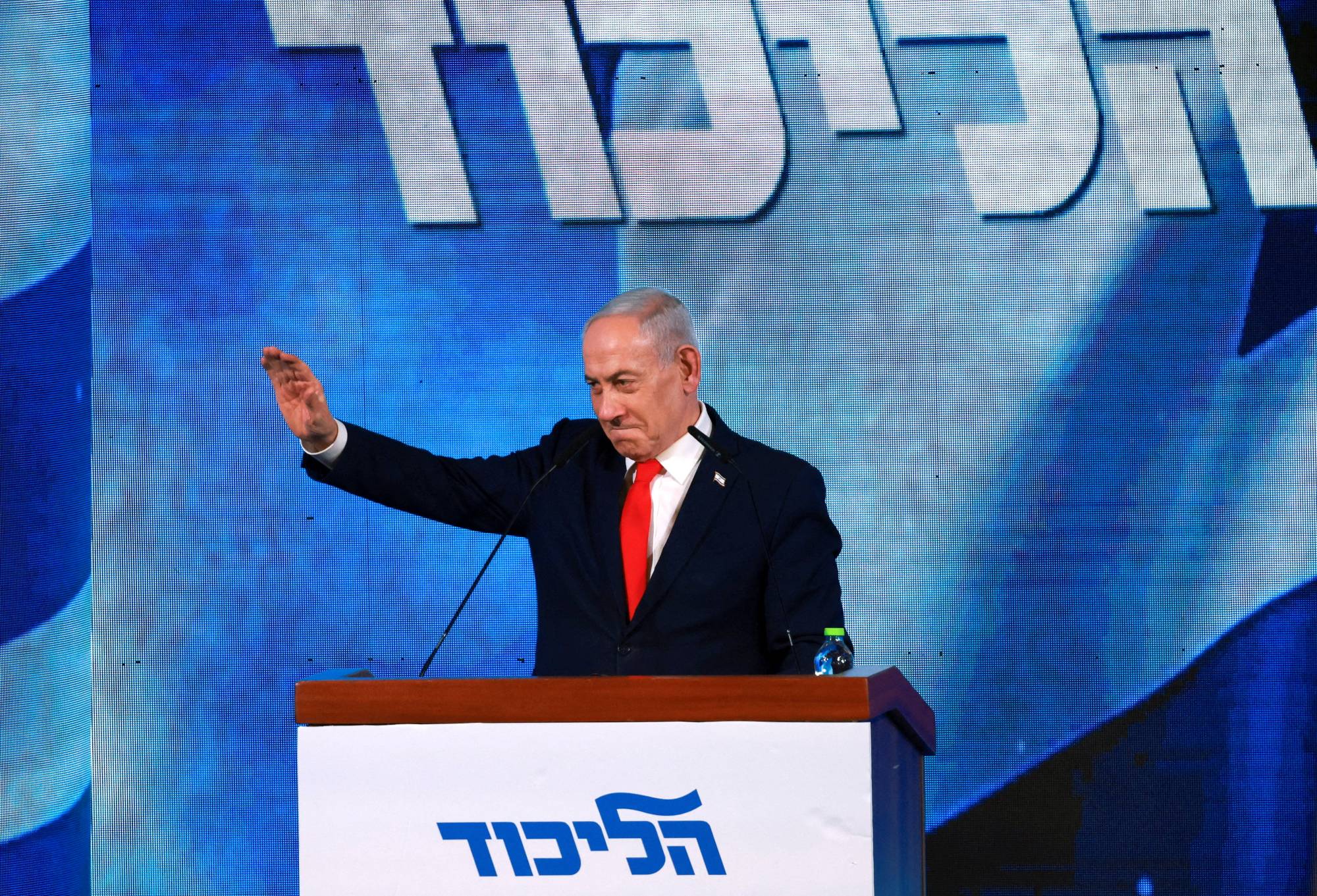
Israeli Prime Minister and Likud party leader Benjamin Netanyahu gestures after exit polls, at his party headquarters during Israel's national election, in Jerusalem, October 28, 2026. (Reuters)

With just under a third of the ballots counted early on Wednesday morning, Israel’s Central Elections Committee reported 22.02% of the vote went to Likud, the party led by Netanyahu, and 15.46% to Eisenkot's Yashar party. The count does not indicate how many seats each party will win in the parliament.

Arab parties could play a key role in next coalition

Final official results aren't expected until later this week and they may vary from the exit polls, which, like all surveys, are subject to potential error.

If the Arab parties do as well as the exit polls suggest, they could play a decisive role in selecting Israel's next prime minister.

In his election night speech, Netanyahu repeated his refusal to create a government relying on Arab parties. Eisenkot has signaled he is ready to work with them under certain conditions, but that could risk alienating some of his partners.

Campaigns gave short shrift to Palestinian issues

Israelis are largely opposed to a Palestinian state. No major candidate advocated a return to the long-moribund peace process.

Even Mansour Abbas, a Palestinian Arab politician who leads Ra’am, the first Arab-led party to join a governing coalition in 2021, focused his campaign on concerns about crime in Arab communities.

As exit polls were shown on a screen at an Abbas election night event in Sakhnin, an Arab city in northern Israel, supporters of the small Arab-led party Ra’am erupted in celebration.

Enduring impact of Oct. 7 attacks

This election was held against the background of the enduring trauma of the Hamas-led attack on Oct. 7, 2023, when fighters killed 1,200 people, mostly civilians, and abducted 251 others, and the ensuing wars in Gaza and beyond.

The deadliest day in Israel’s history featured prominently in the campaigns. Israelis have focused on the security failures surrounding Oct. 7 and the enormous burden on their society, rather than on the humanitarian situation in war-devastated Gaza.
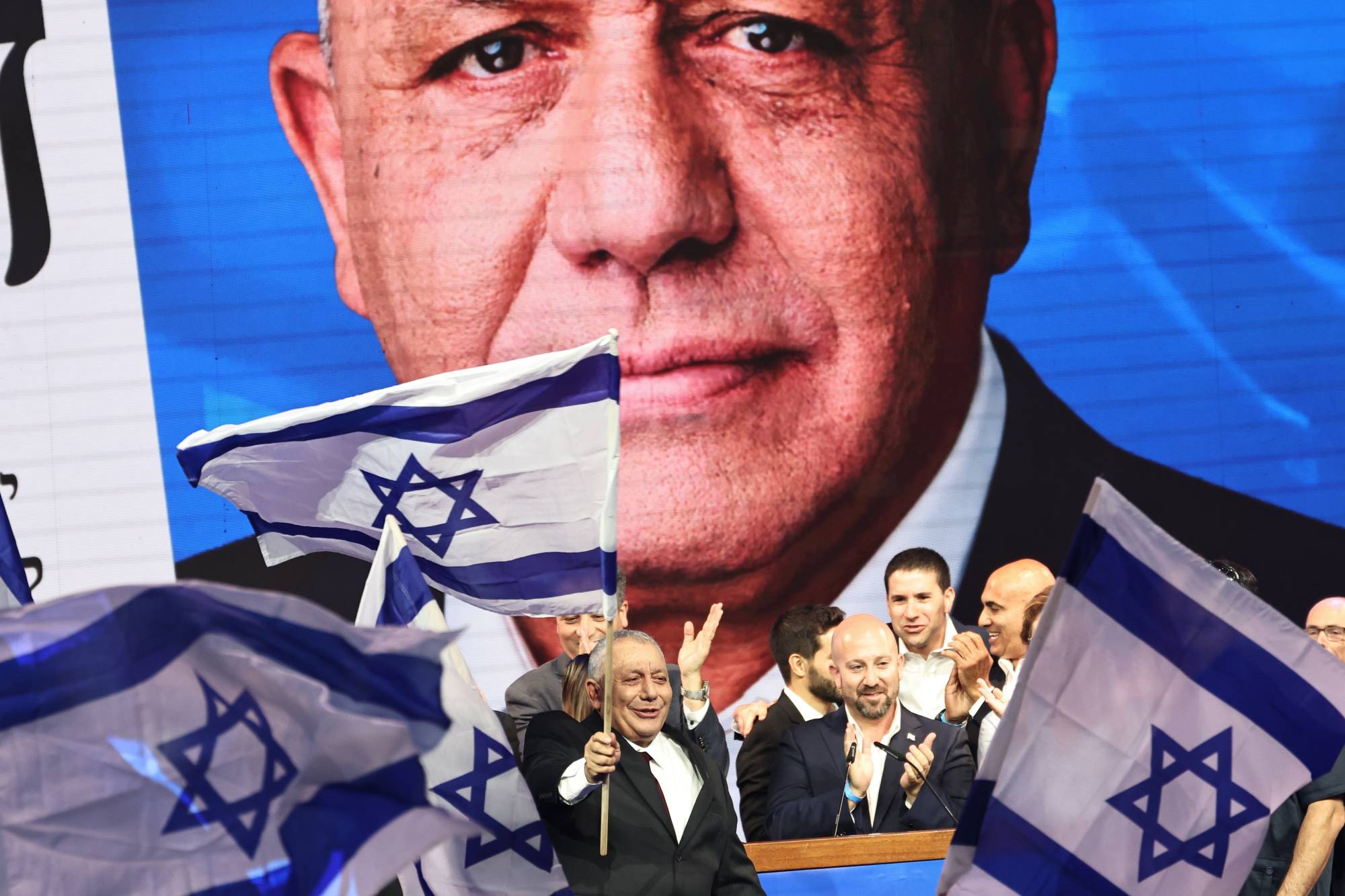
Leader of the Yashar party and former Israeli military chief, Gadi Eisenkot, celebrates with supporters the first election results, Tel Aviv, 27 October 2026. (EPA)

Netanyahu has rejected an investigation into Oct. 7 and blamed the army for the failures that day. His supporters say he led the country back from that difficult day and scored important achievements in wars in Gaza, Lebanon and Iran.

Netanyahu’s opponents said he should be held accountable for the security failures that occurred on his watch and have demanded a commission of inquiry.

Religious divide over military service

The country has also been deeply divided by exemptions from military service granted to ultra-Orthodox males. These exemptions are especially contentious after three years of wars.

Netanyahu’s governing coalitions have long relied on ultra-Orthodox Jewish parties that have demanded these exemptions remain in place.

Eisenkot — who lost his son and two nephews to combat in Gaza — has vowed to end the de facto exemptions. He repeated that promise speaking to supporters on Wednesday morning.

The exit polls, which also indicated a drop in support for ultra-Orthodox parties, signaled voter unhappiness over these exemptions.

High voter turnout

The final update from Israel’s Central Elections Committee put voter turnout at 77.7% of eligible voters as polls closed Tuesday night.

That’s the highest turnout since 1999, and just over seven percentage points higher than in the previous election in 2022, reflecting the high stakes of the election.


Flavio Bolsonaro and Family to Receive US Visas After Leaving Brazil, State Department Says

Brazil's right-wing presidential candidate and Senator Flavio Bolsonaro waves during a press conference in Brasilia on August 5, 2026, where he announced federal deputy Alfredo Gaspar as his running mate for the 2026 presidential election. (AFP)
TT

Flavio Bolsonaro and Family to Receive US Visas After Leaving Brazil, State Department Says

Brazil's right-wing presidential candidate and Senator Flavio Bolsonaro waves during a press conference in Brasilia on August 5, 2026, where he announced federal deputy Alfredo Gaspar as his running mate for the 2026 presidential election. (AFP)

Brazilian Senator Flavio Bolsonaro has left the country for the United States after losing Sunday's presidential election, three sources said, with the US State Department due to grant him and his family entry visas.

Bolsonaro, who has yet to concede to leftist incumbent Luiz Inacio Lula da Silva, left Brazil after refusing to comply with a Supreme Court order to surrender his passports.

The ruling relates to a money laundering probe in which he denies wrongdoing.

Argentina's migration department said on Wednesday that Bolsonaro and his family had briefly entered the country's Misiones province on Tuesday night through a road crossing, with valid travel documents, before boarding a private plane bound for Guayaquil, Ecuador at 11:30 pm local time (0230 GMT).

Argentina cited the flight plan, for the plane operated by air charter company Baires Fly, as the source for the aircraft's destination. The Ecuadorian foreign ministry did not respond to an emailed request for comment outside regular hours.

The current location of Bolsonaro, his wife and two daughters was not immediately clear.

Speaking to reporters late on Tuesday, US President Donald Trump had said that he ‌had heard Bolsonaro ‌was in Argentina.

"The State Department will issue visas to Flavio Bolsonaro and his family and ‌allow ⁠them entry into ⁠the United States," a senior State Department official said.

BRAZIL-US RIFT GROWS

Bolsonaro's departure threatens to deepen a rift between the two most populous nations in the Americas. Lula has accused Washington of colluding with the Bolsonaros to put them back in power, and Reuters reported ahead of Sunday's election on a US State Department campaign to restore them to office.

Trump told reporters on Wednesday that he would approve of Bolsonaro coming to the United States.

"Well, I would approve. I think they're fine people. The election was very strange, and I thought it was terrible. It's gotten bad reviews. You look at what happened to their market", Trump said.

"I think it's so terrible to see it. I didn't ⁠take sides, you know. I know them both. I know Lula. I know Flavio a ‌little bit. I know the father very well. The father was treated really badly. ‌I thought, but I wasn't involved. That's Brazil. It's a different country," he said.

Trump has previously alleged Flavio's father, former President Jair Bolsonaro, was ‌a victim of judicial persecution in Brazil. The elder Bolsonaro also went to the United States after refusing to concede to ‌Lula in 2022, when former US President Joe Biden was in office. He eventually returned but was later given a 27-year sentence for plotting a coup after his supporters stormed government buildings in Brasilia.

On Monday, Trump had said the Brazilian vote "looked like another rigged election."

Lula, speaking in Brasilia, said he had just heard that Flavio had left the country, and called it shameful, saying he should have stayed in Brazil and proved his innocence.

Bolsonaro ‌had been favored to win Sunday's presidential election but ended up losing in a shock result.

ORDERED TO HAND OVER PASSPORTS

On Monday, he was given 24 hours to surrender his ⁠passports, which were canceled after the ⁠deadline lapsed, two sources said. In a court ruling seen by Reuters, the Supreme Court cited the risk of Bolsonaro fleeing Brazil and his "significant financial resources" in ordering his passports seized.

Bolsonaro, who loses his immunity from prosecution when his Senate term ends in February, had said on Monday he had no plans to flee.

"I have never thought about leaving the country," he said. "I will hand over my passports and defend myself against this travesty, which is a clear attempt to intimidate me."

His departure appeared to have caught his campaign manager off guard.

"We are surprised by the news because, just yesterday, we discussed the need for Flavio — given the 60 million votes he received — to take on this role as leader of the opposition," Senator Rogerio Marinho told reporters.

FOLLOWING FATHER'S PATH

Although Bolsonaro has yet to officially concede defeat — saying on Sunday he would seek the annulment of the result over alleged voter irregularities — his Liberal Party said on Monday it acknowledged Lula's victory.

Eduardo Bolsonaro, Bolsonaro's younger brother who lives in the United States, said ahead of the vote that an election loss would require a move.

"If my brother does not win, I'm in favor that he would leave the country," he told podcaster Steven Crowder this month.


Pakistan Says Afghan Firing Kills One in Border District

The city's skyline is framed by mountain peaks in Kabul, Afghanistan, 22 October 2026. (EPA)
TT

Pakistan Says Afghan Firing Kills One in Border District

The city's skyline is framed by mountain peaks in Kabul, Afghanistan, 22 October 2026. (EPA)

‌One person was killed and five injured after Afghan Taliban fired at civilian houses and a market in Pakistan's Waziristan region, near the countries' border, a senior Pakistani administrative official said on Wednesday.

Pakistani ‌forces are "responding ‌effectively and heavily" to ‌the "unprovoked" ⁠firing on Tuesday, ⁠the Deputy Commissioner of South Waziristan Lower said on X.

Afghan Taliban spokesperson Zabihullah Mujahid did not immediately respond to ⁠Reuters' requests for comment ‌on ‌the incident.

The violence comes days ‌after the Afghan Taliban ‌said that problems with Pakistan can be resolved through diplomacy.

Allies-turned-foes Pakistan and Afghanistan ‌have increasingly been at odds over militancy, with ⁠Islamabad accusing ⁠Kabul of harboring militants who stage cross-border attacks.

The Taliban government denies the charge and says militancy is Pakistan's internal problem.

The conflict between the neighbors has killed hundreds of people this year.


What’s Ahead as Votes Are Counted in an Israeli Election with No Clear Winner

Supporters of the Yashar party of the former Israeli military chief Gadi Eisenkot react to the first exit polls, in Tel Aviv, Israel, 27 October 2026. (EPA)
TT

What’s Ahead as Votes Are Counted in an Israeli Election with No Clear Winner

Supporters of the Yashar party of the former Israeli military chief Gadi Eisenkot react to the first exit polls, in Tel Aviv, Israel, 27 October 2026. (EPA)

Israelis appear to have handed a rebuke to Prime Minister Benjamin Netanyahu in national elections, but what’s next is uncertain as exit polls suggest there's no clear winner and no obvious path to a governing majority.

The election was widely seen as a referendum on Netanyahu, the country’s longest-serving prime minister, who gave a defiant speech to his supporters just after 3 a.m. on Wednesday in Jerusalem.

His party, Likud, appears to have gotten the most votes. But the exit polls by major Israeli TV stations indicate that support for his religious-national coalition dropped significantly.

The exit polls suggested his opponents — led by Netanyahu’s chief rival, Gadi Eisenkot, who also rallied exuberant supporters in Tel Aviv early on Wednesday — could secure a solid majority in the next parliament. But whether those disparate parties, which include Arab-led parties, can form a government is uncertain. It would likely take weeks of haggling or possibly new elections.

Here are some key points to know on Wednesday morning, hours after the polls closed in Israel.

Exit polls suggest no clear winner and complex power-jockeying ahead

In Israel, voters choose not individuals but parties. Since no party has ever captured a parliamentary majority on its own, party leaders must agree to come together in a governing coalition.

Exit polls indicate that Netanyahu's bloc of supporters won about 51 seats in parliament, approximately the same as the bloc led by Eisenkot, a former military chief of staff. That would leave each side well below the 61 seats needed to form a government with a parliamentary majority.

The exit polls suggested that Arab-led parties captured the remaining 19 seats.

Israeli Prime Minister and Likud party leader Benjamin Netanyahu gestures after exit polls, at his party headquarters during Israel's national election, in Jerusalem, October 28, 2026. (Reuters)

With just under a third of the ballots counted early on Wednesday morning, Israel’s Central Elections Committee reported 22.02% of the vote went to Likud, the party led by Netanyahu, and 15.46% to Eisenkot's Yashar party. The count does not indicate how many seats each party will win in the parliament.

Arab parties could play a key role in next coalition

Final official results aren't expected until later this week and they may vary from the exit polls, which, like all surveys, are subject to potential error.

If the Arab parties do as well as the exit polls suggest, they could play a decisive role in selecting Israel's next prime minister.

In his election night speech, Netanyahu repeated his refusal to create a government relying on Arab parties. Eisenkot has signaled he is ready to work with them under certain conditions, but that could risk alienating some of his partners.

Campaigns gave short shrift to Palestinian issues

Israelis are largely opposed to a Palestinian state. No major candidate advocated a return to the long-moribund peace process.

Even Mansour Abbas, a Palestinian Arab politician who leads Ra’am, the first Arab-led party to join a governing coalition in 2021, focused his campaign on concerns about crime in Arab communities.

As exit polls were shown on a screen at an Abbas election night event in Sakhnin, an Arab city in northern Israel, supporters of the small Arab-led party Ra’am erupted in celebration.

Enduring impact of Oct. 7 attacks

This election was held against the background of the enduring trauma of the Hamas-led attack on Oct. 7, 2023, when fighters killed 1,200 people, mostly civilians, and abducted 251 others, and the ensuing wars in Gaza and beyond.

The deadliest day in Israel’s history featured prominently in the campaigns. Israelis have focused on the security failures surrounding Oct. 7 and the enormous burden on their society, rather than on the humanitarian situation in war-devastated Gaza.

Leader of the Yashar party and former Israeli military chief, Gadi Eisenkot, celebrates with supporters the first election results, Tel Aviv, 27 October 2026. (EPA)

Netanyahu has rejected an investigation into Oct. 7 and blamed the army for the failures that day. His supporters say he led the country back from that difficult day and scored important achievements in wars in Gaza, Lebanon and Iran.

Netanyahu’s opponents said he should be held accountable for the security failures that occurred on his watch and have demanded a commission of inquiry.

Religious divide over military service

The country has also been deeply divided by exemptions from military service granted to ultra-Orthodox males. These exemptions are especially contentious after three years of wars.

Netanyahu’s governing coalitions have long relied on ultra-Orthodox Jewish parties that have demanded these exemptions remain in place.

Eisenkot — who lost his son and two nephews to combat in Gaza — has vowed to end the de facto exemptions. He repeated that promise speaking to supporters on Wednesday morning.

The exit polls, which also indicated a drop in support for ultra-Orthodox parties, signaled voter unhappiness over these exemptions.

High voter turnout

The final update from Israel’s Central Elections Committee put voter turnout at 77.7% of eligible voters as polls closed Tuesday night.

That’s the highest turnout since 1999, and just over seven percentage points higher than in the previous election in 2022, reflecting the high stakes of the election.