


Israeli Opposition Bloc Gathers to See How to Oust Netanyahu

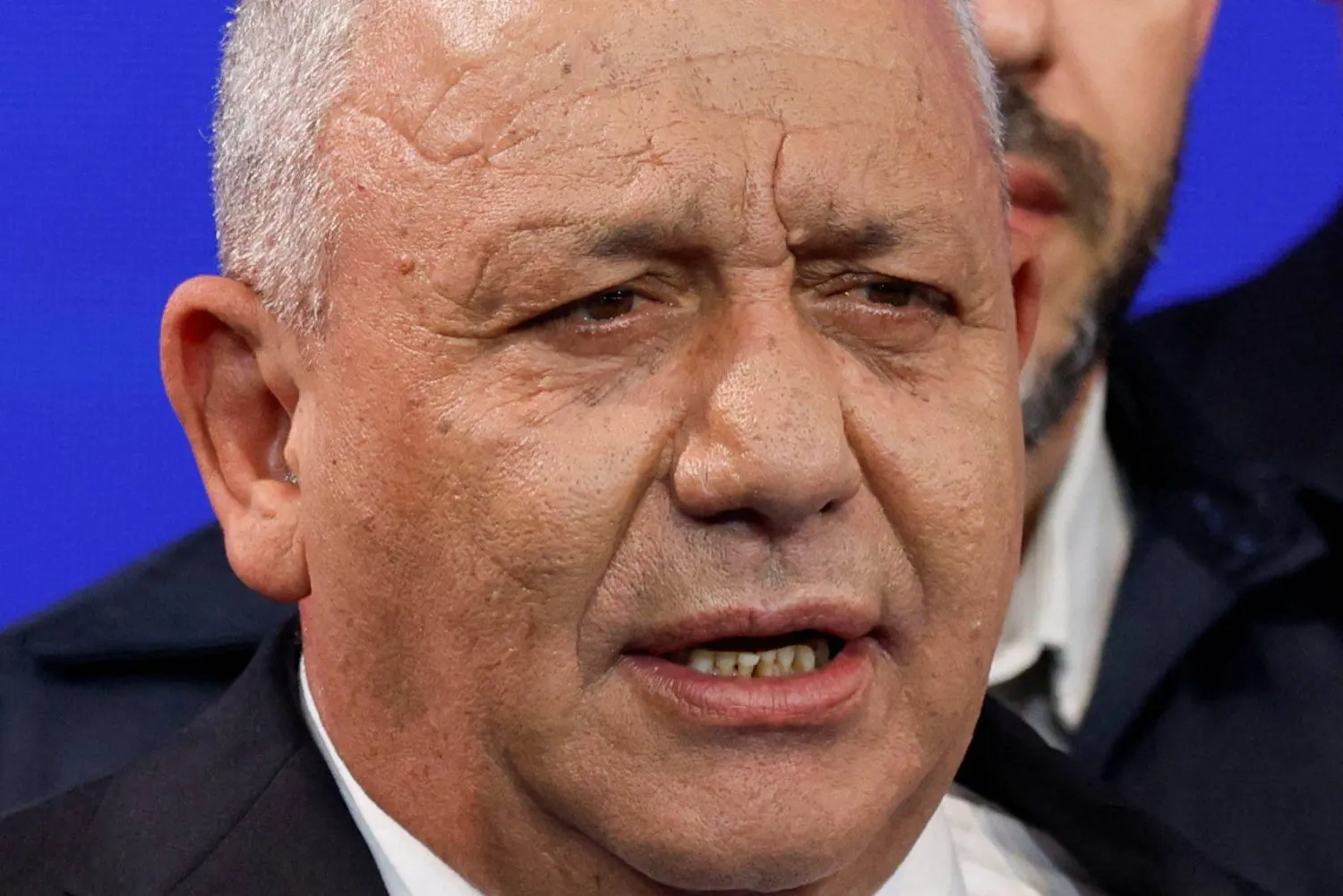
Former military chief Gadi Eisenkot, leader of the Yashar party, speaks following the exit poll at his party headquarters, on the evening of Israel's national election, in Tel Aviv, Israel October 28, 2026. (Reuters)
TT

Israeli Opposition Bloc Gathers to See How to Oust Netanyahu

Former military chief Gadi Eisenkot, leader of the Yashar party, speaks following the exit poll at his party headquarters, on the evening of Israel's national election, in Tel Aviv, Israel October 28, 2026. (Reuters)

The Israeli opposition bloc led by Gadi Eisenkot gathered on Tuesday for the first time since elections as they strategize how to oust Prime Minister Benjamin Netanyahu, with divisions on whether to ally with Arab lawmakers.

Opposition party heads gathered in Herzliya, the tech industry hub north of Tel Aviv where former military chief Eisenkot lives, a week after the election produced an inconclusive result.

Yair Lapid, a centrist former prime minister who headed the opposition in the outgoing parliament, said as he entered that Netanyahu was backing an "extreme and dangerous attempt to invalidate the elections".

"What we need to do now is go and form a government, because the conduct of recent days is just a reminder that we must remove Netanyahu and his people from the Prime Minister's Office," Lapid told reporters.

"They have already caused enough damage to the State of Israel and to the people of Israel," he said.

Netanyahu and his allies have repeatedly alleged major fraud or malfeasance by Arab-majority parties which made historic gains last week, winning 19 seats in the 120-member parliament on the back of anger over the hard-right government's rhetoric towards Arab citizens of Israel.

No side won a majority. Eisenkot's diverse opposition bloc won 48 seats while Netanyahu's camp secured 53, of which 27 are from his Likud party.

The Arab parties could bring Eisenkot to a majority but the opposition is divided on whether to ally with them, and Arab politicians did not join the talks in Herzliya.

Despite their diverging views on various issues, including the role of Arab lawmakers, all the party leaders in Eisenkot's bloc have said they would back him to form the next government.

Public opinion polls conducted before the election showed that Jewish Israeli opposition supporters are divided over including Arab parties in government while right-wing Israelis are adamantly opposed.

- 'Political reality' -

Yousef Jabareen, the head of the largest Arab-majority party in the next parliament, told AFP that the opposition needed to accept "political reality" and team up to remove Netanyahu.

Arab-Israelis are descendants of Palestinians who remained after Israel's creation in 1948 and account for around 20 percent of the population today.

On the campaign trail, most of the main Jewish opposition parties rejected partnering with the Arab-majority lists citing a lack of common values, particularly around security and national identity.

The notable exception was Yair Golan, head of the left-wing party The Democrats, who said it was racist to exclude working with the Arab minority.

Netanyahu spent the campaign painting Arab parties as untrustworthy and stoking fears of a Palestinian state.

Avigdor Liberman, a right-wing member of Eisenkot's bloc who heads the Yisrael Beiteinu party, on Tuesday stressed that another election must be avoided but said that the Arab lists should not be included in the government.

"Given the political situation that has emerged, there is enough room to maneuver, and with proper navigation it is possible to quickly establish a functioning and stable government without Raam and the Joint List," he wrote on X, referring to the two Arab-majority lists.

On Monday, Netanyahu called for a "broad national government" without the Arab parties and said that as his Likud was the largest single party, he should lead the next coalition.

No opposition leader has voiced any openness to a unity government with Netanyahu, Israel's longest-serving prime minister, pointing to his divisiveness, the corruption charges against him and his failure to prevent the October 7, 2023 attack by Hamas.

"We seek to establish a broad government with our partners and with any party that wishes to join and does not support terrorism," Netanyahu said in a Telegram post.

He ruled out a coalition with Arab-majority lists, alleging that the parties "support terrorism and deny the existence of the Jewish state".

Leaders of Arab-Israeli parties have unanimously condemned the October 7 attack by Hamas without describing the Palestinian movement as a terror group.

Although the leader of the Raam party has recognized Israel as a "Jewish state", other leaders have rejected that definition.



Iran Rules Out UN Inspections of Damaged Nuclear Sites Until War Ends

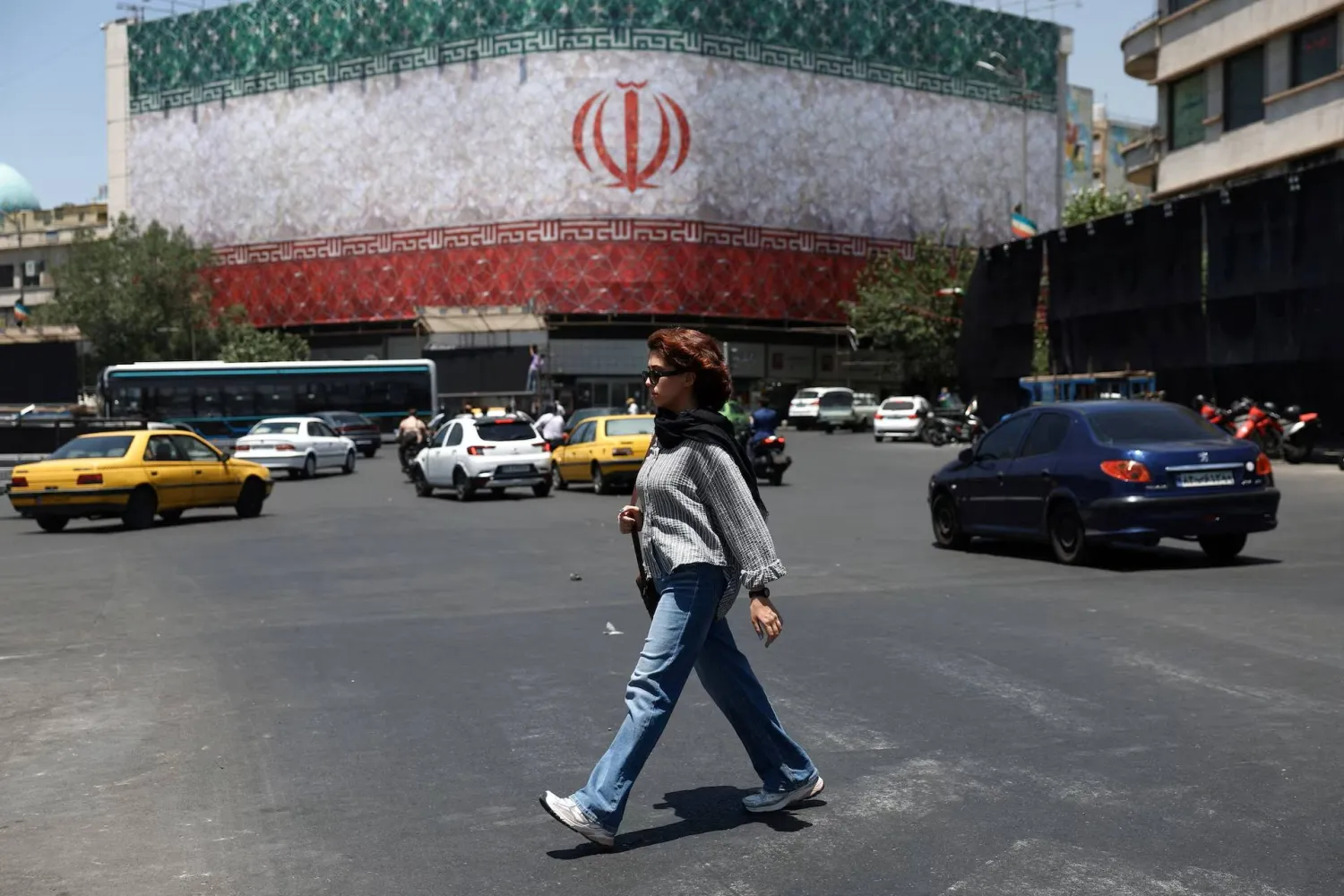
A street in Tehran, June 14, 2026. Majid Asgaripour/WANA (West Asia News Agency) via REUTERS
TT

Iran Rules Out UN Inspections of Damaged Nuclear Sites Until War Ends

A street in Tehran, June 14, 2026. Majid Asgaripour/WANA (West Asia News Agency) via REUTERS

Iran will not let UN inspectors visit its damaged nuclear facilities until the Middle East war has ended and the United States meets its conditions, a senior Iranian official said.

The remarks came days after the International Atomic Energy Agency urged Tehran to take steps towards resuming inspections, which have been suspended since last year's 12-day war with Israel, when the US also struck Iranian nuclear sites.

"We will not grant the IAEA access to the facilities until Iran's conditions are met and the war has permanently ended," Deputy Foreign Minister Kazem Gharibabadi said in a televised interview late Sunday.

Iranian nuclear facilities were hit again during the war which broke out on February 28 when US-Israeli strikes killed Iran's supreme leader Ali Khamenei.

IAEA inspectors visited Iran's Bushehr nuclear power plant in September but have not gained access to other bombed sites including Natanz, Fordow and Isfahan.

Gharibabadi said the agency's request to inspect damaged facilities was "likely aimed at assessing the effectiveness of American weaponry".

Efforts to end the Middle East war have made little headway. Tehran is demanding that Washington unfreeze Iranian assets and lift sanctions, among other conditions, in exchange for reopening the Strait of Hormuz, the vital energy shipping route it has blockaded during the conflict.

Iranian officials have said talks on Iran's nuclear program would come at a later stage.

Earlier this month, the US military announced a $20 million reward for information on Iran's nuclear program, a move Tehran called "repugnant".


A Fire in a Building in Southern Thailand Kills 11 People

 In this image taken with a smartphone and provided by the Kusoldharm Phuket Foundation, damage is seen at a motorcycle rental shop on the ground floor of a residential building following a fire in Phuket, Thailand, Monday, Nov. 16, 2026. (Kusoldharm Phuket Foundation via AP)
In this image taken with a smartphone and provided by the Kusoldharm Phuket Foundation, damage is seen at a motorcycle rental shop on the ground floor of a residential building following a fire in Phuket, Thailand, Monday, Nov. 16, 2026. (Kusoldharm Phuket Foundation via AP)
TT

A Fire in a Building in Southern Thailand Kills 11 People

 In this image taken with a smartphone and provided by the Kusoldharm Phuket Foundation, damage is seen at a motorcycle rental shop on the ground floor of a residential building following a fire in Phuket, Thailand, Monday, Nov. 16, 2026. (Kusoldharm Phuket Foundation via AP)
In this image taken with a smartphone and provided by the Kusoldharm Phuket Foundation, damage is seen at a motorcycle rental shop on the ground floor of a residential building following a fire in Phuket, Thailand, Monday, Nov. 16, 2026. (Kusoldharm Phuket Foundation via AP)

A fire burned through a building in southern Thailand early Monday, killing 11 people, authorities said.

The fire started around 2 a.m. in the building in Phuket that has a motorcycle rental shop on the ground floor and residences on the upper floors, officials of the local government said. It took firefighters about an hour to bring the fire under control.

There were 17 other people who were slightly injured.

Phuket police commander Surachai Sooksai said officers are still investigating the cause of the fire, but initial investigations found an electrical transformer near the building had exploded shortly before the fire started.

Phuket Gov. Chodnarin Koedsom said the rental shop had about 100 motorcycles, along with stored gas, engine oil, plastic materials and tires. He said these combustible materials may have contributed to the rapid spread of the fire and the thick, toxic smoke.

He said the victims appeared to try to escape the fire to the higher floors. One body was found on the third floor and 10 others were found on the fifth floor.

Phuket is on an island in southern Thailand and a popular tourist destination.


China Says Xi-Putin-Trump Meeting Has ‘Groundbreaking Significance’

US President Donald Trump looks at Chinese President Xi Jinping as Xi arrives ahead of a state visit at Joint Base Andrews, Maryland, US, September 23, 2026. (Reuters)
TT

China Says Xi-Putin-Trump Meeting Has ‘Groundbreaking Significance’

US President Donald Trump looks at Chinese President Xi Jinping as Xi arrives ahead of a state visit at Joint Base Andrews, Maryland, US, September 23, 2026. (Reuters)

China's Foreign Ministry said on Monday that this week's trilateral meeting between the Chinese, US and Russian leaders is of "groundbreaking significance" and will promote world peace and stability.

The meeting between Chinese President Xi Jinping, US President Donald Trump and Russian President Vladimir Putin will take place on Thursday in China's southern city of Shenzhen, the site of this week's APEC summit.

Trump will raise efforts to reduce nuclear arms at the meeting, ‌the White House ‌said last week. China has rebuffed attempts ‌to ⁠talk about nuclear ⁠arms with Russia and the United States, which have the largest stockpiles of such weapons.

Chinese Foreign Ministry spokesperson Mao Ning told reporters in Beijing this would be the first face-to-face meeting among the heads of state of China, Russia, and the United States.

"They will exchange views in ⁠depth on safeguarding world peace and promoting strategic ‌stability in major-power relations, which ‌is of groundbreaking significance," she added.

Under the current circumstances, the ‌three countries bear an important responsibility to cooperate in ‌addressing global challenges and to promote world peace and stability, Mao said.

"Stronger communication among China, Russia, and the United States, along with managing differences and stabilizing relations, serves the interests of all ‌three countries," she added.

It also meets the expectations of the international community, and helps "stabilize the ⁠global situation ⁠and advance dialogue and cooperation".

Mao did not give details of what exactly is on the agenda for the trilateral meeting.

Speaking in Manila on Monday, UN chief Antonio Guterres said the United Nations is prepared to support any denuclearization effort that may arise from the summit meeting of the three countries.

China has said it was more appropriate for Russia and the US to speak directly because of their large arsenals.

The UN has long advocated nuclear disarmament, warning that rising geopolitical tension and growing rivalry among major powers have fueled global nuclear risks.