


Trump Deflects Blame for Midterms Rout but Says Accepts Results

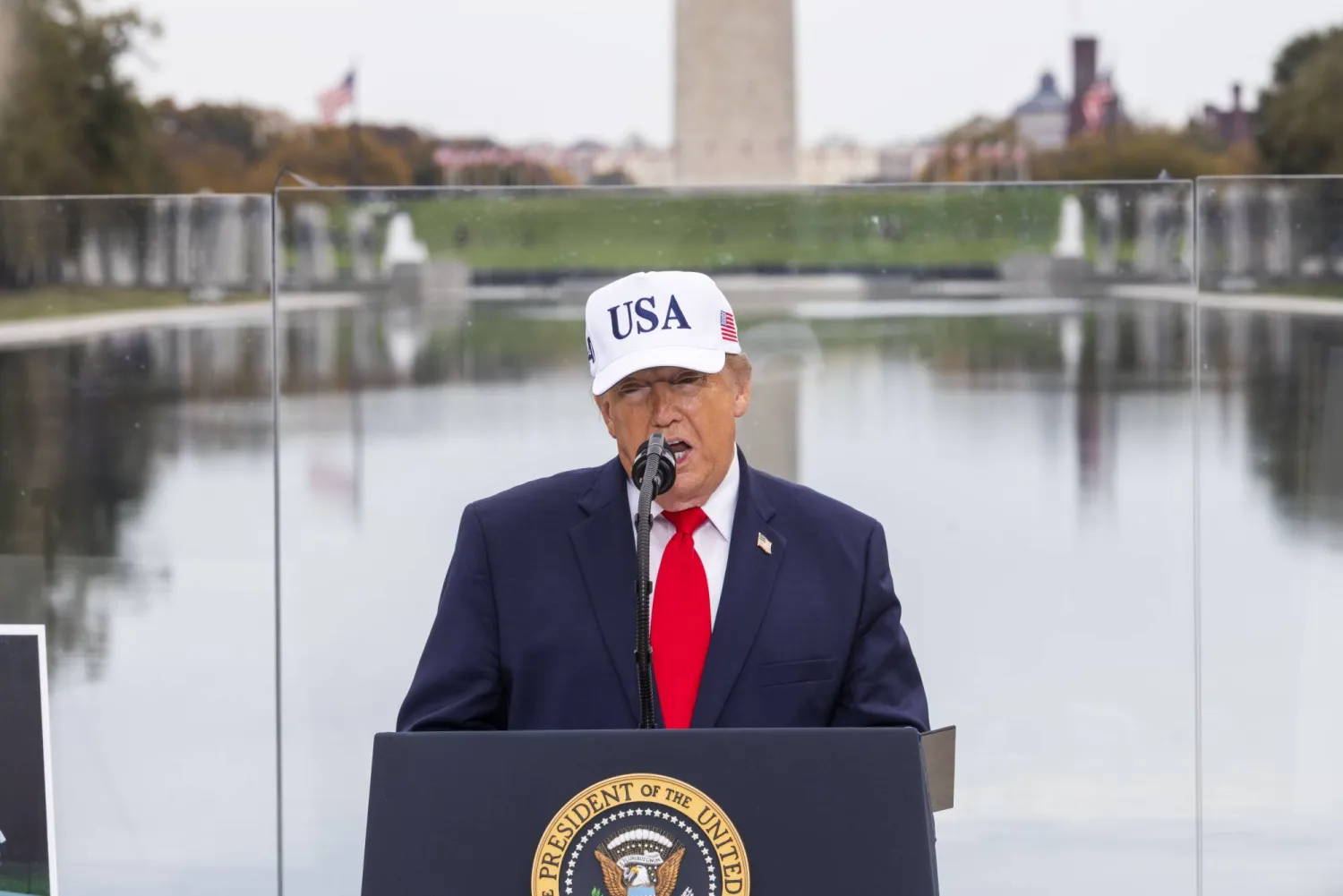
US President Donald Trump delivers his closing pitch the day before midterm elections at the Lincoln Memorial Reflecting Pool in Washington, DC, USA, 02 November 2026. (EPA)
TT

Trump Deflects Blame for Midterms Rout but Says Accepts Results

US President Donald Trump delivers his closing pitch the day before midterm elections at the Lincoln Memorial Reflecting Pool in Washington, DC, USA, 02 November 2026. (EPA)

President Donald Trump said Tuesday he would accept the results of US midterm elections -- but quickly sought to shift the blame for the historic rout to his fellow Republicans.

Time and again on the campaign trail the 80-year-old told Republicans to "pretend I'm on the ballot." That may have been exactly the problem, as voters put Democrats in control of the House and Senate.

But Trump has never been one to take the blame, and in his first reaction to the election results Tuesday he insisted that the Republican Party would have won in a "landslide" if he had actually been running.

"I wasn't on the Ballot and if I was, we would have won IN A LANDSLIDE! Thank you for your attention to this matter," Trump said in a post on his Truth Social platform.

Dismissing speculation about whether he would repeat his refusal to accept his 2020 presidential election loss to Joe Biden, Trump later took a conciliatory tone with the New York Times.

"I am absolutely willing to accept those results," he told The New York Times. "We'll work with the Democrats, and we'll, you know, look forward to working with them. We'll probably work something out."

But Trump later gave a hint of what he really intended to do to Democratic attempts at legislating, posting a picture of his trademark red MAGA baseball hat with the single word: "VETO."

There was a bunker mentality in the White House as Trump and his top cabinet members watched the bruising results come in at a reception in the lavish East Room.

"The White House mood is defiant," a White House official told AFP.

- 'Buckle up' -

A White House official questioned the quality of Republican candidates for the House and Senate.

Many of them Trump had endorsed and traveled across the country to rally support for -- even lavishing praise, in one case, on Republican Ohio Senate candidate Jon Husted.

"Candidate quality matters, and President Trump did a better job promoting many of the candidates on the ballot than the candidates did themselves," the White House official said.

Trump himself added later that he was going to "become a political pundit" and give the reasons why Republicans lost.

First in his crosshairs was Greg Abbott, the loyal Texas governor unseated by Democrat Gina Hinojosa. Trump said that if Abbott hadn't become a "RINO" (Republican In Name Only) "he wouldn't have lost."

The question now is how Trump will react to being a lame duck president for the last two years of his second term, with Democrats in control of both the House and Senate.

The White House indicated that Trump is unlikely to go quietly.

Iran is on his mind and there is widespread speculation that the president will resume large-scale military action against Tehran -- doubling down on a war that it is now clear voters loathed.

"Anyone who voted Democrat today is going to have a serious case of buyer's remorse when gas prices come down quickly when the Iran conflict is solved but they're still stuck with a list of liberal extremist Democrats," the White House official said.

The White House also gave a dark hint of retribution against his political enemies.

"A final note here: regardless of how today plays out, President Trump's resolve to stop the Radical Left is only going to become stronger. Buckle up."

Trump had appeared agitated before the first results even came in, posting a string of angry messages on social media lashing out at conservative broadcaster Fox News's coverage.

In one post sent as the first polls closed, Trump said Fox's ratings were "way down, not because of me, but because they are AGAINST me!"



Trump Says Takes ‘Very Seriously’ Possible Iran Threat to Washington

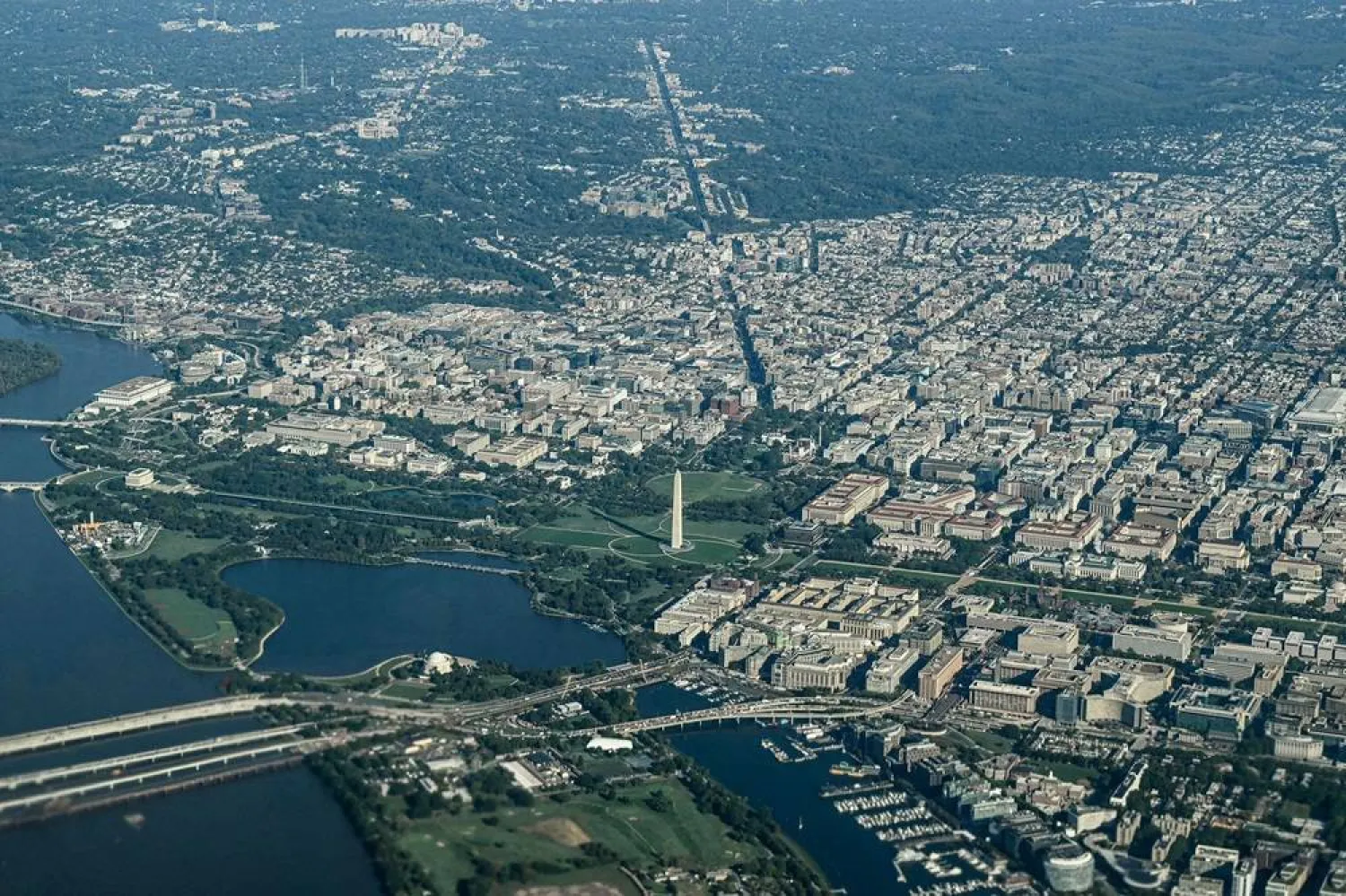
 An aerial view of Washington, DC is seen on October 13. (AFP/Getty Images)
An aerial view of Washington, DC is seen on October 13. (AFP/Getty Images)
TT

Trump Says Takes ‘Very Seriously’ Possible Iran Threat to Washington

 An aerial view of Washington, DC is seen on October 13. (AFP/Getty Images)
An aerial view of Washington, DC is seen on October 13. (AFP/Getty Images)

President Donald Trump said Tuesday that US authorities take "very seriously" any possible threat to Washington, after reports of Iran preparing a so-called dirty bomb plot.

"They will pay a price the likes of which no other country has ever paid before," Trump said, referring to Iran. "We take it very seriously because they happen to be crazy."

Earlier on Tuesday, Iran's Foreign Ministry spokesperson denied a CNN report that it ‌planned to ‌detonate a dirty ‌bomb ⁠in Washington, saying ⁠the allegations were "baseless".

CNN ‌cited ‌sources as saying that US intelligence ‌indicates that Tehran is developing ⁠plans ⁠to potentially detonate a dirty bomb in Washington DC.

Sources familiar with the latest intelligence characterized the Iranian planning as, for now, an effort to give itself options rather than an indicator of an imminent attack, reported CNN. But the plotting picked up by the US has been very specific and includes locations and targets, two of the sources said, and has sparked a flurry of US contingency planning.  

In a statement, White House spokesperson Lauren Bis said that the US is “monitoring any and all potential threats, but at this time there are no credible threats to the homeland.” 


Trump Arrives in Manila for Quad Talks Ahead of China Visit

US President Donald Trump waves as he walks to board Air Force One at Joint Base Andrews, Maryland, on November 16, 2026. (AFP)
TT

Trump Arrives in Manila for Quad Talks Ahead of China Visit

US President Donald Trump waves as he walks to board Air Force One at Joint Base Andrews, Maryland, on November 16, 2026. (AFP)

US President Donald Trump arrived in the Philippines on Tuesday at the tail end of a Southeast Asian summit, with protests awaiting him as he prepares for the first meeting in two years of the Quad group of Indo-Pacific countries.

Trump's Asia trip, which includes the Asia-Pacific Economic Cooperation (APEC) forum in Shenzhen and a much-anticipated trilateral meeting with his Chinese and Russian counterparts, comes after his Republican Party's defeat in midterm elections, plus spy allegations and new US curbs on China's access to AI chips that could complicate a fragile trade-war truce.

Demonstrators gathered in Manila for a fifth day of protests that have included the burning of Trump effigies, calls for an end to the Middle East war and scrapping of the US-led Pax Silica supply chain initiative.

Trump arrived late afternoon at the end of the Association of Southeast Asian Nations summit ‌and will join a ‌US-ASEAN "Special Summit" later on Tuesday.

He will first hold a meeting of the Quad – ‌the ⁠US, Japan, Australia and ⁠India – which will be his first and takes place two years after the last gathering of the group, which Trump's predecessor Joe Biden regarded as a signature foreign policy initiative.

It comes ahead of the APEC gathering hosted by Chinese President Xi Jinping, who has previously objected to the Quad as an effort to encircle Beijing. Quad members have said the grouping is not directed against any one country.

QUAD MEETING THE 'BEST POSSIBLE SIGNAL'

At the ASEAN summit on Monday, Chinese Premier Li Qiang hailed what he called "truly extraordinary" economic achievements of China and ASEAN in the face of global trade restrictions, expressing Beijing's commitment to free trade and the need to "stand united, ward off interference, and work together".

China ⁠is ASEAN's largest trading partner and a key source of investment, but the biggest economies ‌of the 11-member bloc – which has a combined GDP of more than $3.9 trillion – ‌want to deepen ties with the US despite protracted trade and diplomatic uncertainty under the Trump administration.

Former US Deputy Secretary of State Kurt ‌Campbell credited Washington's top diplomat, Marco Rubio, with the timing and reconvening of the Quad, which he said had lost ambition ‌under Trump.

"Part of what he (Rubio) is thinking is that this is probably the best possible signal if you're going to go into a trilateral meeting," said Campbell, co-founder of The Asia Group, referring to Thursday's US-China-Russia talks.

"The linchpin of everything that we do in Asia is the US-Japan relationship, and a perception that this is not at the top of the president's mind would concern me."

White House spokesperson Olivia Wales on Friday ‌said that under Trump's leadership, the Quad had demonstrated it is "a partnership of action, tackling the region's toughest challenges and driving opportunities to ensure a free and open Indo-Pacific".

A Japanese foreign ⁠ministry official said it was ⁠expected that Quad leaders would try to show unity, with maritime security, export restrictions, critical-minerals supply-chain diversification and AI among potential discussion points.

Undersea cables, emerging technology and disaster relief were also likely to be covered, a source familiar with the matter said.

JAPAN TO PLAY MORE PROACTIVE ROLE, PM SAYS

ASEAN's leaders held meetings on Tuesday involving counterparts of Japan, South Korea, China and India.

Japanese Prime Minister Sanae Takaichi pledged to work with ASEAN to boost regional economic and energy resilience to address export restrictions and vulnerabilities from rapid AI development, and strengthen supply chains, including on critical minerals.

"While the international order is experiencing a period of great instability, Japan will play an ever more proactive role," Takaichi said.

Trump will sign a joint statement with Thai Prime Minister Anutin Charnvirakul on Tuesday on an agreement on reciprocal trade. Thai media have reported the two would hold talks and the statement would be about progress on negotiations.

The US is Thailand's largest export market, accounting for 24% of its total shipments this year. The US designated Thailand as a major non-NATO ally in 2003.

Trump will on Wednesday meet Ferdinand Marcos Jr, president of US defense ally the Philippines, before heading to Shenzhen.


Pakistan Army Chief and Iran FM Discuss Regional Peace, Security

Vessels at the Strait of Hormuz, as seen from Musandam, Oman, November 17, 2026. (Reuters)
TT

Pakistan Army Chief and Iran FM Discuss Regional Peace, Security

Vessels at the Strait of Hormuz, as seen from Musandam, Oman, November 17, 2026. (Reuters)

Asim Munir, the powerful army chief of mediating country Pakistan, met with Iranian foreign minister Abbas Araghchi, the Pakistani military said Tuesday, during continued efforts to end the war between the United States and Iran.

Pakistan brokered a June accord that led to a brief halt in fighting between the United States and Iran and set a roadmap for further agreement on reopening the crucial Strait of Hormuz waterway and for negotiations on Tehran's nuclear program.

But the truce collapsed with Washington and Tehran accusing each other of violating the agreement and prompting months of shuttle diplomacy to resuscitate the ceasefire, led principally by mediators Qatar and Pakistan.

During the meeting on Monday, "matters of mutual interest, regional security dynamics and evolving geopolitical developments were discussed," the Pakistani military's media wing said in a statement.

Munir "underscored the importance of sustained engagement, mutual trust and close coordination between the two brotherly countries for promoting regional peace and stability", it added.

Araghchi arrived in Pakistan late on Sunday for a meeting of the Economic Cooperation Organization, a group of nations from Central and South Asia and the Middle East.

Pakistani Foreign Minister Ishaq Dar said on Monday he had held "very candid, very frank" discussions with Araghchi, during the conference confirming that Iran had put forward a two-day proposal to reopen the Strait of Hormuz as part of efforts to end the war with the United States.

He said Washington had not yet responded.

The United States and Israel launched the war on February 28, killing members of Iran's leadership and demanding it cease any nuclear-related activities.

The war plunged the Middle East into violence, with Tehran's retaliatory strikes targeting Gulf countries and sending global energy prices skyrocketing.

Tehran has insisted that Washington meet conditions including the release of frozen assets abroad, sanctions relief and an end to the US naval blockade of Iranian ports in exchange for reopening the Strait of Hormuz.