


Iranian Officials Gloat as US Voters Deal Blow to Trump

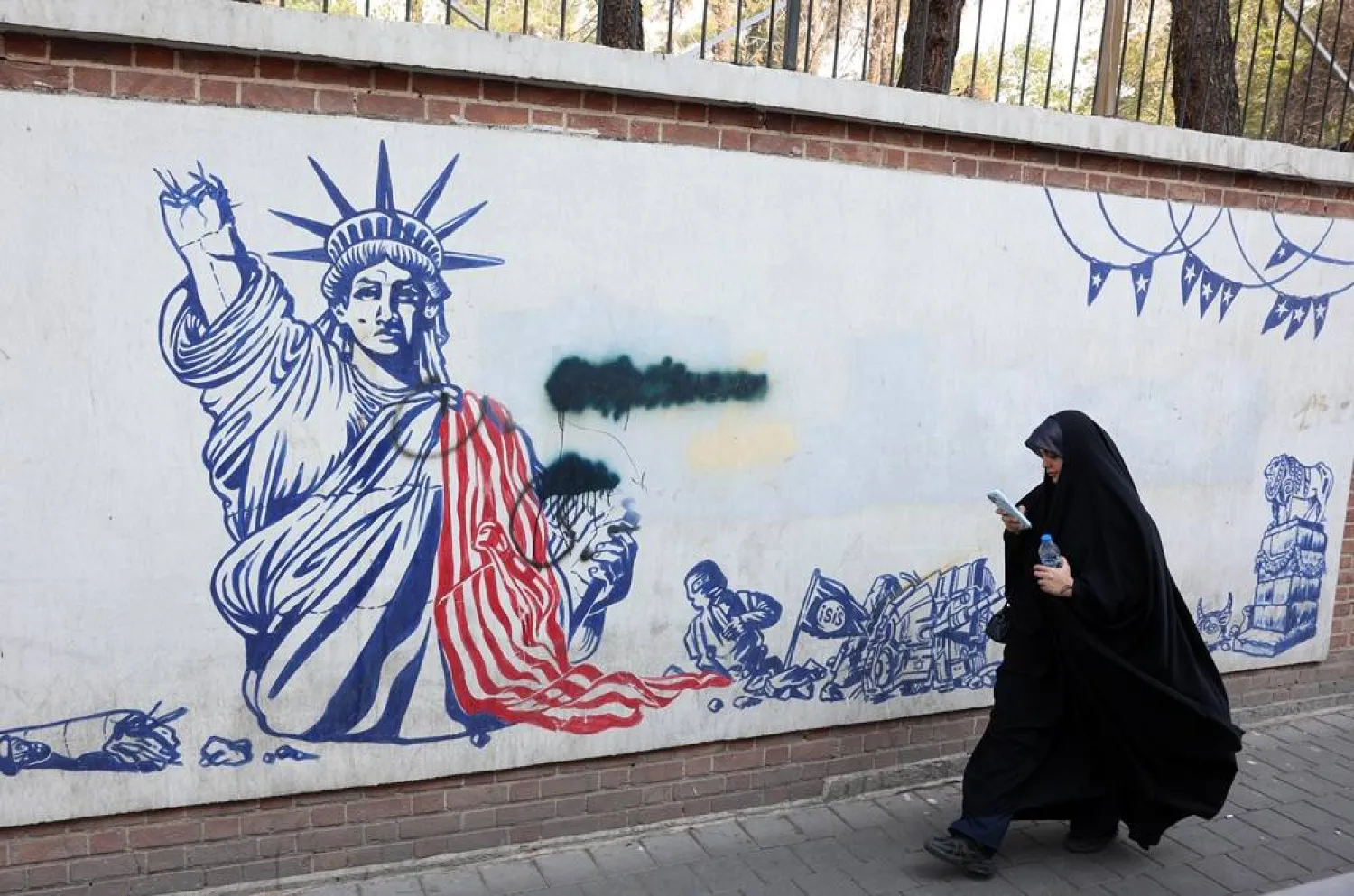
A veiled Iranian woman walks in front of an anti-US mural near the former US embassy in Tehran, Iran, 01 November 2026. (EPA)
TT

Iranian Officials Gloat as US Voters Deal Blow to Trump

A veiled Iranian woman walks in front of an anti-US mural near the former US embassy in Tehran, Iran, 01 November 2026. (EPA)

Iran's government savored the stinging rebuke delivered to Donald Trump in the midterm elections, declaring voters had rejected the war launched by the US president even as Tehran remained on high alert for the possibility of renewed strikes. 

"Conscience or the cost of living, Americans said NO TO WAR, and we endorse this message," Parliament Speaker Mohammad Baqer Ghalibaf, Iran's chief negotiator, posted on X, adding that Washington should not ignore public opinion by attacking his country again. 

Iran's Supreme Leader Mojtaba Khamenei said in a written statement that US hostility would persist regardless of which party was in power, warning against "even the slightest inclination towards submission" to the US. 

"The US sees the end of its hegemony as distant; we see it as near," he added. 

Democrats captured majorities in both the Senate and House in Tuesday's election, with victories in Republican strongholds underscoring deep frustration with Trump's stewardship of the economy and ‌his decision to launch ‌a war that drove up gas prices. 

Trump acknowledged in interviews with two media ‌outlets ⁠that the US-Israeli war ⁠played a role in Republican defeats. 

In Iran, a news outlet run by the judiciary shared a joke circulating on X that "Trump failed at regime change in Iran but he succeeded in Texas", a reference to the southern state where a Democrat won a Senate race for the first time in decades. 

But two senior Iranian sources told Reuters that while Iranian leaders welcomed the Democrats’ victory, Tehran was concerned that Trump could seek to compensate for it with a military strike, and remained on high alert. 

Mediators have intensified efforts to end the war amid fears it could reignite after the election, with Trump ⁠on Tuesday declining to rule out a resumption of combat operations after the vote and ‌Iran planning wider retaliation if war resumes. 

The US and Israel attacked ‌Iran on February 28, and Iran responded with strikes on Israel and Gulf states that host US bases. Conflict also erupted ‌in Lebanon between Iran-backed Hezbollah and Israel. 

Global oil and gas prices have shot up with shipping through the Strait of Hormuz severely disrupted after Tehran declared it closed, while the US has imposed a naval blockade on Iran, hitting Iran's economy hard. 

'IRAN'S SHADOW OVER US ELECTIONS' 

Ahead of the US election, senior Iranian officials told Reuters that Tehran was deliberately prolonging talks with ‌the US to weaken Trump politically ahead of the vote. 

The blow to Trump coincides with the anniversary of the 1979 seizure of the US embassy in Tehran, when ⁠radical students cemented Iran's revolution by storming the embassy soon after the fall of the US-backed Shah, holding 52 Americans hostage there for 444 days. 

Major Iranian newspaper Hamshahri linked the events with a front-page image showing Trump blindfolded with his head bowed. 

With a headline declaring "Iran's shadow over US elections", it said Washington had been "47 years Iran's captive: from the capture of the spies' nest (US embassy) to the November 2026 US Congress elections". 

The Iran war has been unpopular among Americans since it began, and blaming the war for driving up costs had been a focus of the Democrats' midterm election campaign. 

"The consequences of (US) miscalculations and arrogant delusions have manifested as a heavy burden of costs, borne by the American people and the puppet regimes subservient to the US government," Khamenei said in his written statement on Wednesday. 

Trump has offered shifting goals and timelines for the war that is now in its ninth month. 

"I think a part of it was Iran, but at the same time people understood the importance of what I've done with Iran," Trump told Fox News in an interview, referring to the election result. 

The conservative Iranian newspaper Jam-e Jam declared the election result "The twilight of Trumpism". 


Trump Says Takes ‘Very Seriously’ Possible Iran Threat to Washington

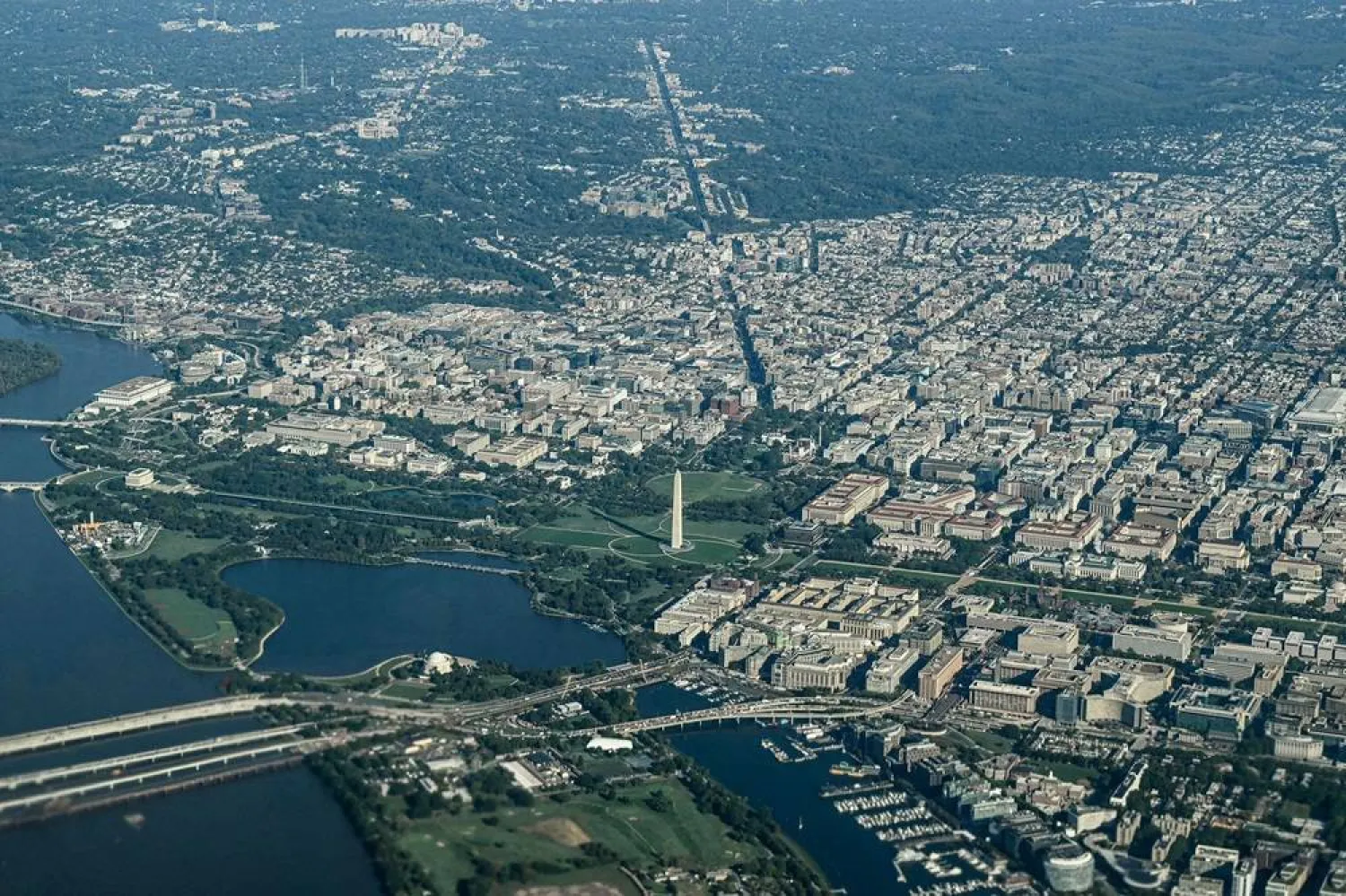
 An aerial view of Washington, DC is seen on October 13. (AFP/Getty Images)
An aerial view of Washington, DC is seen on October 13. (AFP/Getty Images)
TT

Trump Says Takes ‘Very Seriously’ Possible Iran Threat to Washington

 An aerial view of Washington, DC is seen on October 13. (AFP/Getty Images)
An aerial view of Washington, DC is seen on October 13. (AFP/Getty Images)

President Donald Trump said Tuesday that US authorities take "very seriously" any possible threat to Washington, after reports of Iran preparing a so-called dirty bomb plot.

"They will pay a price the likes of which no other country has ever paid before," Trump said, referring to Iran. "We take it very seriously because they happen to be crazy."

Earlier on Tuesday, Iran's Foreign Ministry spokesperson denied a CNN report that it ‌planned to ‌detonate a dirty ‌bomb ⁠in Washington, saying ⁠the allegations were "baseless".

CNN ‌cited ‌sources as saying that US intelligence ‌indicates that Tehran is developing ⁠plans ⁠to potentially detonate a dirty bomb in Washington DC.

Sources familiar with the latest intelligence characterized the Iranian planning as, for now, an effort to give itself options rather than an indicator of an imminent attack, reported CNN. But the plotting picked up by the US has been very specific and includes locations and targets, two of the sources said, and has sparked a flurry of US contingency planning.  

In a statement, White House spokesperson Lauren Bis said that the US is “monitoring any and all potential threats, but at this time there are no credible threats to the homeland.” 


Trump Arrives in Manila for Quad Talks Ahead of China Visit

US President Donald Trump waves as he walks to board Air Force One at Joint Base Andrews, Maryland, on November 16, 2026. (AFP)
TT

Trump Arrives in Manila for Quad Talks Ahead of China Visit

US President Donald Trump waves as he walks to board Air Force One at Joint Base Andrews, Maryland, on November 16, 2026. (AFP)

US President Donald Trump arrived in the Philippines on Tuesday at the tail end of a Southeast Asian summit, with protests awaiting him as he prepares for the first meeting in two years of the Quad group of Indo-Pacific countries.

Trump's Asia trip, which includes the Asia-Pacific Economic Cooperation (APEC) forum in Shenzhen and a much-anticipated trilateral meeting with his Chinese and Russian counterparts, comes after his Republican Party's defeat in midterm elections, plus spy allegations and new US curbs on China's access to AI chips that could complicate a fragile trade-war truce.

Demonstrators gathered in Manila for a fifth day of protests that have included the burning of Trump effigies, calls for an end to the Middle East war and scrapping of the US-led Pax Silica supply chain initiative.

Trump arrived late afternoon at the end of the Association of Southeast Asian Nations summit ‌and will join a ‌US-ASEAN "Special Summit" later on Tuesday.

He will first hold a meeting of the Quad – ‌the ⁠US, Japan, Australia and ⁠India – which will be his first and takes place two years after the last gathering of the group, which Trump's predecessor Joe Biden regarded as a signature foreign policy initiative.

It comes ahead of the APEC gathering hosted by Chinese President Xi Jinping, who has previously objected to the Quad as an effort to encircle Beijing. Quad members have said the grouping is not directed against any one country.

QUAD MEETING THE 'BEST POSSIBLE SIGNAL'

At the ASEAN summit on Monday, Chinese Premier Li Qiang hailed what he called "truly extraordinary" economic achievements of China and ASEAN in the face of global trade restrictions, expressing Beijing's commitment to free trade and the need to "stand united, ward off interference, and work together".

China ⁠is ASEAN's largest trading partner and a key source of investment, but the biggest economies ‌of the 11-member bloc – which has a combined GDP of more than $3.9 trillion – ‌want to deepen ties with the US despite protracted trade and diplomatic uncertainty under the Trump administration.

Former US Deputy Secretary of State Kurt ‌Campbell credited Washington's top diplomat, Marco Rubio, with the timing and reconvening of the Quad, which he said had lost ambition ‌under Trump.

"Part of what he (Rubio) is thinking is that this is probably the best possible signal if you're going to go into a trilateral meeting," said Campbell, co-founder of The Asia Group, referring to Thursday's US-China-Russia talks.

"The linchpin of everything that we do in Asia is the US-Japan relationship, and a perception that this is not at the top of the president's mind would concern me."

White House spokesperson Olivia Wales on Friday ‌said that under Trump's leadership, the Quad had demonstrated it is "a partnership of action, tackling the region's toughest challenges and driving opportunities to ensure a free and open Indo-Pacific".

A Japanese foreign ⁠ministry official said it was ⁠expected that Quad leaders would try to show unity, with maritime security, export restrictions, critical-minerals supply-chain diversification and AI among potential discussion points.

Undersea cables, emerging technology and disaster relief were also likely to be covered, a source familiar with the matter said.

JAPAN TO PLAY MORE PROACTIVE ROLE, PM SAYS

ASEAN's leaders held meetings on Tuesday involving counterparts of Japan, South Korea, China and India.

Japanese Prime Minister Sanae Takaichi pledged to work with ASEAN to boost regional economic and energy resilience to address export restrictions and vulnerabilities from rapid AI development, and strengthen supply chains, including on critical minerals.

"While the international order is experiencing a period of great instability, Japan will play an ever more proactive role," Takaichi said.

Trump will sign a joint statement with Thai Prime Minister Anutin Charnvirakul on Tuesday on an agreement on reciprocal trade. Thai media have reported the two would hold talks and the statement would be about progress on negotiations.

The US is Thailand's largest export market, accounting for 24% of its total shipments this year. The US designated Thailand as a major non-NATO ally in 2003.

Trump will on Wednesday meet Ferdinand Marcos Jr, president of US defense ally the Philippines, before heading to Shenzhen.


Pakistan Army Chief and Iran FM Discuss Regional Peace, Security

Vessels at the Strait of Hormuz, as seen from Musandam, Oman, November 17, 2026. (Reuters)
TT

Pakistan Army Chief and Iran FM Discuss Regional Peace, Security

Vessels at the Strait of Hormuz, as seen from Musandam, Oman, November 17, 2026. (Reuters)

Asim Munir, the powerful army chief of mediating country Pakistan, met with Iranian foreign minister Abbas Araghchi, the Pakistani military said Tuesday, during continued efforts to end the war between the United States and Iran.

Pakistan brokered a June accord that led to a brief halt in fighting between the United States and Iran and set a roadmap for further agreement on reopening the crucial Strait of Hormuz waterway and for negotiations on Tehran's nuclear program.

But the truce collapsed with Washington and Tehran accusing each other of violating the agreement and prompting months of shuttle diplomacy to resuscitate the ceasefire, led principally by mediators Qatar and Pakistan.

During the meeting on Monday, "matters of mutual interest, regional security dynamics and evolving geopolitical developments were discussed," the Pakistani military's media wing said in a statement.

Munir "underscored the importance of sustained engagement, mutual trust and close coordination between the two brotherly countries for promoting regional peace and stability", it added.

Araghchi arrived in Pakistan late on Sunday for a meeting of the Economic Cooperation Organization, a group of nations from Central and South Asia and the Middle East.

Pakistani Foreign Minister Ishaq Dar said on Monday he had held "very candid, very frank" discussions with Araghchi, during the conference confirming that Iran had put forward a two-day proposal to reopen the Strait of Hormuz as part of efforts to end the war with the United States.

He said Washington had not yet responded.

The United States and Israel launched the war on February 28, killing members of Iran's leadership and demanding it cease any nuclear-related activities.

The war plunged the Middle East into violence, with Tehran's retaliatory strikes targeting Gulf countries and sending global energy prices skyrocketing.

Tehran has insisted that Washington meet conditions including the release of frozen assets abroad, sanctions relief and an end to the US naval blockade of Iranian ports in exchange for reopening the Strait of Hormuz.
