



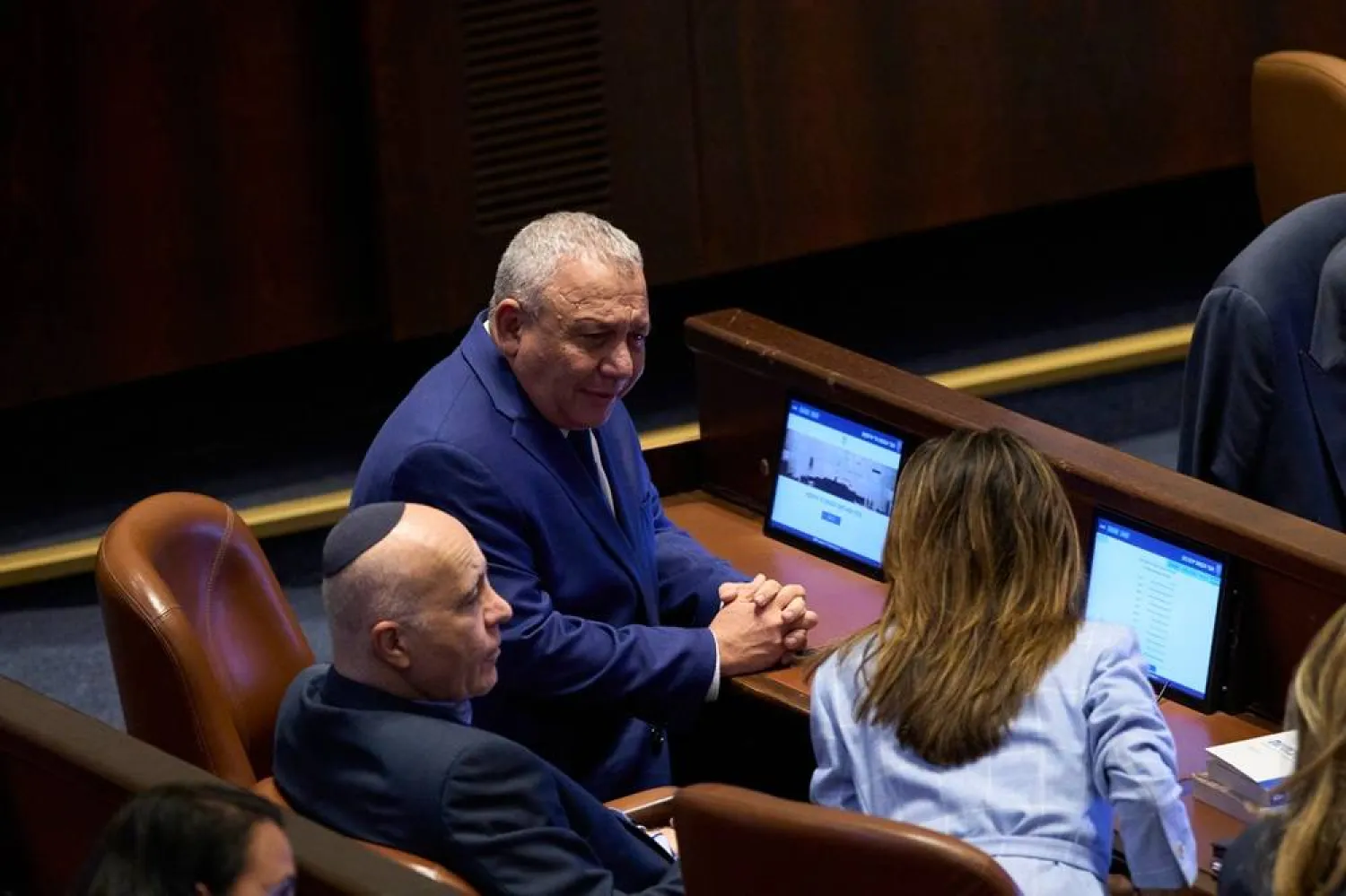

Gadi Eisenkot, who is tasked with forming the next Israeli government, said he saw no immediate reason for attacking Iran on Monday, contradicting caretaker Prime Minister Benjamin Netanyahu who warned against downplaying "grave threats".
The remarks from both politicians came hours before their parties were due to meet for the third time to discuss possible coalition-building, after lengthy negotiations the day before delivered no breakthrough.
Eisenkot has until December 6 -- a deadline which can be extended by 14 days -- to form a government to replace Netanyahu after the October election failed to deliver a clear majority for either bloc.
The former military chief's wide-ranging camp faces divisions on whether to forge alliances with the ultra-Orthodox parties, or the Arab-majority lists, or whether to form a national unity government with Netanyahu's Likud.
Netanyahu has repeatedly pressed for a unity government, which he says is needed to guarantee Israel's security.
During a press briefing at Israel's parliament in Jerusalem on Monday, Eisenkot said the "Iranian threat is the most serious threat to the State of Israel".
"But at this moment I do not see a direct and immediate threat to the State of Israel that would require action before a government is formed," he added.
Netanyahu in turn played up the need for unity "in the face of the great threats surrounding us".
"Anyone who belittles or downplays these immediate, serious and grave threats surrounding us does so for political reasons," he said in televised remarks.
Delegations from Eisenkot's centrist Yashar party and Netanyahu's right-wing Likud are due to meet on Monday evening for a third round of negotiations, spokespeople for Likud and Yashar told AFP earlier on Monday.
Representatives from each party met for four hours on Sunday and laid out their positions "on a range of substantive issues," but with no sign of a breakthrough.
- 'Sham talks' -
On Saturday, Yashar presented the talks as "a genuine commitment to forming the broadest possible government", saying that Eisenkot had asked his representatives to explore all options.
Likud immediately laid down several conditions for its participation in a unity government, including an end to "all personal attacks" and political "boycotts" targeting Netanyahu and his government.
Eisenkot's 48-member bloc needs 61 lawmakers to reach a majority and remains divided over how to build a coalition. Short of 61 lawmakers, Eisenkot's bloc could form a minority government.
In parliament on Monday, Yair Golan, who heads the left-leaning Democrats party which is a part of Eisenkot's camp, said: "We will not agree to any unity government with Netanyahu".
Earlier on X, Golan had urged an end to the "sham talks with Likud". He has instead called for an alliance with the Arab-majority lists, which won record gains in the October vote.
Netanyahu is pushing for a national unity government, which could see a rotation of the premiership between the two men, a mechanism already tried in Israel.
Such an arrangement could allow Netanyahu to keep his political leverage against the corruption charges he faces, as well as continue to oppose the creation of an independent commission of inquiry into the security failures that preceded the Hamas attack of October 7, 2023.
But that prospect runs up against Eisenkot's refusal to serve in a cabinet led by Netanyahu, against whom he centered his campaign.
Last week, Eisenkot said that he would be prepared to put forward a minority national emergency government for a parliamentary vote should efforts to create a broad-based government fail.


