



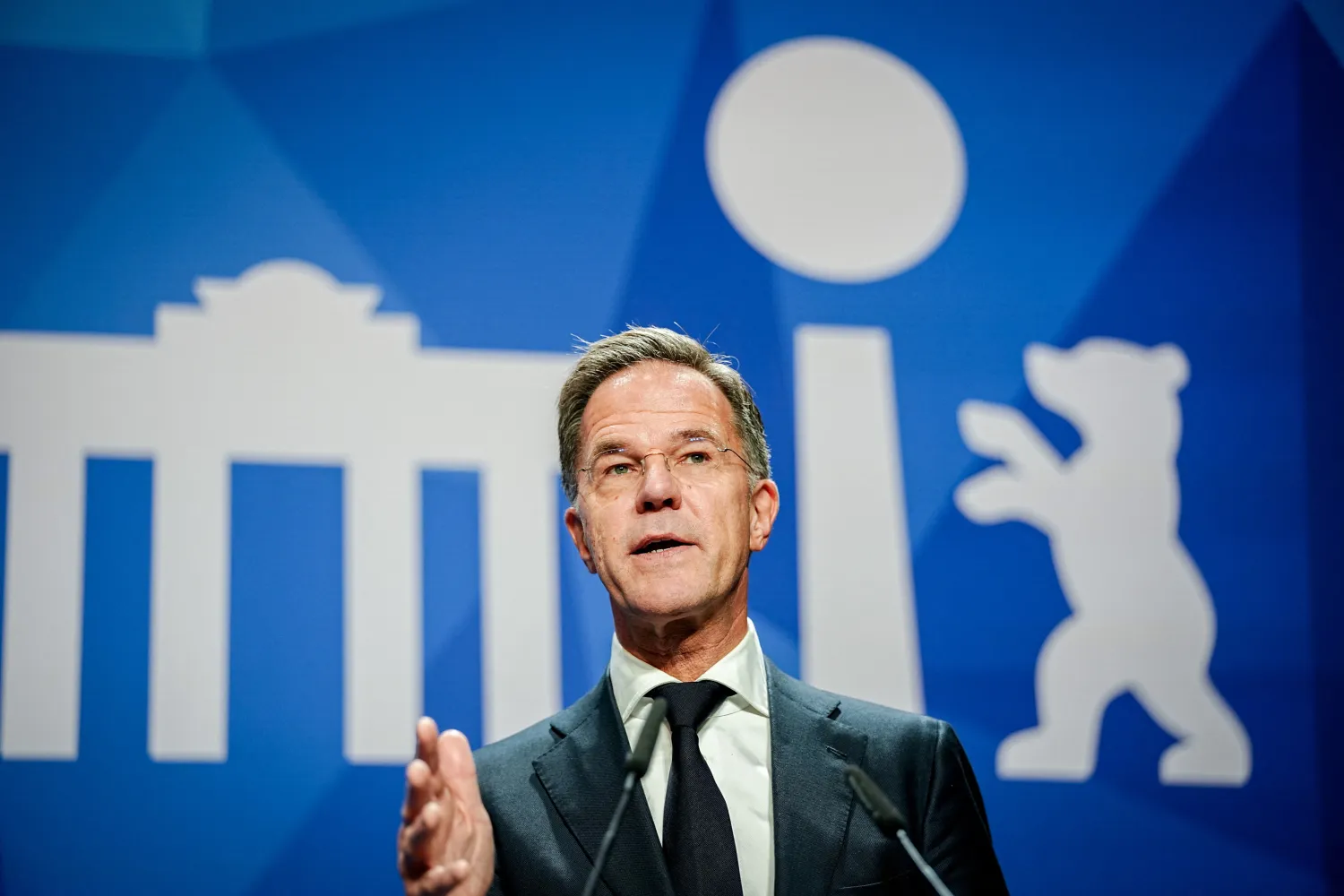

NATO chief Mark Rutte said Monday the alliance would defend against threats in space when asked about German media reports that Russia may be preparing to launch a nuclear-armed satellite.
The media reports, citing unnamed German military and BND spy agency sources, said Moscow was thought to be planning such a launch in the coming weeks, giving it the capability to destroy other satellites.
Rutte, asked about the reports while visiting Berlin, vowed: "We will always make sure that we defend every inch of NATO territory, and that includes making sure that we are safe when it comes to the space element."
German Chancellor Friedrich Merz, speaking alongside Rutte, did not confirm or deny the media reports but voiced concern.
"Reports that Russia is planning to introduce nuclear weaponry into space are not new, yet they remain no less shocking," he said.
"They reveal the level of escalation Russia is evidently prepared to pursue," added Merz, whose chancellery oversees the BND foreign intelligence agency.
A German government spokesman earlier said that the reports were being taken "very seriously," though he did not confirm them either and warned against causing "excessive nervousness regarding hypothetical dangers".
Public broadcasters WDR and NDR, along with the Sueddeutsche Zeitung daily, reported that Russia planned to launch a satellite dubbed "Sputnik-S" equipped with a nuclear warhead sometime in the coming weeks.
The outlets, citing unnamed sources, said that the intelligence reports about the plans had recently been shared among several NATO countries and that the German government had been briefed on the matter.
The satellite had been stored in the Moscow region, according to the news outlets, and could be used to disrupt or destroy important communications and observation satellites orbiting Earth.
The BND declined to comment when questioned by AFP, while the German military's space command pointed to general remarks from Defense Minister Boris Pistorius that threats in outer space are being taken seriously.
Kremlin spokesman Dmitry Peskov said he had not seen the latest news stories on the topic but that frequent reports citing "unknown sources" are "hardly worth taking seriously".
Josef Aschbacher, head of the European Space Agency, described the presence of nuclear weapons in space as "the ultimate nightmare scenario" in comments to the Handelsblatt newspaper.


