At Least 28 Civilians Killed in Sudan Drone Strikes

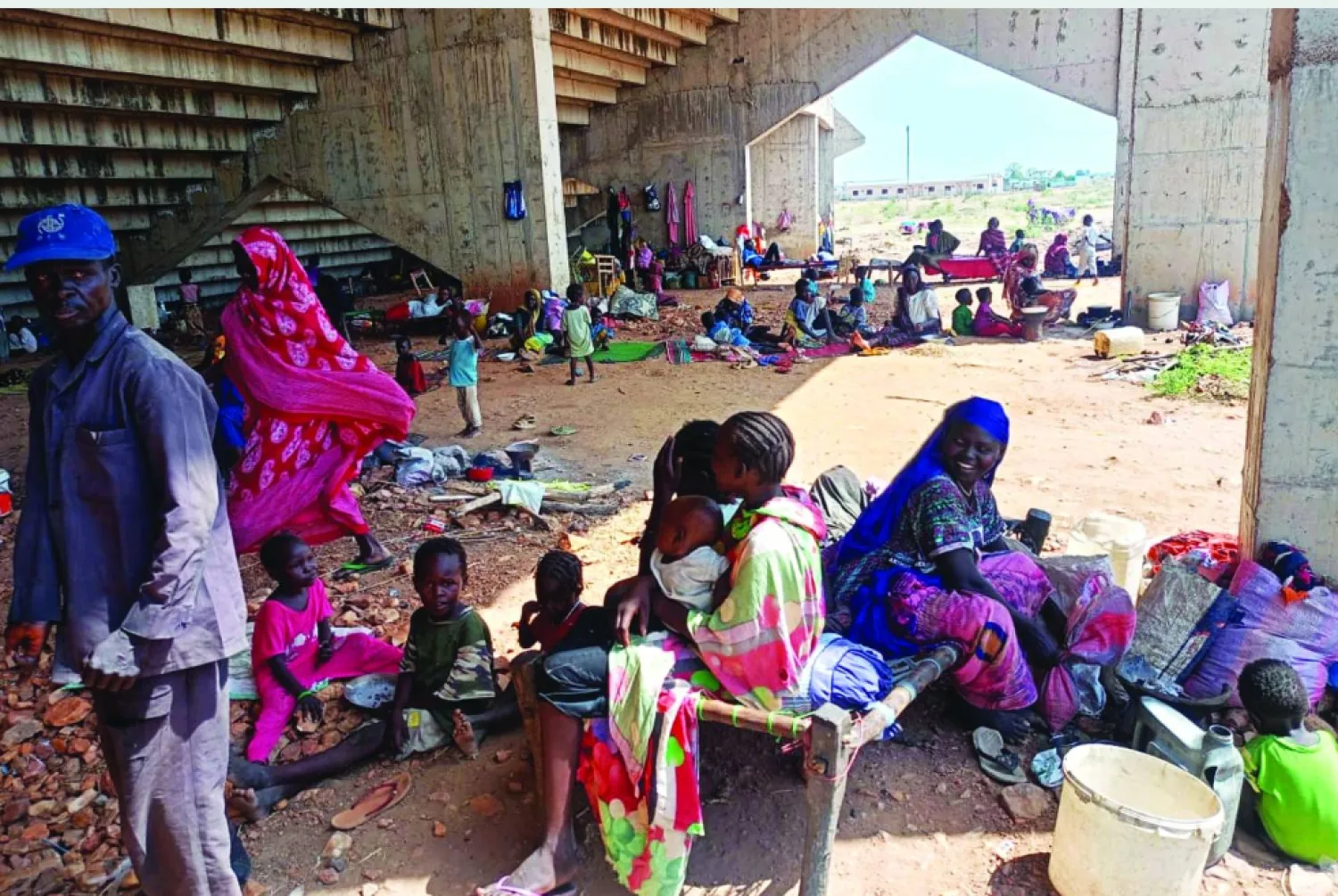
Displaced Sudanese families from Kurdufan at a football stadium in the town of Kadugli, south of the region (AP)
TT

At Least 28 Civilians Killed in Sudan Drone Strikes

Displaced Sudanese families from Kurdufan at a football stadium in the town of Kadugli, south of the region (AP)

Two drone strikes in Sudan, one at a market in Darfur and the other along a road in Kordofan, killed at least 28 civilians, health workers told AFP Thursday.

The three-year war between Sudan's army and the Rapid Support Forces (RSF) has seen a recent uptick in near-daily drone strikes that kill dozens at a time.

On Wednesday, a strike hit a market in North Darfur state's Saraf Omra town, killing "22 people, including an infant, and injuring 17 more", one health worker at the local clinic told AFP.

"The drone hit a parked oil truck, which caught fire along with part of the market," said Hamid Suleiman, a vendor at the market, which serves Saraf Omra and the surrounding towns in the remote Darfur area.

Some 800 kilometers (500 miles) east of the RSF's strongholds in Darfur, another drone strike set fire to a truck travelling on a North Kordofan road in army territory.

"Six bodies arrived at the hospital yesterday, three of them charred, in addition to 10 wounded," a medical source at the local hospital in El-Rahad told AFP, blaming the RSF for the attack.

The civilians were travelling between the army-controlled towns of El-Rahad and Um Rawaba.

Drones from both sides have repeatedly attacked Sudan's central east-west highway, which runs through North Kordofan state capital El-Obeid and connects Darfur to the army-controlled east.

Sudan's war has killed tens of thousands and left some 11 million displaced, in the world's largest hunger and displacement crisis.


Lebanese Presidents and Hezbollah: From Containment to Confrontation

FILED - 16 February 2026, Lebanon, Beirut: FILE PHOTO - Lebanese President Joseph Aoun speaks during a press conference. Photo: Markus Lenhardt/dpa
TT

Lebanese Presidents and Hezbollah: From Containment to Confrontation

FILED - 16 February 2026, Lebanon, Beirut: FILE PHOTO - Lebanese President Joseph Aoun speaks during a press conference. Photo: Markus Lenhardt/dpa

Over more than three decades, the approaches taken by Lebanon’s presidents toward Hezbollah and its weapons have shifted in response to changes in the domestic balance of power and regional and international circumstances. The decision to exempt Hezbollah’s weapons from disarmament on the grounds that they constituted “resistance” against the Israeli occupation in southern Lebanon was the first clear breach of the Taif Agreement, which called for the dissolution and disarmament of all militias that had fought during the civil war.

The presidency of the late Lebanese President Elias Hrawi was not in a position to treat Hezbollah on an equal footing with the militias that were dissolved and disarmed. Syrian tutelage, which controlled Lebanon’s political decision-making in coordination with the Iranian regime, had instructed that Hezbollah be elevated from a “militia” to a “resistance” force. This arrangement remained in place until Israel withdrew from southern Lebanon on May 25, 2000. Lebanon then entered a new phase in which Hezbollah remained a political and military actor whose capabilities surpassed those of the state institutions.

From “Militia” to “Resistance”

When Army Commander Emile Lahoud was elected president in October 1998 with the endorsement of the Syrian regime, Hezbollah’s influence within the state grew stronger, particularly after the Israeli withdrawal. The formula of “army, people and resistance” was subsequently entrenched in the ministerial statements of successive governments, particularly after Israel’s war on Lebanon in July 2006.

The same approach continued through most of Michel Suleiman’s presidency, as he dealt with Hezbollah as a resistance force despite major domestic and external changes, most notably the withdrawal of Syrian forces from Lebanon on April 25, 2005, under American pressure, and the assassination of former Lebanese Prime Minister Rafic Hariri.

In his assessment of this trajectory, former MP Fares Saeed, head of the Saydet al-Jabal Gathering, argues that “the Israeli occupation of part of southern Lebanon and Syria’s control over the internal political game imposed a distinction between Hezbollah and the other Lebanese militias that existed during the civil war.” He says these circumstances “led to Hezbollah being elevated from the status of a militia to that of a resistance force, while the other militias were dissolved and disarmed.”

The Shift Following the Historic Bishops’ Call

Fares Saeed recalls the events of 2000, when Israel withdrew from southern Lebanon, coinciding with the death of Syrian President Hafez al-Assad in June of that year. He says these developments encouraged the Maronite Council of Bishops, headed by the late Maronite Patriarch Nasrallah Boutros Sfeir, to take a stronger position and call for the withdrawal of Syrian forces from Lebanon.

“This historic and courageous position was based on a clear logic,” Saeed says. “Since Israel had withdrawn from southern Lebanon, why should Syria not withdraw as well? There was no longer any reason for it to remain in Lebanon.”

The historic call marked a key moment in reopening the debate over the Syrian presence and the future of Lebanese political life. Along with other factors, it paved the way for the formation of the Qornet Shehwan Gathering, which played a prominent role in the political opposition to the Syrian presence.

Saeed says the Qornet Shehwan Gathering began at that stage by advising Hezbollah to join the call for the Syrian regime to withdraw from Lebanon. This came during Emile Lahoud’s presidency, when Lebanon was closely aligned with Syria and the Iranian axis. He considers that the political and security circumstances at the time did not allow the existing equation to be changed, and therefore Hezbollah’s weapons remained outside the substantive debate over the state’s exclusive control of arms.

The “Wooden Equation”

The presidential terms that followed the Taif Agreement, up until Lebanon was drawn into the war in support of Gaza, were not able to move beyond Hezbollah, even on the most sensitive domestic issues. Michel Suleiman himself was elected president as an initial outcome of the Doha Agreement, which followed Hezbollah’s takeover of Beirut on May 7, 2008.

Former MP Fares Saeed stresses that Suleiman’s arrival at Baabda Palace “did not lead to any fundamental change in the approach to Hezbollah’s weapons, as they continued to be treated as resistance.” He notes that Suleiman “did not engage in a direct confrontation with Hezbollah during most of his presidency, except in its final phase, when he described the ‘army, people and resistance’ formula as a ‘wooden equation.’” This, he says, represented a significant shift in the Lebanese debate over the legitimacy of Hezbollah’s weapons.

The Failed Bet on President Michel Aoun

When President Suleiman’s term ended on May 25, 2014, Lebanon entered a presidential vacuum after the Lebanese Parliament was effectively prevented from electing a successor under pressure from Hezbollah, which imposed the equation: “Either Michel Aoun is president, or there will be no president.”

Aoun was eventually elected on October 31, 2016, prompting Hezbollah to declare victory in the battle, viewing it as “the culmination of the victory of the Iranian axis in Syria and Iraq and the Houthi coup against the legitimate government in Yemen.”

Fares Saeed does not hide his view that “the bet by some on Michel Aoun’s ability to Lebanese Hezbollah failed miserably.” After his election, he says, Aoun secured gains in power, appointments, and deals with Hezbollah’s assistance, and “handed the country over to Hezbollah and Iran.”

President Joseph Aoun’s Positions: A Break With Previous Presidencies

The rhetoric of current President Joseph Aoun represents a break with all previous presidencies that had yielded to the will of Hezbollah and Iran. His speech two days ago marking the 81st anniversary of General Security was perhaps the strongest attack yet on Hezbollah.

“In addition to the conflict with Israel, we are living through an internal war with a faction that stands in opposition to the state and its institutions,” he said. “We tell them: whatever you do, we will continue for the sake of the nation.”

Assessing the speech, Fares Saeed, head of the Saydet al-Jabal Gathering, says the fundamental difference today “lies in the circumstances surrounding Joseph Aoun’s presidency.”

He stresses that “the boldness President Joseph Aoun is showing in addressing Hezbollah’s weapons stems, in part, from his knowledge of the nature of Hezbollah and its intentions toward the Lebanese state, as well as his awareness of its previous attempts to dominate the state’s decision-making.”

He also emphasizes “the importance of the major changes that have taken place, beginning with Hezbollah’s military defeat in its confrontation with Israel, followed by the fall of Bashar al-Assad’s regime and the collapse of a key part of the Iranian axis in the region.”


Israeli Strikes Kill Four in Gaza as Military Says It Arrests Hamas Operative

A destroyed vehicle is seen on a street following an Israeli military strike in Gaza City, Tuesday, Sept. 1, 2026. (AP)
TT

Israeli Strikes Kill Four in Gaza as Military Says It Arrests Hamas Operative

A destroyed vehicle is seen on a street following an Israeli military strike in Gaza City, Tuesday, Sept. 1, 2026. (AP)

An Israeli-backed raid to detain a Hamas fighter in Gaza City was discovered during the operation on Tuesday, prompting airstrikes to cover their withdrawal that killed at least three Palestinians, including two children, Gaza officials said. 

Israeli Defense Minister Israel Katz said a senior Hamas operative had been arrested, while Hamas official Ismail Al-Thawabta said an Israeli special force had tried to carry out an operation in Gaza City before being detected. 

According to Thawabta, director of the Hamas-run Gaza government media office, Israel then launched heavy airstrikes, killing and wounding several people. 

An Israeli ‌security official ‌said the man detained is the head of Hamas' internal ‌security ⁠service. 

Some Israeli media ⁠reports said the raid may have been carried out by members of an Israeli-backed militia that operates from Israeli-controlled areas inside Gaza. 

Witnesses said Israeli warplanes fired at least 12 missiles near the Katiba area in the west of Gaza City, an area crowded with displaced families. 

At least three people — two children and a woman — were killed and several others wounded in the bombardment, medics said. Two vehicles were ⁠hit and reduced to twisted wreckage. Another child was killed ‌in Israeli fire in central Gaza, medics said. 

In ‌a statement on Tuesday, the Israeli military said it struck several targets in the Gaza ‌Strip in order to remove threats to Israeli security forces. 

Katz did not ‌provide details about the arrest operation or identify the Hamas member. 

"This is our policy: we do not wait for threats, but rather pursue Hamas terrorists, thwart them, and destroy their terror infrastructure," said Katz, speaking from the Netiv HaAsara community near the northern Gaza border. 

In ‌a separate incident, medics said a girl, Israa Al-Hissi, was killed and two other people were wounded when Israeli ⁠forces operating east ⁠of Deir Al-Balah in central Gaza opened fire on the area. 

A US-backed ceasefire that took effect in October 2025 halted the large-scale fighting that had devastated the enclave, but it has not ended Israeli strikes. The military says such operations are intended to prevent attacks by Hamas and other Palestinian armed groups. 

Hamas accuses Israel of repeatedly violating the ceasefire and undermining efforts to advance a broader plan by US President Donald Trump to end the war. The plan includes further Israeli troop withdrawals from Gaza and the disarmament of Hamas. 

More than 1,300 Palestinians have been killed in Gaza since the ceasefire came into force last October, according to Gaza health officials. The Israeli military says four Israeli soldiers have been killed in militant attacks during the same period. 


Lebanon’s Berri Rejects ‘Buffer Zones,’ Warns Against Negotiating ‘Under Fire’

 People check debris of a destroyed house that was hit on Thursday in an Israeli airstrike in Arab Salim village, southern Lebanon, Friday, Aug. 28, 2026. (AP)
People check debris of a destroyed house that was hit on Thursday in an Israeli airstrike in Arab Salim village, southern Lebanon, Friday, Aug. 28, 2026. (AP)
TT

Lebanon’s Berri Rejects ‘Buffer Zones,’ Warns Against Negotiating ‘Under Fire’

 People check debris of a destroyed house that was hit on Thursday in an Israeli airstrike in Arab Salim village, southern Lebanon, Friday, Aug. 28, 2026. (AP)
People check debris of a destroyed house that was hit on Thursday in an Israeli airstrike in Arab Salim village, southern Lebanon, Friday, Aug. 28, 2026. (AP)

Lebanese parliament Speaker Nabih Berri rejected the establishment of any “buffer zones or security belts” in South Lebanon, stressing that the state bears responsibility for protecting and defending the area and rebuilding what has been destroyed by Israeli attacks.

He also renewed his opposition to direct negotiations with Israel “under fire,” arguing that previous rounds of talks had produced no results.

In a speech marking the 48th anniversary of the disappearance of Imam Moussa al-Sadr, Berri declared that “civil peace, national unity and the Lebanese Army are red lines that must not be crossed or undermined,” reaffirming his commitment to the army’s authority in the South, alongside UN peacekeeping forces.

He rejected attempts to cast doubt on the army’s role and called for it to be provided with all necessary support.

“The South is an integral part of Lebanon, and responsibility for protecting and defending it alongside its people, and for rebuilding what Israeli aggression has destroyed, rests with the state,” Berri declared. “We will not accept buffer zones or security belts in the South.”

Turning to negotiations with Israel, he reiterated his warning against direct talks while hostilities continue.

“We warned against direct negotiations with Israel under fire, while the rounds of negotiations have yielded no results,” he noted.

He also renewed his opposition to the “framework agreement” between Lebanon and Israel, declaring: “We had exercised our democratic right to reject the agreement, and we maintain that position.”

He said that the current stage, given “existential risks facing South Lebanon and the country as a whole, does not give anyone the right to act on any sovereign issue under any designation, whether a framework agreement or secret articles.”

Berri also stressed his opposition to relinquishing Lebanon’s right to prosecute Israel over “crimes of genocide” committed against South Lebanon.

He argued that the war with Israel “requires a national approach removed from any regional, partisan, sectarian or confessional considerations,” warning against attempts to push Lebanon toward internal divisions.

“What Israel seeks is not Hezbollah, its weapons, the Amal Movement or the Shiite community. Israel wants strife,” he asserted, adding that “Lebanon represents the antithesis of Israel’s racism.”

He urged the Lebanese to avoid internal conflict, saying: “Do not lose Lebanon to internal wars, divisions, or fatal political or security missteps.”

On domestic affairs, Berri reaffirmed his commitment to the Taif Agreement, maintaining that “all partition and federalism projects are incompatible with this accord.”

His remarks come amid growing domestic political debate over sovereign and security issues and the future of South Lebanon, as Israeli attacks continue and the negotiating track remains deadlocked.

On regional developments, Berri expressed “support for all Arab and Pakistani efforts to end tensions and establish stability in the Gulf region.”

He also paid tribute to “all brotherly and friendly countries that have stood and continue to stand by Lebanon.”