Saudi Crown Prince Meets with British PM’s Special Envoy for Gulf Region

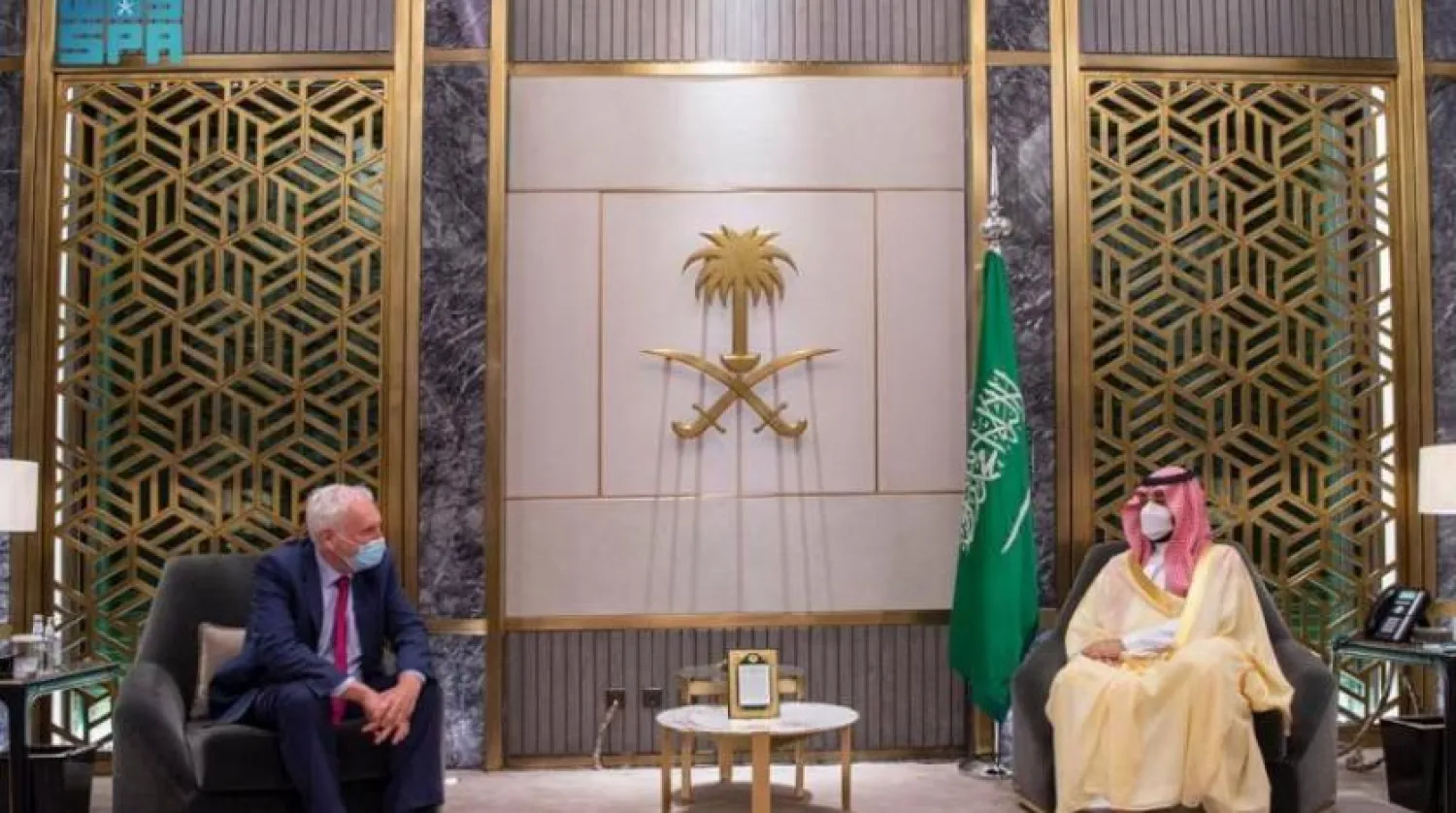
The Saudi Crown Prince and Lister reviewed bilateral relations between the two countries and ways to enhance them. SPA
TT

Saudi Crown Prince Meets with British PM’s Special Envoy for Gulf Region

The Saudi Crown Prince and Lister reviewed bilateral relations between the two countries and ways to enhance them. SPA

Saudi Crown Prince Mohammed bin Salman bin Abdulaziz, Deputy Prime Minister and Minister of Defense, has met with the Special Envoy of the British Prime Minister for the Gulf region, Edward Lister, the Saudi Press Agency reported Sunday.

During the meeting, they reviewed bilateral relations between the two countries and ways to enhance them, in addition to discussing regional and international developments of common interest, SPA added.


Yemen PM to Asharq Al-Awsat: New Saudi Support Boosts Gov’t Performance

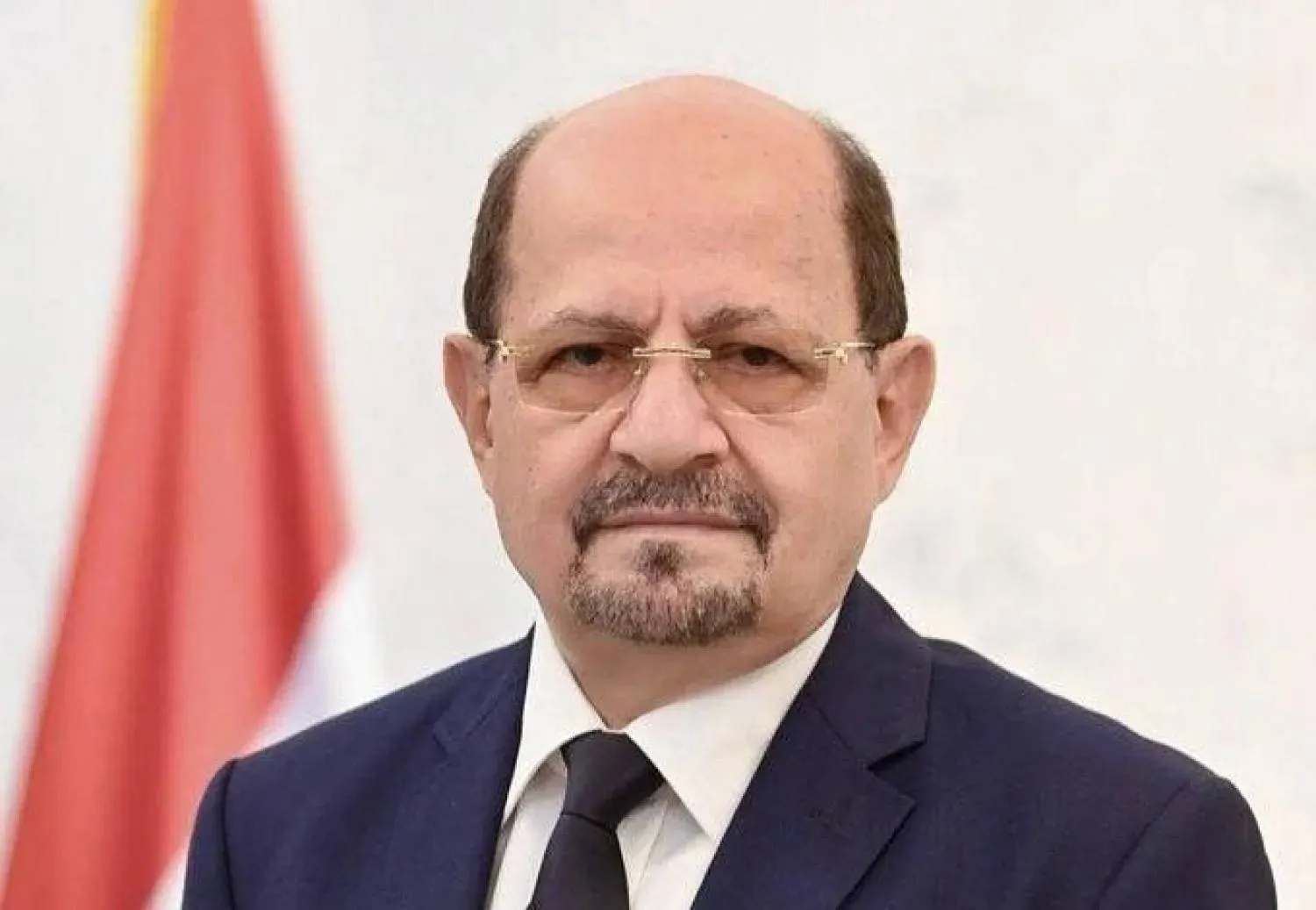
Yemen’s Prime Minister and Foreign Minister Shayea al-Zindani (Asharq Al-Awsat)
TT

Yemen PM to Asharq Al-Awsat: New Saudi Support Boosts Gov’t Performance

Yemen’s Prime Minister and Foreign Minister Shayea al-Zindani (Asharq Al-Awsat)

Yemen’s Prime Minister and Foreign Minister Shayea al-Zindani said new Saudi economic support to cover public sector salaries and help reduce the budget deficit reflects the deep-rooted ties between the two countries and underscores Riyadh’s continued commitment to backing the Yemeni people in all circumstances.

The Saudi Program for the Development and Reconstruction of Yemen announced on Thursday fresh budget support of about $347 million (1.3 billion Saudi riyals) to finance operational expenses, pay salaries and address the Yemeni government’s urgent needs, as part of the Kingdom’s efforts to promote stability and growth.

In remarks to Asharq Al-Awsat, Zindani said the funding would strengthen the government’s performance, enabling it to press ahead with economic reforms, meet salary obligations, deliver basic services and improve living conditions.

He said the latest assistance, alongside previous support, reaffirmed Saudi Arabia’s steadfast backing for Yemen and bolstered the state’s ability to meet its commitments to public employees, easing humanitarian pressures and reinforcing economic stability.

Zindani said the move reflected the vision of the Saudi leadership and its commitment to Yemen’s security and stability, describing the country as a strategic depth and a key pillar of regional security.

He also highlighted the role of Saudi Defense Minister Prince Khalid bin Salman and the program’s efforts in advancing stability and development.

Prince Khalid said in a post on his official X account that the support was provided in implementation of the directives of Custodian of the Two Holy Mosques King Salman bin Abdulaziz and Prince Mohammed bin Salman bin Abdulaziz, Saudi Crown Prince and Prime Minister, in response to the urgent need to support the Yemeni government in paying salaries.

Rashad al-Alimi, chairman of Yemen’s Presidential Leadership Council, said the assistance sent “an important message of confidence” in the recovery path and in the new government’s ability to rebuild state institutions, consolidate security and stability, and work closely with “the loyal brotherly team led by Prince Khalid bin Salman” to achieve the desired transformation.

He added that the support confirmed the partnership with Saudi Arabia was “not circumstantial, but a strategic choice for a brighter future.”

According to the program, the funding aims to strengthen economic and financial stability, reduce the budget deficit, ensure regular government financial flows and salary payments, and improve fiscal management, placing the national economy on a more sustainable track and advancing economic and social development.

The support is expected to boost purchasing power, stabilize household incomes, improve living standards and stimulate commercial markets, contributing to economic stability and sustainable recovery.

Saudi Arabia remains Yemen’s largest historical supporter in humanitarian, development and economic fields. The program said that total Saudi economic and development assistance between 2012 and 2026 exceeded $12.6 billion, with interventions serving as a key pillar of recovery at both macro and micro levels.

Since its establishment in 2018 by order of the Custodian of the Two Holy Mosques and with the Crown Prince's empowerment, the program has helped entrench sustainable development, mitigate humanitarian and economic impacts, and promote comprehensive development that benefits current and future generations.

The program said it has implemented 268 development projects and initiatives across eight vital sectors at a total cost exceeding $1 billion, improving infrastructure and basic services, strengthening food security, building Yemeni capacity and creating jobs, in support of efforts to achieve lasting peace and comprehensive, sustainable development.


Saudi Leadership Sends Condolences to Kuwaiti Emir, Crown Prince on Death of Sheikh Salman Al-Sabah

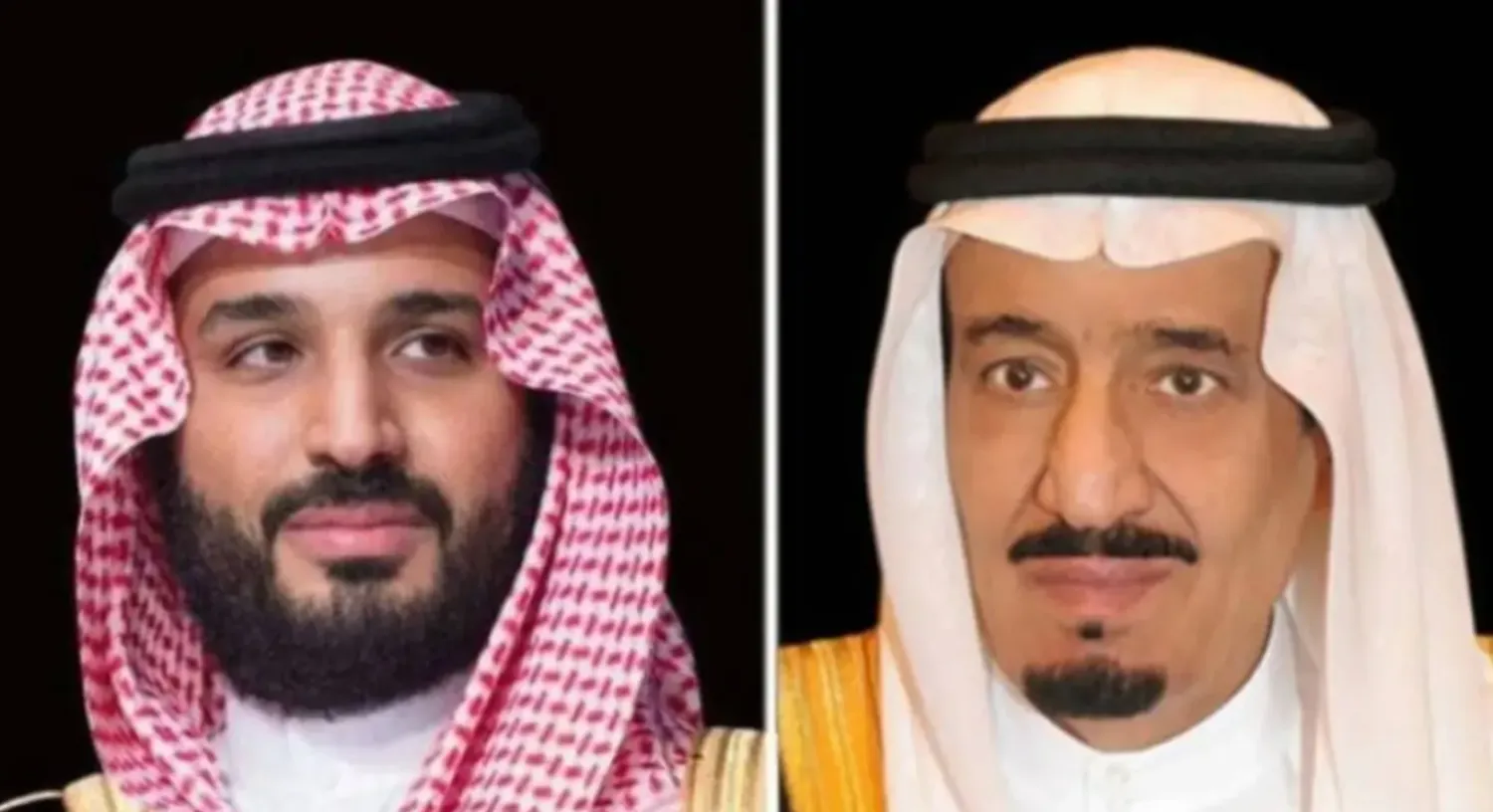
Custodian of the Two Holy Mosques King Salman bin Abdulaziz Al Saud and Saudi Crown Prince Mohammed bin Salman bin Abdulaziz (AAWSAT)
TT

Saudi Leadership Sends Condolences to Kuwaiti Emir, Crown Prince on Death of Sheikh Salman Al-Sabah

Custodian of the Two Holy Mosques King Salman bin Abdulaziz Al Saud and Saudi Crown Prince Mohammed bin Salman bin Abdulaziz (AAWSAT)

Custodian of the Two Holy Mosques King Salman bin Abdulaziz Al Saud sent cable of condolences and sympathy to Kuwaiti Emir Sheikh Meshal Al-Ahmad Al-Jaber Al-Sabah on the death of Sheikh Salman Hamoud Al-Salman Al-Hamoud Al-Sabah.

In the cable, the Custodian of the Two Holy Mosques extended his sincere condolences and sympathy to Sheikh Meshal and the family of the deceased, praying to Allah Almighty to bestow mercy and forgiveness upon the deceased and grant his family patience and solace.

For his part, Prince Mohammed bin Salman bin Abdulaziz Al Saud, Crown Prince and Prime Minister, sent two cables of condolences and sympathy to the Kuwaiti Emir and the Crown Prince, Sheikh Sabah Khaled Al-Hamad Al-Mubarak Al-Sabah.

In the separate cables, the Crown Prince extended his sincere condolences and sympathy to Sheikh Sabah, Sheikh Meshal, and the family of the deceased, praying to Allah Almighty to bestow mercy and forgiveness upon the deceased and grant his family patience and solace.


Kuwait Marks Independence, Liberation Anniversaries Amid Record Financial Surpluses

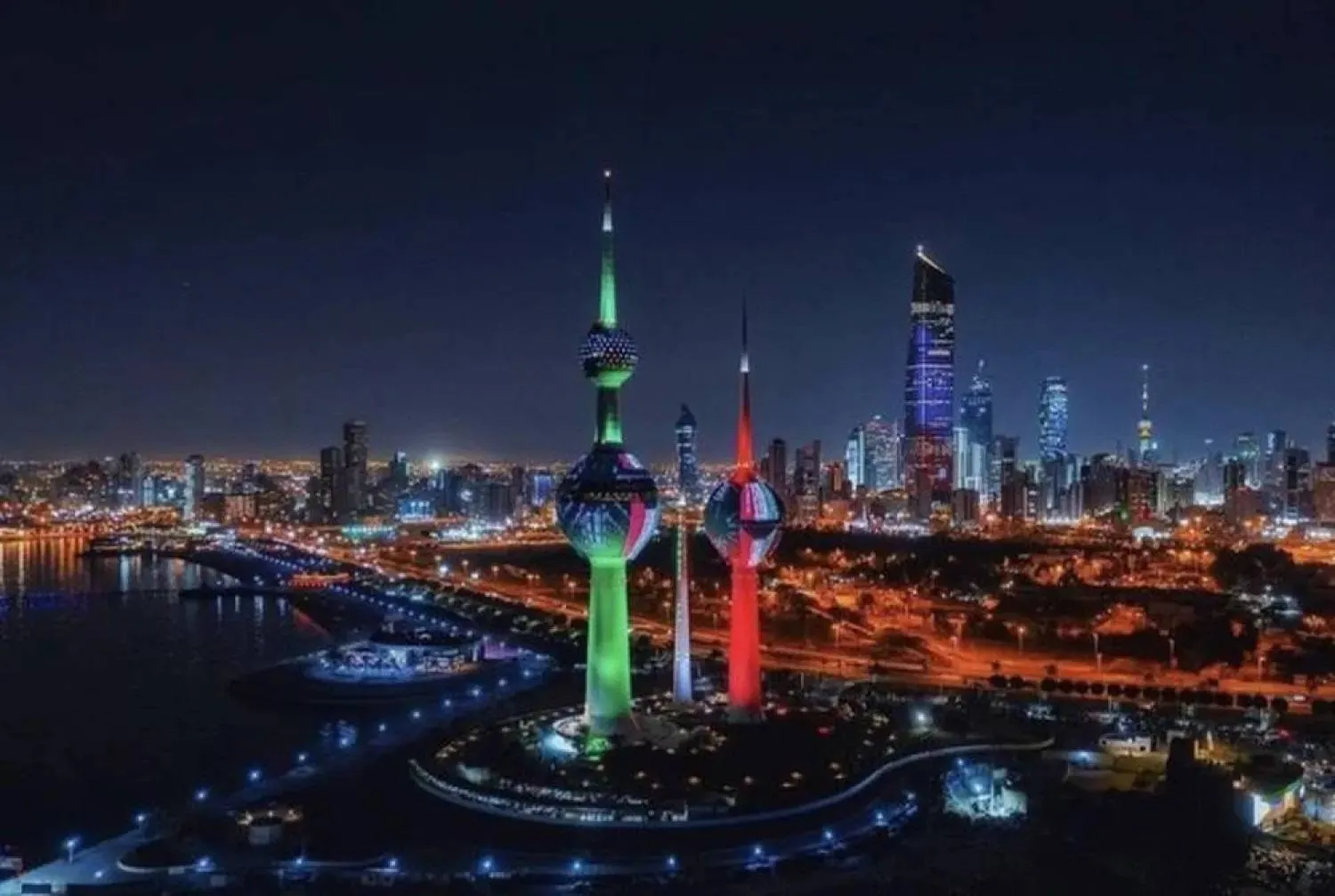
The rise of Kuwaiti banking sector assets to more than $326 billion reflects the strength of the financial system and the confidence of international institutions. 
TT

Kuwait Marks Independence, Liberation Anniversaries Amid Record Financial Surpluses

The rise of Kuwaiti banking sector assets to more than $326 billion reflects the strength of the financial system and the confidence of international institutions. 

Kuwait celebrated on Wednesday the 65th independence anniversary (National Day) and the 35th anniversary of Liberation Day, marking the country’s liberation from the Iraqi invasion of Aug. 2, 1990. Liberation was achieved on Feb. 26, 1991.

Kuwait gained its independence from Britain on June 19, 1961. On that day, the late Emir Sheikh Abdullah Al-Salem Al Sabah, the 11th ruler of Kuwait, signed the independence document with Sir George Middleton, the British High Commissioner to the Arabian Gulf, acting on behalf of his government. The move annulled the 1899 agreement signed by Sheikh Mubarak Al Sabah, Kuwait’s seventh ruler, with Britain to protect the country from external threats.

On May 18, 1964, it was decided to merge the June 19 independence date with February 25 — the anniversary of Sheikh Abdullah Al-Salem Al Sabah’s accession to power — in tribute to his pivotal role in securing Kuwait’s independence. Since then, Kuwait has celebrated its National Day annually on Feb. 25.

Strong Economic Performance

This year’s 65th National Day comes as Kuwait records significant economic developments. A report issued by the Statistical Center for the Cooperation Council for the Arab Countries of the Gulf, titled “The State of Kuwait: Deep-Rooted Foundations and Steps Toward the Future,” highlights unprecedented financial and investment surpluses.

According to the report, Kuwait is achieving record fiscal and investment surpluses, supported by the strength of its sovereign wealth funds, whose assets have surpassed $1 trillion. In addition, banking sector assets have exceeded 100 billion Kuwaiti dinars (approximately $326 billion), reflecting the resilience of the financial system and continued confidence by international institutions in the national economy.

The Kuwait Stock Exchange recorded gains exceeding 9.6 billion Kuwaiti dinars (around $32 billion), underscoring the attractiveness of the investment environment and growing confidence among regional and international investors.

Kuwait ranked 19th globally in the Nation Brand Value Index, with national brands accounting for about 9 percent of GDP — one of the highest ratios worldwide.

The country also placed among the top 10 globally in the Global Innovation Index (GII) 2025, supported by advances in digital infrastructure, 5G technology, mobile internet speeds, government digitalization, and the efficiency of its digital workforce.

Kuwait’s sovereign credit ratings remain in the high-grade category with a stable outlook, further strengthening its global economic standing.

Saudi–Kuwaiti Relations

For more than 130 years, Saudi–Kuwaiti relations have been firmly rooted in shared history and close ties built on common interests and longstanding positions.

Kuwait was the first country visited by Saudi Crown Prince Mohammed bin Salman after his appointment as crown prince. He visited in May 2018 and again on September 30, 2018.

Similarly, Saudi Arabia was the first foreign destination of Sheikh Mishal Al-Ahmad Al-Jaber Al Sabah after assuming power as Emir of Kuwait. On Jan. 30, 2024, he made his first official overseas trip to the Kingdom following his accession.

Joint Saudi–Kuwaiti efforts continue to strengthen cooperation in line with the two countries’ strategic visions — Saudi Vision 2030 and Kuwait Vision 2035 — aimed at expanding collaboration across economic, security, cultural, sports, and social sectors.

Among the key milestones was the signing in December 2019 of a supplementary agreement to the accords governing the divided neutral zone and the adjacent offshore area between the two countries, paving the way for the resumption of oil production on both sides.