


Iran Boosts Military, Economic Presence on Syrian Coast

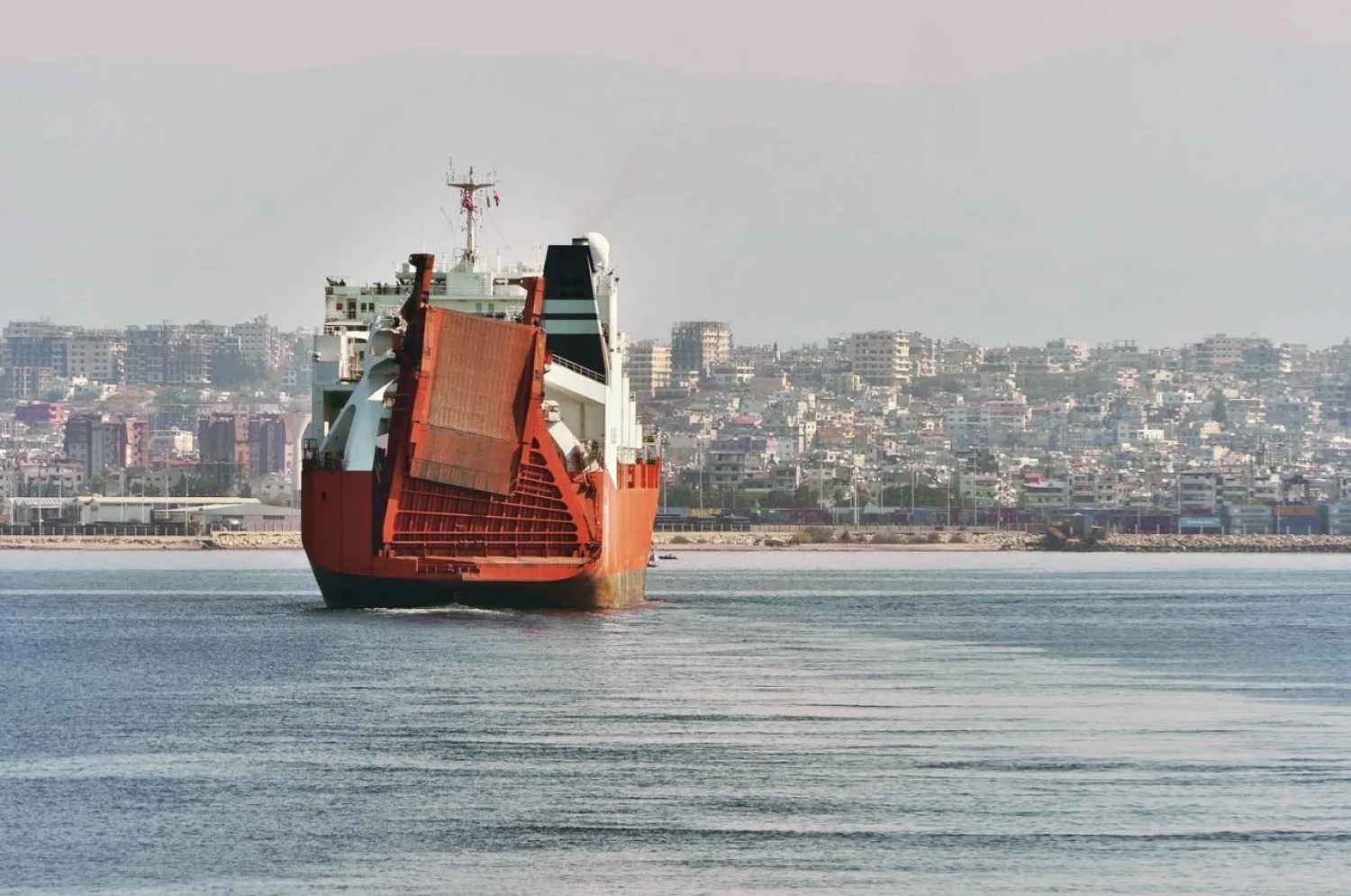
MS Taiko is pictured from onboard Norwegian frigate HNoMS Helge Ingstad at Latakia February 10, 2014, during its second pick up of chemical weapon from Syria. (Reuters)
TT

Iran Boosts Military, Economic Presence on Syrian Coast

MS Taiko is pictured from onboard Norwegian frigate HNoMS Helge Ingstad at Latakia February 10, 2014, during its second pick up of chemical weapon from Syria. (Reuters)

Iran has bolstered its military, economic and charitable presence along Syria’s coast, revealed a report compiled by Syrian opposition experts and politicians.

The National Liberation Front, headed by Fateh al-Hassoun, accused Tehran of seeking naval and land routes to circumvent US sanctions and counter the increased Russian influence at the Latakia and Tartus ports.

Prior to 2011, said the report, Iran did not boast strong military presence on the Syrian coast. Its role was limited to establishing schools and charities. With the eruption of the uprising, Iran sought to infiltrate the coast through many forms and agents.

Russia’s establishment of a base at Hmeimim dramatically reduced Iran’s military expansion towards the coast. Tehran at that point limited itself to infiltrating Syria through civilian and social means. In recent months, however, Iran once again stepped up its efforts to establish a foothold on the coast.

Latakia port

A recent document surfaced in which Latakia port manager ordered the formation of committee to discuss with the “Iranian side” the possibility of transferring the port administration over to it. This was confirmed by The New York Times, which revealed that an agreement to hand over control of the port to Tehran was reached during Syrian regime leader Bashar Assad’s visit to the Iranian capital on February 25.

Indeed, companies affiliated with the Iranian Revolutionary Guards have started to ship goods through Latakia port, which is being used as an alternative arms smuggling route. The National Liberation Front report said Iran wants to seize control of Latakia port to evade American economic sanctions. Moreover, it will garner major influence by controlling Syria’s largest port, “while totally disregarding the deteriorating economic conditions in areas under regime control.”

Baniyas port

The nearby coastal city of Baniyas has started to look more like an Iranian military base with the arrival of an Iranian oil tanker to its port on May 5. The National Liberation Front said that should Tehran assume control of this port, it would come to control two out of three outlets on the Mediterranean.

Baniyas is significant because it lies between Russia’s Hmeimim air base and its sea port in Tartus. Oil pipelines from Iraq stretch all the way to Baniyas. Iran’s control of the port could be related to its efforts to circumvent US sanctions through exporting Iranian oil from Baniyas through Iraq. This is backed by reports that two oil tanker companies had shipped a million barrels of Iranian crude to Syria during the first week of May through Baniyas.

Charities

Iranian charities along the Syrian coast limit their activities to offering financial and relief support to families and relatives of deceased members of militias affiliated to the regime and Iran. The report said charities with Persian names were operating in the Syrian coast. They are dedicated to helping foreign fighters in Syria, such as Afghans, Iraqis and Lebanese.

Close proximity to Turkey

The report added that since the beginning of the year, Iranian forces have sought to redeploy in many coastal regions, especially those close to Turkey. The Iranians are seeking to expand beyond Baniyas and further away from Russian forces in Tartus, Latakia and Hmeimim and looking further north.

Tehran has set its sights on controlling the Kasab border crossing with Turkey. This route is safer than the long coastal road that is under international supervision.

Tehran had considered an alternate route through Iraq, the Syrian desert, then Homs before reaching the coast. The report said that this route is not yet viable to the Iranians due to the presence of the international coalition to defeat ISIS forces in the Tanf base and the presence of ISIS remnants in the desert. The report compared the desert to a “black hole” that has swallowed Iranian and regime convoys that traverse the area.



Egypt’s Prime Minister and FM Head to Washington for Trump Peace Council Meeting

Egyptian Foreign Minister Badr Abdelatty speaks during a joint press conference with Kenyan Prime Cabinet Secretary/Cabinet Secretary for Foreign Diaspora Affairs Musalia Mudavadi in Nairobi, Kenya, Monday, Feb. 16, 2026. (AP)
TT

Egypt’s Prime Minister and FM Head to Washington for Trump Peace Council Meeting

Egyptian Foreign Minister Badr Abdelatty speaks during a joint press conference with Kenyan Prime Cabinet Secretary/Cabinet Secretary for Foreign Diaspora Affairs Musalia Mudavadi in Nairobi, Kenya, Monday, Feb. 16, 2026. (AP)

Egypt's Prime Minister Mostafa Madbouly headed to Washington on Tuesday ‌to ‌participate in ‌the inaugural ⁠meeting of a "Board of Peace" established by US President Donald ⁠Trump, the ‌cabinet ‌said.

Madbouly is ‌attending ‌on behalf of President Abdel ‌Fattah al-Sisi and is accompanied by ⁠Foreign ⁠Minister Badr Abdelatty.

Foreign Minister Gideon Saar will represent Israel at the inaugural meeting, his office said on Tuesday.

Hamas, meanwhile, called on the newly-formed board to pressure Israel to halt what it described as ongoing violations of the ceasefire in Gaza.

The Board of Peace, of which Trump is the chairman, was initially designed to oversee the Gaza truce and the territory's reconstruction after the war between Hamas and Israel.

But its purpose has since morphed into resolving all sorts of international conflicts, triggering fears the US president wants to create a rival to the United Nations.

Saar will first attend a ministerial level UN Security Council meeting in New York on Wednesday, and on Thursday he "will represent Israel at the inaugural session of the board, chaired by Trump in Washington DC, where he will present Israel's position", his office said in a statement.

It was initially reported that Prime Minister Benjamin Netanyahu might attend the gathering, but his office said last week that he would not.

Ahead of the meeting, Hamas spokesman Hazem Qassem told AFP that the Palestinian movement urged the board's members "to take serious action to compel the Israeli occupation to stop its violations in Gaza".

"The war of genocide against the Strip is still ongoing -- through killing, displacement, siege, and starvation -- which have not stopped until this very moment," he added.

He also called for the board to work to support the newly formed Palestinian technocratic committee meant to oversee the day-to-day governance of post-war Gaza "so that relief and reconstruction efforts in Gaza can commence".

Announcing the creation of the board in January, Trump also unveiled plans to establish a "Gaza Executive Board" operating under the body.

The executive board would include Turkish Foreign Minister Hakan Fidan and Qatari diplomat Ali Al-Thawadi.

Netanyahu has strongly objected to their inclusion.

Since Trump launched his "Board of Peace" at the World Economic Forum in Davos in January, at least 19 countries have signed its founding charter.


Palestinian Child Dies After Stepping on Mine in West Bank

Israeli troops conduct a military raid in the village of Al-Yamoun, west of Jenin, West Bank, 17 February 2026. (EPA)
TT

Palestinian Child Dies After Stepping on Mine in West Bank

Israeli troops conduct a military raid in the village of Al-Yamoun, west of Jenin, West Bank, 17 February 2026. (EPA)

A Palestinian child died after stepping on a mine near an Israeli military camp in the occupied West Bank on Tuesday, the Palestinian Red Crescent said, with an Israeli defense ministry source confirming the death.

"Our crews received the body of a 13-year-old child who was killed after a mine exploded in one of the old camps in Jiftlik in the northern Jordan Valley," the Red Crescent said in a statement.

A source at COGAT, the Israeli defense ministry's agency in charge of civilian matters in the Palestinian territories, confirmed the death to AFP and identified the boy as Mohammed Abu Dalah, from the village of Jiftlik.

Israel's military had previously said in a statement that three Palestinians were injured "as a result of playing with unexploded ordnance", without specifying their ages.

It added that the area of the incident, Tirzah, is "a military camp in the area of the Jordan Valley", near Jiftlik and close to the Jordanian border.

"This area is a live-fire zone and entry into it is prohibited," the military said.

Jiftlik village council head Ahmad Ghawanmeh told AFP that three children, the oldest of whom was 16, were collecting herbs near the military base when they detonated a mine.

Jiftlik as well as the nearby Tirzah base are located in the Palestinian territory's Area C, which falls under direct Israeli control.

Israel has occupied the West Bank since 1967.

Much of the area near the border with Jordan -- which Israel signed a peace deal with in 1994 -- remains mined.

In January, Israel's defense ministry said it had begun demining the border area as part of construction works for a new barrier it says aims to stem weapons smuggling.


Hezbollah Rejects Disarmament Plan and Government’s Four-Month Timeline

29 July 2024, Iran, Tehran: Then Hezbollah deputy leader Sheikh Naim Qassem is pictured during a meeting in Tehran. (Iranian Presidency/dpa)
TT

Hezbollah Rejects Disarmament Plan and Government’s Four-Month Timeline

29 July 2024, Iran, Tehran: Then Hezbollah deputy leader Sheikh Naim Qassem is pictured during a meeting in Tehran. (Iranian Presidency/dpa)

Hezbollah rejected on Tuesday the Lebanese government's decision to grant the army at least four months to advance the second phase of a nationwide disarmament plan, saying it would not accept what it sees as a move serving Israel.

Lebanon's cabinet tasked the army in August 2025 with drawing up and beginning to implement a plan to bring all armed groups' weapons under state control, a bid aimed primarily at disarming Hezbollah after its devastating ‌war with ‌Israel in 2024.

In September 2025 the cabinet formally ‌welcomed ⁠the army's plan to ⁠disarm the Iran-backed Shiite party, although it did not set a clear timeframe and cautioned that the military's limited capabilities and ongoing Israeli strikes could hinder progress.

Hezbollah Secretary-General Sheikh Naim Qassem said in a speech on Monday that "what the Lebanese government is doing by focusing on disarmament is a major mistake because this issue serves the goals of Israeli ⁠aggression".

Lebanon's Information Minister Paul Morcos said during a press ‌conference late on Monday after ‌a cabinet meeting that the government had taken note of the army's monthly ‌report on its arms control plan that includes restricting weapons in ‌areas north of the Litani River up to the Awali River in Sidon, and granted it four months.

"The required time frame is four months, renewable depending on available capabilities, Israeli attacks and field obstacles,” he said.

Hezbollah lawmaker Hassan ‌Fadlallah said, "we cannot be lenient," signaling the group's rejection of the timeline and the broader approach to ⁠the issue of ⁠its weapons.

Hezbollah has rejected the disarmament effort as a misstep while Israel continues to target Lebanon, and Shiite ministers walked out of the cabinet session in protest.

Israel has said Hezbollah's disarmament is a security priority, arguing that the group's weapons outside Lebanese state control pose a direct threat to its security.

Israeli officials say any disarmament plan must be fully and effectively implemented, especially in areas close to the border, and that continued Hezbollah military activity constitutes a violation of relevant international resolutions.

Israel has also said it will continue what it describes as action to prevent the entrenchment or arming of hostile actors in Lebanon until cross-border threats are eliminated.