


Brazil Squad Mired in Trouble as Time Ticks for Ancelotti Before the World Cup 

Real Madrid's Vinicius Júnior gestures during the Spanish LaLiga soccer match between FC Barcelona and Real Madrid, in Barcelona, Catalonia, Spain, 11 May 2025. (EPA)
TT

Brazil Squad Mired in Trouble as Time Ticks for Ancelotti Before the World Cup 

Real Madrid's Vinicius Júnior gestures during the Spanish LaLiga soccer match between FC Barcelona and Real Madrid, in Barcelona, Catalonia, Spain, 11 May 2025. (EPA)

Carlo Ancelotti faces myriad problems as Brazil coach and only about a dozen games to deal with them before the World Cup if he wants to have a decent shot at the 2026 title.

The initial challenges will be solving the defensive woes, bolstering the midfield and fielding a lineup that won’t be over-reliant on Neymar, who has been struggling with injuries.

Brazil's soccer confederation on Monday said the 65-year-old Italian will leave Real Madrid one year before the end of his contract and take over Brazil's national team on May 26, the day after the final round of the Spanish league. Details of the deal were not released.

“Ancelotti's impact goes beyond results; he is a strategist who turns teams into legends. Brazil, with its unique tradition, and Ancelotti, with his revolutionary vision, will make a partnership that will go down in history,” CBF President Ednaldo Rodrigues said. “He is the greatest coach in history and, now, he will be in charge of the biggest national team on the planet.”

Rodrigues' optimism doesn't entirely ring true for those who've watched Brazil over the last two years.

Ancelotti's first challenge will be reigniting belief in a squad sitting fourth in South American World Cup qualifying after a heavy 4-1 loss at archrival Argentina. After a series of poor performances Dorival Júnior was fired as coach, just like his predecessors Ramon Menezes and Fernando Diniz.

Ancelotti's tenure reportedly has already started in conversations with two key Brazil players of the previous World Cup campaigns: Neymar, still recovering at Santos following his ACL tear, and Manchester United midfielder Casemiro.

There's no standout successor to either player in the national setup. If Ancelotti wants to bring the pair of 33-year-old veterans back into the squad, he'll need gameplans to play with and without them.

Creativity crisis Brazil's creative midfield is also an issue, which has frustrated the team's several top strikers.

Lucas Paquetá, who seemed set to take that position in the starting lineup, is facing charges by English soccer authorities amid allegations he had deliberately received cards during Premier League matches to influence betting markets. Paquetá denies any wrongdoing.

Other players tested in that role, including Madrid's Rodrygo, Fullham's Andreas Pereira, Flamengo's Gerson, haven't so far delivered performances to reassure fans. That lack of a high performing creative midfield has limited the scoring ability of strikers Vinicius Júnior, Raphinha, Matheus Cunha, and Endrick.

Brazil's defensive midfield is also expected to be an issue for Ancelotti — hence the call to veteran Casemiro, with whom he won several titles at Madrid. Newcastle's Bruno Guimarães and Joelinton were the latest attempt for a change.

There are other players who could take that role but no clear choices for Brazil. Ancelotti will have to go looking.

Defensive collapse

Brazil’s defensive woes are shocking compared with the six years under coach Tite, between 2016 and 2022. The Selecao has conceded 31 goals in 25 matches since Qatar. That is one more than in 81 matches under Tite.

Even if the team's stars don't deliver, Ancelotti's performance will be judged by how he fixes Brazil's defense, as he has done in the clubs where he's worked.

Unlike Brazil's attacking force, which has several top players and some good options for the bench, the team's defense has lacked talent at right- and left-back for years. None of the players tested since 2022 have echoed Brazil's tradition in those positions of attacking players who also know how to block opponents.

A possible solution, which was used by Luiz Felipe Scolari in the 2002 World Cup for different reasons, would be for Ancelotti to pick three defenders and choose two wingers to play close to the team's midfield. But Brazil would also struggle to find three top defenders in good shape.

The current defensive duo of Marquinhos and Gabriel Magalhães has not inspired confidence, as numbers suggest, and Eder Militão, another Ancelotti favorite, is still returning from injury.

Even in goal there will be big decisions for Ancelotti to make.

Alisson held the position in the last two World Cups, when Brazil was eliminated in quarterfinals. As the new cycle began and the Liverpool goalkeeper was injured, Ederson took over. But then Ederson was injured and Alisson reclaimed his starting spot. As they competed for the starting place, both were injured and that resulted in Bento taking over against Argentina.

History

And these are only the on-field problems that Ancelotti will have to deal with. Legal woes involving the CBF President, Ednaldo Rodrigues, could also be a distraction. Fans have little patience with poor performances and there's still a slight chance the team won't make it to the World Cup for the first time ever — the top six teams in South America will have direct berths.

TV Band commentator Galvao Bueno, often regarded as a spokesman for Brazil fans, said Ancelotti will need local help to navigate the challenges.

“Ancelotti will bring his assistants, but he has friends in Brazil; Cafu, Kaká and, above all, Paulo Roberto Falcão,” Bueno said, referring to three former internationals who reportedly might join the coaching staff. “Ancelotti will take over the national team at moment in which the CBF is facing tremendous headwinds!”

That's not exactly new for Brazil.

If history means anything, Brazil has won only one of its five World Cup titles as the favorite going into the tournament — in 1962, as defending champion.

In 2001, one year before the team's last World Cup title, Scolari's Brazil lineup got knocked out in a Copa America by Honduras. Stars Ronaldo and Rivaldo were struggling with injuries. Pundits were highly critical of the 3-5-2 formation for the simple reason that Brazil hadn't won a trophy with such strategy.

Ancelotti might have to look at history for some inspiration, and maybe his phone book for some local friends who could help, before his actual work with Brazil begins.
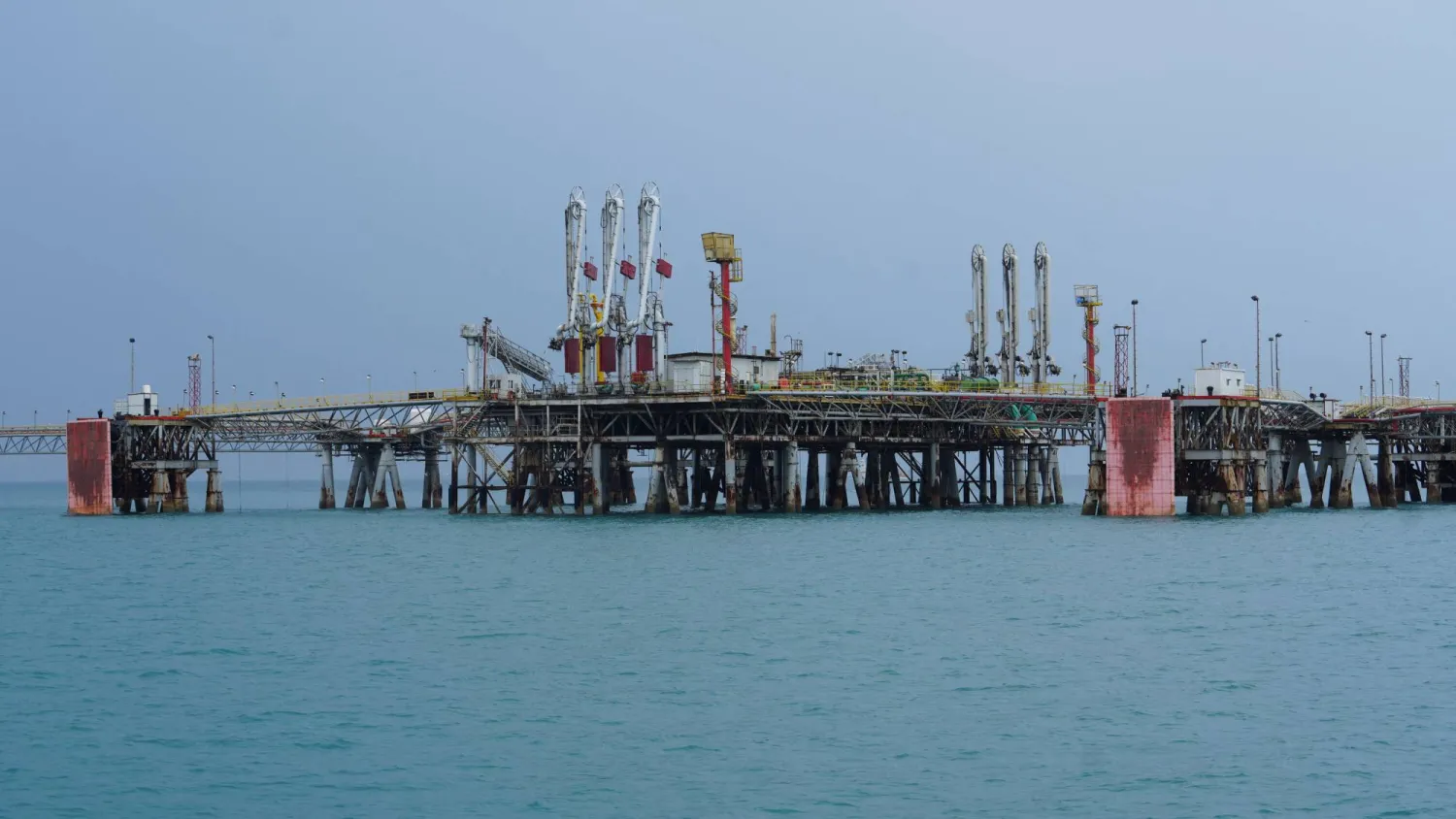



Official: Iraq Has Not Yet Applied for an IMF Loan

A floating oil export platform in Basra port, Iraq (Reuters)
TT

Official: Iraq Has Not Yet Applied for an IMF Loan

A floating oil export platform in Basra port, Iraq (Reuters)

Financial Advisor to the Iraqi Prime Minister Mazhar Mohammed Saleh revealed on Saturday that Iraq has not yet submitted a formal request for a loan from the International Monetary Fund (IMF).

The Iraqi News Agency quoted Saleh as saying that “Iraq enjoys close relations with the IMF, and since 2003, it has concluded more than five agreements, three of which were Stand-by Arrangements, while the other agreements related to emergency support.”

Iran's war has caused significant disruptions in supply chains, especially in the energy sector, which was severely affected by a near-complete closure of the Strait of Hormuz, through which about 20 percent of global oil supplies pass.

Saleh stated that “the Fund has played a significant role in supporting the Iraqi economy over the past 23 years, especially since Iraq is now considered one of the biggest victims of the ongoing war in the region, considering that 85 percent of its oil exports pass through the Strait of Hormuz. This has caused significant harm and international concern, given that Iraq is an important and active member in the stability of the region and world markets.”

He pointed out that there is an Iraqi government team in contact with the IMF, meeting with Fund officials for consultations twice a year.

He clarified that “Iraq signed an agreement with the IMF on July 7, 2016, for a Stand-by Arrangement by providing a significant loan, which played a major role in supporting the general budget,” noting that “signing an agreement with the Fund is a matter decided by the Iraqi government, and this does not prevent consultations between the two parties, as Iraq is a member of this institution responsible for global stability.”

Saleh mentioned that “Iraq will borrow from the International Monetary Fund if the need arises, but there is no formal request from the government yet, and the current need is for the war in the region to stop, and for its geopolitical impacts on oil exports to cease.”

He added that “technical assistance from the IMF is available now, unlike the issue of financing, which requires the approval of a program by the Iraqi government.”

He explained that “the loan itself represents a reform program to support the budget or to achieve social goals, such as supporting the health and education sectors, because it is a human investment that must be subject to conditions defining expenditure directions and commitment to a reform program agreed upon by the Iraqi state and the IMF.”


More Children’s Hospitals Turn to Furry Caregivers to Help Kids Heal

Cincinnati Children's Hospital facility dog Grover plays in the grassy facility dog play area at Cincinnati Children's Hospital in Cincinnati, Monday, May 4, 2026. (AP Photo/Carolyn Kaster)
TT

More Children’s Hospitals Turn to Furry Caregivers to Help Kids Heal

Cincinnati Children's Hospital facility dog Grover plays in the grassy facility dog play area at Cincinnati Children's Hospital in Cincinnati, Monday, May 4, 2026. (AP Photo/Carolyn Kaster)

The first time 5-year-old Calvin Owens went outside in more than a month, he met up with his canine friend Hadley on a hospital patio. Despite being tethered to equipment with wires and tubes, the little boy managed to stand up near his wheelchair long enough to toss her a ball.

He smiled as she ran to fetch it. Caregivers cheered.

“Look how good you’re doing!” said Hadley's handler, Schellie Scott.

Such small victories and moments of joy are common whenever Hadley or one of the other three facility dogs at Cincinnati Children’s Hospital show up.

These furry caregivers aren’t the typical therapy dogs volunteers bring to hospitals to comfort patients. They are specially trained, full-time working dogs that provide emotional support during stressful procedures, motivate kids to move around and make hospitals seem less scary. And experts say their ranks are growing at children’s hospitals across the nation.

A mounting body of research shows that even short interactions with facility dogs can improve children’s overall well-being, decrease the pain they feel and reduce signs of stress, like cortisol levels and blood pressure.

“These dogs are making a real difference,” said Kerri Rodriguez, director of the Human-Animal Bond Lab at the University of Arizona. “They can provide a little bit of normalcy, a little bit of comfort, in a really stressful, sterile environment that kids might not feel comfortable in.”

Although no one tracks the number of facility dogs in children's hospitals, Rodriguez points to the continual growth of the annual Facility Dog Summit, where handlers and other participants network and where attendance nearly doubled from 2024 to 2025. Other types of hospitals also have full-time dogs, but experts say children's hospitals account for most of the expansion in programs. One large nonprofit, Canine Assistants in Georgia, has a specific children’s hospital initiative through which it has placed more than 80 dogs nationally.

Dogs have been on the job for years at places such as Mount Sinai Kravis Children’s Hospital in New York, Norton Children’s in Louisville, Kentucky, and St. Louis Children’s Hospital. And new programs keep sprouting up. In March, Johns Hopkins Children’s Center in Maryland introduced its first two facility dogs.

Hospitals generally get the dogs from nonprofits. Organizations such as Canine Companions, where Cincinnati Children's gets its dogs, breed, raise and train them, then place them with hospital staff members but still own them. Dogs and handlers live and work together, The Associated Press reported.

Although hospitals don’t pay for the dogs, they’re responsible for costs such as food and veterinary care, which can add up, especially since most are larger breeds like Labradors or golden retrievers. Hospitals usually fundraise or seek grants to cover the costs.

Experts say the benefits of these sorts of “animal-assisted therapies” are clear. A 2022 study Rodriguez coauthored analyzed a survey conducted across 17 children's hospitals. Pediatric health professionals described how facility dogs provided a comforting presence, built rapport, and normalized the hospital environment for children and families.

A 2021 study in the Journal of Pediatric Nursing concluded that animal- assisted therapies were beneficial for controlling pain and blood pressure in children and teens. Other research also found these therapies reduce anxiety and pain and can even improve heart and lung function.

Facility dogs are allowed in more sensitive areas of the hospital than volunteer dogs, and sometimes serve particular hospital units. Opal, one of two St. Louis dogs, splits her time between the pediatric behavioral health unit and the child protection program.

No matter where the dogs work, keeping them clean is key.

Hadley, in Cincinnati, is bathed twice a month because she works in the cancer and blood diseases area, where kids might have reduced immunity.

She gets even more baths, or cleanings with special wipes, if she’s potentially exposed to germs. Handlers use leashes and balls that can be easily cleaned, and people must sanitize their hands before and after touching the dogs.

If a patient is in isolation, the dog stays outside the room. The one exception is if a dying child wants a dog to be close. In those cases, caregivers say concerns about germs are outweighed by the need to ease fears and provide comfort.

Hadley’s workday starts whenever her handler Scott — whose job as a child life assistant involves keeping patients' lives as normal as possible — arrives at the hospital. Hadley mostly sees patients, but also gets breaks when she can just do what she wants.

On a recent morning, the Labrador-golden retriever mix raced around a grassy dog play area with her canine co-worker, Grover. While Grover is calm and chill, Hadley gets so excited she shakes her head to toss balls to herself.

“Hadley loves life,” Scott said. “Hadley lives big.”

Inside the hospital, the dogs get constant attention. For handlers, "it's like being the assistant to a famous person,” joked Scott.

Signs of the dogs’ celebrity status are everywhere.

They appear on closed-circuit television shows filmed by the hospital and beamed into patient rooms. Photos of the dogs, themed for holidays or events, line the hallways. And there are mailboxes where kids can drop letters or pictures for the dogs and get replies.

Patients can also get trading cards for each dog with stats like breed and birthday, bandanas to decorate for their furry friend, or little stuffed dogs.

Caregivers create books featuring the dogs to show kids about procedures or treatments they’re about to undergo.

Kids hospitalized for long stretches get to know the dogs well.

Aspen Franklin, a 14-year-old fighting a life-threatening immune disorder, has been coming to the hospital since she was a toddler and was recently hospitalized for weeks. At times, Hadley has snuggled beside her in bed.

“She has a calming presence,” Aspen said. “That is a comfort to me.”

Like other facility dogs, Hadley also helps her family cope. When Aspen's younger brother Emory donated his cells for her bone marrow transplant, Hadley spent time with him — and other visiting siblings.

Having Hadley around “is really nice because they’re away from their animals at home,” said their mom, Brittney Franklin, whose family has two dogs and a cat.

Franklin recently watched as Aspen painted with Hadley. The dog couldn’t go in her room so soon after her transplant, so Aspen dabbed colors on a small canvas and handed it to Scott, who put it in a plastic bag and smeared peanut butter on top. Just outside the room, Hadley eagerly licked it up. A piece of abstract art emerged.

Hadley’s next patient was Calvin, the little boy she met on the patio. Calvin has a rare, severe type of childhood arthritis and recently had a bone marrow transplant. Though he could only stand for a few moments at a time, he made the effort repeatedly to play with Hadley.

“He’s such a strong little man,” Scott said.

After Calvin went inside, Hadley met up with 11-year-old Bethany Striggles, who recently finished a chemotherapy treatment for bone cancer. The girl hurled the ball all the way down the hallway, and Hadley bounded happily to retrieve and gently return it. Bethany rewarded her with an ice pop.

“She helps me exercise more,” Bethany said. “She’s energetic and happy and always likes to see me.”

But Hadley does eventually tire. When that happens, she goes back to an office affectionately known as her lair, where she has treats, toys and a big dog bed.

Above the bed is a bulletin board covered with drawings, photos and notes. One, written on orange construction paper, contains a small, pink handprint and the words: “Thank you for being my BEST FRIEND.”


US Military Conducts Rapid Response Exercise at Embassy in Venezuela

US Embassy holds emergency and air evacuation drill in Caracas, Venezuela, Saturday, May 23, 2026. (AP Photo/Pedro Mattey)
TT

US Military Conducts Rapid Response Exercise at Embassy in Venezuela

US Embassy holds emergency and air evacuation drill in Caracas, Venezuela, Saturday, May 23, 2026. (AP Photo/Pedro Mattey)

The US military conducted a rapid response exercise involving Marines and military aircraft in Venezuela’s capital Saturday, over four months after the ouster of then-President Nicolás Maduro.

Two Marine Corps Osprey aircraft, which have characteristics of both a helicopter and a fixed-wing airplane, flew over the recently reopened US Embassy in Caracas. They landed in the parking lot with the downdraft blowing tree branches. Forces then descended from the aircraft.

“Ensuring the military’s rapid response capability is a key component of mission readiness, both here in Venezuela and around the world,” The Associated Press quoted the embassy as saying on Instagram.

Venezuela’s government had announced the drill earlier this week. Foreign Minister Yván Gil said the US would conduct the exercise to prepare “in the event of medical emergencies or catastrophic emergencies.”

The drill comes almost two months after the US formally reopened its embassy in Caracas. The reopening followed the restoration of full diplomatic relations with the South American country after Maduro 's ouster in early January.

Some Caracas residents Saturday gathered near the embassy to watch the aircraft, while a few dozen others gathered elsewhere in the city to protest the exercise. Protesters held a Venezuelan flag with the message “No to the Yankee drill” written over it.

US military aircraft last flew over Caracas on Jan. 3, when elite forces rappelled down from helicopters and captured Maduro and his wife. Both were taken to New York to face drug trafficking charges. They have pleaded not guilty.