EU Considers Restarting WTO Case Against US Over Steel Tariffs

FILE PHOTO: Chess pieces are seen in front of displayed US and EU flags in this illustration. REUTERS
TT

EU Considers Restarting WTO Case Against US Over Steel Tariffs

FILE PHOTO: Chess pieces are seen in front of displayed US and EU flags in this illustration. REUTERS

The European Union is considering reopening a case at the World Trade Organization against the United States over a steel and aluminum dispute that saw the allies hit each other with tariffs on more than $10 billion of goods, Bloomberg News reported on Friday, citing people familiar with the matter.
The EU will, however, refrain from immediately reimposing retaliatory tariffs on American goods over the disagreement, the report said.


Morocco's Cereals Harvest Expected to Double after Wet Winter

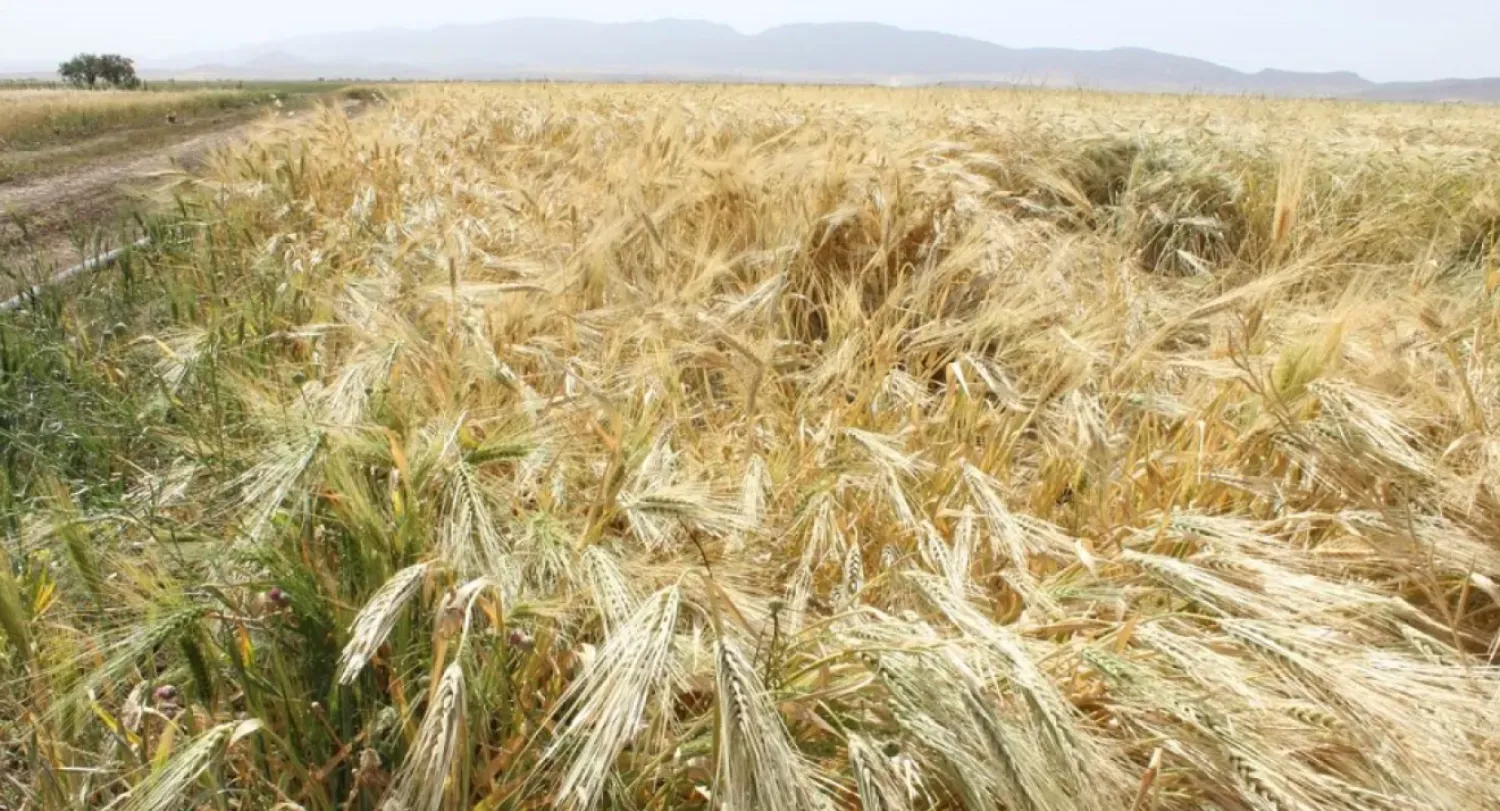
The previous harvest was 4.4 million tons, including 2.4 million tons of soft wheat (File Photo/AFP)
TT

Morocco's Cereals Harvest Expected to Double after Wet Winter

The previous harvest was 4.4 million tons, including 2.4 million tons of soft wheat (File Photo/AFP)

Moroccan grains traders and millers expect Morocco to double its cereals harvest this season after abundant winter rains, with limited impact from floods in the northwestern plains of the North African country, which is a major grains importer.

Industry leaders plan to add domestic wheat to strategic reserves this year "without compromising imports", said Moulay Abdelkader Alaoui, head of the federation of industrial millers FNM, who expects a domestic harvest of 6 million metric tons.

"We expect a good cereals harvest this year of 8 to 9 million tons, including around 5 million tons of soft wheat," Omar Yacoubi, head of Morocco's wheat trading federation FNCL, told Reuters. The previous harvest was 4.4 million tons, including 2.4 million tons of soft wheat.

Morocco traditionally cancels its wheat import subsidy and reinstates customs duties to protect the local harvest.

But this year importers, millers and traders have asked the government to extend the subsidy window to June 1, instead of May 1, to compensate for costs incurred due to bad weather.

Rainfall this winter was 34% above the 30-year average and triple the previous year's levels, while dam filling rates improved to 70% from about 25%, agriculture ministry data shows, while the total grain-planted area rose to 3.7 million hectares, from 2.6 million the year before.

Flooding in the fertile northwestern plains, which destroyed 110,000 hectares, had a "localized" impact, Yacoubi said, with wheat losses to be offset by higher yields in larger plains.

DELAYED SHIPPING

Large swells and storms since mid-December have disrupted port operations at Casablanca and Jorf Lasfar, which handle 80% of Morocco's wheat imports.

Shipping delays have weighed heavily on importers, even as international wheat prices remain below the subsidy eligibility threshold, Yacoubi said, adding that as of this week, 70 ships carrying 1 million tons of wheat were queued outside ports, leading to low stock levels.

Moroccan importers are paying about $20,000 per day for ships waiting offshore, pushing them to request an extension of the government subsidy programme.

Traditionally, only half of Morocco's harvest reaches industrial mills because small farmers retain wheat for their own use, but Alaoui said this year's plentiful rainfall should improve crop quality and encourage more collection.

French exporters expect to supply about two-thirds of Morocco's soft wheat import needs, or 3.5 million tons.

From June 2025 to January 2026, Morocco imported 7 million tons of grains, up 12% year-on-year, including 3.2 million tons of soft wheat.

During the same period, France topped Morocco's soft wheat suppliers with 2.26 million tons, followed by Argentina with 233,144 tons, Russia with 227,070 tons, Germany with 120,084 tons and the U.S. with 94,688 tons.



Saudi Arabia Records Slowest Inflation Since February 2025

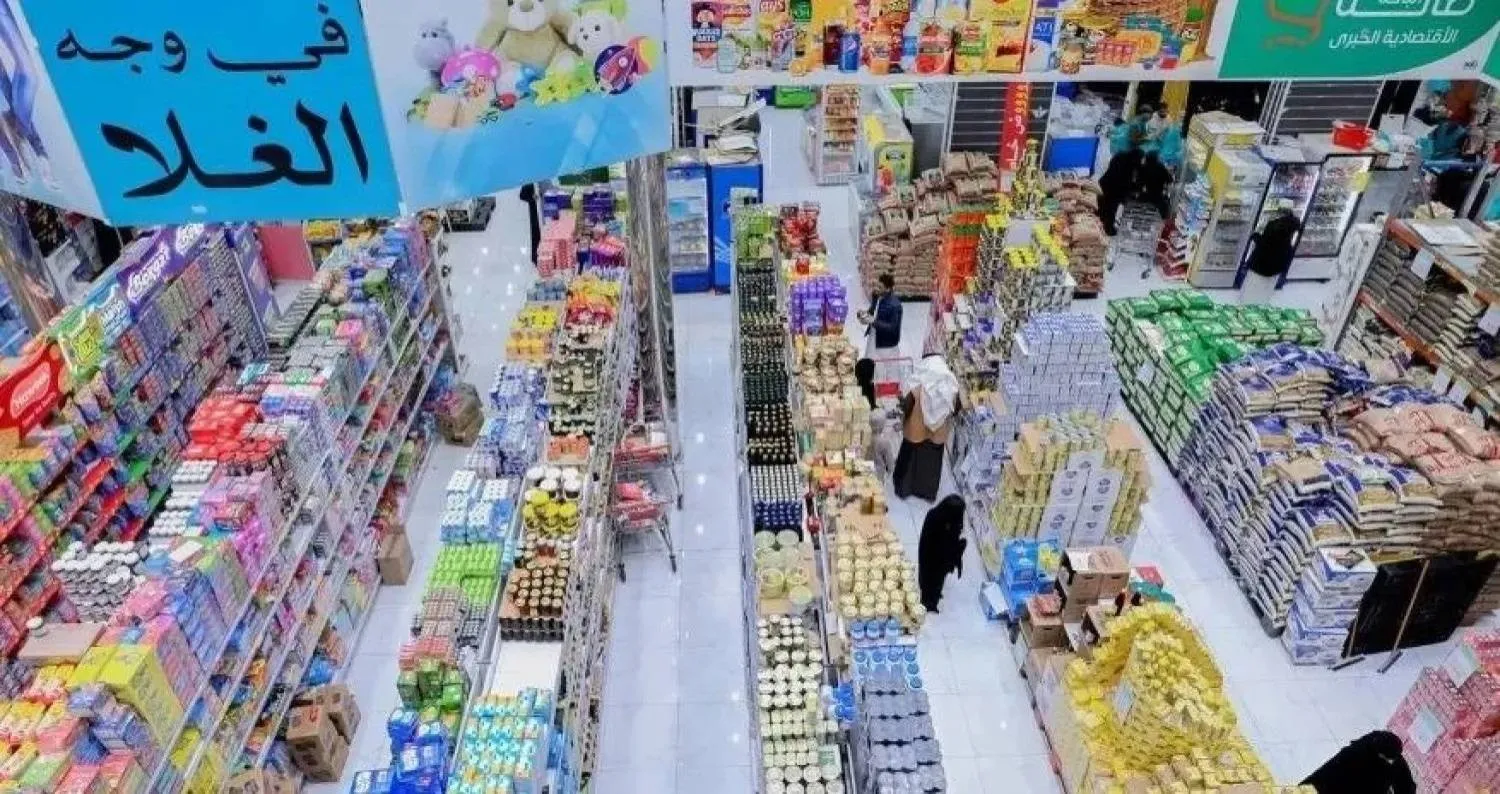
A supermarket in Saudi Arabia (SPA) 
TT

Saudi Arabia Records Slowest Inflation Since February 2025

A supermarket in Saudi Arabia (SPA) 

Saudi Arabia’s annual inflation eased noticeably in January, rising 1.8 percent year on year, the slowest pace since February last year, signaling positive momentum for the domestic economy.

According to official data, inflation in January 2026 was driven mainly by higher housing, water, electricity, gas and other fuel prices, which rose 4.2 percent. Transport costs increased 1.5 percent, while restaurant and accommodation services rose 1 percent.

Housing rents remain the largest contributor to inflation, with actual rents climbing 5.2 percent annually.

Economists said January’s slowdown points to greater price stability and easing living costs, reflecting government measures to support growth.

Osama bin Ghanem Al-Obaidi, an advisor and professor of international commercial law, said the 1.8 percent annual rate is the lowest among G20 countries. While housing and utilities remain the largest contributors, he noted that rent increases are now less intense than in recent months.

Al-Obaidi added that inflation control in Saudi Arabia remains effective, with relative price stability supporting consumer purchasing power and easing pressure on low-income households. He said January’s data reflects growing market stability, with pressures in some categories contained by demand.

Economist Ahmed Al-Shahri, for his part, noted that the moderation in inflation boosts confidence and encourages investment and broader economic activity. He attributed the improvement to government efforts to ensure economic stability and advance sustainable development, underscoring the effectiveness of fiscal and economic policies.

Al-Shahri highlighted housing and rental measures introduced under the direction of Crown Prince and Prime Minister Mohammed bin Salman, noting their significant impact. Despite the 1.8 percent annual rise, he said inflation remains low by historical standards, indicating that price pressures are gradually easing after post-pandemic global shocks and supply-chain disruptions.

Category Breakdown

Transport prices rose 1.5 percent year on year, driven by a 6 percent increase in passenger transport services. Restaurant and accommodation prices increased 1 percent, reflecting higher food and beverage services. Personal care and other goods and services surged 7.9 percent, led by higher jewelry and watch prices. Insurance and financial services rose 3.3 percent, while food and beverages edged up 0.2 percent.

Furniture and household equipment prices fell 0.3 percent, and health prices dipped 0.1 percent.

On a monthly basis, the consumer price index rose 0.2 percent in January compared with December 2025, supported by higher housing, transport and restaurant prices, while food and beverages declined 0.6 percent.


Gold Drops over 1% as Thin Trading, Profit‑taking Weigh

An Indian woman tries on gold jewelry at a jewelry store in Bangalore (EPA)
TT

Gold Drops over 1% as Thin Trading, Profit‑taking Weigh

An Indian woman tries on gold jewelry at a jewelry store in Bangalore (EPA)

Gold prices dropped on Monday, pressured by thin trading volumes as US and China markets remained shut due to local public holidays, while some traders booked profits after last session's 2.5% jump.

Spot gold fell 1.1% to $4,986.32 per ounce by 0550 GMT. US gold futures for April delivery lost 0.8% to $5,005.60 per ounce.

"Gold has given back some of Friday's post-CPI ‌gains today due to ‌thinner trading conditions and a lack ‌of ⁠fresh upside catalysts," said ⁠Tim Waterer, KCM chief analyst, referring to the US consumer price inflation data. He also pointed to profit-taking on the day.

US markets are closed for the Presidents' Day holiday, while markets in China are closed for the Lunar New Year holiday. The US CPI rose 0.2% in January after an unrevised 0.3% gain in December, ⁠the Labor Department's Bureau of Labor Statistics said ‌on Friday.

Economists polled by Reuters ‌had forecast the CPI to increase by 0.3%. Federal Reserve Bank of ‌Chicago President Austan Goolsbee said on Friday that interest rates could ‌go down, but noted that services inflation remained high.

Market participants anticipate the central bank to hold interest rates at its next meeting on March 18. Still, they are pricing in 75 basis points in rate ‌cuts this year, with the first expected in July, according to data compiled by LSEG.

Non-yielding ⁠bullion tends ⁠to do well in low-interest-rate environments. "It will likely require the dollar to resume its downtrend for gold to make a push in the direction of $6,000 before year-end," Waterer said.

On the geopolitical front, the US military is preparing for the possibility of a weeks-long operation against Iran should President Donald Trump authorize an attack, two US officials told Reuters, in what could become a far more serious conflict than previously seen between the countries.

Spot silver lost 2.4% to $75.64 per ounce, after a 3% fall earlier in the session. The white metal rose 3.4% on Friday. Spot platinum slipped 0.8% to $2,045.11 per ounce, while palladium shed 0.7% to $1,673.52.