
Cash-strapped Lebanese Soldiers Moonlight as Mechanics, Waiters

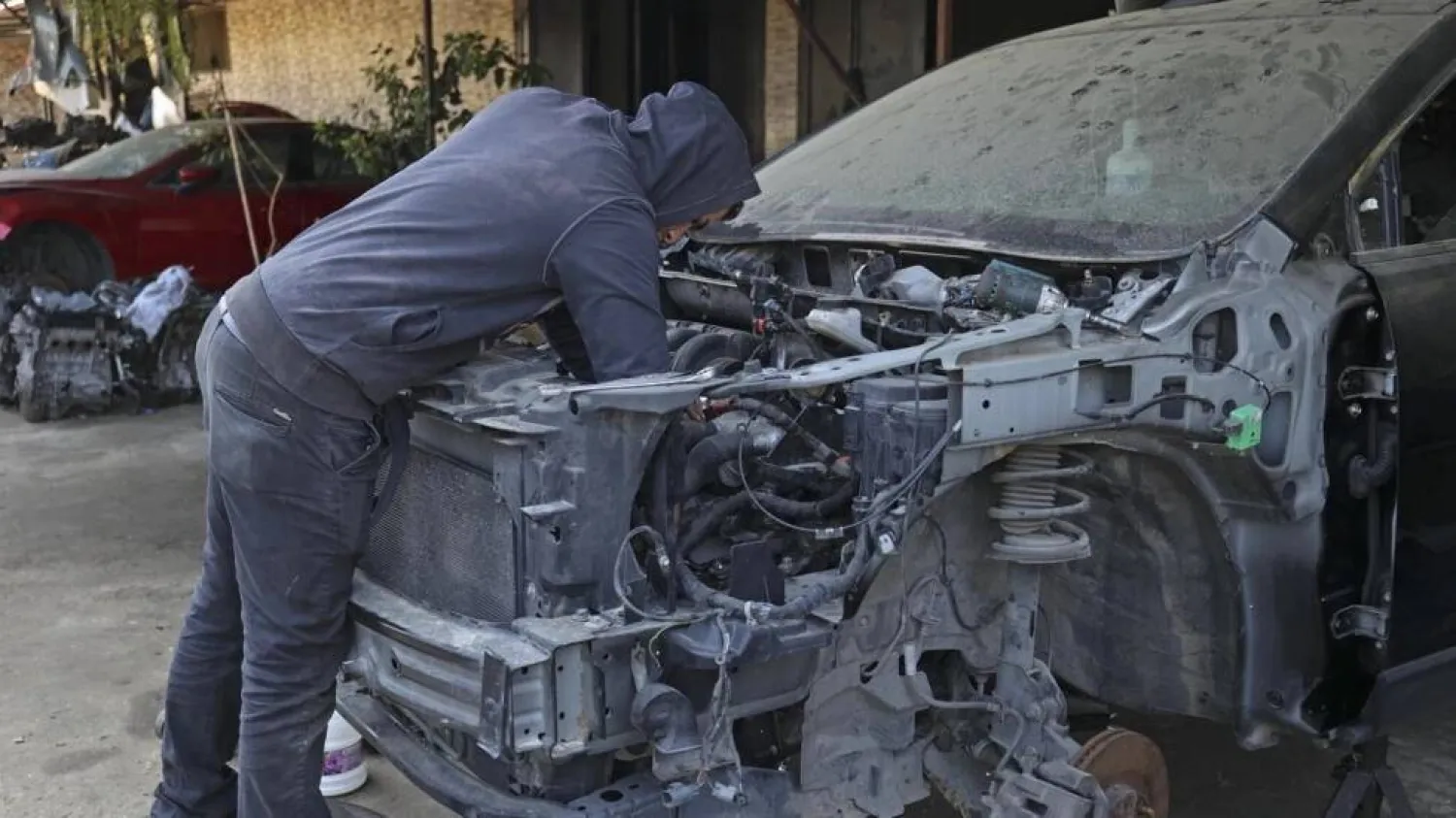
A soldier works at a garage in the Lebanese port city of Tripoli as a side hustle to make ends meet. ANWAR AMRO / AFP
TT

Cash-strapped Lebanese Soldiers Moonlight as Mechanics, Waiters

A soldier works at a garage in the Lebanese port city of Tripoli as a side hustle to make ends meet. ANWAR AMRO / AFP

A crushing economic crisis in Lebanon has impelled members of the security forces to take on side hustles to get by, raising concerns about security in the eastern Mediterranean country.

Soldiers in Lebanon have seen their salaries diminish to around an eighth of their value in dollar terms since the country's economy began tanking in late 2019.

To make ends meet, 28-year-old soldier Samer says he works three days a week with his uncle at a garage in the northern port city of Tripoli.

"Almost all of my army friends have a second job," he said, standing near an open car bonnet, his hands dirty with grease and oil.

In regular times, moonlighting while serving in the military can be punishable by imprisonment.

But now "the army turns a blind eye because if not, everybody would quit", said Samer, whose name has been changed as he is not allowed to talk to the media.

The devastating economic crisis -- which the World Bank says is one of the planet's worst in modern times -- has plunged more than 80 percent of the Lebanese population into poverty.

On average, a soldier used to earn about $800 a month before the crisis, but the value of the Lebanese currency, the pound, has since crashed and salaries are now worth around just $100.

Working at the garage, Samer says he earns double what he does as a soldier -- but still struggles to survive, with nappies and milk to buy for his young son.

Since June last year, Qatar and the United States have announced millions to help prop up security force salaries -- particularly for the army, seen as a key pillar of Lebanon's stability.

'Penniless'

"Even with the $100 extra from the Qataris every 45 days, it's still not enough," Samer told AFP. "At the end of the month, I'm penniless."

Around 80,000 Lebanese serve in the army, while almost 25,000 police serve in Lebanon's Internal Security Forces (ISF), according to official sources.

The army declined to respond to an AFP request for comment on the issue of soldiers taking up second jobs.

Ahmad, 29, chose to desert after 10 years of service, preferring instead to work full time as a waiter.

"I realized that staying was hopeless," he told AFP, also using a pseudonym.

He quit early last year and said others from his barracks had also left the army.

"I was raised to love the uniform. I still do, but we are suffocating," he said.

Lebanon's cash-strapped military struggles to even maintain its own equipment.

After the economic meltdown began, the army cut down on meat in meals for on-duty soldiers, while in 2021 it introduced helicopter joyrides for tourists in a bid to boost its coffers.

Security concerns

Ahmad said he worried about being arrested for deserting.

"But at least I earn seven times the amount from before -- and have enough to eat."

Dina Arakji from Control Risks consultancy said morale in the security forces "has decreased as a result of the crisis".

Unofficially allowing soldiers to work other jobs has jeopardized "the forces' ability to effectively cover and respond to the country's domestic security needs", she told AFP.

Police who serve in Lebanon's ISF say their financial woes are even tougher.

"Our situation is pitiful," Elie, a 37-year-old police officer, told AFP at a protest demanding pension increases for armed forces members in March.

The father of three said his salary was worth around $50 and that he worked with his father, a farmer, to help feed his family.

"The ISF turns a blind eye to those moonlighting as there are no other solutions," a security official told AFP.

The official, requesting anonymity as they were not authorized to talk to the media, said health budgets for the armed forces had also collapsed.

The army provides its own hospital for its forces, but the ISF has no such facilities.

"The worst thing is that if you are injured on the job, you have to pay your own hospital bills," police officer Elie said.

EU Urged to 'Act Now' on West Bank Settlement Project

The Palestinian village of Turmus Ayya (foreground) and the Israeli settlement of Shilo (background), north of Ramallah in the Israeli-occupied West Bank, are pictured on May 6, 2026. (Photo by Zain JAAFAR / AFP)
TT

EU Urged to 'Act Now' on West Bank Settlement Project

The Palestinian village of Turmus Ayya (foreground) and the Israeli settlement of Shilo (background), north of Ramallah in the Israeli-occupied West Bank, are pictured on May 6, 2026. (Photo by Zain JAAFAR / AFP)

More than 400 former diplomats, ministers, and senior officials on Wednesday urged the European Union to "act now" against Israel's "illegal" settlements in the occupied West Bank.

The open letter comes as Israel intends to move forward with E1, a new construction project covering around 12 square kilometers (4.6 square miles) with some 3,400 housing units in the occupied West Bank.

The move would further separate east Jerusalem, occupied and annexed by Israel and predominantly inhabited by Palestinians, from the West Bank.

"The EU and its member states, together with partners, must take immediate action to deter Israel from further advancing its illegal annexation of Palestinian land in the West Bank," said the letter signed by more than 440 figures, including former EU foreign policy chief Josep Borrell and former Belgian prime minister Guy Verhofstadt.

The signatories called for targeted sanctions, such as visa bans and business restrictions, on "all those engaged in illegal settlement activity", calling for measures against those promoting or implementing the E1 scheme.

The Israeli government plans to publish an initial tender on June 1 for the construction of housing for up to 15,000 "illegal settlers", AFP quoted the letter as saying, urging the EU and its member states to "act now".

The plan has been condemned by international leaders, with UN Secretary General Antonio Guterres's spokesman saying it would pose an "existential threat" to a contiguous Palestinian state.

Excluding east Jerusalem, more than 500,000 Israelis live in the occupied West Bank in settlements that are illegal under international law, among some three million Palestinians.

In 2025, the expansion of Israeli settlements reached its highest level since at least 2017, when the United Nations began tracking data, according to a UN report.

There has been a spike in deadly attacks by Israeli settlers in the occupied West Bank since the start of the Iran war on February 28, Palestinian officials and the United Nations have said.

Israel has occupied the West Bank since 1967.


Israel Army Says Striking Hezbollah Targets across Lebanon

An Israeli soldier gestures next to a tank, on the Israeli side of the border with Lebanon, May 3, 2026. REUTERS/Shir Torem
TT

Israel Army Says Striking Hezbollah Targets across Lebanon

An Israeli soldier gestures next to a tank, on the Israeli side of the border with Lebanon, May 3, 2026. REUTERS/Shir Torem

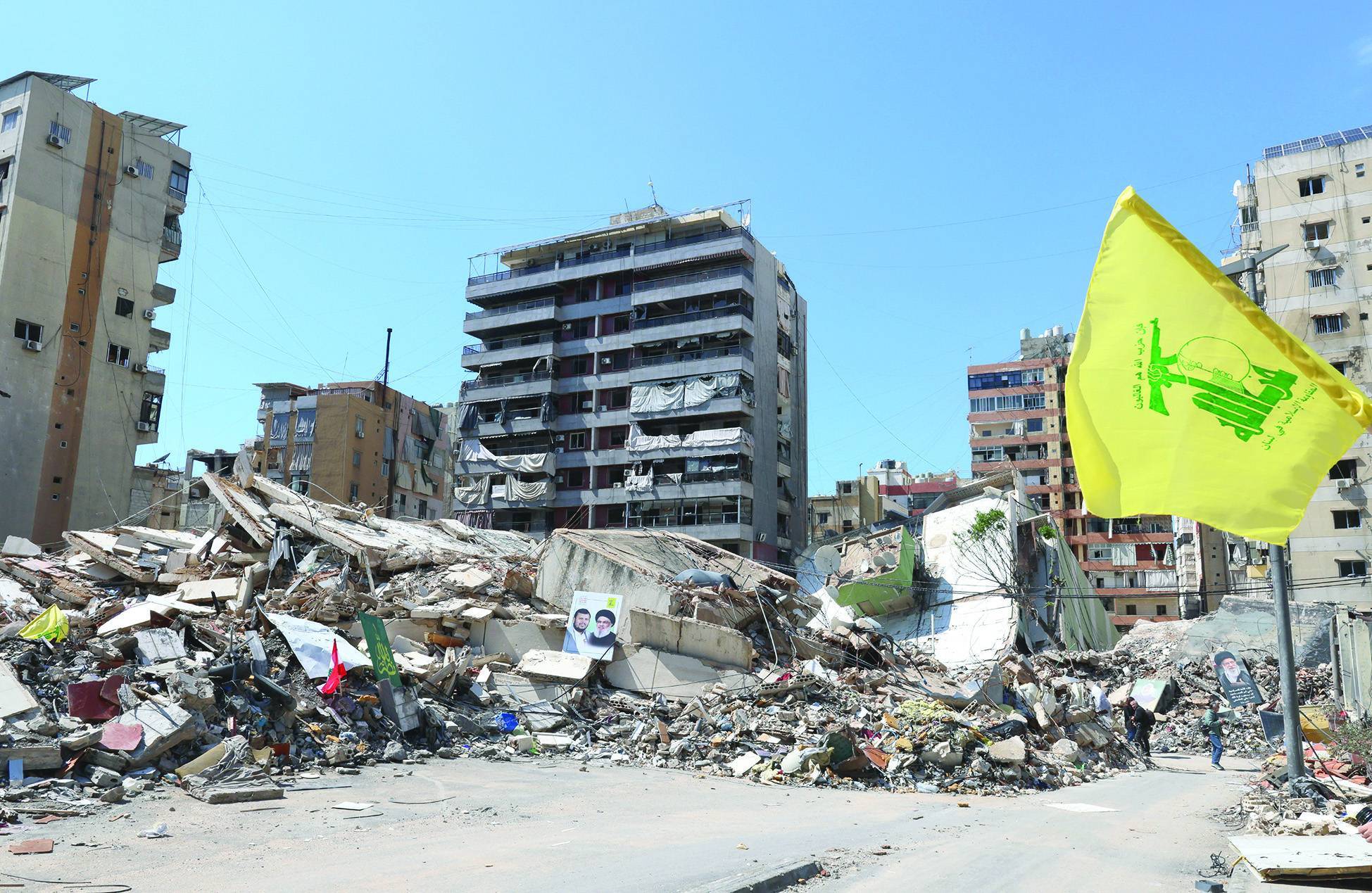
Israel's army said Wednesday it had begun striking Hezbollah infrastructure in several areas of Lebanon, despite a truce with the neighboring country intended to halt fighting with the Iran-backed militant group. 

"The IDF has begun striking Hezbollah terror infrastructure sites in several areas in Lebanon," a military statement said. 

It came shortly after the army reported "several incidents" during which drones exploded near Israeli soldiers operating in Lebanon's south.  

Lebanon's health ministry said an Israeli strike in Lebanon's eastern Bekaa valley killed four people, with local media reporting the attack took place before the Israeli army issued a warning to evacuate the area along with 11 other towns. 

"An Israeli enemy raid on the town of Zellaya in West Bekaa resulted in four martyrs, including two women and an elderly man," the ministry said. 

Lebanese state media said the attack struck the house of the town's mayor, killing him and three members of his family. 


US Wants 'Concrete Actions' on Iran from Next Iraqi PM

Members of Iraq's pro-Iran paramilitary group Kataeb Hezbollah mourn a comrade who was killed in a strike in Basra, during the funeral in Baghdad on April 8, 2026. AHMAD AL-RUBAYE / AFP/File
TT

US Wants 'Concrete Actions' on Iran from Next Iraqi PM

Members of Iraq's pro-Iran paramilitary group Kataeb Hezbollah mourn a comrade who was killed in a strike in Basra, during the funeral in Baghdad on April 8, 2026. AHMAD AL-RUBAYE / AFP/File

The United States is looking for "concrete actions" by Iraq's next prime minister to distance the state from pro-Iran armed groups before resuming financial shipments and security aid, a senior official said Tuesday.

Iraq's ruling coalition has put forward Ali al-Zaidi as the next leader and he quickly received a congratulatory call from President Donald Trump, who had threatened to end all US support if former frontrunner Nouri al-Maliki took office.

But a senior US State Department official, speaking on condition of anonymity, said Zaidi must address the "blurry line" between pro-Iran armed groups in the Shia-majority country and the state, AFP said.

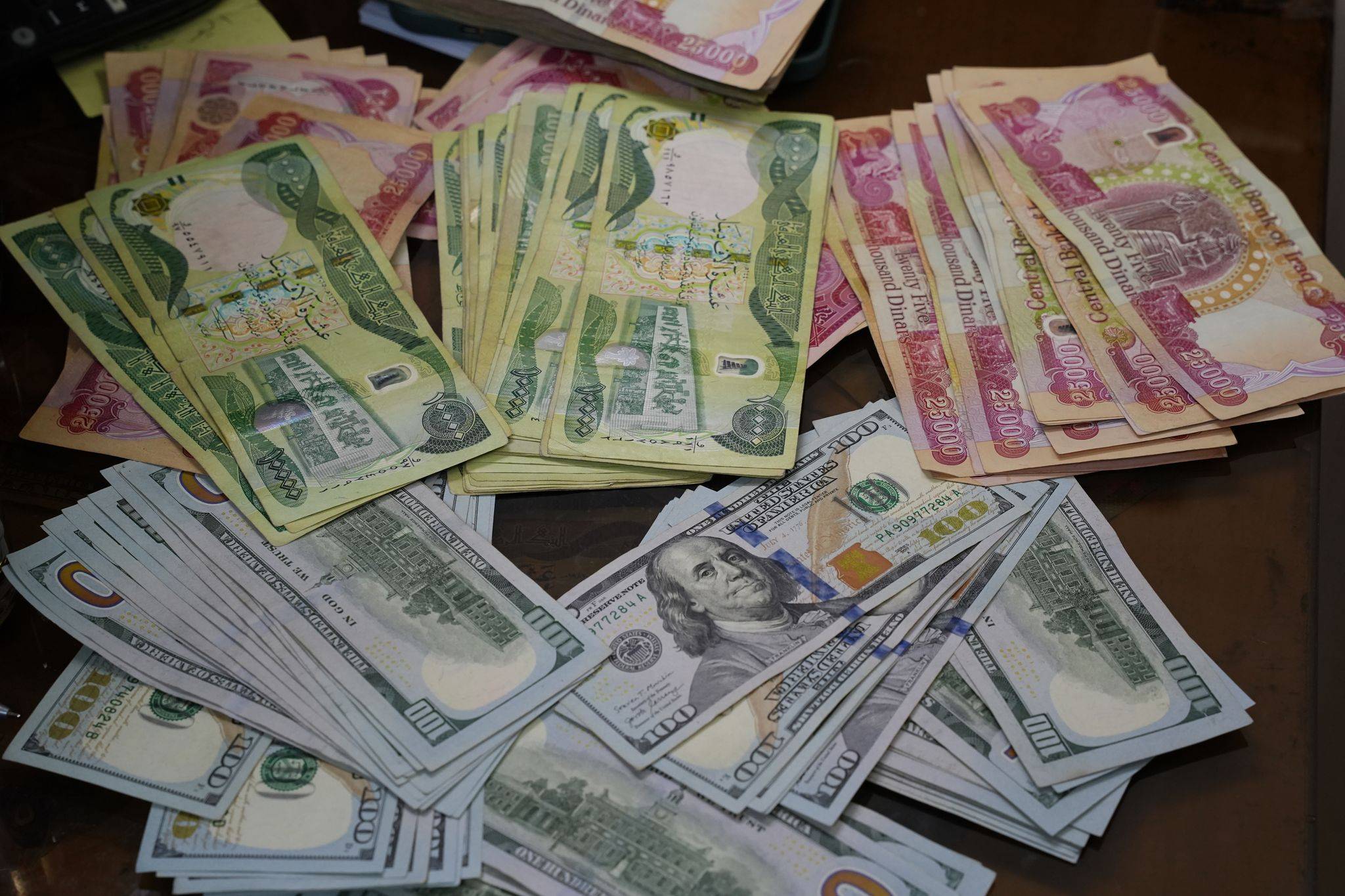
Washington suspended cash payments for oil revenue, which have been handled from the Federal Reserve Bank of New York in an arrangement dating to the aftermath of the 2003 US invasion of Iraq, as well as security assistance over a spate of attacks on US interests.

Resuming full support "would start with expelling terrorist militias from any state institution, cutting off their support from the Iraqi budget (and) denying salary payments to these militia fighters," the official said.

"Those are the type of concrete actions that would give us confidence and say that there's a new mindset."

The official said US facilities in Iraq suffered more than 600 attacks after February 28, when the United States and Israel launched their war on Iran.

The attacks have come to a standstill since a shaky April 8 ceasefire between the United States and Iran, with the exception of Iranian strikes in Iraqi Kurdistan.

"I'm not underestimating the severity of the challenge or what it would take to disentangle these relationships. It could start with a clear and unambiguous statement of policy that the terrorist militias are not part of the Iraqi state," the official said.

"Certain elements of the Iraqi state have continued to provide political, financial and operational cover for these very terrorist militias," he added.

The United States piled pressure on Iraq after it appeared that Maliki would be the next prime minister. During his previous stint in office, relations deteriorated with Washington over accusations of being too close to Iran's Shia clerical government and fanning sectarian flames.

Attacks by armed groups in Iraq have struck the US embassy in Baghdad, its diplomatic and logistics facility at the capital's airport and oil fields operated by foreign companies.