Palestinian Rockets Fired Towards Jerusalem, Israel Kills Militant Leader

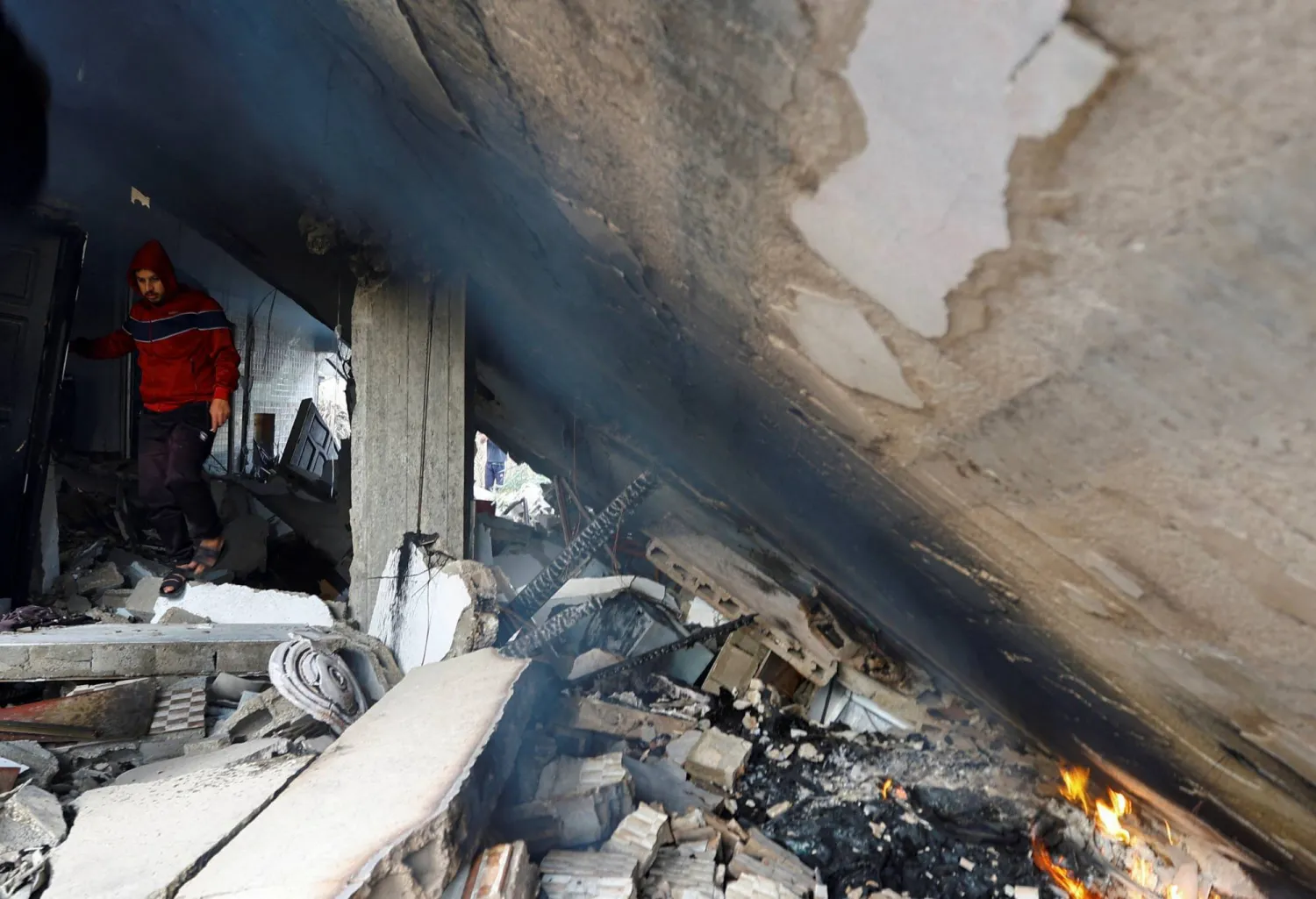
A man walks through the site of an Israeli airstrike amid Israel-Gaza fighting in Deir al-Balah town in the central Gaza Strip, May 12, 2023. REUTERS/Ibraheem Abu Mustafa
TT

Palestinian Rockets Fired Towards Jerusalem, Israel Kills Militant Leader

A man walks through the site of an Israeli airstrike amid Israel-Gaza fighting in Deir al-Balah town in the central Gaza Strip, May 12, 2023. REUTERS/Ibraheem Abu Mustafa

A Palestinian armed group on Friday fired rockets towards Jerusalem for the first time in fighting this week, and Israel killed another militant leader with its air strikes in Gaza, while Egypt tried to forge a ceasefire.

Rocket sirens sounded in the town of Beit Shemesh and elsewhere in the hills outside Jerusalem, ending a 12-hour lull in fighting. Brief explosions could be heard in Jerusalem, possibly from Israeli missile defenses intercepting the rockets.

The Israeli military said two rockets had been fired toward the Jerusalem area but did not confirm if they were intercepted. Local media reported that air defenses shot them down. Israeli towns near the Gaza border also came under renewed fire. No injuries were reported.

Shortly afterwards, Israel resumed air strikes against the Islamic Jihad militant group in the Gaza Strip.

A senior leader, Eyad Al-Hasani, and his aide were killed in a strike on a Gaza apartment. Hasani was the sixth member of Islamic Jihad's top military council to be taken out by Israel this week.

Israeli forces launched an air strike campaign against the Islamic Jihad leadership in the early hours on Tuesday, accusing them of planning attacks on Israel. Islamic Jihad, the second largest armed group in Gaza after the ruling Hamas movement, has since fired almost 1,000 rockets, some deep into Israel.

At least 33 Palestinians in densely populated Gaza, including women and children, have been killed in the past three days, while one person in Israel was killed when an apartment was struck by a rocket in a Tel Aviv suburb.

In Gaza, a small impoverished coastal territory blockaded by Israel and Egypt since 2007, people woke up to empty streets, and many were keen for a respite after days of explosions.

‘Our life has stopped’

Amin Abuelkheir hoped to reopen his fish restaurant after closing it four days ago. "Our life has stopped, the sea is closed to us, and we have stock that we are unable to sell. We hope there will be a truce," Abuelkheir said.

Israelis, still on alert, ventured away from shelters at the start of the weekend to make Sabbath preparations after hours of quiet. But they again ran for cover when sirens pierced the late-morning calm.

The latest flare-up caps more than a year of resurgent Israeli-Palestinian violence that has killed more than 140 Palestinians and at least 19 Israelis and foreigners since January in a seemingly never-ending cycle.

Islamic Jihad spurns coexistence with Israel and preaches its destruction. Top ministers of Israel's current religious nationalist government rule out any state sought by Palestinians in territories captured by Israel in the 1967 Middle East war.

Israel's military said that almost 200 Palestinian rockets had misfired, and that such failed launches had killed four people inside Gaza, including a 10-year-old girl. Islamic Jihad denied that its rockets had misfired or caused deaths in Gaza.

As Egypt pressed on with mediation efforts, two Palestinian officials familiar with the talks said the sides were debating a draft proposed by Cairo.

Among truce terms, Islamic Jihad wants Israel to commit to ending strikes against its leaders. Israel has rejected that. Israel appeared to be hoping that Islamic Jihad, if depleted of rockets and commanders, would halt hostilities unilaterally.

At least 110 people have been injured in the Israeli air strikes that destroyed a number of buildings and damaged more than 300 apartments Gaza, where residents have been experiencing decades of a worsening humanitarian crisis.

Israel occupied the Gaza Strip and the West Bank in the 1967 war, as well as East Jerusalem which Palestinians want for their capital. Israeli forces and settlers withdrew from Gaza in 2005. Statehood talks between Israel and the mainstream Palestinian Authority, based in the West Bank, have been frozen since 2014.

Jordan Steps up Security with Overnight Raids as Terrorism Threat Resurfaces

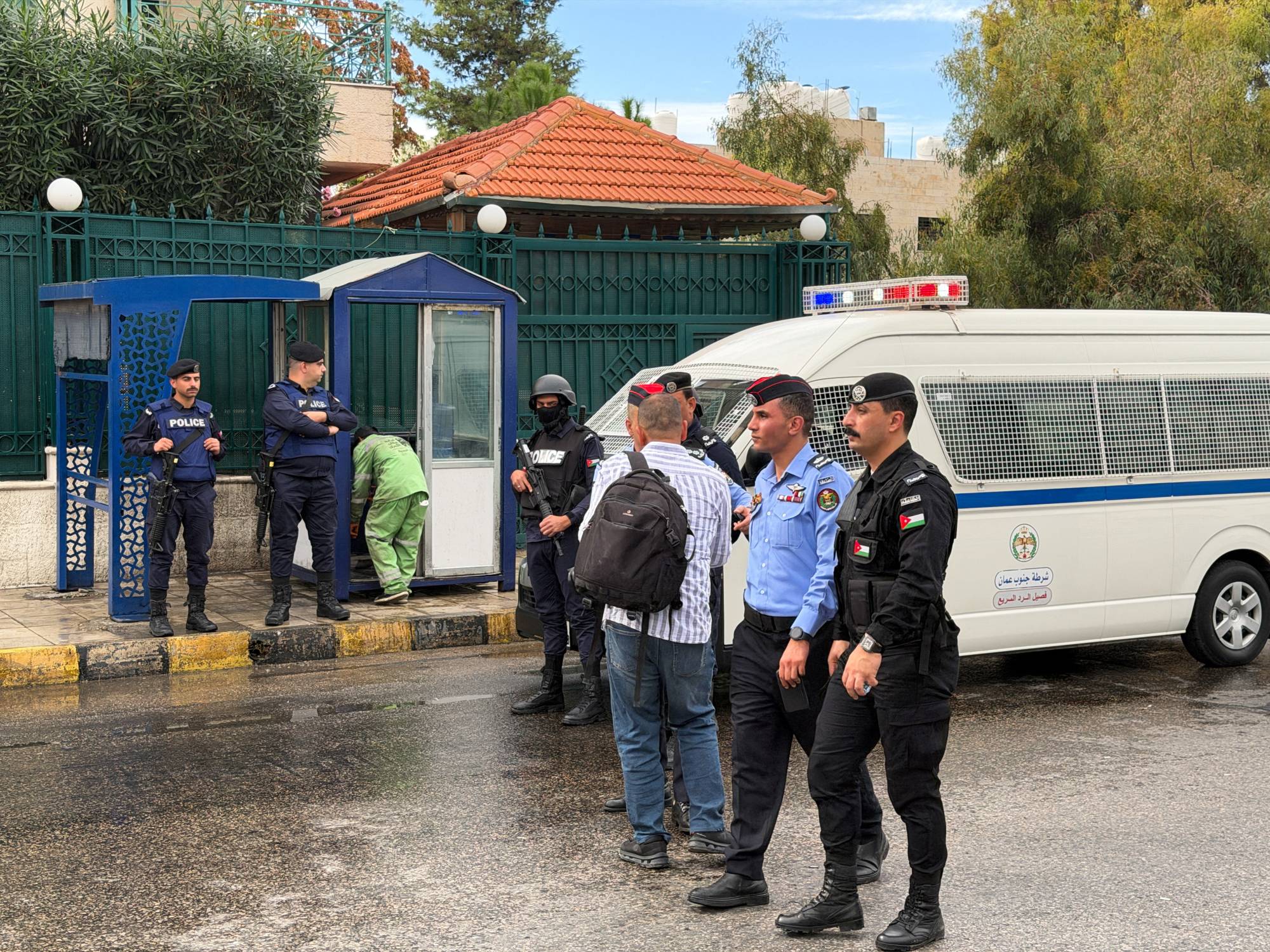
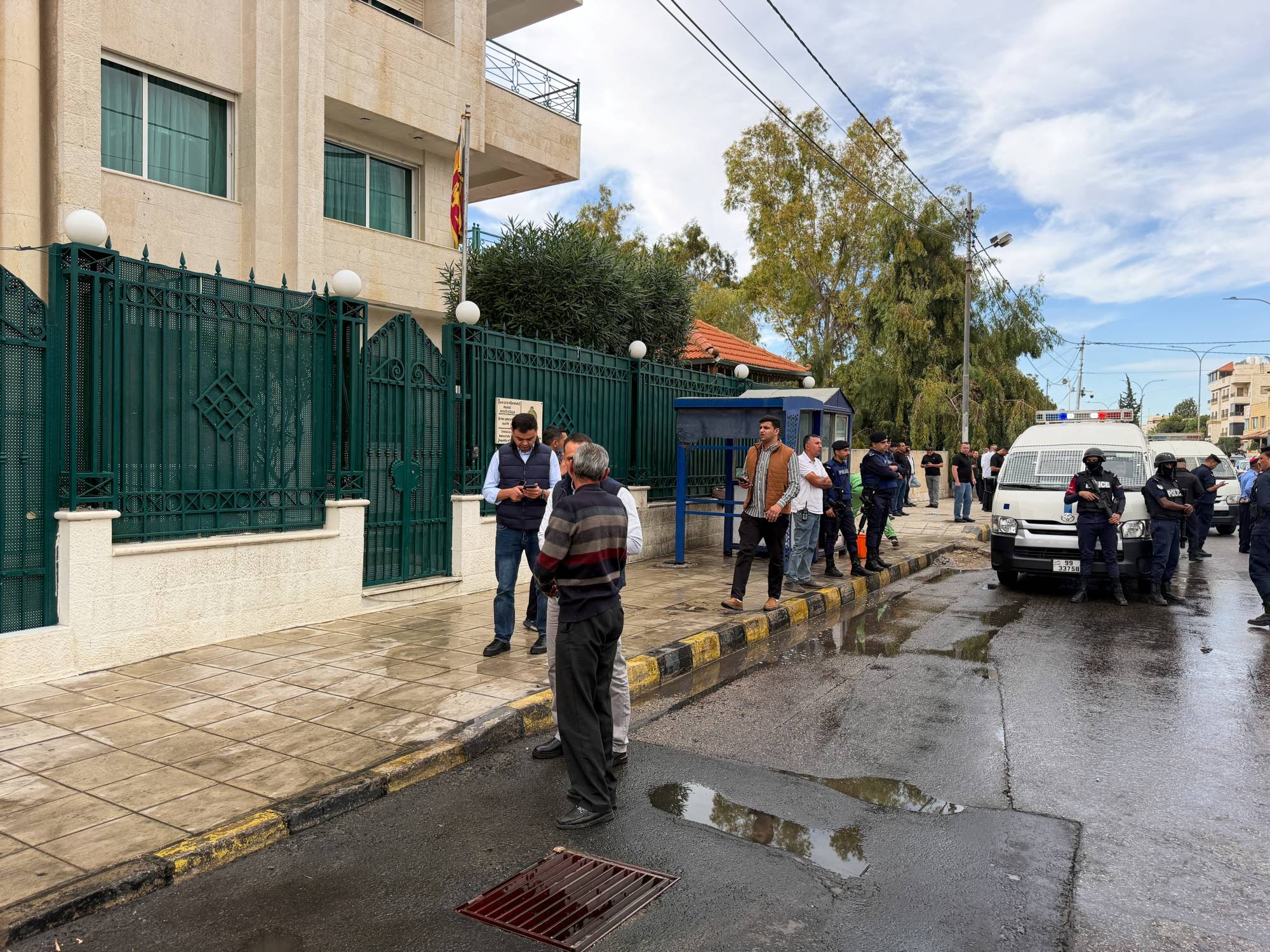
Jordanian police stand guard in front of the Sri Lankan Embassy, background, after an assailant killed a security officer at a guard booth outside the compound in Amman, Jordan, Thursday, Nov. 5, 2026. (AP Photo/Raad Adayleh)
TT

Jordan Steps up Security with Overnight Raids as Terrorism Threat Resurfaces

Jordanian police stand guard in front of the Sri Lankan Embassy, background, after an assailant killed a security officer at a guard booth outside the compound in Amman, Jordan, Thursday, Nov. 5, 2026. (AP Photo/Raad Adayleh)

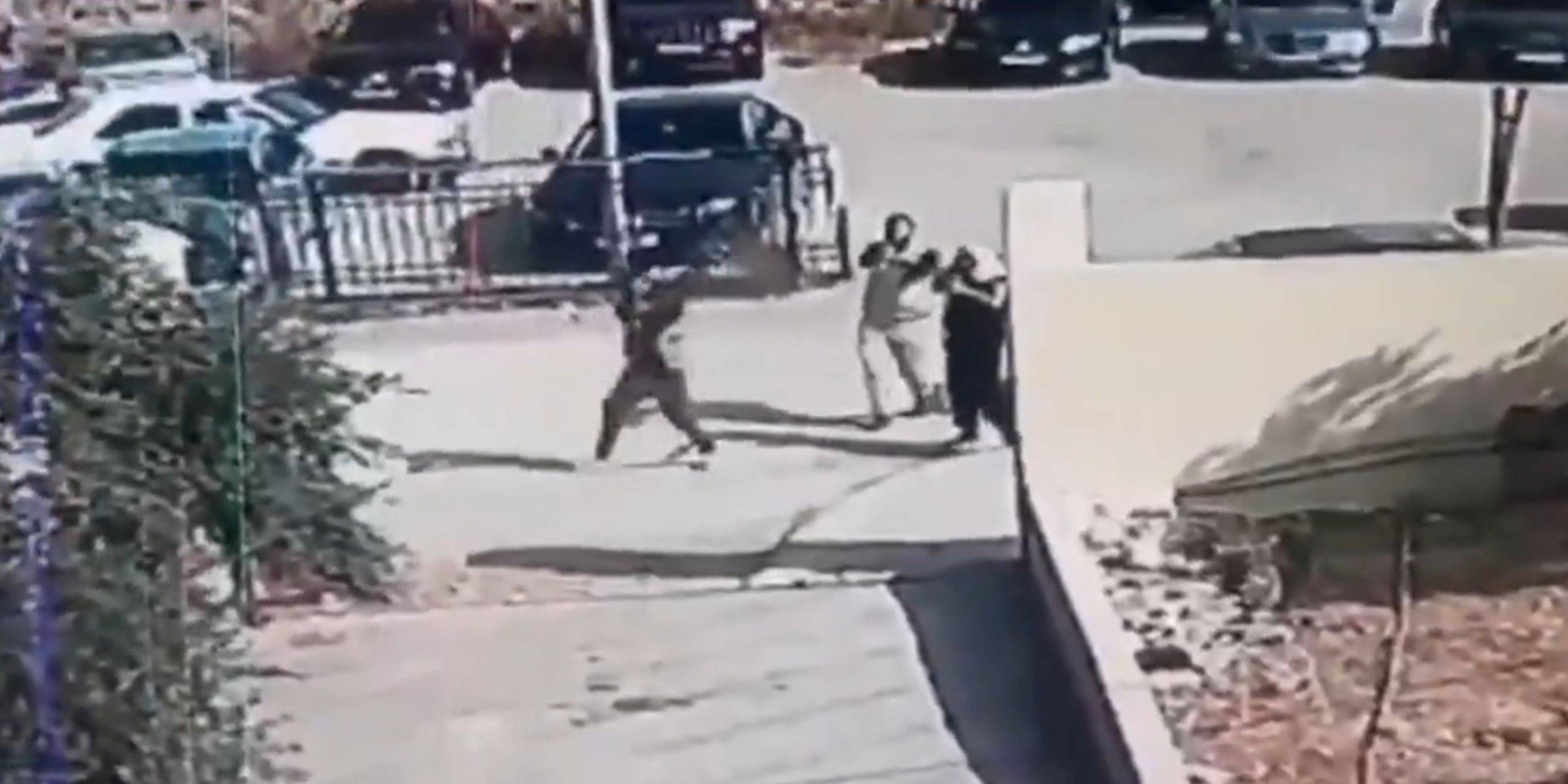
Just days after the deadly attack on Saint George Church in Hamoud village in southern Jordan and retaliatory airstrikes against ISIS in southern Syria, another attack struck the capital, Amman, on Thursday, killing one security officer and wounding another.

The assailant, described as a “terrorist,” had recently been released from prison after serving a sentence in a 2020 terrorism case involving plans to carry out attacks.

Attacks on security personnel guarding ministries, embassies and government institutions are not new. But Thursday’s assault has revived concerns about the threat posed by lone-wolf attackers and their possible links to ISIS.

Observers say the attack may have appeared isolated, but that does not rule out instructions being delivered through online accounts linked to the militant group.

ISIS makes no secret of its hostility toward Jordan. Communications between the group and the cell behind the Hamoud Church attack revealed a list of potential targets.

Civilians and members of the security forces stand outside the Sri Lankan embassy after a stabbing attack that killed one Jordanian security officer and wounded another, in Amman, Jordan, November 5, 2026. REUTERS/Jehad Shelbak

Retired security experts warn that bladed weapons are easy to conceal and use, particularly when attackers strike without warning. The threat is compounded by the nature of police work, which requires Public Security Directorate personnel to maintain close, direct contact with civilians.

Jordanian security under attack on multiple fronts

Jordan's efforts to combat terrorism and extremism have made it a target for militant groups.

A string of attacks in recent years has claimed the lives of civilians and security personnel and struck sovereign state institutions, raising questions about the methods used to monitor and pursue militants at home and abroad.

ISIS's targets extend well beyond security forces.

Civilians and members of the security forces stand outside the Sri Lankan embassy after a stabbing attack that killed one Jordanian security officer and wounded another, in Amman, Jordan, November 5, 2026. REUTERS/Jehad Shelbak

The Hamoud Church attack in Karak killed nine people and wounded 40. More troubling, however, was what appeared to be an attempt to sow sectarian discord between Muslims and Christians in a governorate widely regarded by Jordanians as a symbol of religious coexistence.

The challenge for security agencies lies partly in the unpredictable nature of lone-wolf attacks.

Even suspects under surveillance may develop plans suddenly, driven by revenge or extremist religious edicts urging the killing of security personnel.

Experts argue that surveillance alone cannot contain the threat. They say rehabilitation must become a priority, particularly through open dialogue between terrorism convicts and moderate religious leaders.

One figure involved in such efforts is Bassam al-Amoush, a former Muslim Brotherhood leader and former member of the Islamic Action Front who is now affiliated with the Umma Party.

Al-Amoush won parliamentary seats on the Islamic Action Front ticket in several elections before leaving the party over internal disagreements. He has since engaged imprisoned ISIS members in discussions aimed at exposing the religious violations committed by terrorist and takfiri groups.

The concern is not theoretical.

Several perpetrators of terrorist attacks in Jordan had previously been convicted of terrorism offenses, served their sentences and returned to civilian life.

Image taken from a video of militants during their attack on the church in the Jordanian village of Hamoud

Human rights reports indicate that terrorism convicts are held in shared prison wards, while years behind bars have failed to dislodge the extremist beliefs that underpin their ideology.

Those beliefs remain deeply rooted among militants, whether they operate in organized cells or as lone wolves living within their communities.

The latest attack has brought those concerns into sharper focus.

The assailant who targeted a security guard outside the Sri Lankan Embassy on a major road in western Amman had previously pledged allegiance to the ISIS leader in 2019.

He was arrested in 2020 and sentenced to nine years in prison in 2022, raising questions about the gap between his sentence and the time he actually served.

A similar pattern emerged among those involved in the Hamoud Church attack in Karak, with former terrorism convicts featuring prominently among perpetrators of attacks in Jordan.

The threat has also been fueled by years of cross-border recruitment.

Since the outbreak of the Syrian conflict, terrorist organizations in Syria and Iraq have used social media to recruit young Jordanians, while militant cells spread along Jordan's northern border.

Some of those areas remain outside the control of Syria's new government, providing potential bases for threats to Jordanian national security.

Sleeper cells and fears of coordinated attacks

Security experts say the pattern points to possible links between militants inside Jordan and organizations abroad, as well as the presence of sleeper cells within the kingdom.

After years of relative dormancy, ISIS has reassessed its operations, plans and the distribution of its cells among communities in southern Syria, exploiting weak security and vast areas beyond effective state control.

Security assessments suggest the group has adapted its deployment and methods to changing conditions, taking advantage of Jordanian security forces' focus on countering Iranian attacks against Jordan and Gulf states since late February.

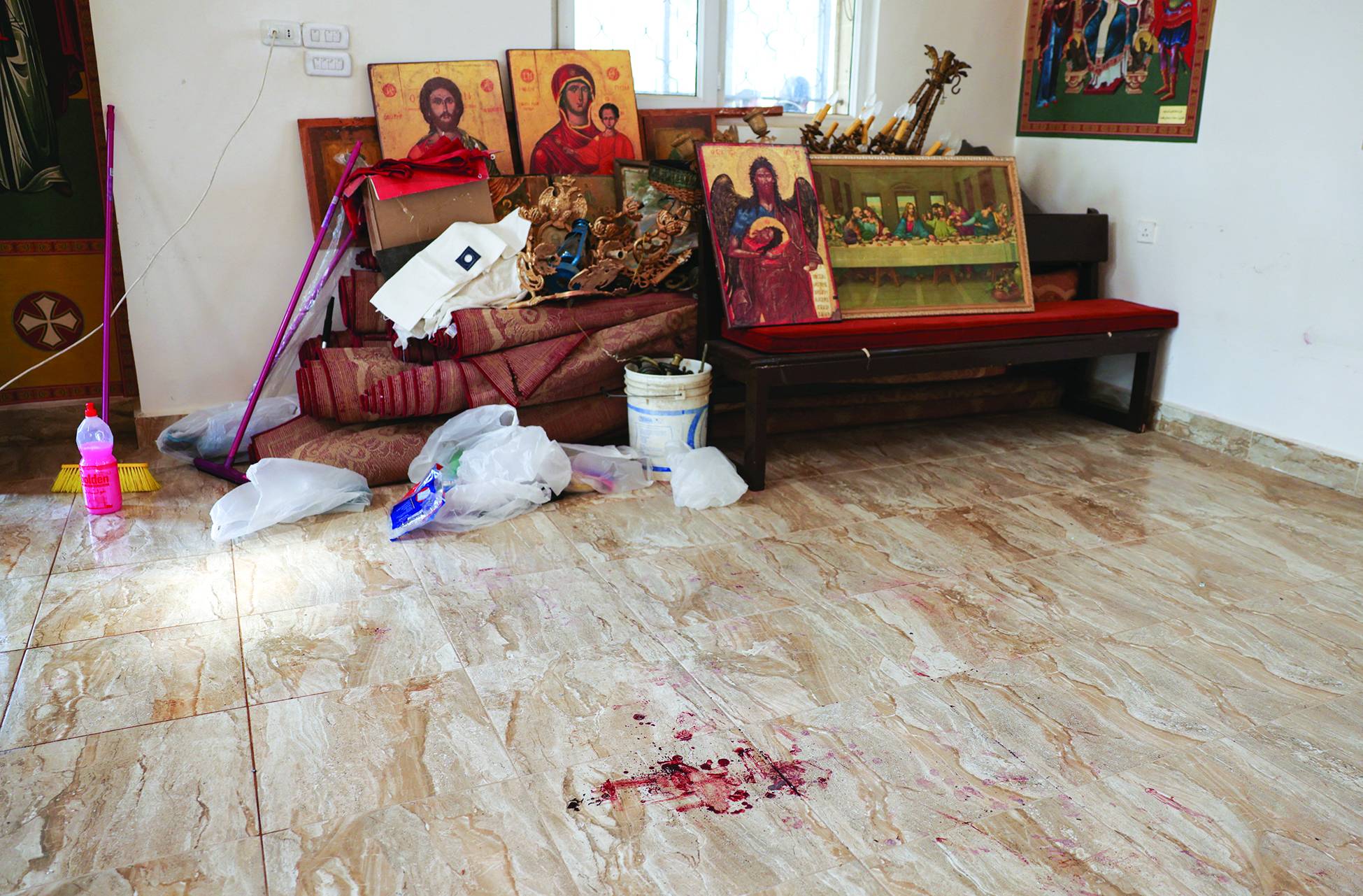
A bloodstain at Saint George’s Greek Orthodox Church, where gunmen opened fire during a funeral the previous day, in the village of Hamoud, Karak, Jordan, October 24, 2026. REUTERS/Alaa Al Sukhni

The threats come from more than one direction.

ISIS remains active to Jordan's north, while Tehran-backed Shiite militias operate along its eastern border with Iraq.

Despite their differences, the groups share an interest in targeting Jordanian security.

Such threats also have roots in areas once supported by Syria's former government, including territory that housed drug-manufacturing facilities and cross-border smuggling networks used to threaten Jordan through various means.

Informed sources say Jordanian security officials are increasingly concerned about renewed, intensive communications between sleeper cells inside the kingdom and terrorist organizations abroad.

The concern has fueled calls to widen surveillance using databases of Jordanians affiliated with terrorist groups, including those still in prison and those who have been released.

The priority, according to the sources, is to close potential security gaps before militant groups can exploit them.

One question remains particularly pressing.

Some perpetrators of the Hamoud Church attack had been released from prison only shortly before the assault. The attacker behind Thursday's operation had also recently completed his sentence.

Could they have received instructions from convicted militants with whom they had shared prison cells?

Fears that security gaps could complicate intelligence gathering and investigations prompted Jordanian security agencies to launch a sweeping series of raids across the kingdom as the case unfolded.

The operations began Thursday night and continued into early Friday, reaching northern, central and southern Jordan.

Security forces raided areas including Southern Mazar in Karak governorate and Irbid in the north, as well as Marka, Al-Rajm al-Shami and Jubeiha in and around northern Amman.

The raids also extended to Russeifa in Zarqa governorate.


Talks Underway to Avert Split into Rival Administrations in Iraqi Kurdistan

Patriotic Union of Kurdistan (PUK) leader Bafel Talabani announced his party’s withdrawal from the regional government in protest against a parliamentary session held without its lawmakers (AFP)
TT

Talks Underway to Avert Split into Rival Administrations in Iraqi Kurdistan

Patriotic Union of Kurdistan (PUK) leader Bafel Talabani announced his party’s withdrawal from the regional government in protest against a parliamentary session held without its lawmakers (AFP)

Iraqi Kurdistan's deepening political crisis has revived the prospect of rival administrations, with the Patriotic Union of Kurdistan (PUK) announcing its withdrawal from the regional government even as its longtime rival, the Kurdistan Democratic Party (KDP), says talks are underway to resolve the standoff.

A senior KDP official said the party, led by Masoud Barzani, was in contact with the PUK, headed by Bafel Talabani, and representatives of other political groups in a bid to break the deadlock.

The threat of a return to separate administrations has grown since the Kurdistan Regional Parliament convened last Wednesday for the first time since elections nearly two years ago, electing its leadership without the PUK, which denounced the move as unilateral and rejected it.

The KDP won 39 seats in the October 2024 elections, ahead of the PUK's 23. The PUK later joined forces with the New Generation Movement, which secured 15 seats, to strengthen its hand in negotiations to form a government with its historic rival.

On Thursday evening, Talabani declared that the PUK would not recognize the parliamentary session and would withdraw from the government.

The KDP, however, defended the session as "neither a victory for one side nor a defeat for another, but a victory for the people of Kurdistan as a whole."

The PUK, New Generation Movement, Kurdistan Islamic Union, National Stance Movement and Kurdistan Justice Group had all previously announced they would boycott the session.

In a televised address, Talabani raised the prospect of a separate administration in Sulaymaniyah, warning that his party would match any move by its rivals to form a government.

"If they appoint a prime minister, we will appoint a prime minister here. If they choose a minister, we will choose a minister here," he said.

"They started this ... and I will be the one to end it."

KDP leader Masoud Barzani, meanwhile, urged the parties that boycotted the session to return to parliament, attend future meetings and work together to serve the people of Kurdistan, support the political process and advance its next steps.

Vala Fareed, the newly elected speaker of the Kurdistan parliament, told local media that reviving the legislature was essential to protecting the region's constitutional status and was not directed against any political party.

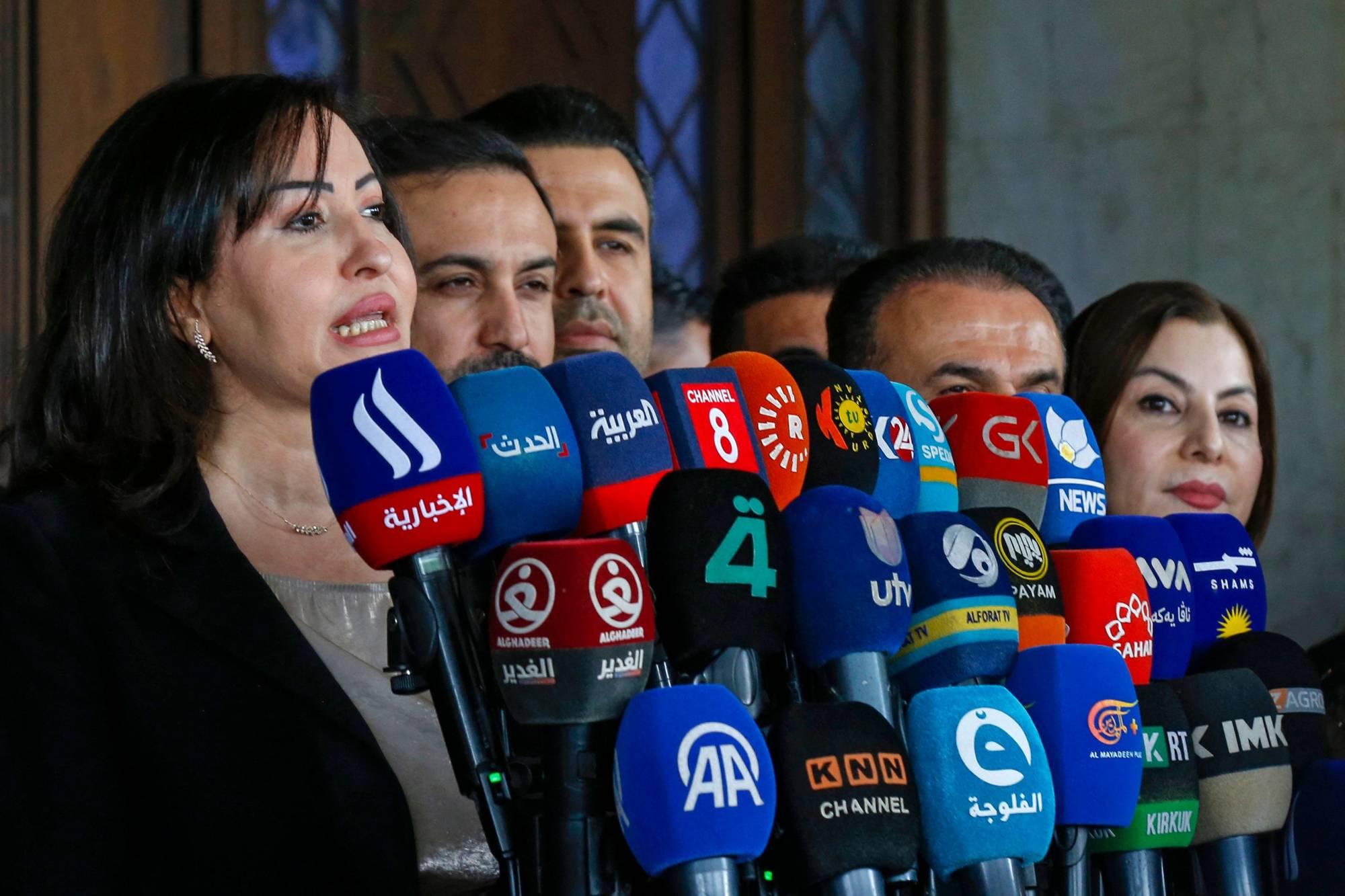
The new Kurdish parliament speaker Vala Fareed (L) addresses a press conference after the session of Kurdistan's regional parliament, in Erbil on November 4, 2026. (Photo by Safin HAMID / AFP)

PUK moves to quit government offices

The PUK is pressing ahead with its withdrawal.

Senior party official Mahmoud Khoshnaw told Asharq Al-Awsat that PUK representatives would begin vacating their government offices on Sunday, the first working day of the week.

He warned that the parliamentary session could have "negative repercussions," saying its outcome could give outside powers grounds to intervene.

Khoshnaw said the PUK could go further, potentially seeking administrative independence for Sulaymaniyah from Erbil.

The KDP rejected suggestions that the parliamentary session was unlawful.

Senior party official Dijwar Faiq said the legislature had convened nearly two years after the elections with 52 lawmakers from different blocs, parties and communities present, meeting the required legal quorum.

Faiq told Asharq Al-Awsat that the KDP, as the largest party in parliament, had wanted the PUK and other groups to take part and had spent nearly two years trying to bring them on board.

Despite repeated meetings and negotiations, he said, the PUK and other parties refused to participate.

He said parliament would meet again on Monday to elect its legal committee and open nominations for the Kurdistan region's presidency.

Rival parties clash over parliamentary quorum

At the heart of the dispute is a question that has quietly divided the two parties for nearly two years: who could secure the parliamentary quorum first?

Khoshnaw said the PUK could have rallied its allies to convene parliament but chose not to, preferring a negotiated settlement that included all parties.

"The Kurdistan region cannot be governed solely by the arithmetic of parliamentary seats," he said, arguing that governance must also rest on principles that ensure all influential forces representing the Kurdish people have a role.

Faiq challenged that account, saying the PUK had spent two years trying, unsuccessfully, to secure a quorum with New Generation to convene parliament and form a government.

"If they had been able to secure a quorum, they would not have hesitated to convene parliament and form a government that excluded the KDP," he said.

Together, the PUK and New Generation hold 38 of the Kurdistan parliament's 100 seats. Their alliance demanded half the positions in the regional government, a proposal the KDP rejected.

The KDP argues that support from other parties would tip the balance in its favor, though it says it remains willing to share power with its historic rival on fair and balanced terms.

Faiq urged parties seeking a place in government to participate according to their parliamentary strength and legal and electoral entitlements, and to help draft the government's program.

Those unwilling to govern could choose the opposition, he said, but they must still attend parliamentary sessions.

"Otherwise, what was the point of their participation in the elections in the first place?" he asked.


Hezbollah Bristles at ‘Friends of Lebanon’ Statement

Rubble from buildings destroyed by Israeli airstrikes during a press tour organized by the Hezbollah media office in the Ruwais neighborhood, southern suburbs of Beirut, Lebanon, 06 May 2026. EPA/WAEL HAMZEH
TT

Hezbollah Bristles at ‘Friends of Lebanon’ Statement

Rubble from buildings destroyed by Israeli airstrikes during a press tour organized by the Hezbollah media office in the Ruwais neighborhood, southern suburbs of Beirut, Lebanon, 06 May 2026. EPA/WAEL HAMZEH

Hezbollah lashed out at a statement by the embassies of five “Friends of Lebanon” countries — Britain, the United States, Australia, Canada and Japan — demanding that the state hold exclusive control over weapons and decisions on war and peace.

The statement called for a public commitment from all lawmakers and political parties to uphold those principles. It also addressed the Dahr al-Baidar explosives case, urging a swift, independent judicial process, free from political interference, to ensure full accountability.

A diplomatic source told Asharq Al-Awsat the statement sought to “reaffirm our support for the government's efforts to strengthen state sovereignty and establish its exclusive control over weapons.”

Lebanese authorities had not been informed of the statement in advance, an official Lebanese source told Asharq Al-Awsat.

The source said the statement nevertheless fully aligned with recent positions taken by President Joseph Aoun and Prime Minister Nawaf Salam against dragging Lebanon into regional conflicts.

It also came amid mounting fears that Hezbollah could join a possible future war involving Iran.

Hezbollah denounces 'brazen interference'

The statement drew a furious response from Hezbollah.

Hezbollah lawmaker Ali Ammar called it “the height of vulgarity and insolence,” accusing the five countries of blatant interference in Lebanon's internal affairs.

Ammar said the statement trampled on Lebanon's sovereignty, judicial independence, diplomatic norms and the dignity of its people, going so far as to dictate national choices and impose political positions.

He also condemned Lebanese authorities for repeatedly turning a blind eye to such interference and treating it as routine.

Ammar said the countries, which he accused of falsely presenting themselves as Lebanon's friends, should instead have condemned Israel's continued occupation of Lebanese territory, daily attacks on Lebanese sovereignty, killings, destruction, displacement and repeated violations of international agreements and resolutions.

Rather than fueling divisions, stirring discord and defending Lebanon's enemies, he said, the countries should have called for dialogue and national consensus among the Lebanese.

Pressure mounts on Lebanese authorities

Lawmaker Michel Douaihy said the statement was a direct message to Lebanese authorities to act on the weapons issue and translate decisions already taken into concrete measures.

“Lebanon has not yet missed the train. It can still catch up through concrete steps by the authorities and a change in their current approach,” Douaihy told Asharq Al-Awsat.

On the Dahr al-Baidar explosives case, Douaihy said the matter could no longer be swept under the rug, particularly after a Hezbollah lawmaker claimed the explosives belonged to the group and demanded their return.

He called for judicial action, arrests and trials, saying accountability must extend beyond those caught transporting the explosives.

US-French divide over Hezbollah's weapons

The absence of France and Germany — both closely involved in Lebanese affairs — from the five-nation statement stood out.

Sami Nader, director of the Levant Institute for Strategic Affairs, said all five signatories were aligned with Washington in demanding concrete action on Hezbollah's weapons and rejecting warnings that such steps could spark a civil war.

That position contrasts with the approach previously championed by France, which maintained that the Lebanese state could not push the army further into confronting Hezbollah without risking internal upheaval.

“The American approach is fundamentally opposed to this position,” Nader told Asharq Al-Awsat.

Washington believes Lebanese authorities must take at least some action on Hezbollah's weapons and no longer accepts the government's justifications for holding back, viewing them instead as cover for the group, he said.

Nader added that even France was beginning to retreat from its earlier position under diplomatic pressure, losing ground and influence in Lebanon to other countries.