


World Bank Expects Economic Growth Amid Lasting Peace in Yemen

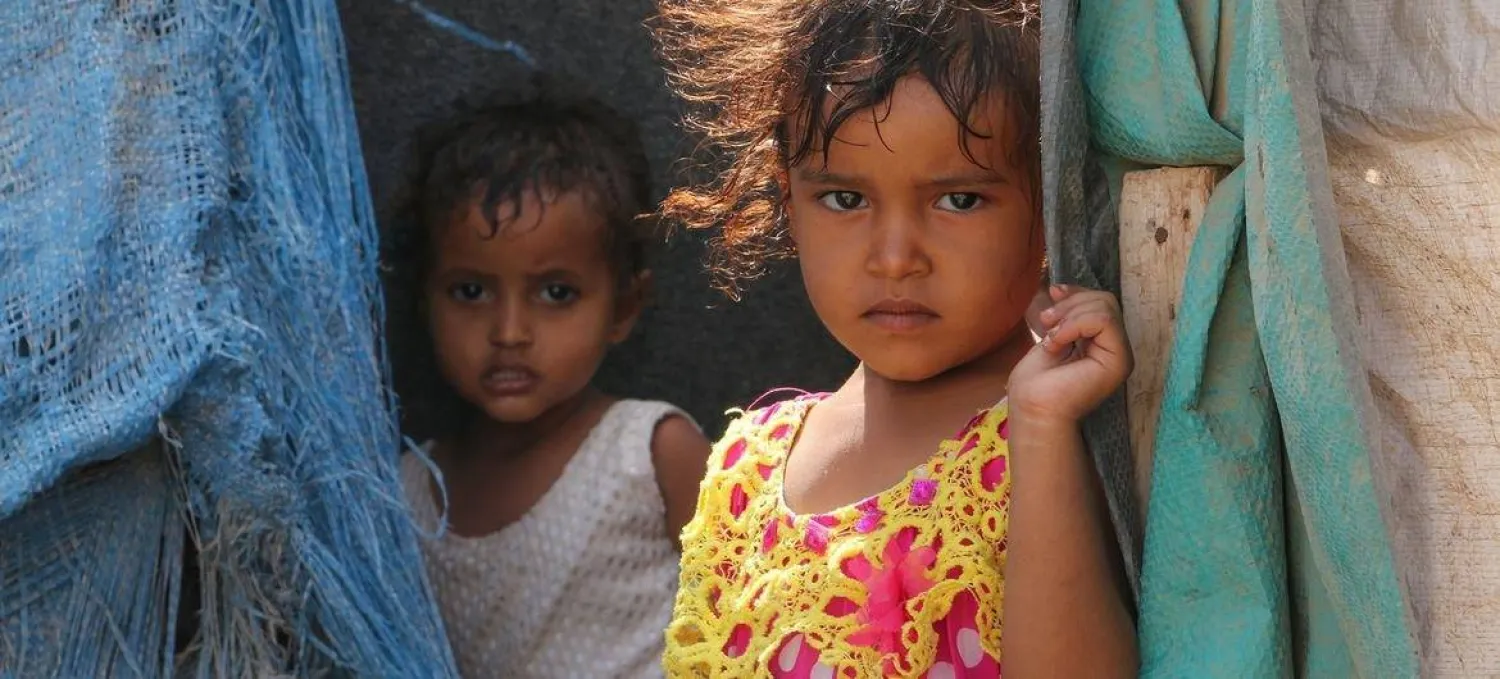
Displaced Yemeni children in Aden (UN)
TT

World Bank Expects Economic Growth Amid Lasting Peace in Yemen

Displaced Yemeni children in Aden (UN)

The World Bank expected that a permanent peace agreement in Yemen would achieve significant economic revenues and contribute to economic growth, despite its previous assessment of Yemen's need for billions of dollars for economic recovery.

In its report entitled "The Future: Glimmers of Hope in Dark Times," the World Bank said if Yemen attains a lasting peace agreement, there could be a significant "peace dividend" for the population, a six percentage point increase in GDP growth trajectory which would result in a cumulative increase in real GDP by one third over the next five years compared to the status quo.

It noted that this would be accompanied by significant growth in public and private investment, employment, productivity, and poverty reduction.

It must be accompanied by external donor assistance at scale for accelerated reconstruction and recovery.

The conflict led to a contraction in real GDP by approximately 50 percent between 2011 and 2022. It has damaged or destroyed over one-third of the country's homes, schools, hospitals, and water and sanitation facilities.

Productivity plummeted as violence intensified, while productivity indicators were weak before the conflict.

The war severely disrupted oil production, which is crucial to the economy, undermined the government's ability to support the population by providing essential services, and affected public employment.

Many civil servants have been paid only partially or not regularly.

- A glimmer of hope

The report's in-depth political economy analysis and innovative data analytics suggest that Yemen's de facto decentralization could help support its future growth, corroborating a perspective consistently voiced in informant interviews.

The report cited other reasons for guarded optimism about potential recoveries, such as the strong entrepreneurial spirit of the Yemeni people, including, notably, women, the proximity of the high-income adjacent markets of the Gulf states, and Yemen's economic potential for agricultural, agro-processing and light manufacturing production, and exports.

World Bank Country Manager for Yemen, Tania Meyer, said that peace must enable inclusive growth, foster sustainable development, and improve the living conditions for the people of Yemen.

Meyer cautioned: “We must remain clear-eyed about the realities on the ground – the hardships faced by the Yemeni people are immense," noting that "high inflation, poor job quality, and an unstable public sector persist as major hurdles."

Earlier, the World Bank announced that nearly 17 million Yemenis suffer from food insecurity because of the wars and deteriorating economic conditions.

It warned that hunger, food insecurity, and malnutrition were among the most pressing challenges, exacerbated by the protracted conflict in the country.

Last March, the World Bank approved a second additional financing of $207 million for the Emergency Social Protection Enhancement and COVID-19 Response Project (ESPECRP) in Yemen to address chronic food insecurity and malnutrition.

However, a month later, it announced that Yemen needed between $11.82 and $16 billion in 2023 and between $11 and $22 billion next year to rebuild the local economy.

Ahead of the World Bank report, the UN Office for the Coordination of Humanitarian Affairs (OCHA) allocated $18 million for the urgent needs of people affected by humanitarian crises in Yemen to prevent famine and address rising levels of food insecurity driven by conflict, economic shocks, and climate change.

The Office warned in its statement that the humanitarian crisis would affect 17.3 million people in 2023.

By the end of May 2023, the Yemen Humanitarian Response Plan (HRP) was only 23.5 percent funded. In February, the Response Plan seeking $4.34 billion to assist 17.9 million people was only 10.4 percent funded, forcing aid organizations to reduce or close critical assistance programs.

- Development is the solution

The report indicated that relief agencies in Yemen are facing a significant funding shortfall amidst increasing humanitarian needs, which endangers the life-saving response of millions of people.

The UN repeatedly cautioned about a lack of funding compared to the proposed plans to finance the humanitarian crisis in Yemen, considered the worst in modern times.

A previous donor conference fell far short of the needed humanitarian aid, as world leaders pledged less than $1.2 billion in February for the humanitarian response that requires more than $4.3 billion.

The advisor to the Yemeni Minister of Local Administration and Coordinator of the Relief Committee, Jamal Balfaqih, wondered if the international organization could conduct accurate statistics on the numbers of needy families and those threatened with starvation.

Balfagih told Asharq Al-Awsat that he doubts the UN can reach all regions.

He added that relief work and aid provision are based on predictions of the numbers of those targeted without actual statistics and surveys.

The official presented his point of view to provide practical solutions to save Yemeni families from famine by defining targeted areas and supporting families with an integrated program that links food with production.

He noted that food in exchange for production in agriculture, livestock trade, or other medium-sized income-generating projects are viable solutions.



Iraq Says Ankara Agrees to Take Back Turkish Citizens Among ISIS Detainees Transferred from Syria 

This handout picture made available by the Iraqi prime minister's office shows Iraq's Prime Minister Mohammed Shia al-Sudani (R) receiving US Special Envoy to Iraq Tom Barrack (L) before attending the signing of agreements between Chevron Corporation and the Basra, Dhi Qar, and North Oil Companies at the government palace in Baghdad on February 23, 2026. (Iraqi Prime Minister’s Press Office / AFP)
TT

Iraq Says Ankara Agrees to Take Back Turkish Citizens Among ISIS Detainees Transferred from Syria 

This handout picture made available by the Iraqi prime minister's office shows Iraq's Prime Minister Mohammed Shia al-Sudani (R) receiving US Special Envoy to Iraq Tom Barrack (L) before attending the signing of agreements between Chevron Corporation and the Basra, Dhi Qar, and North Oil Companies at the government palace in Baghdad on February 23, 2026. (Iraqi Prime Minister’s Press Office / AFP)

Iraq's foreign minister said on Monday Türkiye had agreed to take back Turkish citizens from among thousands of ISIS detainees transferred to Iraq from Syria when camps and prisons there were shut in recent weeks.

Iraq took in the detainees in an operation arranged with the United States after Kurdish forces retreated and shut down camps and prisons which had housed ISIS suspects ‌for nearly a decade.

Baghdad has said ‌it ⁠will try suspects ⁠on terrorism charges in its own legal system, but it has also repeatedly called on other countries to take back their citizens from among the detainees.

Foreign Minister Fuad Hussein told US envoy Tom Barrack in a meeting that Iraq ⁠was in talks with other countries on ‌the repatriation of ‌their nationals, and had reached an agreement with Türkiye.

In ‌a separate statement to the UN Human ‌Rights Council, Hussein said: "We would call the states across the world to recover their citizens who've been involved in terrorist acts so that they be tried ‌in their countries of origin."

The fate of the suspected ISIS fighters, ⁠as well ⁠as thousands of women and children associated with the group, has become an urgent issue since the Kurdish force guarding them collapsed in the face of a Syrian government offensive.

At the height of its power from 2014-2017, ISIS held swathes of Syria and Iraq, ruling over millions of people and attracting fighters from other countries. Its rule collapsed after military campaigns by regional governments and a US-led coalition.


Chad Govt Shuts Sudan Border Until Further Notice 

Children poke their heads and arms through holes in makeshift fabric fences in the strategic opposition-controlled town of Akobo, Jonglei State, on February 12, 2026. (AFP)
TT

Chad Govt Shuts Sudan Border Until Further Notice 

Children poke their heads and arms through holes in makeshift fabric fences in the strategic opposition-controlled town of Akobo, Jonglei State, on February 12, 2026. (AFP)

Chad's government said on Monday it was closing the border with Sudan until further notice, following several clashes between Chadian soldiers and armed groups involved in the civil war across the frontier.

"This decision follows repeated incursions and violations committed by the forces involved in the conflict in Sudan on Chadian territory," Communications Minister Mahamat Gassim Cherif said in a statement, adding that he wanted to halt "any risk of the conflict spreading" to his country.

Sudan's paramilitary Rapid Support Forces have been fighting government troops for almost three years in a conflict that has killed tens of thousands of people and forced 11 million to flee their homes, triggering what the UN says is one of the world's worst humanitarian crises.

The paramilitaries have conducted several operations near the Chad border and at least nine Chadian soldiers have been killed in separate incidents since December.

Monday's statement said Chad "reserves the right to retaliate against any aggression or violation of the inviolability of its territory and its borders".

"Cross-border movements of goods and people are suspended," the text said, adding that "exceptional exemptions" for humanitarian reasons would still be possible.


Report: US Forces to Complete Withdrawal from Syria within a Month 

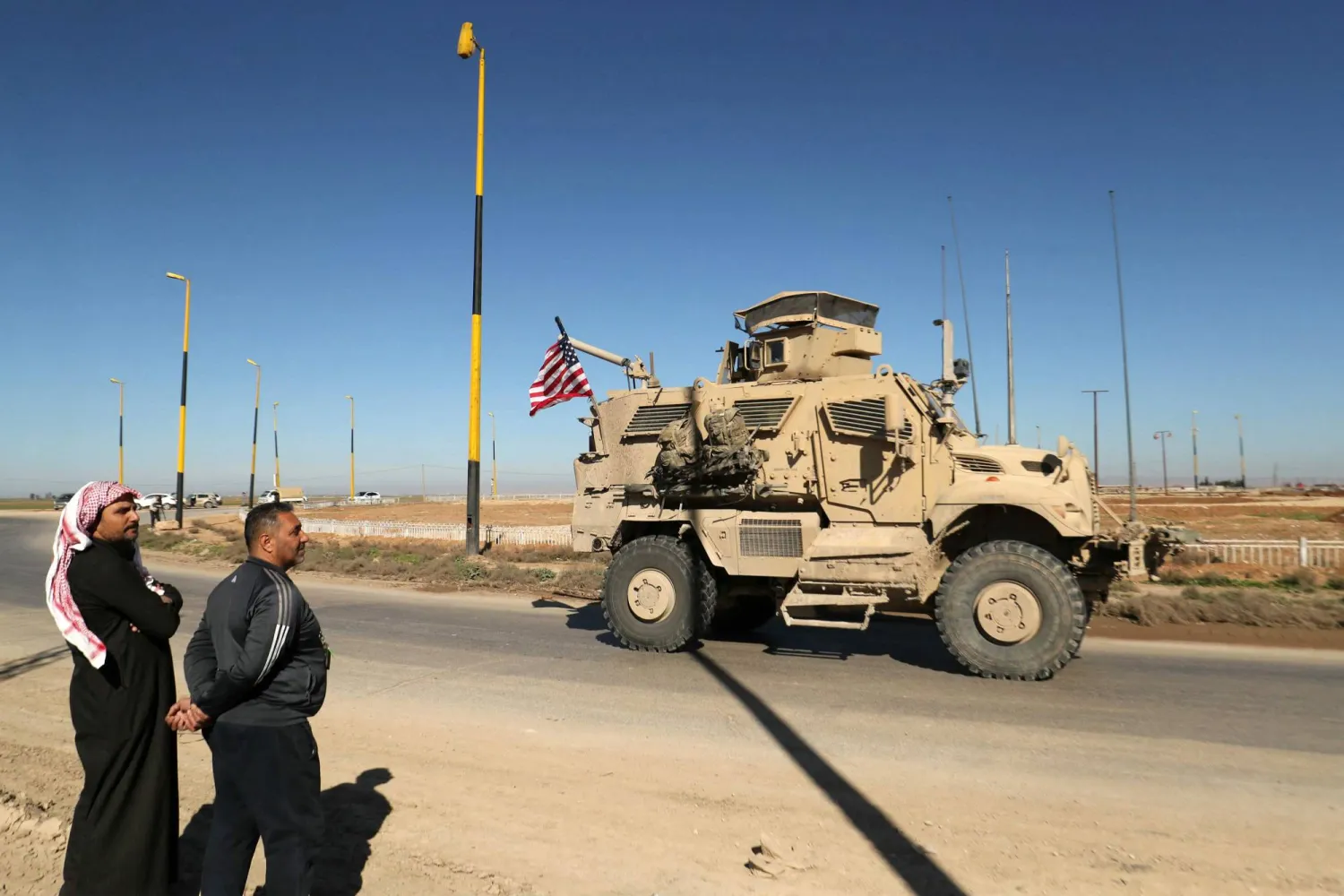
Men watch as a US military mine-resistant ambush protected (MRAP) armored fighting vehicle moves in a convoy along a highway outside Qamishli in Syria's northeastern Hasakeh province on February 23, 2026. (AFP) 
TT

Report: US Forces to Complete Withdrawal from Syria within a Month 

Men watch as a US military mine-resistant ambush protected (MRAP) armored fighting vehicle moves in a convoy along a highway outside Qamishli in Syria's northeastern Hasakeh province on February 23, 2026. (AFP) 

US forces that led the anti-ISIS coalition in Syria started leaving a major base in the northeast on Monday and should complete their withdrawal from the country within a month, sources told AFP. 

The move comes after Kurdish forces, long backed by Washington in the fight against the ISIS group, ceded territory to Damascus and agreed to integrate into the state. 

American forces have already withdrawn from two other bases in the past two weeks, Al-Tanf in the southeast and Shaddadi in the northeast. 

"Within a month, they will have withdrawn from Syria and there will no longer be any military presence in the bases," a Syrian government official said, with a Kurdish source confirming the timeline. 

A third source, a diplomat, said the withdrawal should be completed within 20 days. 

The United States has about 1,000 troops still deployed in Syria. It began withdrawing on Monday from the Qasrak base in the northeast, which is still under the control of Kurdish forces, a Kurdish official who requested anonymity told AFP. 

An AFP team saw a convoy of dozens of trucks, loaded with armored vehicles and prefabricated structures, on a road linking the Qasrak base in Hasakeh province to the border with Iraq. 

Syria's government recently extended its control to the northeast of the country. 

Washington has drawn close to Syria's new authorities since the fall of Bashar al-Assad in late 2024.