
Israeli Killing of 15-year-old Palestinian Girl in West Bank Casts Light on Civilian Casualties

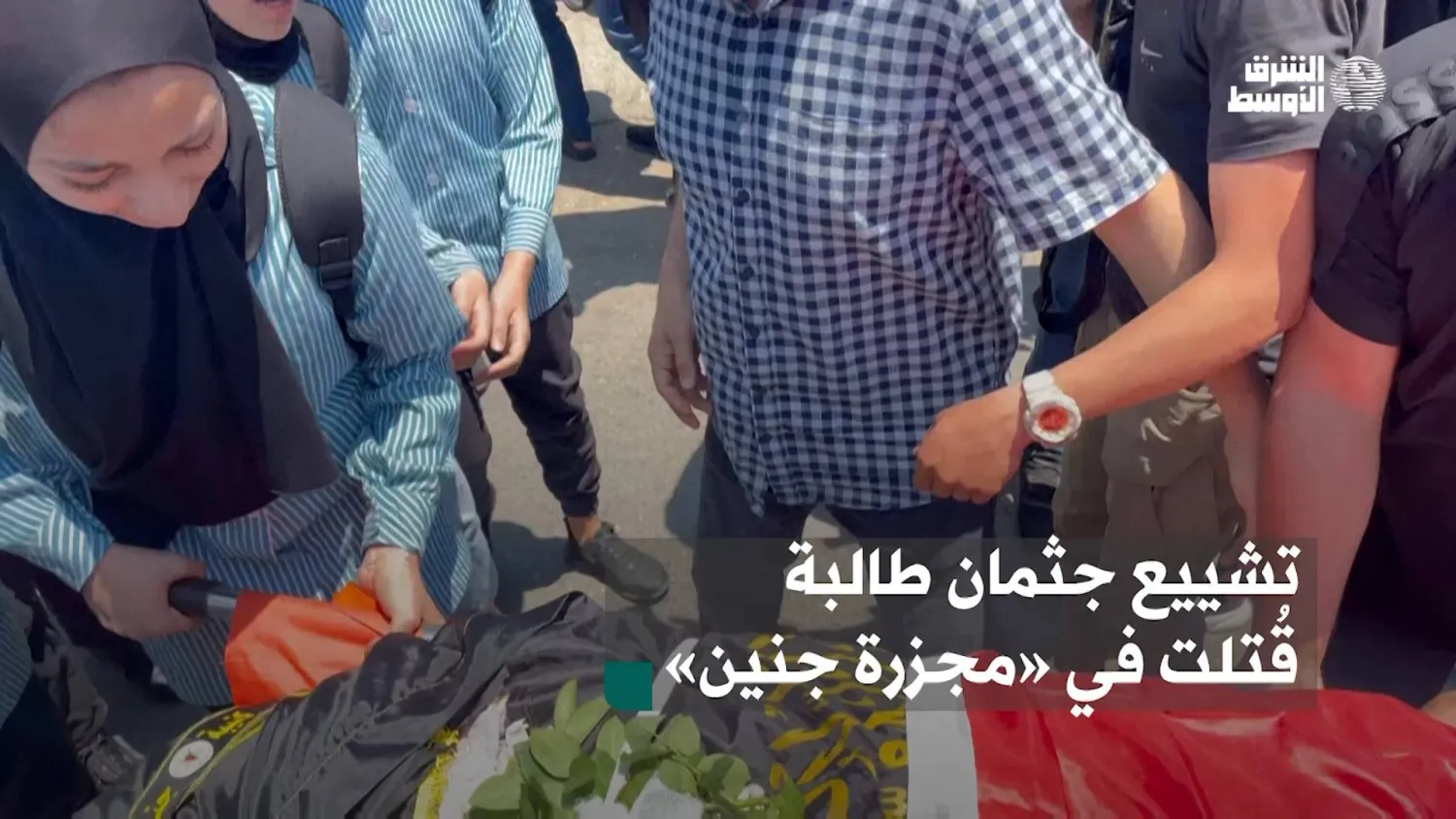
 Funeral of a student who was killed in the Jenin massacre.
Funeral of a student who was killed in the Jenin massacre.
TT

Israeli Killing of 15-year-old Palestinian Girl in West Bank Casts Light on Civilian Casualties

 Funeral of a student who was killed in the Jenin massacre.
Funeral of a student who was killed in the Jenin massacre.

At the funeral for Sadeel Naghniyeh, 15, her closest friends hoisted her dead body over their small shoulders. Wearing their school uniforms — tight black hijabs and oversized striped shirts — they staggered through the Palestinian refugee camp, crying and choking out the Islamic funeral prayers.

Last week's tribute by the schoolgirls was a striking departure from the stream of funerals that have become a grim routine in this flashpoint West Bank town. The death of Sadeel — killed by suspected Israeli fire when a raid into the northern Jenin refugee camp ignited the territory's fiercest Israeli-Palestinian fighting in years — drew attention to the rising number of children killed in the heightened violence and the extraordinary risks they face, The Associated Press said.

Typically in Palestinian funerals, older men — relatives and friends — drape the dead in the flags of armed groups. Sadeel's eighth-grade classmates wrapped her in the uniform she would no longer wear.

“She was only a child. She had ambitions to become a nurse and save lives,” her father, Ghassan Naghniyeh, 46, said from his vine-covered driveway where Sadeel was shot. “They killed my daughter and they killed her dreams.”

Witness accounts and surveillance videos suggest there were no clashes at that time on her street and that the fighting between Palestinians and Israeli forces was unfolding some 650 meters (700 yards) west of her home.

The killing of Sadeel — one of 12 Palestinians under the age of 16 killed by Israeli fire in the West Bank this year, according to a tally by The Associated Press — has sparked condemnation from rights groups and renewed scrutiny of the military’s record of causing civilian casualties. The army launched a widespread campaign into Palestinian towns last year in response to a wave of Palestinian attacks inside Israel.

So far this year, nearly 140 Palestinians have been killed by Israeli fire in the West Bank, according to the AP’s count, almost half of them affiliated with armed groups. The army says that number is much higher. But civilians have also been killed, including a 2-year-old boy earlier this month and a 15-year-old boy in last week's same Jenin camp raid. His death is also under military review.

“We’re not just talking about Sadeel’s death, we’re talking about daily killings and no accountability that could serve as a way to prevent Israel from killing more civilians in the future,” said Shawan Jabarin, director of Al Haq, a Palestinian human rights group.

The Israeli army often accuses Palestinian groups of endangering civilians by using residential areas for cover. It gave no explanation for Sadeel's death, saying the circumstances are “under examination.”

Sadeel’s family believes the bullet that killed her likely came from an Israeli army jeep rumbling down their quiet street that morning, according to surveillance footage. Two motorists, a woman in her 30s and a young man, were wounded when they came under fire from the same jeep, neighbors said.

The last video taken on Sadeel’s phone shows a similar military jeep moving along a dusty road some 200 meters (yards) from where she stood. It remains unclear whether it was the same jeep. Minutes after she posted the clip to Telegram, she was lying in her driveway, brain-dead. Two days later, she died.

The Israeli military declined to answer multiple questions about the military vehicles. Without mentioning Sadeel, the army said its arrest operation had sparked a “massive exchange of fire with terrorists” and that Israeli forces had opened fire on gunmen and those throwing explosive devices.

Israeli military raids have been met regularly with Palestinian gunfire and rippled into bloody battles. Israel contends the intensified military activities are a counterterrorism effort and has focused its operations on the hometowns of assailants — particularly the city of Jenin and its adjacent refugee camp.

The camp has reemerged as a stronghold of Palestinian militancy two decades after Israel invaded the camp with tanks and helicopters, flattening homes. The effects of that 2002 battle, among the biggest of the second Palestinian uprising, linger.

“The martyrs from that battle are still dead. The prisoners are still in prison,” said Mohammed Shehata, the general manager of the Freedom Theater, which was co-founded by a famous militant and offers drama classes for young Palestinians in the camp. "And now, the young people fighting today’s battles will pass their pain onto the next generation.”

Sadeel, who lived just behind the theater, could often be found there, watching auditions, joking with foreign volunteers and playing improv games in its summer camp, Shehata said. He shared a video of a younger Sadeel singing with other kids, making her hands into a heart shape as she pranced.

But the conflict never went away. It sliced through her home. Residents say on the outskirts of the camp, rooftops in Sadeel’s neighborhood afforded Israeli snipers a good vantage point. Multiple bullet holes from past raids pierce her father’s parked white Kia.

Two of her uncles were killed as teenagers in the second uprising. Another two remain in Israeli prison.

Sadeel’s profile picture on Facebook is a black-and-white photo of an unidentified girl wearing an abaya and holding up a rifle. “Oh God, I end my life according to your will,” she wrote several months ago. Transfixed by Israeli and Palestinian attacks, killings and clashes each day, Sadeel could hardly focus in school, her father said.

Israeli officials say incitement on social media drives Palestinian youth toward militancy. But her uncle, Nidal Naghniyeh, described Sadeel's praise for militants as the inevitable outcome of life in Jenin refugee camp.

“Sadeel had nothing else around her but death and destruction,” he said. "So what does she think about? What does she dream of? Death.”

When Israeli military vehicles and drones swarmed the camp last week, armed Palestinians ambushed the forces with gunfire and powerful explosives, prompting the Israeli military to dispatch helicopter gunships to help evacuate its stranded soldiers. Seven Palestinians were killed.

The raid started with a familiar scene. The camp sirens wailed. Militants fired into the air to warn residents about the incursion. Naghniyeh and his wife ushered Sadeel and their four sons toward the back of the house. They shut all the windows.

But Sadeel was restless around 8.a.m. and asked her father if she could spend the day next door with her twin cousins, Sara and Yara.

Naghniyeh agreed, considering it a safe and much-needed distraction. Minutes after she disappeared down the stairs, he heard his 9-year-old son, Hamoudi, shrieking.

In the driveway, Naghniyeh cradled Sadeel's limp body and felt blood at the back of her head. He knew his only daughter was gone.

“Whoever shot her would have seen her,” he said. “Did they not see she was small?”


Libya’s Ramadan Celebrations Tempered by Economic Woes

A family walks on their way to shop for Ramadan decorations ahead of the holy month of Ramadan in Benghazi, Libya, February 16, 2026. (Reuters)
TT

Libya’s Ramadan Celebrations Tempered by Economic Woes

A family walks on their way to shop for Ramadan decorations ahead of the holy month of Ramadan in Benghazi, Libya, February 16, 2026. (Reuters)

Libyans have been enjoying Ramadan with feasts and fireworks -- but soaring prices, a devalued currency and political divisions have left many with little to celebrate.

Fifteen years on from the fall of longtime leader Moammar al-Gaddafi, the country remains split between east and west, while shortages of goods, including fuel, disrupt daily life, despite Libya sitting atop vast oil and gas reserves.

During the holy month of Ramadan, shoppers stock up on treats, as families gather for lavish meals before and after the daytime fast that stretches from sunrise to sunset.

But this year supermarkets have been rationing their goods, while many petrol stations are short of gas. In the capital Tripoli, most ATMs were out of cash this week.

Firas Zreeg, 37, told AFP while weaving through a crowded supermarket that the economy was deteriorating, blaming currency speculators for the fall in the dinar, "which has negative repercussions on our daily lives".

The price of cooking oil has doubled in recent weeks, while meat and poultry prices rose by half.

Refills of gas cylinders, officially priced at 1.5 dinars ($0.24) but often unavailable through state-run distributors, now sell for 75 dinars ($11.85) on the black market and at times more.

- 'Burden on citizens' -

Libya has struggled to recover from the chaos that erupted following the 2011 uprising that toppled Gaddafi.

It remains divided between the Government of National Unity (GNU) based in Tripoli and an eastern administration backed by Libyan National Army (LNA) commander Khalifa Haftar.

The country has largely been stable in recent years although there have been bouts of deadly violence, including the killing of Gaddafi's son and heir apparent Seif al-Islam this month.

With security holding, many Libyans are more focused on their livelihoods.

Last month, the central bank in the western territory devalued the dinar -- the second time in less than a year -- by nearly 15 percent, "aimed at preserving financial and monetary stability and ensuring the sustainability of public resources".

In an address this week, GNU leader Abdulhamid Dbeibah acknowledged that the devaluation had once again "put the burden on citizens".

Hanna Tetteh, head of the United Nations Support Mission in Libya, warned on Wednesday that "poverty and pressure on society [are] increasing".

"The situation, in addition to the fragile security landscape, should be a matter for concern as such conditions can lead to unexpected political and security challenges," she told the UN Security Council.

Libya's other economic problems included the absence of a unified national budget, in light of its political divide, as well as uncoordinated public spending due to parallel state institutions, Tetteh said.

Revenues from the oil industry were also declining, she added, while the central bank has said public spending is growing at an unsustainable pace.

On Tuesday, Libya marked 15 years since the start of the uprising, with fireworks lighting up the sky in Tripoli, but for many Libyans life remains a struggle.

"Minor improvements in security were made over the past three years," Zreeg told AFP, but Libyans are still faced with huge economic challenges.


Libya PM Undergoes 'Successful' Treatment at Heart Hospital

Head of Libya's Government of National Unity (GNU) Abdulhamid Dbeibah. (GNU)
TT

Libya PM Undergoes 'Successful' Treatment at Heart Hospital

Head of Libya's Government of National Unity (GNU) Abdulhamid Dbeibah. (GNU)

Libya's Prime Minister Abdulhamid Dbeibah has undergone "successful" treatment at a heart hospital, his office said Saturday, but his specific ailment was not disclosed.

"I assure you that I am fine, by God's grace," said a statement posted on social media overnight.

The treatment was carried out at a facility in the northwestern Libyan city of Misrata on an undisclosed date, said AFP.

Dbeibah said he later travelled abroad for "additional medical checkups for reassurance", though this was not the primary reason for his trip.

Italian media outlets previously reported he had been admitted to a leading cardiac facility in Milan on Thursday for a general check-up.

"The matter is simply that I underwent some additional medical checkups for reassurance while I was abroad due to a prior external commitment," he said.

"The results confirmed the success of the treatment I received in Libya, praise be to God."

The prime minister leads a UN-recognized government based in Tripoli that controls western Libya, while the country's east is run by another administration backed by military strongman Khalifa Haftar.

Libya has remained divided since chaos erupted following the 2011 Arab Spring uprising that toppled longtime leader Muammar Gaddafi.


Eight Hezbollah Members Killed in Israel’s Friday Strikes on Lebanon

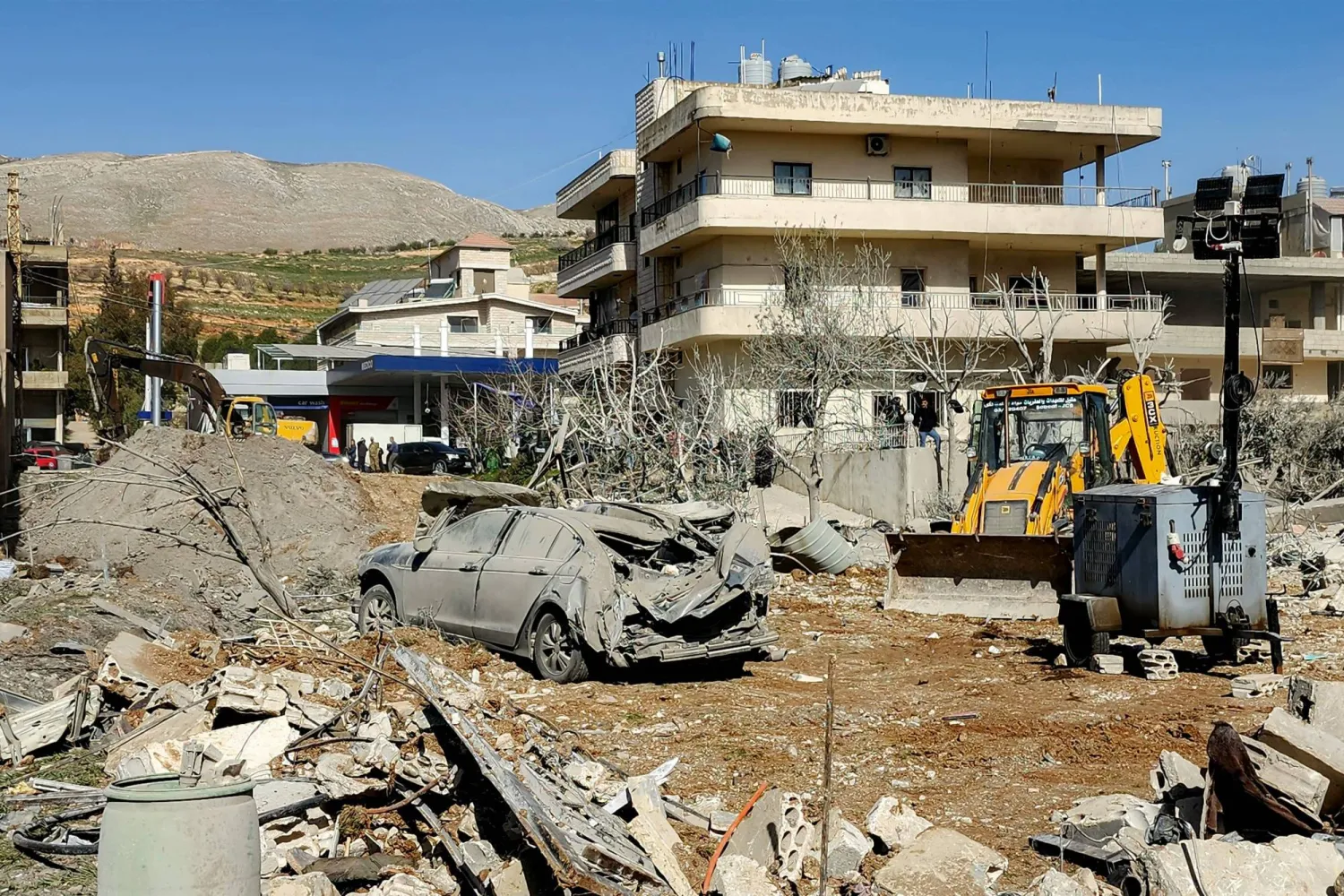
A bulldozer clears debris near heavily-damaged buildings in the village of Bednayel in Lebanon's eastern Bekaa Valley region on February 21, 2026, following Israeli strikes. (AFP)
TT

Eight Hezbollah Members Killed in Israel’s Friday Strikes on Lebanon

A bulldozer clears debris near heavily-damaged buildings in the village of Bednayel in Lebanon's eastern Bekaa Valley region on February 21, 2026, following Israeli strikes. (AFP)

Attacks carried out by Israel on Friday in eastern Lebanon killed eight members of Hezbollah, an official from the group told AFP on Saturday.

Lebanon's health ministry said Friday that a total of 10 people were killed in strikes that hit the eastern Bekaa region.

The Israeli military said it targeted "several terrorists of Hezbollah's missile array in three different command centers in the Baalbek area".

Lebanon's president on Saturday condemned the attacks, the latest despite a ceasefire with Hezbollah.

In a statement, Joseph Aoun called the attacks "a blatant act of aggression aimed at thwarting diplomatic efforts" by the United States and other nations to establish stability.

A lawmaker from Hezbollah called on Beirut to suspend meetings of a multinational committee tasked with monitoring the truce.

Washington is one of five members on the committee overseeing the ceasefire implemented in November 2024, with the body scheduled to meet again next week.

Israel has repeatedly bombed Lebanon despite the ceasefire, usually saying it is targeting Hezbollah but occasionally also the group's Palestinian ally Hamas.

The Friday attacks on southern and eastern Lebanon killed 12 people, according to the health ministry, 10 of them in the east of the country.

Israel's military said it struck "several terrorists of Hezbollah's missile array in three different command centers in the Baalbek area".

Hezbollah said a commander was killed in the raids. Its lawmaker Rami Abu Hamdan said on Saturday the group "will not accept the authorities acting as mere political analysts, dismissing these as Israeli strikes we have grown accustomed to before every meeting of the committee".

He called on Beirut to "suspend the committee's meetings until the enemy ceases its attacks".

Hezbollah, while weakened following war with Israel, remains a strong political force in Lebanon represented in parliament.

Lebanon's government last year committed to disarming the Iran-backed group, with the army saying last month it had completed the first phase of the plan covering the area near the Israeli border.

Israel, which accuses Hezbollah of rearming since the war, has called the Lebanese army's progress on disarming the group insufficient.