
The history of the Saudi riyal is deeply intertwined with the evolution of the Saudi state, evolving from its early days as a fluctuating medium of exchange to its modern, regulated form through significant political, social, and economic transformations, reported the Saudi Press Agency on Saturday.
A comprehensive overview of this trajectory begins with the diverse currencies of the First Saudi State, passes through the regulatory milestones of the unification era, and culminates in today’s sophisticated monetary structure.
First Saudi State: Vibrant markets and multiple currencies
With the establishment of the First Saudi State in the mid-12th century AH (mid-18th century CE), the Arabian Peninsula lacked a unified monetary system, and a variety of currencies circulated, driven by trade across a vast geography.
According to the historical guide for Founding Day published by the King Abdulaziz Foundation for Research and Archives (Darah), First Saudi State founder Imam Muhammad bin Saud bin Muhammad bin Muqrin focused on building a robust economic foundation by securing financial resources and encouraging trade between Diriyah and other regions. Consequently, markets in Diriyah and Najd flourished, attracting merchants who traded in gold, silver, and barter.
As noted in Dr. Abdullah Al-Saleh Al-Uthaimin’s "History of the Kingdom of Saudi Arabia," popular currencies included the Austrian silver Maria Theresa thaler, locally known as Al-Riyal Al-Fransi (literally the French riyal), which became a staple due to its consistent purity and weight.
According to Dr. Mohammed Al-Manshat’s "Organizations of the First Saudi State," Diriyah’s markets reached a peak of prosperity during the reign of Imam Saud bin Abdulaziz. Political and security stability allowed merchants to move freely, facilitating smooth and reliable financial transactions.
Regional diversity and variety of coins
Monetary patterns varied by region. In Najd, denominations such as Al-Jadeeda, Al-Khurda, Al-Muhammadiya, and Al-Mushakhas were used according to market needs. Al-Khurda served as the smallest unit, while Al-Jadeeda was used for everyday transactions.
In Al-Ahsa, an agriculturally vital hub, a local currency called Al-Tawila, a bent copper bar combined with silver, was commonly used. Meanwhile, the Hijaz experienced a high degree of currency diversification, as Makkah and Madinah welcomed pilgrims carrying various coins from across the Muslim world.
The reign of King Abdulaziz: Foundations of organization
The entry of King Abdulaziz bin Abdulrahman Al Saud into Riyadh in 1319 AH (1902) marked a pivotal economic turning point. Initially, he maintained the existing currencies to preserve market stability while gradually introducing a unified currency.
According to the Saudi Central Bank (SAMA), an early significant step was counterstamping circulating coins with the word "Najd" to indicate official adoption. After the unification of the Hijaz and Najd in 1343 AH (1925), the word "Hijaz" was added to reflect the expanding political unity.
By 1343 AH, monetary reform shifted from stamping to minting. SAMA records show the issuance of the first Saudi copper coins in half- and quarter-qirsh denominations, bearing King Abdulaziz’s name and the mint location, Umm Al-Qura. These were the first legal-tender coins of the Saudi state.
In 1346 AH (1927), King Abdulaziz abolished all foreign circulating currencies and introduced the first pure Saudi silver riyal. To support this, he issued a royal decree - published in the Umm Al-Qura gazette - outlining the state’s new monetary policies. After the formal unification of the Kingdom in 1351 AH (1932), the riyal became the official currency. By 1354 AH (1935), a new silver riyal bearing the name "Kingdom of Saudi Arabia" was issued, symbolizing national unity and stability.
Saudi Arabian Monetary Agency: Regulation and supervision
To manage the expansion of economic activity, King Abdulaziz issued two royal decrees in 1371 AH (1952) establishing the Saudi Arabian Monetary Agency (SAMA), now the Saudi Central Bank. SAMA was tasked with regulating currency issuance, maintaining its value, and supervising the banking system. It began operations in 1372 AH (1953), focusing on introducing the Saudi gold pound and completing the minting of the silver riyal.
Pilgrim receipts and paper currency
Recognizing that heavy coins were becoming impractical for a modernizing economy and burdensome for pilgrims, King Abdulaziz sought a more efficient solution. This led to the introduction of "pilgrim receipts" by SAMA in 1372 AH (1953). Initially issued in 10-riyal denominations, these receipts were printed in Arabic, Persian, English, Urdu, Turkish, and Malay.
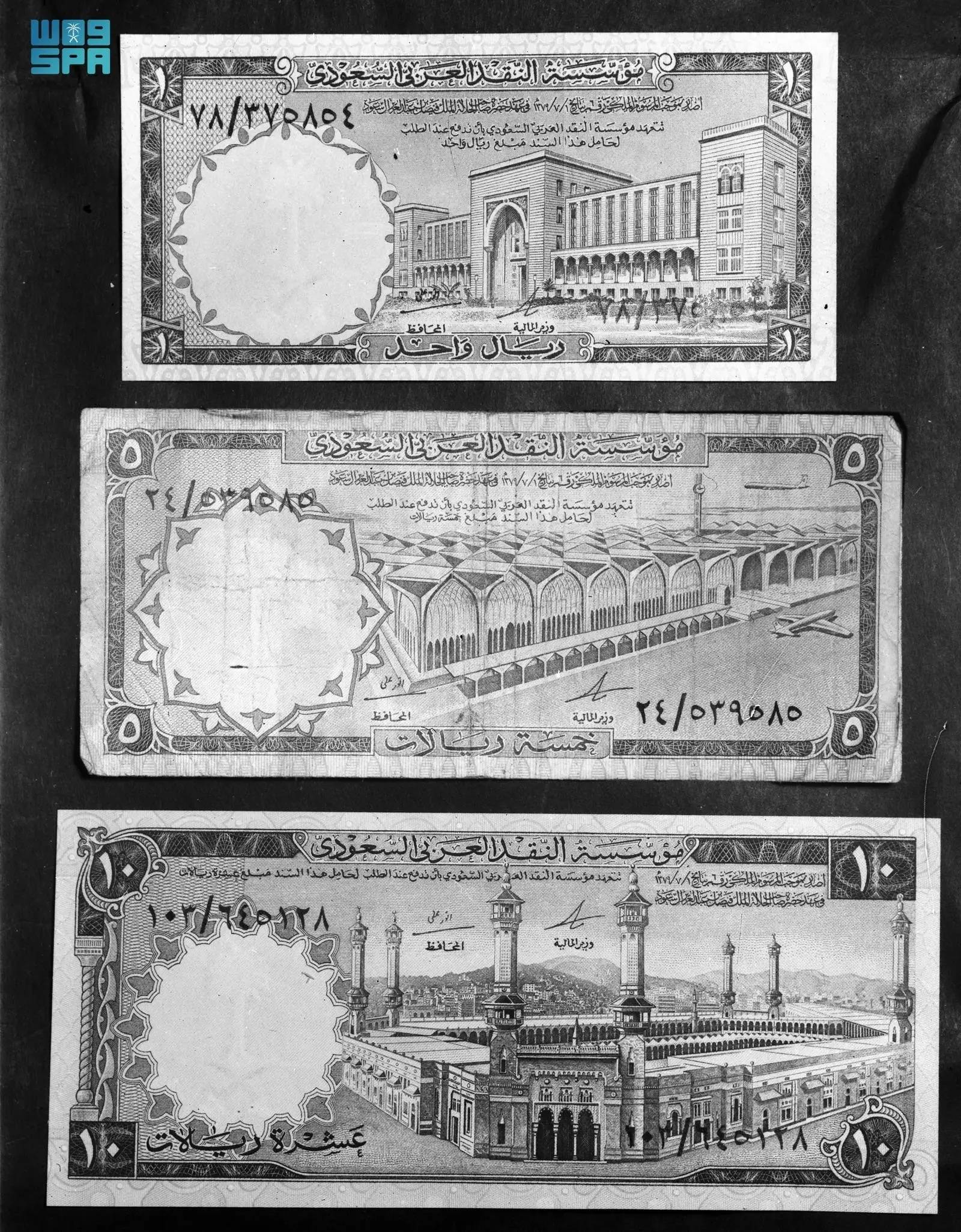
Though intended as a temporary convenience to be exchanged for silver, the receipts quickly gained the trust of merchants, citizens, and pilgrims alike. This success led SAMA to issue five-riyal notes in 1373 AH (1954) and one-riyal notes in 1375 AH (1956).
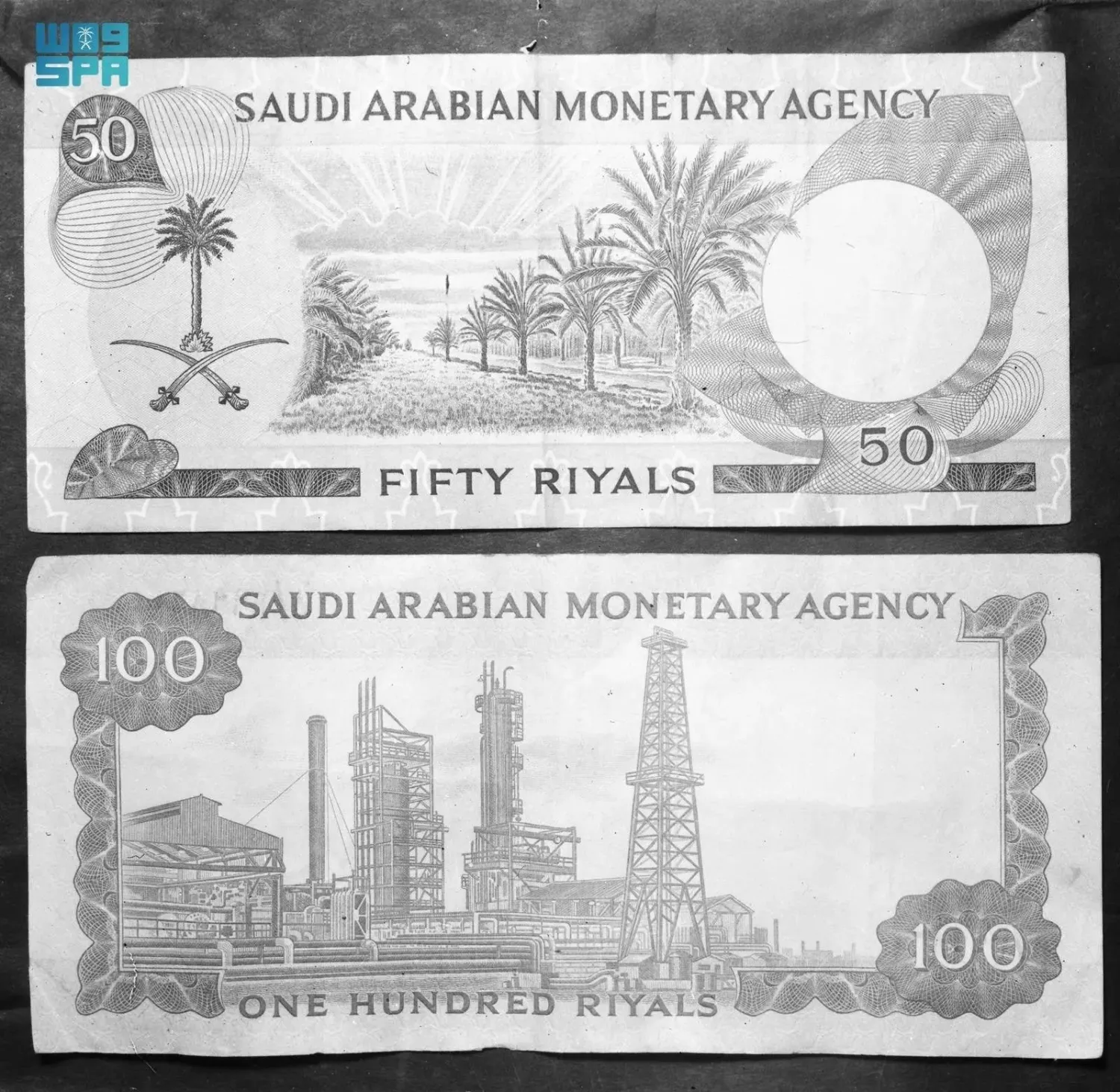
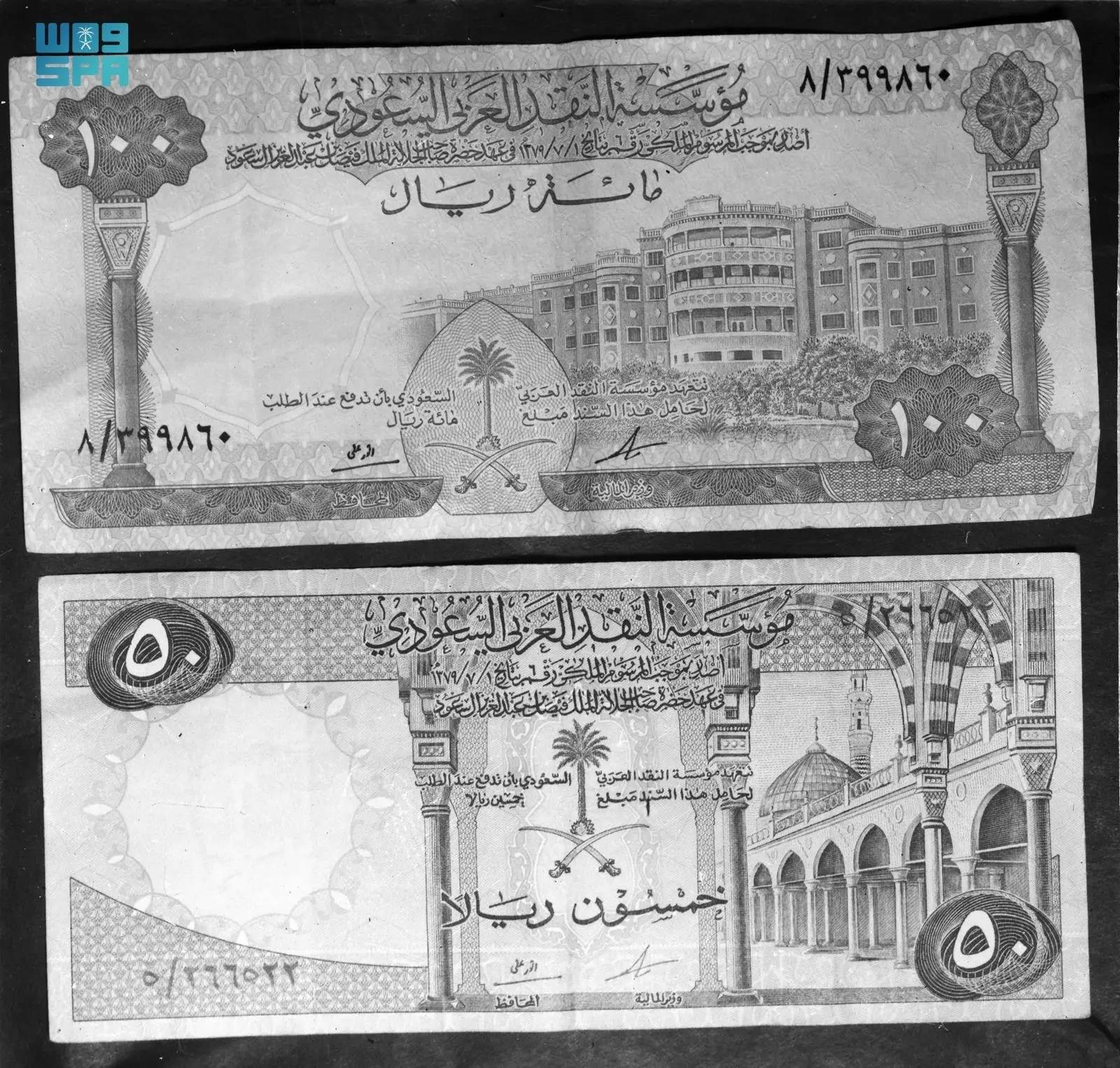
The public’s preference for these receipts over heavy coins paved the way for a permanent transition to paper currency. In 1381 AH (1961), the first official paper issue of the Saudi riyal was released during the reign of King Saud bin Abdulaziz, featuring enhanced security and depictions of historical landmarks.
The sixth issue: Trust and security
The sixth issue of the Saudi currency was released in 1438 AH (2016) under the reign of Custodian of the Two Holy Mosques King Salman bin Abdulaziz Al Saud, bearing the slogan "Trust and Security." This series incorporated the latest global technologies and security standards for both paper and metal denominations.
Furthermore, the adoption of the official Saudi Riyal Symbol on February 20, 2025, reinforced the Kingdom’s financial and national identity. The symbol’s design, inspired by Arabic calligraphy, reflects pride in the cultural heritage that defines the nation.
From the barter systems of Diriyah to the internationally recognized symbol of today, the Saudi riyal serves as a living record of three centuries of progress, representing not merely a unit of value but a document of the nation’s journey and renaissance.