Biden Says Israel Has Agreed to Allow Humanitarian Assistance to Move into Gaza from Egypt

An injured person is assisted at Shifa Hospital after hundreds of Palestinians were killed in a blast at Al-Ahli hospital in Gaza that Israeli and Palestinian officials blamed on each other in Gaza City, Gaza Strip, October 17, 2023. (Reuters)
TT

Biden Says Israel Has Agreed to Allow Humanitarian Assistance to Move into Gaza from Egypt

An injured person is assisted at Shifa Hospital after hundreds of Palestinians were killed in a blast at Al-Ahli hospital in Gaza that Israeli and Palestinian officials blamed on each other in Gaza City, Gaza Strip, October 17, 2023. (Reuters)

President Joe Biden said Wednesday that Israel had agreed to allow humanitarian assistance to begin flowing into Gaza from Egypt, with the understanding it would be subject to inspections and that it should go to civilians and not Hamas militants.

In remarks from Tel Aviv where the president had gone to show support for Israel following a brutal and deadly Oct. 7 attack that killed roughly 1,400 people, Biden cautioned the nation against all-consuming rage.

"I understand. Many Americans understand," Biden said, likening the attack to the Sept. 11, 2001 terrorist attacks in the US that killed nearly 3,000 people. "You can't look at what has happened here ... and not scream out for justice. While you feel that rage, don't be consumed by it."

Israel had cut off the flow of food, fuel and water to the Gaza Strip after the attack. Mediators have been struggling to break a deadlock over providing supplies to desperate civilians, aid groups and hospitals. An explosion at a Gaza Strip hospital compounded the suffering.

Shortly after Biden's remarks, Israel confirmed food, water and medicine would begin to flow, though the timing wasn't immediately clear.

There were conflicting claims of who was responsible for the hospital blast. Officials in Gaza quickly blamed an Israeli airstrike. Israel denied it was involved and released a flurry of video, audio and other information that it said showed the blast was instead due to a missile misfire by Islamic Jihad, another militant group operating in Gaza. The Islamic Jihad dismissed that claim. The Associated Press has not independently verified any of the claims or evidence released by the parties.

Biden on Wednesday said data from his Defense Department showed it was not likely a strike by the Israeli military.

"Based on what I’ve seen, it appears as though it was done by the other team, not you," Biden told Israeli Prime Minister Benjamin Netanyahu during a meeting. But he said there were "a lot of people out there" who weren’t sure what caused the blast, which sparked protests throughout the Middle East.

Biden said he had spoken with the Israeli cabinet "to agree to the delivery of life-saving humanitarian assistance of civilians in Gaza."

"Let me be clear," Biden said. If Hamas diverts or steals the assistance, they will have demonstrated once again that they have no concern for the welfare of the Palestinian people."

Biden also said an additional $100 million in humanitarian assistance for Gaza and the West Bank.

Biden had also been scheduled to visit Jordan to meet with Arab leaders Wednesday, but the summit was called off after the hospital explosion. His remarks in Tel Aviv spoke both to the horrors that the Israelis had endured, but also the growing humanitarian crisis for Palestinian civilians in Gaza.

He told Netanyahu he was "deeply saddened and outraged" by the hospital explosion. But he also stressed that "Hamas does not represent all the Palestinian people, and it has brought them only suffering." And he spoke of the need to find ways of "encouraging life-saving capacity to help the Palestinians who are innocent, caught in the middle of this."

Biden reiterated the US was firmly behind Israel.

"I want you to know you're not alone. We will continue to have Israel's back as you work to defend your people," Biden said. "We'll continue to work with you and partners across the region to prevent more tragedy to innocent civilians."

Netanyahu called the president's visit "deeply, deeply moving," adding, "I know I speak for all the people of Israel when I say thank you Mr. President, thank you for standing with Israel today, tomorrow and always."

Netanyahu said Biden had rightly drawn a clear line between the "forces of civilization and the forces of barbarism," saying Israel was united in its resolve to defeat Hamas.

"The civilized world must unite to defeat Hamas," he said. US officials on Wednesday also announced sanctions against a group of 10 Hamas members and the Palestinian militant organization’s financial network across Gaza, Sudan, Türkiye, Algeria and Qatar.

Biden also met with Israeli President Isaac Herzog as well as with Israeli first responders and the families of victims and those being held hostage by Hamas. He held their hands, embraced them and listened quietly as their voices cracked as they spoke of the horrors they'd seen.

Eli Beer, the founder of a volunteer emergency medical service, told Biden that through his visit "you uplifted the whole spirit in this country, and all the Jewish people in the world."

The grim tone of Wednesday's meetings between Biden and Netanyahu stood in stark contrast to their optimistic meeting just a month ago on the sidelines of the UN General Assembly in New York, where Netanyahu marveled that a "historic peace between Israel and Saudi Arabia" seemed within reach.

The possibility of improved relations between Israel and its Arab neighbors has dimmed considerably with the outbreak of the Israel-Hamas war. Israel has been preparing for a potential ground invasion of Gaza in response to Hamas' attacks.

Roughly 2,800 Palestinians have been reported killed by Israeli strikes in Gaza. Another 1,200 people are believed to be buried under the rubble, alive or dead, health authorities said. Those numbers predate the explosion at the Al-Ahli hospital on Tuesday.

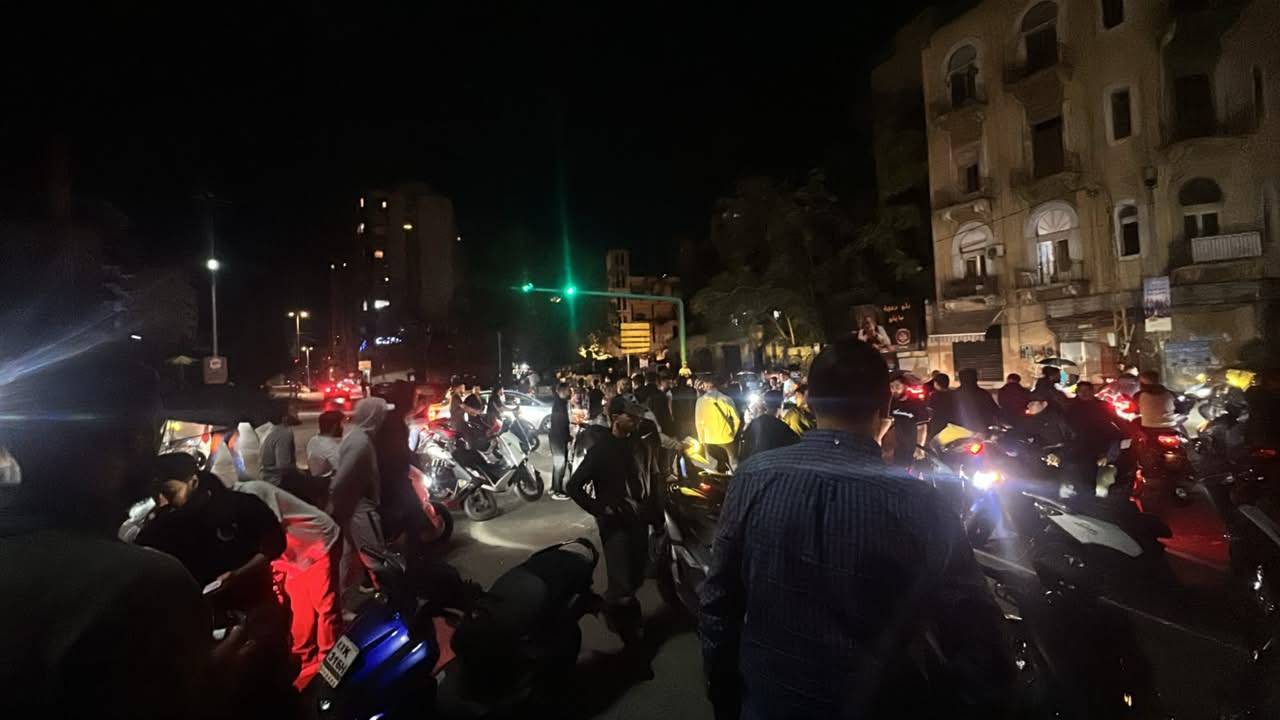
Protests swept through the region after the blast at the hospital, which had been treating wounded Palestinians and sheltering many more who were seeking a refuge from the fighting.

Hundreds of Palestinians flooded the streets of major West Bank cities including Ramallah. More people joined protests that erupted in Beirut, Lebanon and Amman, Jordan, where an angry crowd gathered outside the Israeli Embassy.

Outrage scuttled Biden's plans to visit Jordan, where King Abdullah II was to host meetings with Palestinian President Mahmoud Abbas and Egyptian President Abdel Fattah al-Sisi. But Abbas withdrew in protest, and the summit was subsequently canceled outright.

Ayman Safadi, Jordan’s foreign minister, told a state-run television network that the war is "pushing the region to the brink."

Jordan declared three days of mourning after the hospital explosion and Safadi said the summit was canceled after speaking with all leaders. He said they had wanted the meeting to produce an end to the war, which seems unlikely now, and to give Palestinians the respect they deserve.

Kirby said Biden understood the move was part of a "mutual" decision to call off the Jordan portion of his trip. He said Biden would speak to Abbas and Sisi by phone Wednesday as he returned to Washington.

There are also fears that a new front could erupt along Israel’s northern border with Lebanon, where Hezbollah operates. The Iran-backed organization has been skirmishing with Israeli forces.

Always a believer in the power of personal diplomacy, Biden's trip is testing the limits of US influence in the Middle East at a volatile time. It's his second trip to a conflict zone this year, after visiting Ukraine in February to show solidarity with the country as it battles a Russian invasion.


Aoun: Lebanon Appreciates Saudi Crown Prince’s Efforts to Promote Regional Stability

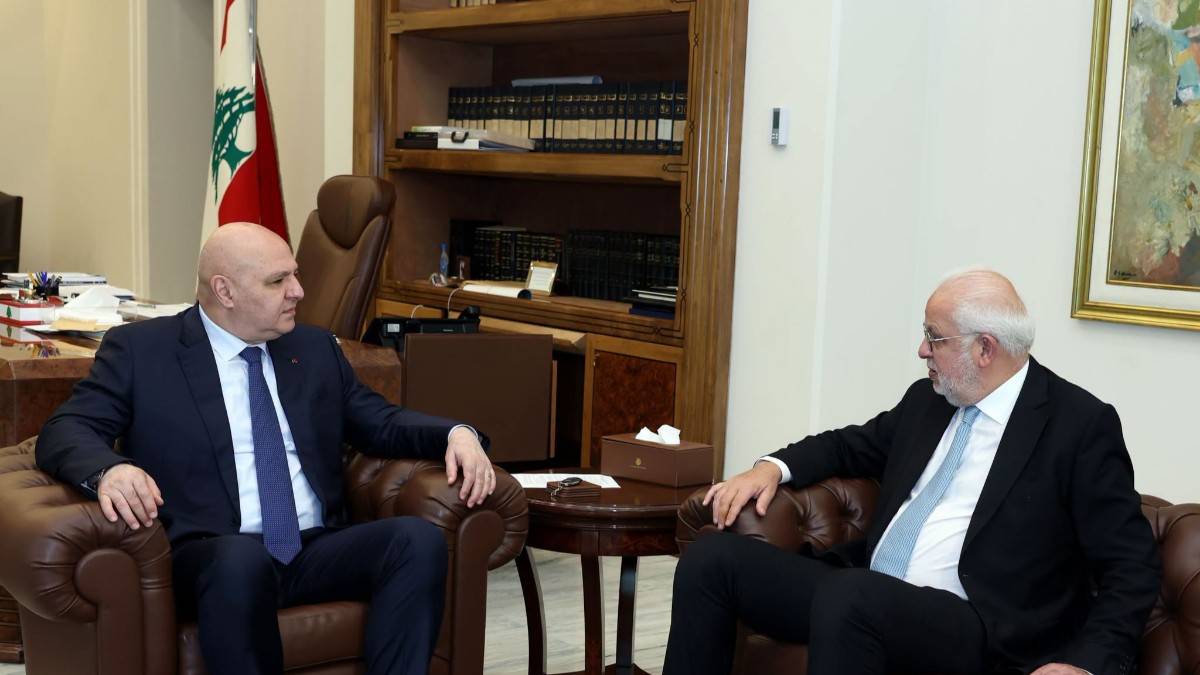
FILE - Lebanese President Joseph Aoun gestures to journalists at the Presidential Palace, in Baabda, east of Beirut, Lebanon, Wednesday, May 21, 2025. (AP Photo/Hassan Ammar, File)
TT

Aoun: Lebanon Appreciates Saudi Crown Prince’s Efforts to Promote Regional Stability

FILE - Lebanese President Joseph Aoun gestures to journalists at the Presidential Palace, in Baabda, east of Beirut, Lebanon, Wednesday, May 21, 2025. (AP Photo/Hassan Ammar, File)

Lebanese President Joseph Aoun hailed on Wednesday the “balanced and wise” efforts made by Saudi Crown Prince and Prime Minister Mohammed bin Salman, saying his endeavors have created an “atmosphere to support stability, which Lebanon appreciates as a source of pride”.

In a post on media platform X, Aoun added: “We hope that Lebanon will be an integral part of this effort. The Kingdom of Saudi Arabia, as the sponsor of the Taif Agreement, is trusted by the Lebanese, the countries of the region and the world”.


Syria's Kurds Register for Citizenship after Decades of Marginalization

"Unregistered" Kurds, who have been stateless since a controversial 1962 census, have been flocking to registration centers across Syria. Delil SOULEIMAN / AFP
TT

Syria's Kurds Register for Citizenship after Decades of Marginalization

"Unregistered" Kurds, who have been stateless since a controversial 1962 census, have been flocking to registration centers across Syria. Delil SOULEIMAN / AFP

In a packed hall in Qamishli's sports stadium in northeast Syria, Firas Ahmad is one of dozens of Kurds waiting to apply for citizenship after many in the minority were barred from doing so for decades.

Since last week, "unregistered" Kurds, who have been stateless since a controversial 1962 census, have been flocking to registration centers across Syria to apply for citizenship, based on the interior ministry's instructions.

"A person without citizenship is considered as good as dead," Ahmad, 49, told AFP.

"Imagine not being able to register my children or our homes in our names," he said, adding that "my grandfather never had citizenship, and we have been living without official documents ever since".

On the tables facing long queues of people, registration forms were scattered along with personal photos and old documents, while government employees were recording the data.

The new measure follows Syrian President Ahmed al-Sharaa's January decree granting citizenship to Kurds residing in the country, including those who have been unregistered for decades.

It also enshrines the Kurds' cultural and language rights, and recognizes Kurdish as a national language.

The decree came during weeks of clashes between Kurdish fighters, who once controlled swathes of northeastern Syria, and government forces after which an agreement was reached to integrate the Kurdish administration into the central state.

The integration included government forces entering the previously Kurdish-controlled cities of Hasakeh and Qamishli in February, and the appointment in March of senior Kurdish military leader Sipan Hamo as assistant defense minister for the eastern region, among other steps.

- 'We suffered greatly' -

The lack of citizenship affected many aspects of daily life, from the inability to register births and property ownership to difficulties in studying, moving around, travelling and working, leaving many without full legal recognition of their existence.

"We suffered greatly," says Galya Kalash, a mother of five, speaking in Kurdish.

"My five children could not complete their education, and we could not travel at all. Even now, our house is not registered in our name."

Around 20 percent of Syria's Kurds were stripped of their Syrian nationality in a controversial 1962 census in the northeastern Hasakeh province.

Ali Mussa, a member of Hasakeh's Network of Statelessness Victims, told AFP that there are around 150,000 unregistered people in Syria today.

There are around two million Kurds in Syria, most of them in the northeast.

Mussa called on authorities to show "flexibility in implementing the decision and to provide facilities for residents outside Syria" who may not be able to travel due to their refugee status in Europe or fear of flight disruptions due to the Middle East war.

Authorities are expected to keep registration centers open for a month.

Abdallah al-Abdallah, a civil affairs official in the Syrian government, told AFP the period could be extended.

"The most important compensation for these people is gaining citizenship after being deprived of it for all these years," he said.

In the registration center, Mohammed Ayo, 56, said not having citizenship made him feel "helpless", including being unable to get a driver's license or book a hotel room in capital Damascus as it required prior security clearance.

"You study for many years, and in the end they say you have no certificate," he said, adding that, after finishing high school, he was unable to obtain an official document to study at university.

"We did not even have the right to run for office or vote."


Trump Says Israel and Lebanon Leaders to Hold Talks Thursday

TOPSHOT - US President Donald Trump speaks to the press outside the Oval Office at the White House in Washington, DC, on April 13, 2026. (Photo by Brendan SMIALOWSKI / AFP)
TT

Trump Says Israel and Lebanon Leaders to Hold Talks Thursday

TOPSHOT - US President Donald Trump speaks to the press outside the Oval Office at the White House in Washington, DC, on April 13, 2026. (Photo by Brendan SMIALOWSKI / AFP)

US President Donald Trump ‌said leaders of Lebanon and Israel will speak, saying he was "trying to get a little breathing room" between the countries, after more than six weeks of war between Israel and the Lebanese armed group Hezbollah. 

"It has been a long time since the two leaders have spoken, like 34 years. It will happen tomorrow. Nice!," Trump wrote in a social media post published before midnight on Wednesday, Washington ‌time. 

It did ‌not say which Lebanese and Israeli ‌leaders ⁠would speak, or give ⁠any further details, Reuters reported. 

The Israeli Prime Minister’s office did not immediately respond to a request for comment. There was no immediate response to a request for comment from the offices of Lebanese President Joseph Aoun and Prime Minister Nawaf Salam. 

The conflict spiraled out ⁠of the US-Israeli war with Iran, with ‌the Iran-backed Hezbollah opening ‌fire in support of Tehran on March 2, prompting ‌an Israeli offensive in Lebanon just 15 months after ‌the last conflict.  

Washington on Wednesday expressed optimism about reaching a deal to end the war with Iran.  

Israel's security cabinet convened late on Wednesday to discuss a possible Lebanon ‌ceasefire, a senior Israeli official said. Another senior Israeli official and a senior ⁠Lebanese official said ⁠Israeli Prime Minister Benjamin Netanyahu's government was under heavy pressure from Washington to reach a ceasefire in Lebanon. 

Netanyahu, in a video statement released late on Wednesday, said the Israeli military continued to strike at Hezbollah and was about to "overcome" the southern Lebanese town of Bint Jbeil. 

The senior Lebanese official said that Lebanon’s assessment was that Israel wanted to secure a victory in Bint Jbeil before diplomatic progress could be made.