


First Evacuations from Gaza as Refugee Camp Struck Again

Palestinian health ministry ambulances cross the gate to enter the Rafah border crossing in the southern Gaza Strip before crossing into Egypt on November 1, 2023. (AFP)
TT

First Evacuations from Gaza as Refugee Camp Struck Again

Palestinian health ministry ambulances cross the gate to enter the Rafah border crossing in the southern Gaza Strip before crossing into Egypt on November 1, 2023. (AFP)

Hundreds of injured residents and foreigners escaped Gaza to Egypt Wednesday, the first evacuations from the war-torn Palestinian territory pounded by Israeli warplanes in retaliation for an unprecedented Hamas attack.  

The brief glimmer of hope sparked by the temporary opening of the Rafah border crossing was quickly snuffed out as a fresh strike pulverized buildings in Gaza's biggest refugee camp for a second consecutive day, killing dozens according to the Palestinian health ministry.  

Israeli Prime Minister Benjamin Netanyahu vowed to "continue until victory" over Hamas, whose brutal October 7 attack sparked the latest conflict, the deadliest in decades of unrest between the two sides.

AFP reporters at Gaza's southern border saw ambulances whisking away the wounded to Egyptian field hospitals, including one young boy with heavy bandaging around his stomach.

Whole families, struggling to carry their worldly possessions, rushed through the heavily fortified crossing towards Egypt, which said it admitted 335 foreigners or dual nationals and 76 seriously wounded and sick people.

Jordanian citizen Umm Saleh Hussein said water and electricity shortages were "the least" of the hardships Gazans were facing.

"There were bigger problems such as the bombardment. We were afraid. Many families were martyred," she told AFP.

A first group of mostly women and children arrived in Egypt, with TV images showing parents with pushchairs and elderly people clambering off a bus.  

"It's enough. We've endured enough humiliation," said Gaza resident Rafik al-Hilou, accompanying relatives including children aged one and four hoping to cross into Egypt.  

"We lack the most basic human needs. No internet, no phones, no means of communication, not even water. For the past four days, we haven't been able to feed this child a piece of bread. What are you waiting for?"  

'Slaughtered and killed'

AFPTV images from Wednesday's strike on the Jabalia camp showed extensive damage and rescuers clawing through rubble to extract blood-stained casualties.  

Dozens were killed and wounded, according to the Hamas-run health ministry, which came a day after Israeli jets hit the camp, killing at least 47 people, according to an AFP count.  

Rescuers said "whole families" had died, but casualty details could not be immediately confirmed. Israel's military did not comment.  

UN chief Antonio Guterres condemned Israel's strikes on the Gaza refugee camp.  

"The secretary-general is appalled over the escalating violence in Gaza, including the killing of Palestinians, including women and children in Israeli air strikes in residential areas of the densely populated Jabalia refugee camp," spokesman Stephane Dujarric said.  

Israel said Tuesday's raid was a successful hit on top Hamas commander Ibrahim Biari, but the large death toll drew a chorus of international condemnation in the region and as far afield as Bolivia, which severed diplomatic ties in protest.

Jordan recalled its ambassador to Israel "to condemn the Israeli war that is killing innocent people in Gaza".  

Hamas said seven of the 240 hostages it is holding, including three foreign passport holders, had died in Tuesday's bombing, a claim impossible to verify.  

The group's leader Ismail Haniyeh accused Israel of committing "barbaric massacres against unarmed civilians", saying it was covering its own "defeats."  

Israel has relentlessly pounded Gaza in retribution for the worst attack in the country's history, when Hamas gunmen stormed across the border, killing 1,400 people, mostly civilians, according to Israeli officials.  

AFP reporters saw more tanks pour over the border into northern Gaza, as Israel stepped up its ground incursion launched late last week. Its bombing campaign has killed 8,796 people, according to Hamas-run Gaza's health ministry.  

Israel said 15 soldiers died in ground fighting in Gaza on Tuesday, bringing to 330 the number killed since October 7.

AFP images showed tearful Israeli women in uniform hugging each other for comfort at the funeral of one of the troops killed.  

"People were just slaughtered and killed everywhere," said 21-year-old Israeli Maya Keyy, from one of the communities torn apart by the Hamas attack.  

"As Jews we need to fight for our own existence... it's like it's a war that will never end."  

'No hope in Gaza'  

The situation in Gaza remained desperate, with food, fuel and medicine for the 2.4 million residents all running short, according to aid groups.  

Palestinian residents told AFP they had evacuated from northern Gaza, as demanded by Israel, but were still under threat.

"We've been told people are evacuating from Gaza City towards the central area of the strip beyond the valley, so we headed there," Amen al-Aqluk said.  

"After 20 days, we were bombarded. Three of our kids lost their lives and we all got injured.  

"There is no hope in the Gaza Strip. It is not safe anymore here. When the border opens, everybody will leave and emigrate. We encounter death everyday, 24 hours a day."  

With fears mounting of a regional war, US President Joe Biden called for "urgent mechanisms" to dial down tensions and said top diplomat Antony Blinken would embark on another Middle East tour from Friday.  

Türkiye and Iran called for a regional conference to prevent a conflagration, as Israel faces a daily barrage of aerial attacks from Hamas and other Iran-backed groups around the Middle East, including Yemen's Houthi militias.  

In the north, Israel has traded near-daily fire with Lebanon's Iran-backed Hezbollah movement.  

And the families of hostages kidnapped by Hamas have endured an unbearable wait for news of relatives thought to be held in the labyrinth of tunnels deep below Gaza.  

Ayelet Sella, whose seven cousins were kidnapped from one of the kibbutz communities raided by Hamas gunmen, said she could find "no rest" until her loved ones are returned.  

"We have no more tears, our eyes are dry, we are empty three weeks on," said Sella, speaking to AFP at the Great Synagogue in Paris. "I only ask for one thing, that they come back."

Yemen Rejects Iran's Mediation Bid While It Continues to Arm Houthis

Al-Zouba called on the Islamic world to cut off funding and arms supplies to the Houthis (SABA)
TT

Yemen Rejects Iran's Mediation Bid While It Continues to Arm Houthis

Al-Zouba called on the Islamic world to cut off funding and arms supplies to the Houthis (SABA)

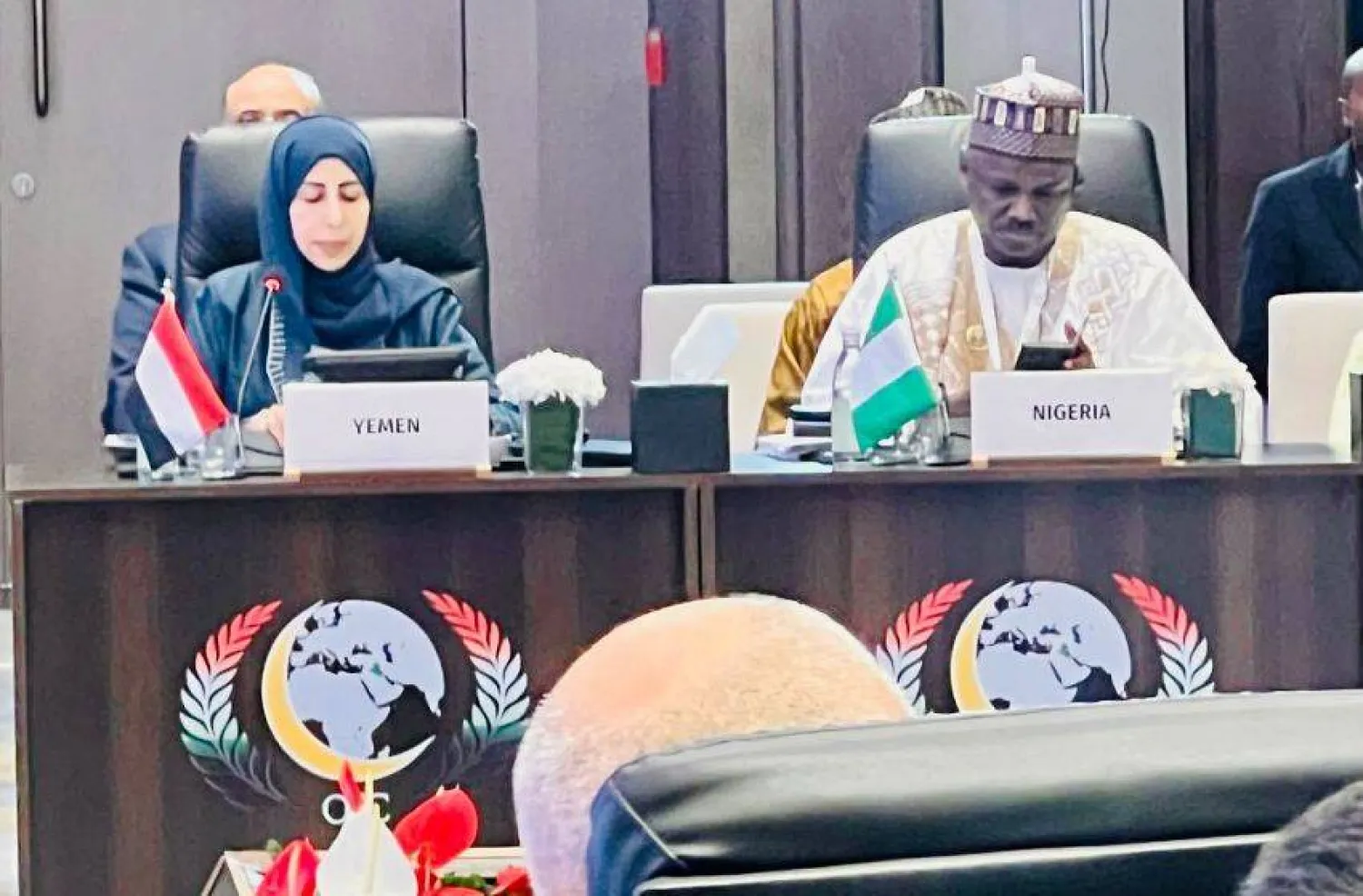
The Yemeni government has rejected Iran's attempts to position itself as a mediator in the country's war, holding Tehran responsible for supporting the Houthi takeover and prolonging the conflict by supplying the group with weapons, funding, training, missiles, drones and military experts.

Foreign Minister Afrah Al-Zouba said Iran had made itself a party to the war against the Yemeni people and should end its military support for the Houthis and respect national sovereignty and the principles of good neighborliness rather than offer to mediate. Her remarks reflect the government's efforts to move beyond political accusations against Tehran and press for international action against the sources of the group's weapons.

Speaking on the sidelines of the 52nd session of the Council of Foreign Ministers of the Organization of Islamic Cooperation (OIC) in the Iraqi capital, Baghdad, Al-Zouba said Tehran could not arm one party to a conflict and then present itself as a mediator seeking to end it.

She argued that Iran's attempts to portray the war as a conflict between Yemen and Saudi Arabia ignored the reality of an armed group's takeover of the Yemeni state.

The minister accused the Iranian regime of using Yemen as a bargaining chip and channeling pressure directed at Tehran into attacks whose costs are borne by the people of the region, international trade and global markets.

She noted that the Houthis had rejected regional and international peace initiatives, including a Saudi-proposed roadmap, and exploited periods of de-escalation to regroup and strengthen their military capabilities.

Tehran's Responsibility

Al-Zouba also rejected Iran's attempts to portray the Houthis as Yemen's legitimate representatives or describe them as the "Yemeni Armed Forces."

She stressed that Tehran's dealings with the group did not grant it the legitimacy to represent the Yemeni state or give the Iranian regime authority over Yemen's sovereign decisions.

The minister also rejected efforts to characterize the campaign to restore state institutions as a conflict between Yemen and Saudi Arabia.

She said Houthi claims that the group acts according to its own interests and calculations did not absolve Iran of responsibility for arming it and enabling it to continue its attacks.

Al-Zouba cited several Iranian actions that she described as violations of Yemeni sovereignty, including the handover of Yemen's diplomatic premises in Tehran to a Houthi representative in November 2019.

She also pointed to the smuggling of an Islamic Revolutionary Guard Corps (IRGC) officer into Sanaa in October 2020 and his appointment as ambassador to the Houthis, as well as flights operated to Sanaa airport in July 2026 without the internationally recognized government's approval.

The minister accused Tehran of continuing to interfere in Yemen's affairs despite the severing of diplomatic relations in October 2015, describing those actions as violations of the rules governing relations between states, Yemeni sovereignty and the Vienna Convention on Diplomatic Relations.

Al-Zouba linked these accusations to the ongoing military escalation in Yemen, citing Houthi ballistic missile attacks on Maashiq Palace, the seat of the presidency and government in the temporary capital, Aden.

She also pointed to the continued siege of Taiz and shelling of residential neighborhoods, alongside attacks targeting Saudi Arabia and threatening international shipping.

Call for Islamic Action

Amid what she described as growing threats, the Yemeni foreign minister urged OIC member states to take a firm stance against the Houthis, designate the group a terrorist organization, cut off its funding sources and halt the flow of weapons and military expertise to its forces.

She stressed that the continuation of the war could not be separated from Iranian military and technical support, warning against allowing Yemeni territory to become a launching pad for threats to regional security.

Al-Zouba called for Islamic solidarity to move beyond declarations and translate into practical measures that protect member states and their resources while countering foreign interference that fuels conflicts.

She also urged the international community to enforce the arms embargo on the Houthis under UN Security Council Resolutions 2216 and 2624, hold the group's financiers accountable and support the Yemeni government in restoring state institutions and extending its authority throughout the country.

Al-Zouba emphasized that Yemen's security was closely tied to that of its neighbors and that confronting Iranian interference required ending support for armed proxies and safeguarding national sovereignty.

She also highlighted Saudi Arabia's continued support for Yemen through economic, humanitarian and development assistance.

On the political front, the minister said the Yemeni government, which had remained committed to pursuing peace for 12 years, would not accept a political process that served as cover to legitimize the Houthi takeover or allow weapons to remain outside state institutions.

She stressed that a just and lasting peace required respect for Yemen's sovereignty, unity and territorial integrity, the restoration of its institutions and adherence to the agreed framework for a political settlement, foremost among them UN Security Council Resolution 2216.

The remarks came as Operation Dawn of Yemen, launched by Presidential Leadership Council Chairman Rashad al-Alimi, continued its campaign to restore state institutions and extend government authority across the country's entire territory, according to the government.


US Ambassador Condemns Israeli Settler Attack on American Journalist

An Israeli settler points a gun amid clashes with Palestinians harvesting olives in Abu Falah near Ramallah in the Israeli-occupied West Bank, October 16, 2026. (Reuters)
TT

US Ambassador Condemns Israeli Settler Attack on American Journalist

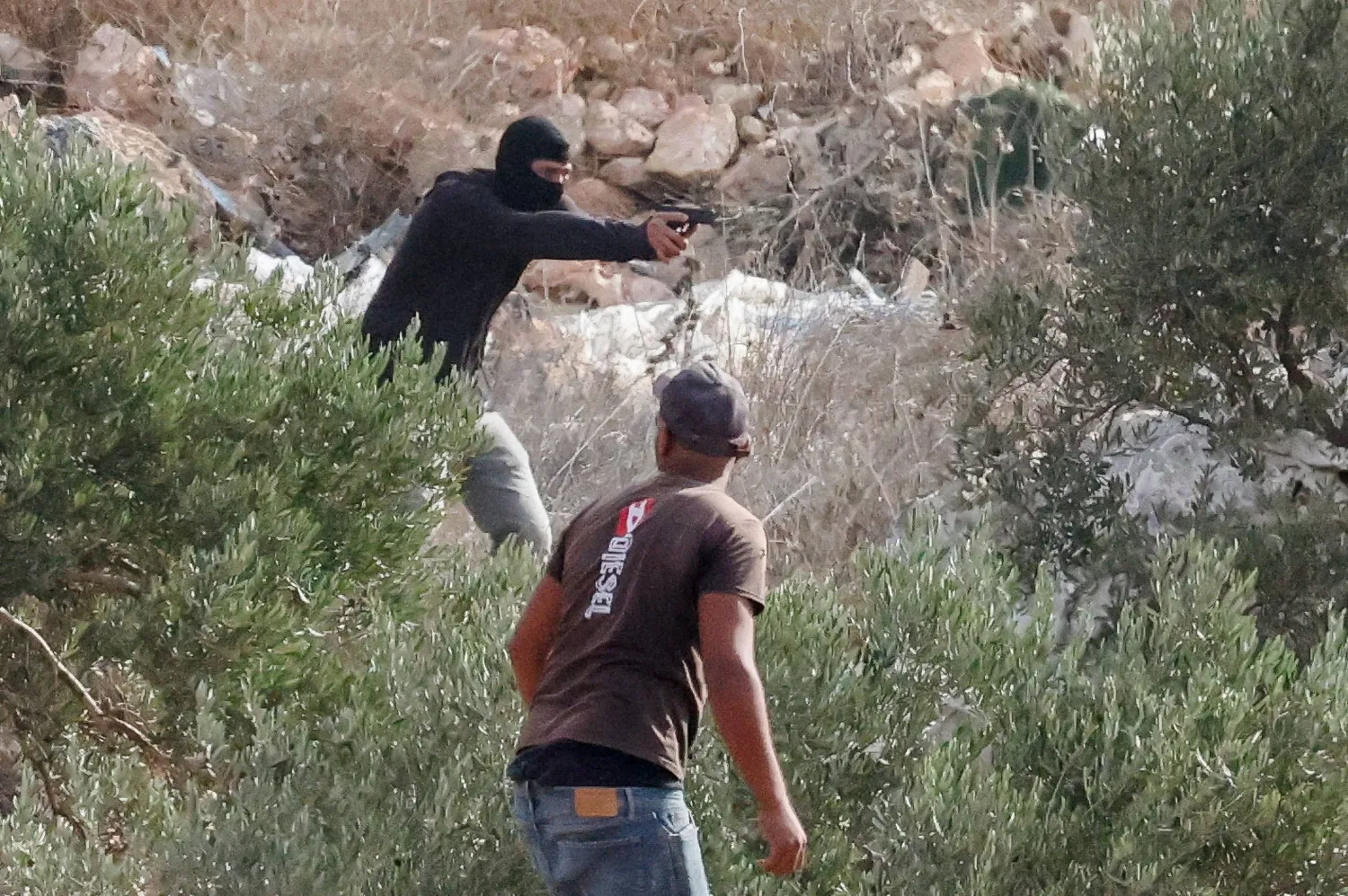
An Israeli settler points a gun amid clashes with Palestinians harvesting olives in Abu Falah near Ramallah in the Israeli-occupied West Bank, October 16, 2026. (Reuters)

US Ambassador to Israel Mike Huckabee sharply condemned on Sunday settler violence during an olive harvest in the West Bank that injured several Palestinians and Washington Post photographer Heidi Levine as “a despicable act of terror carried out by masked cowards.”

In a post late Saturday on X, he called for “a full investigation, arrest, and prosecution to the fullest extent of the law to whoever participated in this.”

Levine was seriously injured in the attack Friday in the West Bank village of Abu Falah. Israeli police are also investigating an attack by Israeli settlers on European diplomats Saturday in another West Bank village.

Settler violence against Palestinians has soared this year and spiked further in recent weeks as Israel plans to hold elections Oct. 27.

Israeli Prime Minister Benjamin Netanyahu was ambiguous in addressing Levine’s assault, condemning “violence against anyone” but referring to the attack as “alleged” and saying its circumstances remain unclear.

Huckabee said Levine’s assault was “vicious” and “dishonorable,” and noted that she was clearly identified as a journalist when she was attacked.

Levine, an award-winning photojournalist who has covered conflict zones around the world for more than four decades, remains hospitalized in Tel Aviv as she recovers from hand surgery, broken ribs and other injuries she sustained in the attack.

She said she was forced to the ground and beaten for more than 10 minutes by the settlers, who also stole her camera, passport and phone.

The Washington Post reiterated its call for a full and transparent investigation, though Israel rarely investigates settler violence fully. Yesh Din, an Israeli rights group, says around 94% of investigations into settler violence since 2005 have ended without an indictment, with just 3% leading to full or partial convictions.


US Wants Israel to ‘Crack Down’ on Settler Violence in West Bank, Rubio Says

 Israeli forces keep watch during Israeli settlers' weekly tour in Hebron, in the Israeli-occupied West Bank, October 17, 2026. (Reuters)
Israeli forces keep watch during Israeli settlers' weekly tour in Hebron, in the Israeli-occupied West Bank, October 17, 2026. (Reuters)
TT

US Wants Israel to ‘Crack Down’ on Settler Violence in West Bank, Rubio Says

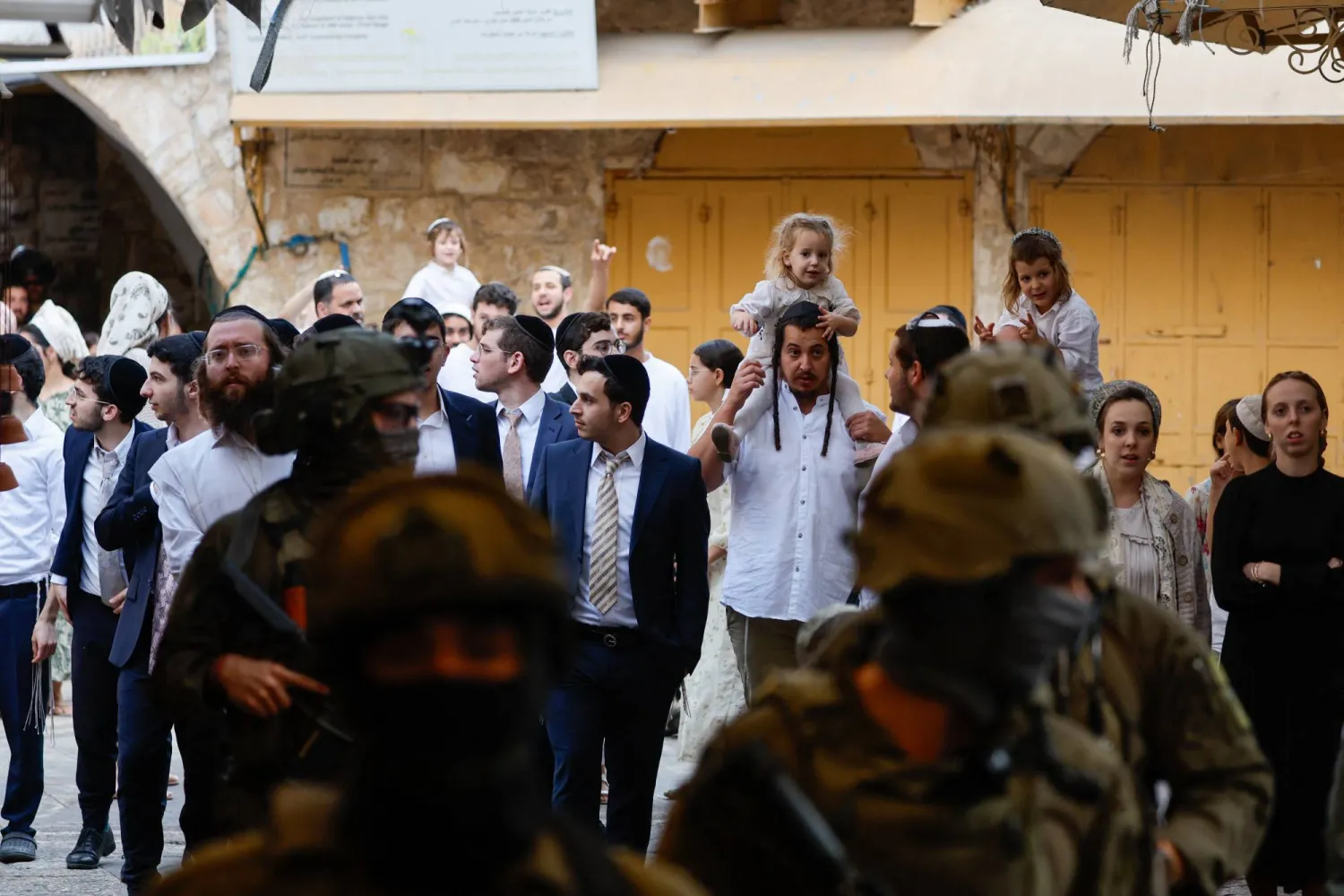
 Israeli forces keep watch during Israeli settlers' weekly tour in Hebron, in the Israeli-occupied West Bank, October 17, 2026. (Reuters)
Israeli forces keep watch during Israeli settlers' weekly tour in Hebron, in the Israeli-occupied West Bank, October 17, 2026. (Reuters)

The United States wants Israel to do more to deter attacks committed by settlers in the West Bank, US Secretary of State Marco Rubio said on Saturday.

"We're very disturbed by those images and what we're seeing," Rubio said. "We've asked the Israelis and continue to ask them ‌to crack ‌down on that stuff."

His ‌comments ⁠to reporters came ⁠after the widespread dissemination of video showing multiple individuals attacking Heidi Levine, an American photojournalist with the Washington Post. Levine was one of at least two people injured in the Friday ⁠incident, which took place ‌as Israeli settlers ‌attacked Palestinian civilians.

European diplomats and a French ‌mayor also were attacked in the occupied ‌West Bank, Belgium's foreign minister said.

The US State Department, Rubio said, has inquired about the event that included Levine's ‌attack. Rubio, who spoke to reporters before boarding a flight to ⁠Uzbekistan, ⁠said he expects to hear back from the US Embassy in Jerusalem by Sunday.

Israeli settlers in the West Bank have been involved in at least 170 attacks on Palestinians since September 27, around the start of the annual olive harvest, according to Yesh Din, an Israeli settlements monitoring group.