In Gaza, Displaced Women Recount Lives Upended by War

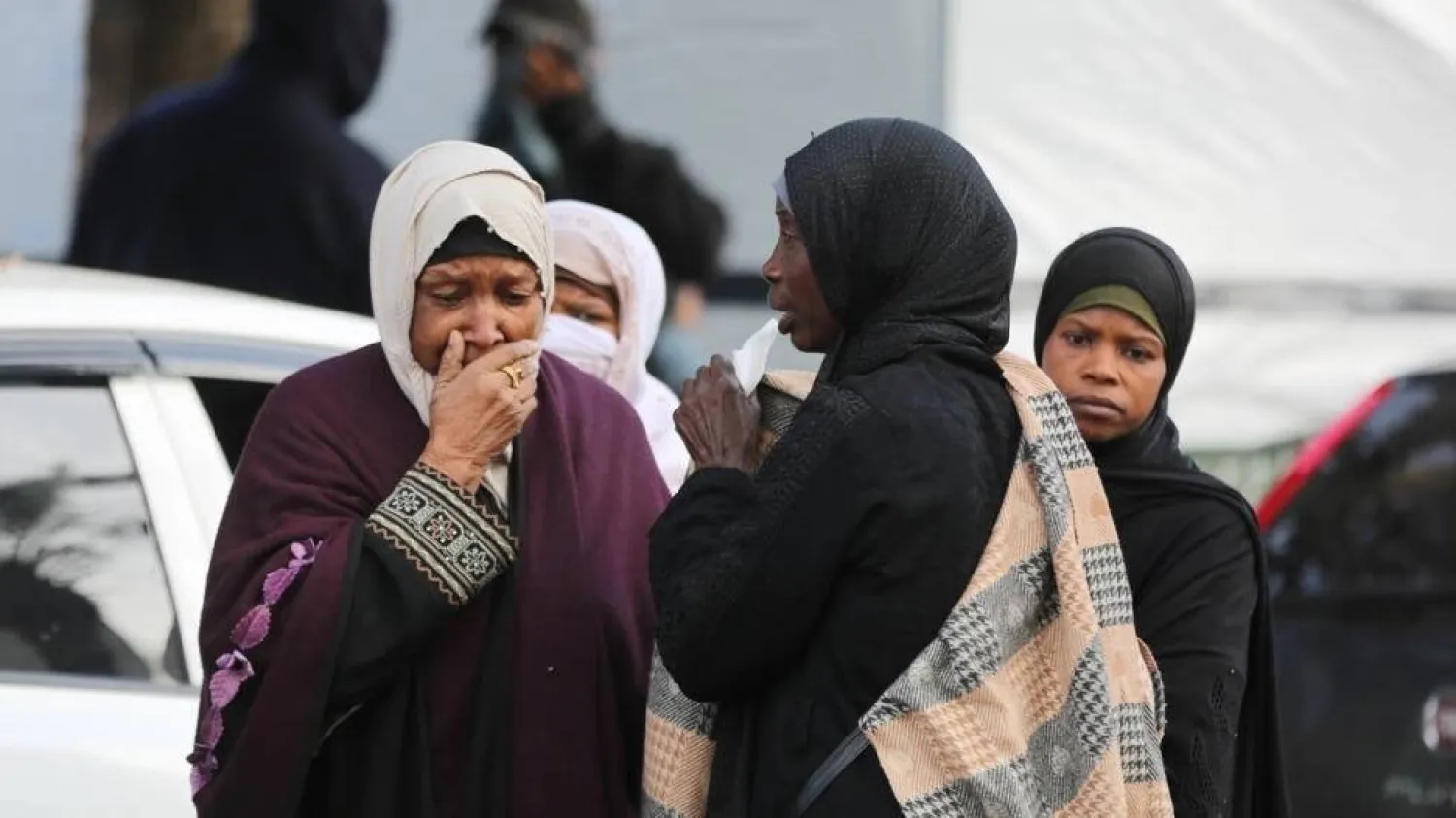
Eleven weeks of war have killed thousands in Gaza and displaced the vast majority of its inhabitants, officials say. AFP
TT

In Gaza, Displaced Women Recount Lives Upended by War

Eleven weeks of war have killed thousands in Gaza and displaced the vast majority of its inhabitants, officials say. AFP

A relentless Israeli military campaign, in response to deadly Hamas attacks on October 7, has upset the lives of most, if not all, residents of the Gaza Strip.
Israeli forces have launched a bombardment campaign and ground invasion of Gaza ever since Hamas militants launched their shock attack -- the deadliest in Israel's 75-year history.
It killed about 1,140 people, mostly civilians, according to an AFP tally based on official Israeli figures.
Israel's retaliatory offensive has killed at least 20,258 people in the besieged Palestinian territory, according to the health ministry in Hamas-run Gaza.
The United Nations estimates the fighting has displaced 1.9 million of Gaza's 2.4 million population.
AFP spoke to three Palestinian women who shared how the conflict has upended their lives.
Nour al-Wahidi, 24, medical intern
Wearing a stethoscope around her neck, Wahidi recalled spending 38 consecutive days treating patients in terrible conditions at Gaza City's Al-Shifa hospital, which has been raided by Israeli forces.
"I worked through moments of escalation these past two years, but everything about this war is different: the length, the death toll, the severity of injuries, the displacement," she said.
For a month now Wahidi has been sharing an apartment with 20 members of her extended family, having been displaced twice since the war broke out.
The medical intern is working in the emergency ward of the Kuwaiti hospital in Rafah, in the besieged territory's south.
"Every day, I come across suffering that I never thought I would see," she said.
Some of her relatives took shelter at a school run by the UN agency for Palestinian refugees, UNRWA, while others remained in Gaza.
Wahidi has lost all contact with those who stayed behind in Gaza City because the grid is often down and communications frequently cut.
"Before, I was home with everything I needed. Now I'm in this strange place, without water or food," she said.
"The situation is catastrophic."
She also warned that "there's been a rapid spread of disease".
Still, she tries to make do by telling herself that others have it even worse.
"After work, I can go home, I can cook and light a fire. I wash my hands when there's water," she said, counting her blessings.
"We've had to consider water and food supplies, and how to charge our phones -- things we never thought about before," she added.
"No one deserves to live like this."
Sondos al-Bayed, 32, housewife
Bayed hails from Gaza City but is now living in a tent outside the Kuwaiti hospital in Rafah.
She shares the space with her journalist husband and three children.
"Our life has been turned upside down. It's been a total 180," she said.
Her family has been forced to move multiple times since leaving Gaza City.
They first fled south towards the central city of Deir al-Balah. However, the homeowners who took them in soon asked them to leave.
It was "out of fear that journalists would be targeted" by Israeli strikes, Bayed told AFP.
"I cried so much... I didn't know what to do," she said.
They set off again for Khan Yunis, in the south, but their plans were thwarted once again. The Israeli army issued an evacuation order for those in the area, sending them further south near the border with Egypt.
With what little food she can find, Bayed prepares meals for her children but they refuse to eat: "The food's bad and expired."
Life has become "hard, like being separated from family, as are the memories", Bayed said.
"We were happy before and had a stable life. We dreamt of building a bigger house. I want (that life) back."
Lynn Ruk, 17, student
Ruk lives in a makeshift camp in Rafah along with her parents, brother, four sisters and niece.
"My life used to be so boring, I'd complain. The war changed everything," she said.
Her family left their home in Khan Yunis the day after the war erupted.
"We took a photo of the house, in tears," Ruk said.
They briefly stayed with one of her sisters. When it became too dangerous there, they left for the city's Nasser hospital, before winding up in Rafah.
"I thought we'd go home after a week. It's been more than 70 days now and we're still not back," she said.
The teenager said she has lost seven kilos (15 pounds) since the war began. She has fallen sick several times and was even taken to the emergency room after fainting.
Today, her meals mainly consist of canned food, with only the occasional piece of bread.
"I never thought my life would look like this... Before the war, I showered every day," she said.
"Now, if I'm lucky, I'll wash at the mosque once a week, at sinks reserved for performing one's ablutions -- if there's any water," she added.
Ruk is afraid for the lives of her friends, and her own.
She aspires to be a journalist and hopes to be able to travel abroad to make her dream come true.
"I wish I could go back to the life I had before, the one I didn't like," she said.



Lebanese PM to Asharq Al-Awsat: 2nd Phase of Disarmament to Begin Soon Covering Regions between Litani, Awali

Prime Minister Nawaf Salam and ambassador Simon Karam meet on Saturday. (PM's office)
TT

Lebanese PM to Asharq Al-Awsat: 2nd Phase of Disarmament to Begin Soon Covering Regions between Litani, Awali

Prime Minister Nawaf Salam and ambassador Simon Karam meet on Saturday. (PM's office)

Lebanon would have completed the first phase of the army’s plan to impose state monopoly over arms, or the disarmament of Hezbollah, by the end of the year.

Prime Minister Nawaf Salam’s office confirmed on Saturday that the first phase was close to completion.

“The first phase of the weapons consolidation plan related to the area south of the Litani River is only days away from completion,” it said.

“The state is ready to move on to the second ‌phase - namely (confiscating weapons) north of the ‍Litani River - based on the ‍plan prepared by the Lebanese army pursuant to ‍a mandate from the government,” Salam added.

The cabinet will meet at the beginning of the new year after the first phase is completed.

Salam, meanwhile, told Asharq Al-Awsat that the second phase of the disarmament will cover the areas between the Litani and Awali Rivers to its north.

The third phase will cover Beirut and Mount Lebanon and the fourth covers the Bekaa followed by remaining regions.

Lebanese sources said the army has completed most of its report on its disarmament efforts south of the Litani. It has completed the confiscation and destruction of thousands of tons of ammunition and military gear. It has discovered around a hundred military tunnels in the region.

As it stands, the army is unlikely to ask for an extension of the deadline to complete the first phase by the end of the year. It may ask for a “technical” extension for a few weeks if necessary.

Salam refused to go into the details of the government’s next step after it receives the army’s detailed report on the disarmament south of the Litani.

“The military has succeeded in imposing complete state authority over the regions from south of the Litani to the southern border, except for the areas occupied by Israel and from where it should withdraw without delay,” the PM told Asharq Al-Awsat.

He confirmed that the government will convene at the beginning of the year to assess the first phase of the disarmament, stressing that Israel must take reciprocal steps, such as ceasing its violations of the ceasefire.

This will not prevent Lebanon from moving on to the second phase of implementing state monopoly over arms, he revealed.

Progress hinges of Hezbollah’s cooperation with Lebanon’s efforts to limit possession of weapons to the state and move towards activating state institutions in the South and kick off the reconstruction process with the help of Lebanon’s friends, he added.

“Imposing state monopoly over weapons is a Lebanese need before it is an international one,” he declared.

Everyone should be concerned with facilitating the process to end the cycle of violence, he urged.

Salam met on Saturday with Simon Karam, Lebanon's top civilian negotiator on the Mechanism committee overseeing the Hezbollah-Israel truce.

Karam briefed Salam on the latest meeting of the Mechanism.

Hezbollah continues to resist calls to disarm, saying the ceasefire with Israel does not cover areas north of the Litani. Party officials continue to tie disarmament to Israel’s withdrawal from regions it occupies in the South.


Israeli Military Says Detained Suspected ISIS Militant in Syria

FILE PHOTO: Israeli military vehicles manoeuvre along the Israel-Lebanon border, as seen from northern Israel, November 24, 2025. REUTERS/Shir Torem/File Photo
TT

Israeli Military Says Detained Suspected ISIS Militant in Syria

FILE PHOTO: Israeli military vehicles manoeuvre along the Israel-Lebanon border, as seen from northern Israel, November 24, 2025. REUTERS/Shir Torem/File Photo

The Israeli military said on Saturday its forces had arrested a suspected ISIS militant in Syria earlier this week and taken him back to Israel.

In a statement, the military said that on Wednesday "soldiers completed an operation in the area of Rafid in southern Syria to apprehend a suspected terrorist affiliated with ISIS.”

"The suspect was transferred for further processing in Israeli territory," the statement said.


Report: Colombian Mercenaries in Sudan ‘Recruited by UK-registered Firms’

(COMBO) This combination of satellite images released by Planet Labs PBC on December 19, 2025, shows from top left to bottom right:- the graves near the United Nations Children's Fund (UNICEF) headquarters in El-Fasher, taken on the following dates: on October 8, 2025, on October 27, 2025, on January 15, 2025, and on December 14, 2025. (Photo by Handout / Planet Labs / AFP)
TT

Report: Colombian Mercenaries in Sudan ‘Recruited by UK-registered Firms’

(COMBO) This combination of satellite images released by Planet Labs PBC on December 19, 2025, shows from top left to bottom right:- the graves near the United Nations Children's Fund (UNICEF) headquarters in El-Fasher, taken on the following dates: on October 8, 2025, on October 27, 2025, on January 15, 2025, and on December 14, 2025. (Photo by Handout / Planet Labs / AFP)

An exclusive investigation by UK’s The Guardian has found companies hiring hundreds of Colombian fighters for Sudan’s Rapid Support Forces.

A one-bedroom flat off north London’s Creighton Road in Tottenham is, according to UK government records, tied to a transnational network of companies involved in the mass recruitment of mercenaries to fight in Sudan alongside the RSF, said the report.

Colombian mercenaries were directly involved in the RSF’s seizure of the southwestern Sudanese city of El Fasher in late October, which prompted a killing frenzy that analysts say has cost at least 60,000 lives.

“The flat in Tottenham is registered to a company called Zeuz Global, set up by two individuals named and sanctioned last week by the US treasury for hiring Colombian mercenaries to fight for the RSF,” said The Guardian.

“Both figures – Colombian nationals in their 50s – are described in documents at Companies House, the government register of firms operating in the UK, as living in Britain,” it said.

“The day after the US treasury announced sanctions on those behind the Colombian mercenary operation –December 9 – Zeuz Global abruptly moved its operation to the very heart of London. On 10 December the firm shared “new address details” Its new postcode matches One Aldwych, a five-star hotel in Covent Garden,” the report added.

Yet the first line of Zeuz Global’s new address is, confusingly, “4dd Aldwych,” which corresponds to the Waldorf Hilton hotel 100 meters away, according to The Guardian.

Both hotels said they had no link to Zeuz Global and had no idea why the firm had used their postcodes.

“It is of major concern that the key individuals the US government claims are directing this mercenary supply have been able to set up a UK company operating from a flat in north London, and even to claim that they’re resident in the UK,” said Mike Lewis, a researcher and former member of the UN panel of experts on Sudan.

When Companies House was asked if it had any knowledge of what Zeuz Global actually did, or is doing, it did not respond. The government agency would also not confirm whether the sanctioned individuals were, in fact, resident in the UK.

Contacting Zeuz proved fruitless; its website, set up in May, was labelled as “under construction” with no contact details provided.