Syrians Cancel Christmas Festivities in Solidarity with Gaza

The Syrian capital has a lone Christmas market this year, as churches cancel most festivities in solidarity with Gaza. LOUAI BESHARA / AFP
TT

Syrians Cancel Christmas Festivities in Solidarity with Gaza

The Syrian capital has a lone Christmas market this year, as churches cancel most festivities in solidarity with Gaza. LOUAI BESHARA / AFP

Christmas cheer has deserted the streets of Syria's cities, where the main churches have limited celebrations to prayers in solidarity with Palestinians suffering war in Gaza.
"In Palestine, the birthplace of Jesus Christ, people are suffering," the Syriac Catholic Archbishop of Aleppo, Mor Dionysius Antoine Shahda, told AFP.
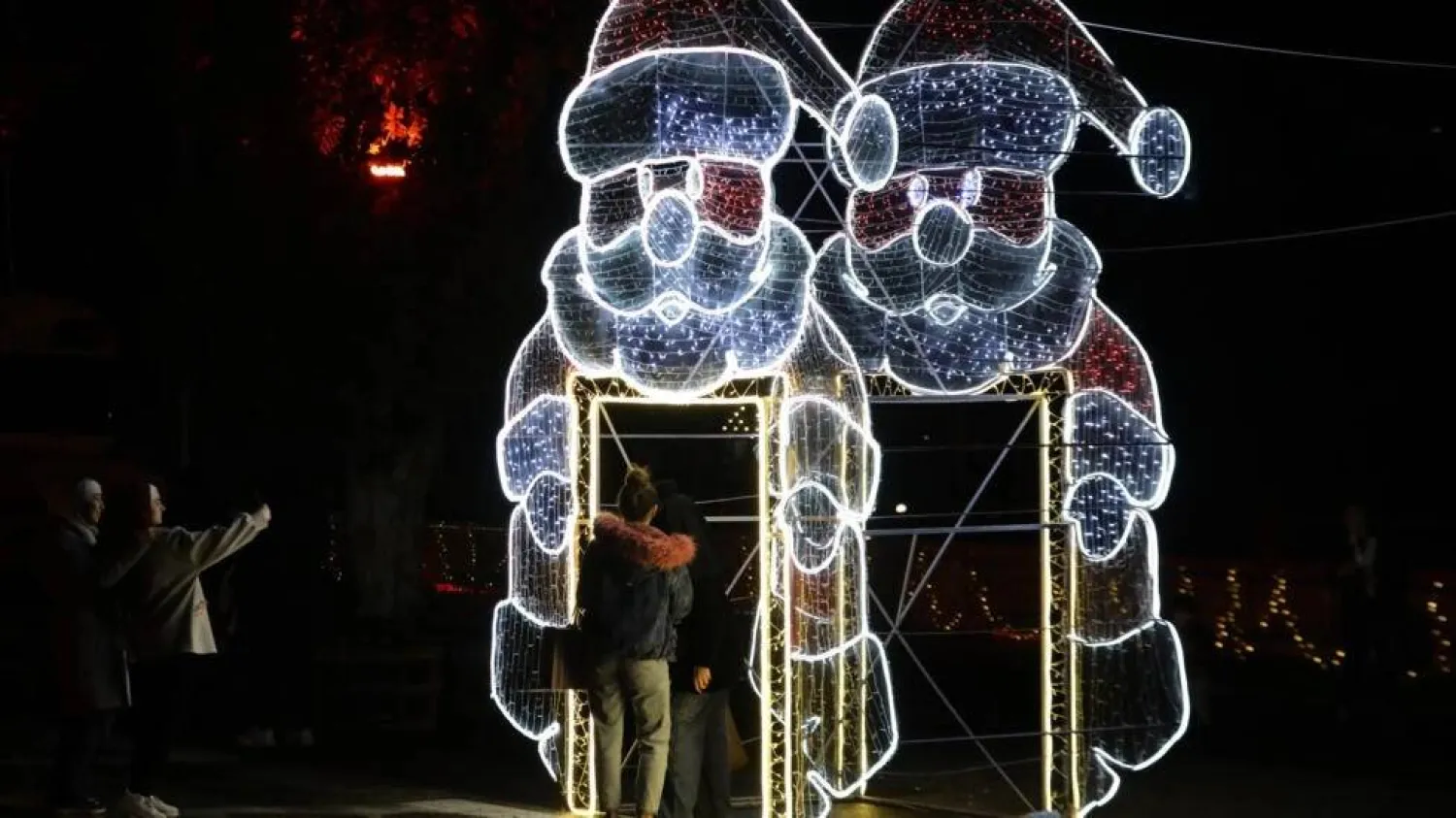
The northern Syrian city's central district of Azizia is usually home to a bustling festive market and a huge Christmas tree, while its streets are adorned with lights and trinkets, AFP said.
But this year, the main square is almost empty and there are no Christmas decorations in sight.
"In Syria we canceled all official celebrations and receptions in our churches in solidarity with the victims of the bombing on Gaza" by Israeli forces, Shahda said.
The Syriac Catholic Church was not alone, with the leaders of three of Syria's major churches -- the Greek Orthodox, Syriac Orthodox and Melkite Greek Catholic patriarchs -- announcing they were canceling Christmas festivities and limiting celebrations to religious ceremonies.
"Given the current circumstances, especially in Gaza, the patriarchs apologize for not receiving Christmas and New Year greetings," the trio said in a joint statement, adding they were limiting ceremonies to "prayers".
The health ministry in the Hamas-ruled Palestinian territory says more than 20,000 people have been killed in the Gaza Strip since Israel launched its massive air and ground offensive, in response to a deadly attack on southern Israel on October 7.
Most of the dead in Gaza are women and children, officials say.
The Hamas attack killed about 1,140 people in Israel, mostly civilians, according to an AFP tally based on official figures.
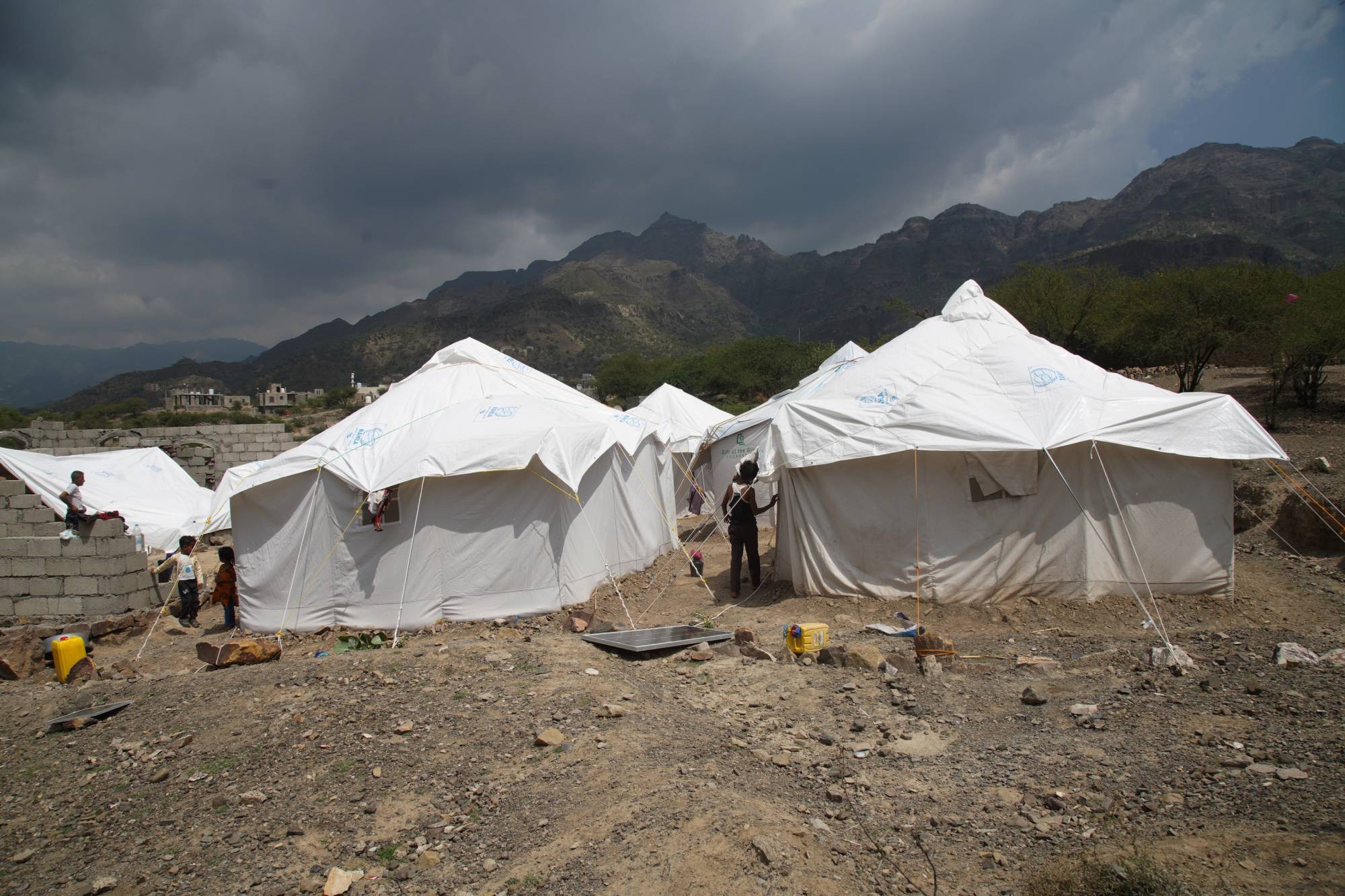
Many Gazans have been displaced by the violence and forced into crowded shelters or tents, often struggling to find food, fuel, water and medical care.
The UN agency for Palestinian refugees has said the ongoing Israeli military campaign left no safe place anywhere across the narrow territory.
'No opportunity for joy'
Before Syria's civil war erupted in 2011, it was home to more than 1.2 million Christians, though huge numbers have fled since.
The conflict had dampened Christmas celebrations, but festivities picked up in recent years as the main front lines froze and government forces retook control of large swathes of the country.
Still, gloom now prevails in the streets of the capital Damascus.
Festivities are limited to a lone market, while the Greek Orthodox Mariamite Cathedral in Damascus has put up modest decorations and a small tree in its courtyard.
Damascus resident Rachel Haddad, 66, said she had been glued to her phone for more than two months, reading news of the devastation in Gaza, and did not have the heart to put up a Christmas tree.
"This year was very sad. It began with the earthquake and ended with the Gaza war," Haddad said, referring to the February 6 tremor that ripped through southern Turkey and Syria, killing at least 55,000 people.
"There was no opportunity for joy," she said, also blaming Syria's economic woes.
The country's economy has been battered by war, with recurrent fuel shortages and long, daily power cuts a fact of life.
"If there is no electricity, how will you see the decorations and lights anyway?" Haddad asked.



Syria Moves Military Reinforcements East of Aleppo After Telling Kurds to Withdraw

Military vehicles drive along a road as the last Kurdish-led Syrian Democratic Forces (SDF) fighters left the Syrian city of Aleppo on Sunday, state-run Ekhbariya TV said, following a ceasefire deal that allowed evacuations after days of deadly clashes, in Latakia, Syria, January 14, 2026. (Reuters)
TT

Syria Moves Military Reinforcements East of Aleppo After Telling Kurds to Withdraw

Military vehicles drive along a road as the last Kurdish-led Syrian Democratic Forces (SDF) fighters left the Syrian city of Aleppo on Sunday, state-run Ekhbariya TV said, following a ceasefire deal that allowed evacuations after days of deadly clashes, in Latakia, Syria, January 14, 2026. (Reuters)

Syria's army was moving reinforcements east of Aleppo city on Wednesday, a day after it told Kurdish forces to withdraw from the area following deadly clashes last week.

The deployment comes as Syria's government seeks to extend its authority across the country, but progress has stalled on integrating the Kurds' de facto autonomous administration and forces into the central government under a deal reached in March.

The United States, which for years has supported Kurdish fighters but also backs Syria's new authorities, urged all parties to "avoid actions that could further escalate tensions" in a statement by the US military's Central Command chief Admiral Brad Cooper.

On Tuesday, Syrian state television published an army statement with a map declaring a large area east of Aleppo city a "closed military zone" and said "all armed groups in this area must withdraw to east of the Euphrates" River.

The area, controlled by Kurdish forces, extends from near Deir Hafer, around 50 kilometers (30 miles) from Aleppo, to the Euphrates about 30 kilometers further east, as well as towards the south.

State news agency SANA published images on Wednesday showing military reinforcements en route from the coastal province of Latakia, while a military source on the ground, requesting anonymity, said reinforcements were arriving from both Latakia and the Damascus region.

Both sides reported limited skirmishes overnight.

An AFP correspondent on the outskirts of Deir Hafer reported hearing intermittent artillery shelling on Wednesday, which the military source said was due to government targeting of positions belonging to the US-backed, Kurdish-led Syrian Democratic Forces.

- 'Declaration of war' -

The SDF controls swathes of the country's oil-rich north and northeast, much of which it captured during Syria's civil war and the fight against the ISIS group.

On Monday, Syria accused the SDF of sending reinforcements to Deir Hafer and said it would send its own personnel there in response.

Kurdish forces on Tuesday denied any build-up of their personnel and accused the government of attacking the town, while state television said SDF sniper fire there killed one person.

Cooper urged "a durable diplomatic resolution through dialogue".

Elham Ahmad, a senior official in the Kurdish administration, said that government forces were "preparing themselves for another attack".

"The real intention is a full-scale attack" against Kurdish-held areas, she told an online press conference, accusing the government of having made a "declaration of war" and breaking the March agreement on integrating Kurdish forces.

Syria's government took full control of Aleppo city over the weekend after capturing its Kurdish-majority Sheikh Maqsud and Achrafieh neighborhoods and evacuating fighters there to Kurdish-controlled areas in the northeast.

Both sides traded blame over who started the violence last week that killed dozens of people and displaced tens of thousands.

- PKK, Türkiye -

On Tuesday in Qamishli, the main Kurdish city in the country's northeast, thousands of people demonstrated against the Aleppo violence, while shops were shut in a general strike.

Some protesters carried Kurdish flags and banners in support of the SDF.

"This government has not honored its commitments towards any Syrians," said cafe owner Joudi Ali.

Other protesters burned portraits of Turkish Foreign Minister Hakan Fidan, whose country has lauded the Syrian government's Aleppo operation "against terrorist organizations".

Türkiye has long been hostile to the SDF, seeing it as an extension of the Kurdistan Workers' Party (PKK) and a major threat along its southern border.

Last year, the PKK announced an end to its long-running armed struggle against the Turkish state and began destroying its weapons, but Ankara has insisted that the move include armed Kurdish groups in Syria.

On Tuesday, the PKK called the "attack on the Kurdish neighborhoods in Aleppo" an attempt to sabotage peace efforts between it and Ankara.

A day earlier, Ankara's ruling party levelled the same accusation against Kurdish fighters.

The Britain-based Syrian Observatory for Human Rights reported 45 civilians and 60 soldiers and fighters from both sides killed in the Aleppo violence.


Lebanon Says France to Host Conference to Support Army

French Special Presidential Envoy to Lebanon, Jean-Yves Le Drian looks on during a meeting with Lebanese Prime Minister Nawaf Salam (not pictured) at the Government Palace in Beirut, Lebanon, 14 January 2026. (EPA)
TT

Lebanon Says France to Host Conference to Support Army

French Special Presidential Envoy to Lebanon, Jean-Yves Le Drian looks on during a meeting with Lebanese Prime Minister Nawaf Salam (not pictured) at the Government Palace in Beirut, Lebanon, 14 January 2026. (EPA)

Lebanon said Wednesday that a conference in support of the country's army as it seeks to disarm Hezbollah would take place in Paris on March 5.

The announcement follows recent promises of support to the military, which lacks funds, equipment and technical expertise.

Presidency spokeswoman Najat Charafeddine said President Joseph Aoun met French envoy Jean-Yves Le Drian, Saudi envoy Yazid bin Farhan and ambassadors including from the US, Egypt and Qatar, discussing preparations for "a conference to support the Lebanese army and internal security forces".

"It was decided to hold the conference in Paris on March 5, to be opened by French President Emmanuel Macron," she said at the presidential palace.

Under US pressure and fearing expanded Israeli strikes, Lebanon has committed to disarming the Iran-backed Hezbollah, which was badly weakened in more than a year of hostilities with Israel that largely ended in late 2024.

Last week, Lebanon's army said it had completed the first phase of its plan to disarm the group, covering the area south of the Litani river, around 30 kilometers (20 miles) from the Israeli border.

A plan for the disarmament north of the Litani is to be presented to cabinet next month.
Israel, which accuses Hezbollah or rearming, has criticized the army's progress as insufficient, while Hezbollah has rejected calls to surrender its weapons.

Lebanon's army has dismantled tunnels and other military infrastructure belonging to Hezbollah near the Israeli border in recent months, seizing weapons and ammunition, despite its limited capacities.

Despite the ceasefire, Israel has kept up regular strikes on Lebanon, usually saying it is targeting Hezbollah, and has maintained troops in five south Lebanon areas it deems strategic.

Last month, talks with international envoys in Paris touched on the Lebanese army's needs, while its chief agreed to document its progress in disarming Hezbollah.


Iraqi Officials Arrest Man Wanted by Australian Police as 'Number One Priority'

Australian Federal Police Commissioner Krissy Barrett said the arrested man, Kazem Hamad, was a threat to national security. (Getty Images file)
TT

Iraqi Officials Arrest Man Wanted by Australian Police as 'Number One Priority'

Australian Federal Police Commissioner Krissy Barrett said the arrested man, Kazem Hamad, was a threat to national security. (Getty Images file)

Iraqi officials have arrested a man wanted by Australian Federal Police as a person of interest in ​the investigation into a spate of firebombings, including an antisemitic attack on a Melbourne synagogue, police said on Wednesday.

Australian Federal Police Commissioner Krissy Barrett said the arrested man, Kazem Hamad, was a threat to national security and that she had identified ‌him as her "Number ‌One priority".

Iraq's National ‌Center ⁠for ​International ‌Judicial Cooperation said in a statement that Kadhim Malik Hamad Rabah al-Hajami had been arrested as part of a drugs investigation, after a request from Australia.

Barrett said Iraqi officials had made an independent decision to arrest the man ⁠in their own criminal investigation, after Australian Federal Police provided ‌information to Iraqi law enforcement ‍late last year.

"This ‍arrest is a significant disruption to an ‍alleged serious criminal and his alleged criminal enterprise in Australia," she said in a statement.

In October, Barrett said that in addition to being a ​suspect in arson attacks in Australia linked to the tobacco trade, the man ⁠was "a person of interest in the investigation into the alleged politically-motivated arson attack on the Adass Israel Synagogue" in Melbourne.

Australia expelled Iran's ambassador in August after the Australian Security Intelligence Organization traced the funding of hooded criminals who allegedly set fire to the Melbourne synagogue in December 2024 to Iran's Revolutionary Guard Corps.

Hamad, previously convicted in Australia for drug trafficking ‌offences, was deported from Australia to Iraq in 2023.