

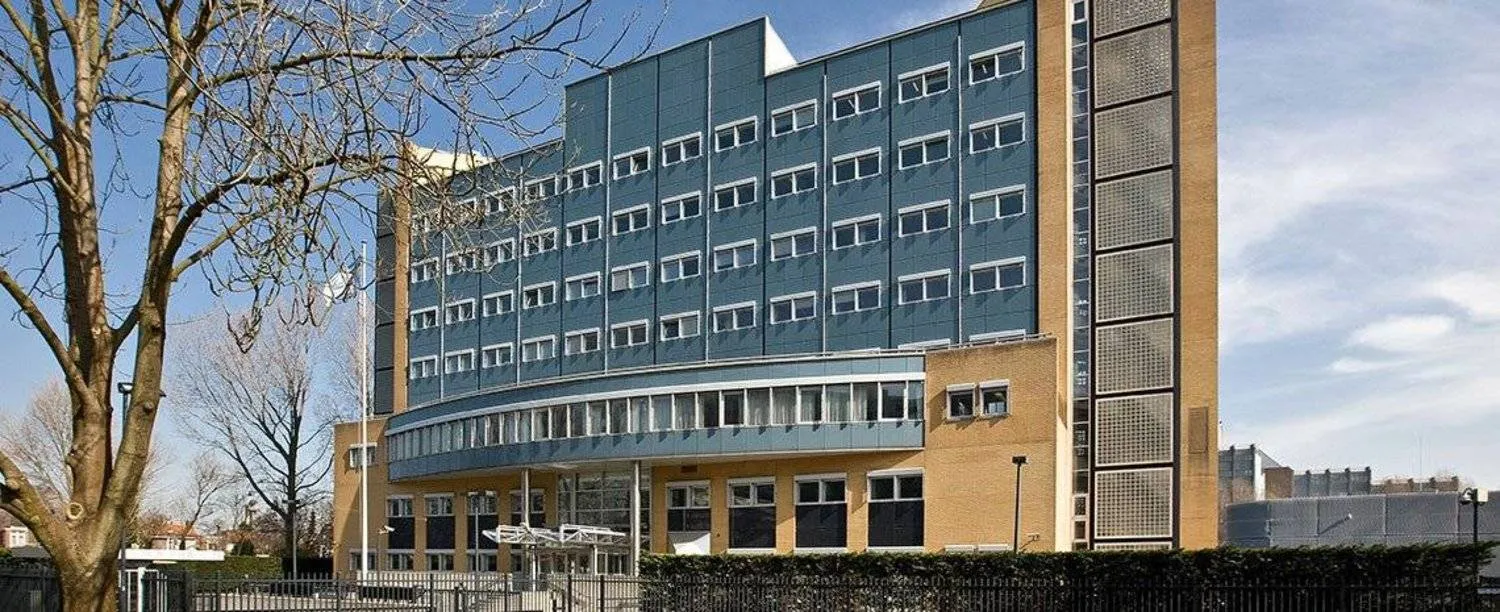

Lebanon's Hariri Tribunal Officially Closes, Leaving 3 Cases Unresolved

The Special Tribunal for Lebanon officially closed on Sunday. (STL)
TT

Lebanon's Hariri Tribunal Officially Closes, Leaving 3 Cases Unresolved

The Special Tribunal for Lebanon officially closed on Sunday. (STL)

UN Secretary-General Antonio Guterres has closed an international tribunal that was created to investigate the 2005 assassination of former Lebanese Prime Minister Rafik Hariri, the UN chief's spokesperson said Sunday.

Over the years, the Special Tribunal for Lebanon held in absentia proceedings and found three members of the Hezbollah party guilty in connection with Hariri's death in a massive Feb. 14, 2005 truck bombing.

The tribunal based in The Hague, Netherlands, sentenced the three — Salim Jamil Ayyash, Hassan Habib Merhi and Hussein Hassan Oneissi - to five concurrent sentences of life imprisonment.

Judges said evidence linked phones to the alleged mastermind of the bombing, Hezbollah commander Mustafa Badreddine, who was indicted by the court but is believed to have been killed in the Damascus area in May 2016.

The STL, however, leaves behind three unresolved cases: The assassination of former Secretary General of the Lebanese Communist Party George Hawi and the attempted assassinations for former minister Elias al-Murr and current MP Marwan Hamadeh.

At the beginning of 2023, Guterres extended the panel's mandate until Dec. 31 “for the limited purpose of completion of the non-judicial residual functions” and “for the orderly closure of the Special Tribunal.” The secretary-general noted Sunday that those tasks had been accomplished and the tribunal shut down, Guterres said.

Guterres had tasked Mohammed Ali al-Lajmeh, aide to the former STL prosecutor, to manage a team tasked with organizing the archive of the tribunal at the UN headquarters in New York.

Al-Lajmeh told Asharq Al-Awsat that the process of transferring the files was completed successfully. The team has completed its duties in full.

He added, however, that the cases for which the STL was formed will be closed. Should Lebanon arrest anyone convicted by the tribunal, the case will be reopened at the UN and its concerned agencies after holding consultations with the relevant Lebanese authorities.

Riachi

Judge Ralph Riachi, former Vice-President of the Tribunal, told Asharq Al-Awsat that the STL had “accomplished much in serving justice and the case for which it was established.”

He lamented the closure of the STL, but noted that it completed the most important aspect of its work and that is the designation of the crime and “pointing to” the culprits.

The arrest of the convicts is not part of its jurisdiction, he clarified.

He noted the criticism against the STL for failing to name the main culprit in Hariri’s assassination. “This tribunal and no other international courts have the jurisdiction to name sides and organizations. It did, however, flatly name the party to which the suspects belong to in its appeal decision.”

Riachi stressed that it was now up to the Lebanese state and all its agencies to complete the work started by the STL. It must reclaim millions of pieces of evidence and files and fulfill its duties towards the people affected by these crimes.

Failure to do so will “harm the principle of justice,” he warned.

Hamadeh

Hamadeh revealed to Asharq Al-Awsat that he had sent Guterres a message months ago, hoping for the STL archive to be preserved at the UN General Secretariat or a dedicated institution “so that it wouldn’t fall into hostile hands that would exploit it to justify the crimes that have happened.”

“We have taken steps to preserve the confidentiality of the probe. There are millions of documents that must remain confidential,” he stated.

Moreover, he revealed that “very prominent” people were named in the indictment, but they haven’t been revealed yet because it is “forbidden”. They must be identified one day in history, he added.

Furthermore, the MP refused to have his case return to Lebanon. “I prefer to see my case remain in the UN drawers rather than see it killed and buried in Lebanon,” he said.

Hamadeh still holds a “small hope that the case may be one day revived, and the culprits brought to justice.”

Verdicts

Hezbollah officials have repeatedly denied that members of the group were involved in the suicide attack that killed Hariri and refused to deal with the tribunal. The bombing killed Hariri and 21 others, and wounded 226.

The trial judges had said there was no evidence Hezbollah’s leadership or Syria were involved in the attack but noted the assassination happened as Hariri and his political allies were discussing whether to call for Syria to withdraw its forces from Lebanon.

UN spokesman Stephane Dujarric said in a statement Sunday that the Special Tribunal was established to try those responsible for the attack following the adoption of a 2007 Security Council resolution. The tribunal's jurisdiction also extended to other attacks that were judicially determined to be “connected” to Hariri's assassination.

“The secretary-general expresses his deep appreciation for the dedication and hard work of the judges and staff at the Special Tribunal throughout the years,” Dujarric said.

He added that Guterres also appreciated the support provided by the Lebanese government, the government of the Netherlands as the host state, and member states that participated in the tribunal's management committee.

The trial centered on the alleged roles of four Hezbollah members in the suicide truck bombing that killed Hariri. Prosecutors based their case largely on data from mobile phones allegedly used by the plotters to plan and execute the bombing.

The four men, who were charged with offences including conspiracy to commit a terrorist act, were tried in absentia.

The judges said they were "satisfied beyond reasonable doubt" that main suspect Ayyash was most likely the user of mobile phones used to scope out Hariri ahead of the attack, the key argument of the prosecution case.

They were also satisfied that the 56-year-old Ayyash "had associations with Hezbollah".

During the trial, which spanned 415 days of hearings, the tribunal heard evidence from 297 witnesses.


Egypt Pushes for Deeper Economic Ties with Qatar

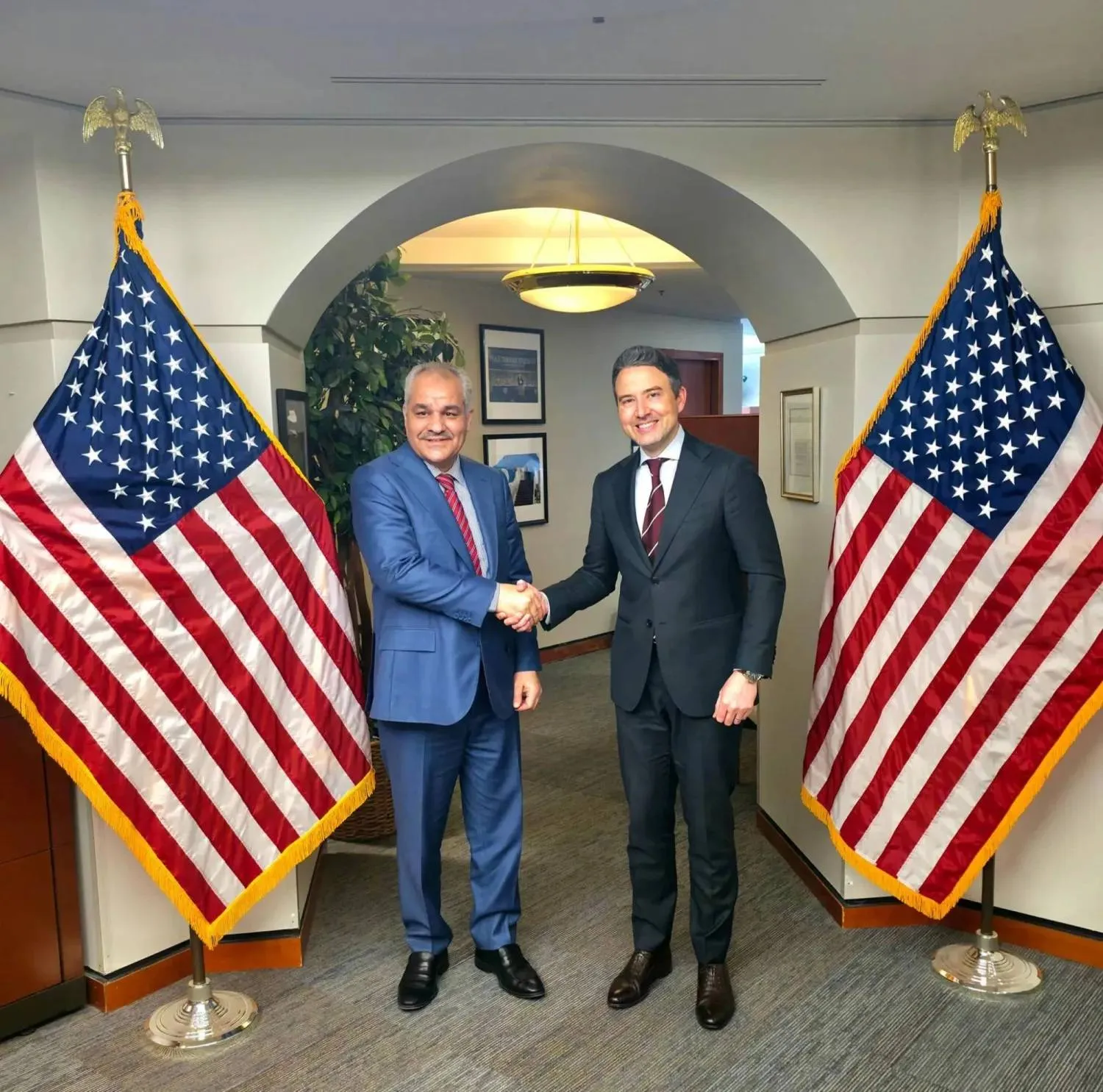
Photo from  the Egyptian–Qatari Business Forum in Cairo on Sunday (Egyptian Ministry of Investment) 
TT

Egypt Pushes for Deeper Economic Ties with Qatar

Photo from  the Egyptian–Qatari Business Forum in Cairo on Sunday (Egyptian Ministry of Investment) 

Egypt has signaled a new push to deepen economic cooperation with Qatar, announcing a set of investment facilitation measures aimed at boosting bilateral trade and attracting Qatari capital. The announcement came during the Egyptian–Qatari Business Forum held in Cairo on Sunday.

Egypt’s Minister of Investment and Foreign Trade, Hassan ElKhatib, said that a specialized committee would be established to streamline investment and trade procedures between the two countries. Experts view the move as a clear indication of the evolving economic partnership between Cairo and Doha.

ElKhatib inaugurated the forum alongside Ahmad bin Mohammed Al-Sayed, Qatar’s Minister of State for Foreign Trade, with wide participation from business leaders and private-sector representatives from both countries.

Bilateral relations have gained renewed strength following President Abdel Fattah Al-Sisi’s visit to Doha in April, during which Qatar announced a $7.5 billion package of direct investments to support its economic partnership with Egypt.

According to ElKhatib, Qatari investments in Egypt currently stand at around $3.2 billion, distributed across more than 266 companies operating in sectors including finance, industry, and tourism. He added that bilateral trade reached $143 million during the first ten months of the current year, up from $80 million in 2023 — an increase of nearly 80 percent.

The minister said relations with Qatar received a significant boost following Al-Sisi’s visit, which paved the way for new investment projects, led by developments on Egypt’s northwestern Mediterranean coast.

To further support Qatari investors, El-Khatib announced the creation of the specialized facilitation committee to help remove obstacles facing companies and enhance overall economic cooperation, underscoring Egypt’s intent to elevate ties with Qatar to a more strategic level.

Qatar’s Minister of State for Foreign Trade emphasized the importance of strengthening economic partnerships with Cairo, highlighting the private sector’s role in driving growth and creating new investment opportunities. He noted that sustained cooperation between companies in both countries enhances knowledge exchange and enables high-quality investments that support sustainable development.

Former Egyptian Assistant Foreign Minister Ambassador Youssef El-Sharkawy said Egyptian–Qatari relations have entered a new phase of political and economic cooperation. He told Asharq Al-Awsat that economic collaboration has become the main engine of strategic partnership, particularly through investments in the North Coast, the Suez Canal Economic Zone, and key sectors such as tourism, industry, and real estate.

Economist Walid Gaballah, a member of the Egyptian Association for Economy and Legislation, said the forum serves as a practical mechanism for activating Qatar’s investment commitments in Egypt, especially in tourism, agriculture, technology, and industry. He added that improved investment conditions have already contributed to rising trade volumes.

According to Egypt’s Central Agency for Public Mobilization and Statistics, bilateral trade between Egypt and Qatar totaled $128.4 million last year. Observers noted that the deepening economic relationship coincides with closer regional coordination between Cairo and Doha, including joint efforts to promote de-escalation and stability in the region.


Political Tensions between Lebanon and Iran Reach New Heights

Lebanese President Joseph Aoun (center), Foreign Minister Youssef Raggi (left) and Iranian FM Abbas Araqchi meet in Lebanon in June. (Lebanese Presidency)
TT

Political Tensions between Lebanon and Iran Reach New Heights

Lebanese President Joseph Aoun (center), Foreign Minister Youssef Raggi (left) and Iranian FM Abbas Araqchi meet in Lebanon in June. (Lebanese Presidency)

Tensions between Lebanon and Iran have reached unprecedented levels, reflecting a shift in how Beirut views its ties with Tehran, especially when it comes to Hezbollah’s arsenal and Iranian meddling in Lebanese internal affairs.

The tensions are not just playing out in the media, but in official positions taken by Lebanon’s top officials.

The latest example was Lebanese Foreign Minister Youssef Raggi’s announcement last week that he was declining an invitation by his Iranian counterpart Abbas Araqchi to visit Tehran. He instead proposed meeting in a neutral country.

An official Lebanese source told Asharq Al-Awsat that Raggi’s position does not stem from his personal views, but from a “clear political stance that Lebanese-Iranian relations cannot go back on track if they are not based on equality.

Iran must only limit its dealings in Lebanon to the state and no other party, namely Hezbollah, it added.

The root of the crisis lies in Iran’s absolute support for Hezbollah and how Tehran views it as an extension of its Revolutionary Guards Corps, an entity that exists parallel to the Lebanese state and even violates its jurisdiction in taking decisions of war and peace.

Speaking on condition of anonymity, the source warned that Iran maintaining this position towards Lebanon, “complicates the situation inside Lebanon and exposes the country to a new war with Israel.”

Lebanon cannot withstand such a new conflict, it added.

Araqchi on Thursday said he would visit Lebanon after Raggi issued a formal invitation.

Raggi was not the only senior Lebanese official to take issue with Iran. Earlier this year, President Joseph Aoun refused to meet with Secretary of Iran's Supreme National Security Council Ali Larijani while he was visiting Beirut.

The source said the refusal was a “direct message that the Lebanese state no longer tolerates parallel channels or relations that go beyond formal and constitutional levels.”

“This is the Lebanese state’s official position,” it stressed. “Iran will be welcomed if its changes the way it approaches Lebanon, whereby relations should be between official and constitutional institutions. Both countries should be equals, not with one being subordinate to the other.”

Earlier in 2025, Aoun received Iranian Speaker of the Shura Council Mohammad Bagher Qalibaf, informing him that Lebanon has “grown weary” of other countries “waging their wars on its territory.”

“It is about time that the Lebanese people are relieved of wars and tragedies,” he said, referring to the “support war” Hezbollah had launched in 2023 in solidarity with Hamas in Gaza with Iran’s backing.

On Sunday, Iranian foreign ministry spokesman Esmaeil Baghaei renewed Tehran’s call on Beirut to hold dialogue.

“Iran would rather avoid making statements that would distract Lebanon from focusing on its sovereignty and territorial integrity. The real danger against Lebanon’s sovereignty and dignity are Israel’s ambitions and hegemony,” he remarked.

Meanwhile, a senior adviser to Iran's supreme leader, Ali Akbar Velayati, declared that Tehran will continue to support Hezbollah.

Meeting with Hezbollah representative in Tehran, Abdullah Safieddine, he described the party as one of “the most important pillars of the Resistance Axis.”

Hezbollah is playing a “fundamental role in confronting Zionism,” he added.

Such statements demonstrate how Iran views Hezbollah’s arsenal as part of Tehran's regional security system, not as an issue related to Lebanon’s sovereignty.

The Lebanese government earlier this year took a landmark decision to impose state monopoly over arms, which effectively calls on Hezbollah to lay down its weapons.

Another adviser to Iran’s supreme leader, Ali Shamkhani, had previously openly declared that efforts to disarm Hezbollah “will fail.”

“These arms are those of the Lebanese people to defend their territory against Israel,” he added, rejecting any discussions about handing them over to the Lebanese state.

The official Lebanese source stressed that “there can be no going back” from the decision to impose state monopoly over arms.

“The internal and external objections will not change the state’s policy that has taken the decision to impose its authority throughout Lebanon,” it continued.


Seven Killed in Drone Strike on Hospital in Sudan's Restive Kordofan Region

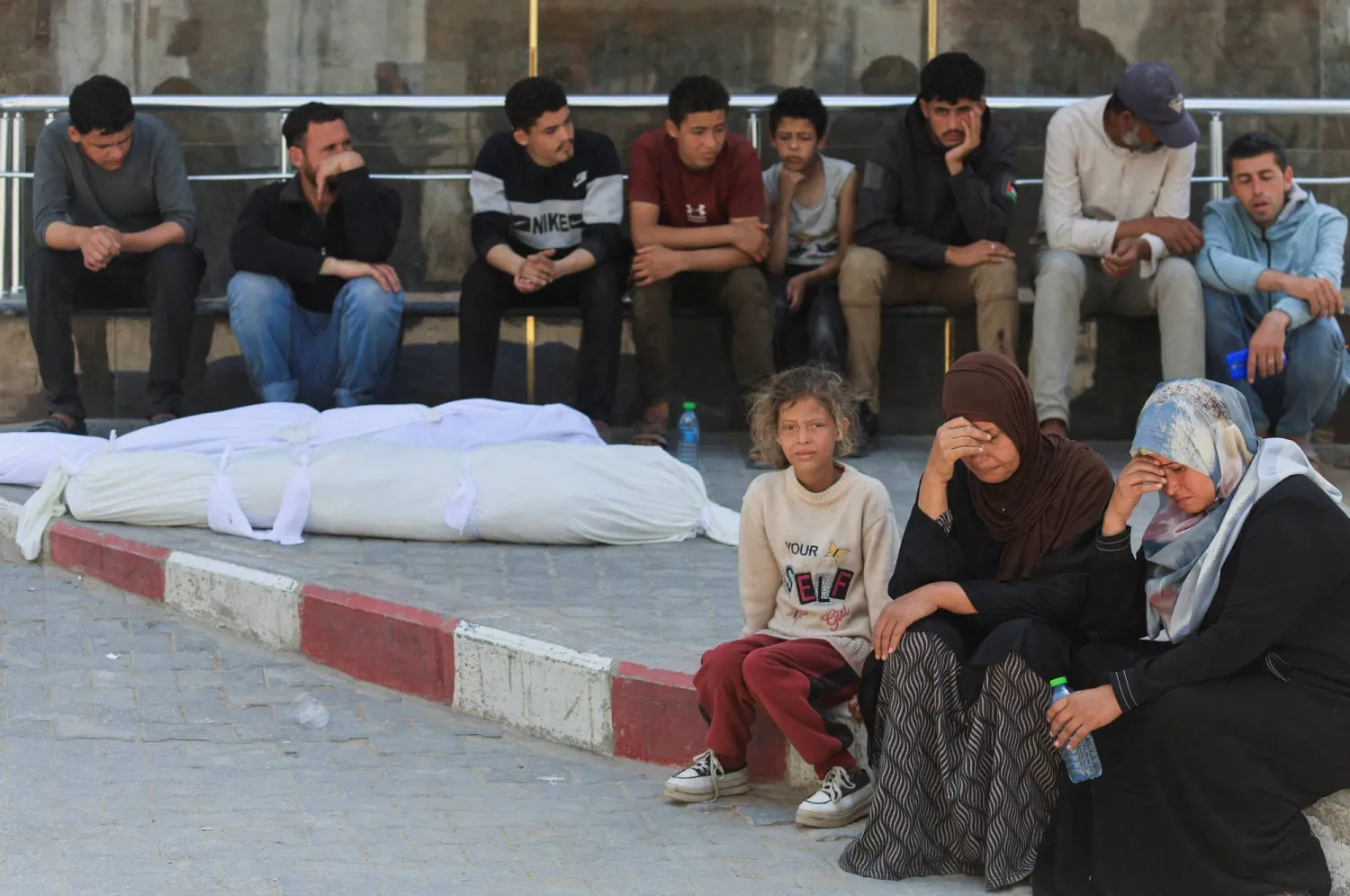
The Sudanese flag flutters in Omdurman, part of greater Khartoum on December 13, 2025. Since April 2023 war has raged between the Sudanese regular army and the paramilitary Rapid Support Forces (RSF), killing tens of thousands of people and created one of the world's worst humanitarian crises. (Photo by Ebrahim Hamid / AFP)
TT

Seven Killed in Drone Strike on Hospital in Sudan's Restive Kordofan Region

The Sudanese flag flutters in Omdurman, part of greater Khartoum on December 13, 2025. Since April 2023 war has raged between the Sudanese regular army and the paramilitary Rapid Support Forces (RSF), killing tens of thousands of people and created one of the world's worst humanitarian crises. (Photo by Ebrahim Hamid / AFP)

A drone strike Sunday on an army hospital in the besieged southern Sudan city of Dilling left "seven civilians dead and 12 injured", a health worker at the facility told AFP.

The victims included patients and their companions, the medic said on condition of anonymity, explaining that the army hospital "serves the residents of the city and its surroundings, in addition to military personnel".

Dilling, in the flashpoint state of South Kordofan, is controlled by the Sudanese army but is besieged by rival paramilitary forces.

The greater Kordofan region is currently facing the fiercest fighting in Sudan's war between the army and the Rapid Support Forces (RSF), as both seek to wrest control of the massive southern region.

The RSF controls swathes of Kordofan along with their allies, the Sudan People's Liberation Movement-North (SPLM-N) faction led by Abdelaziz al-Hilu, which has a historic foothold in the region's Nuba Mountains.

Together, the forces have besieged the region's key cities with army divisions, including Dilling and South Kordofan state capital Kadugli, some 120 kilometers (75 miles) south.

Famine has gripped Kadugli since September, according to the UN, which estimates Dilling is suffering the same conditions, but a lack of access to data has prevented an official declaration.

Sunday's strike comes a day after a drone strike on a United Nations peacekeeping base killed six Bangladeshi troops in Kadugli.

- Wider attack -

Last week, SPLM-N said the capture of Dilling and Kadugli was "only a matter of time", urging the army and its allied militias to withdraw.

The RSF, emboldened by its seizure of the army's last holdout position in Darfur in October, has pushed through Kordofan in an attempt to capture the country's central corridor.

The UN has repeatedly warned the region is in danger of witnessing a repeat of the atrocities that unfolded in North Darfur state capital El-Fasher, including mass killing, abductions and sexual violence.

Paramilitaries have set their sights on Kadugli, Dilling and North Kordofan state capital El-Obeid, which lie on a north-south axis between the South Sudan border and the capital Khartoum.

El-Obeid also lies on a key highway that connects Darfur to Khartoum, which the army recaptured in March.

With the RSF in control of all of Darfur's major cities, Sudan is effectively split in two.

The army holds the center, east and north, while the RSF and its allies control the west and parts of the south.

Across the country, the war has killed tens of thousands of people, displaced 12 million and created the world's largest hunger and displacement crises.