


Gaza Combat Surges Anew as Israeli Tanks Storm Back into Areas They Left

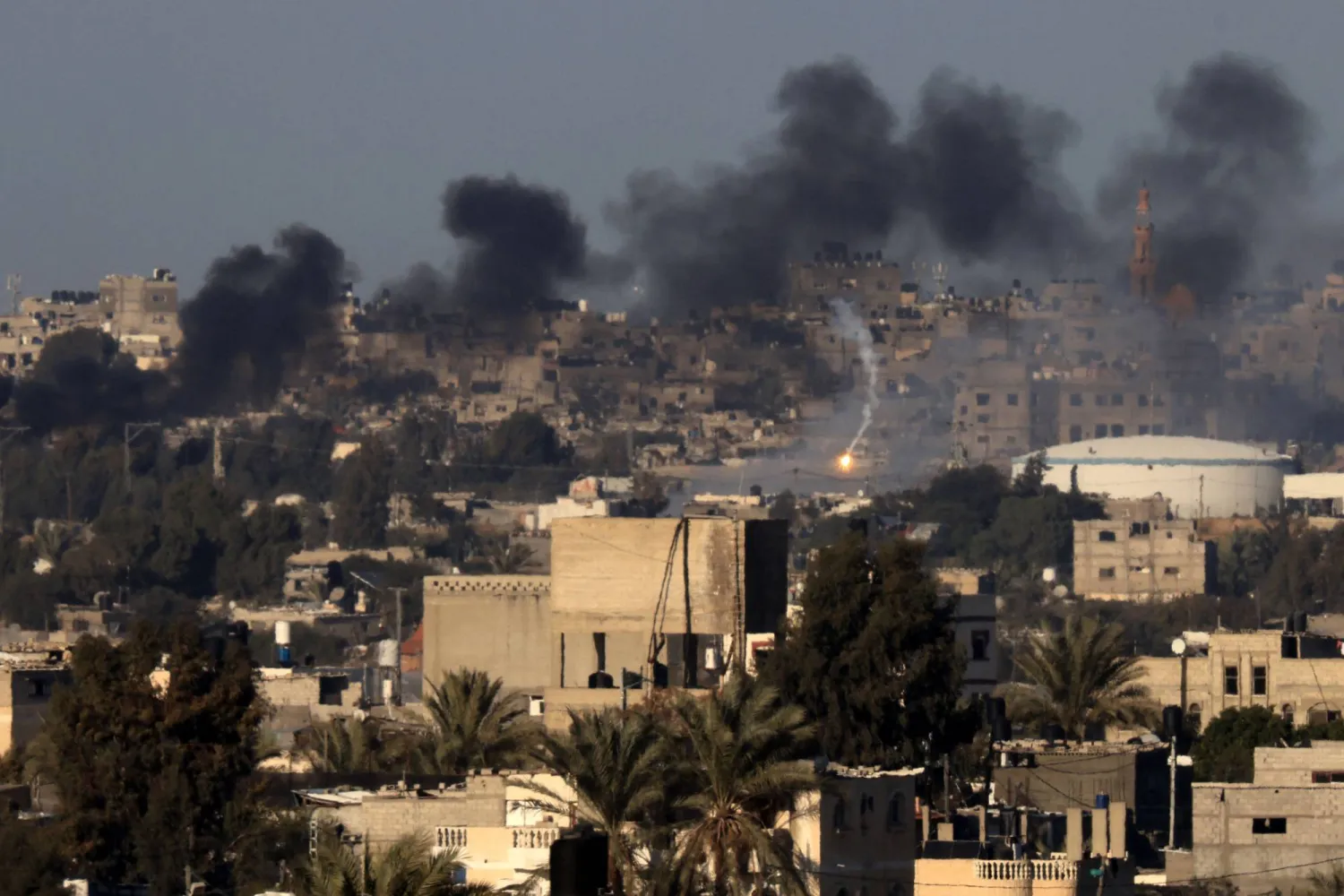
This photograph taken on January 15, 2024 from Rafah shows a flare and smoke billowing over Khan Yunis in the southern Gaza Strip during Israeli bombardment, amid ongoing battles between Israel and the Palestinian group Hamas. (Photo by AFP)
TT

Gaza Combat Surges Anew as Israeli Tanks Storm Back into Areas They Left

This photograph taken on January 15, 2024 from Rafah shows a flare and smoke billowing over Khan Yunis in the southern Gaza Strip during Israeli bombardment, amid ongoing battles between Israel and the Palestinian group Hamas. (Photo by AFP)

Israeli tanks stormed back into parts of the northern Gaza Strip they had left last week, residents said on Tuesday, reigniting some of the most intense fighting since the New Year when Israel announced it was scaling back its operations there.

Massive explosions could be seen over northern areas of Gaza from across the border with Israel - a rarity over the past two weeks after Israel announced a drawdown of forces in the north as part of a transition to smaller, targeted operations.

The rattle of gunfire reverberated across the border through the night. In the morning, contrails snaked through the sky as Israel's Iron Dome defenses shot down rockets fired by militants across the fence, proof they retain the capability to launch them despite more than 100 days of war.

Israel said its forces had killed dozens of Hamas fighters overnight in clashes in Beit Lahiya on Gaza's northern edge. Gaza health authorities said the last 24 hours of Israeli bombing had killed 158 people in the Palestinian enclave, raising their toll for the war, now in its fourth month, to 24,285, with thousands more bodies feared lost in the rubble.

Israel launched the war to eradicate Hamas after militants stormed across the border fence on Oct. 7, killing 1,200 people and capturing 240 hostages. The war has driven nearly all Gazans from their homes, some several times, and caused a humanitarian crisis, with food, fuel and medical supplies running low.

Under US pressure to reduce civilian casualties, Israel had said it was transitioning from a full-scale ground assault to targeted operations against the Hamas militants that control the enclave.

It began that shift with a pullback in the north. Defense Minister Yoav Gallant also said on Monday that the more recent ground assault in the south was drawing to a close.

But any path toward de-escalating the war still seems remote, with Israel saying it will not rest until Hamas is destroyed, and the militants showing no sign of losing the ability to resist.

Israel Ziv, a retired general who formerly commanded Israeli forces in Gaza, told Reuters that 10-15% of Hamas' pre-war rocketry corps of some 1,000 personnel were believed to be still alive, with some 2,000 rockets left to be fired.

However, Ziv said, Israeli forces had by now established "extensive control" in Gaza, meaning they could "maneuver freely", except in Rafah, Deir al-Balah and Nusseirat, the launch point of Tuesday's rocket salvo.

Change of plans

Some of the hundreds of thousands of residents who fled the north earlier in the war had begun returning last week to bombed-out areas where the Israelis had withdrawn. But residents who spoke to Reuters on Tuesday said the abrupt resurgence of fighting in the north would now halt plans to try to go home.

"We almost planned to return to our house in Nazla, east of Jabalia, but thank God we didn't. This morning people living nearby arrived here and told us the tanks pushed back there," said Abu Khaled, 43, a father of three now living with relatives in severely damaged Gaza City.

"The sounds of bombing from the tanks, from the planes didn't stop all night. It reminded us of the first day of the ground incursion."

Israeli forces have fought their way to the center of Gaza's main southern city of Khan Younis, and into towns north and east of the central city of Deir al-Balah.

Israeli commando forces carried out targeted raids in Khan Younis to take out militant infrastructure, including offices of several senior regional Hamas commanders, the military said.

The Gaza war has inflamed tensions across the region, including in the Red Sea, where the Iran-aligned Houthi militias in Yemen have been attacking commercial ships. The route is used by 15% of world shipping. The militias say they are targeting vessels linked to Israel in solidarity with Gaza.

The United States and Britain responded by bombing Yemen to prevent what they called a threat to global commerce.

The latest ship to be attacked, a Malta-flagged, Greek-owned bulk carrier, sustained minor damage on Tuesday when it was hit with a missile in the Red Sea. No injuries were reported.

‘Forgive me, my son, I could not protect you’

Defense Minister Gallant's announcement on Monday that the major ground offensive in the south would end soon raises the question of whether the Israelis will still try to advance into remaining areas they have yet to enter.

Most of Gaza's 2.3 million people are now crowded into those few areas, including Deir al-Balah and Rafah, which is located on the southern edge of the Strip bordering Egypt.

In Khan Younis, Zaher Abu Zarifa wept and cradled a black plastic body bag holding his seven-year-old son Saif, one of at least 11 bodies brought out at a hospital morgue.

The boy was killed by a missile while playing on a bicycle by a school gate, his father said.

Later, by a small freshly dug grave, a gravedigger unzipped the bag so the father could kiss the boy's face, then zipped it back up, took the boy and gently laid him in the ground.

"Forgive me, my son. I could not protect you," the father repeated. "Forgive me, my son. I could not protect you."


Rural Taiz Defies Houthi Mobilization and Militarization

Children in a rural village in Taiz improvise a classroom game after being cut off from schooling. (X)
TT

Rural Taiz Defies Houthi Mobilization and Militarization

Children in a rural village in Taiz improvise a classroom game after being cut off from schooling. (X)

Rural communities in southern Taiz province, southwestern Yemen, have emerged as a flashpoint near the front lines, where the conflict has spilled into classrooms and the wider community. Houthi efforts to turn schools into platforms for ideological indoctrination and student recruitment have met with widespread resistance and boycotts.

Government authorities have suspended classes across Taiz since the Houthis escalated their offensive and seized control of most districts.

Despite the group's efforts to reopen schools, most teachers have opted to stay home or flee to government-controlled areas, leaving tens of thousands of children at risk of losing an academic year.

Several mothers in Al-Shamayatayn district told Asharq Al-Awsat their children were distraught at being unable to attend school.

The Houthis have turned many schools into military barracks, deepening parents' fears about sending their children back amid continued fighting and mounting resistance to the group's control and interference in daily life.

One mother recalled trying to persuade her child to stay home by showing him photographs of his school converted into a Houthi military barracks and military vehicles stationed nearby.

But when he asked to transfer to another school, she struggled to explain her fears that he could be subjected to indoctrination and recruitment.

The Houthis have pressed ahead with efforts to persuade parents to send their children back to school while repeatedly threatening education officials, staff and teachers with punitive measures.

A report by the American Center for Justice (ACJ) and the Yemeni Teachers Syndicate in Taiz documented Houthi abuses in October, including killings, abductions, enforced disappearances and the destruction and looting of schools.

It recorded the deaths of 13 teachers and education workers across several districts from shelling and direct gunfire, reflecting a systematic effort to subjugate educational institutions and communities in war-affected areas.

Houthi pressure and infighting

Local sources said a campaign was gaining traction on social media, with residents of rural southern Taiz circulating messages under slogans such as "Our schools are for education, not recruitment."

Women have also burned ideological pamphlets distributed by the Houthis in schools, government offices and markets.

A teacher working in Al-Shamayatayn recounted to Asharq Al-Awsat an unusual encounter with rival Houthi officials.

The teacher had fled to his native Al-Maqatirah district in neighboring Lahj province before the Houthis seized control of the area. He was surprised when a Houthi supervisor approached him, asking him to cooperate with the group and help resume classes at a local school.

He declined, saying that if he returned to teaching, it would be at the school where he was employed.

The supervisor tried to win him over, promising to facilitate his transfer and grant him privileges in return for his cooperation.

But another Houthi official, who oversaw his school in Al-Shamayatayn, called to warn him against accepting the offer and demanded that he return to his original workplace.

The teacher seized on the warning to fend off the first supervisor's demands. The incident, however, sparked a dispute between the two officials, who accused each other of overstepping their authority and obstructing their work, threatening to take the matter to the group's senior leadership.

Another education worker told Asharq Al-Awsat that the Houthis were pressuring education personnel through phone calls, social media messages and home visits by field commanders.

Their tactics ranged from veiled threats to promises of promotions and greater influence for those who complied.

Grassroots resistance

Field sources in Al-Mawasit, Al-Shamayatayn and Al-Ma'afer districts said markets and roads remained unusually quiet, with commercial activity sharply reduced nearly six weeks after the Houthi takeover. The group's supporters have also found Houthi slogans on walls erased overnight.

Traders and shop owners have refused to donate to the group or disclose details of their business activities and sales to its supervisors. Many have kept their shops closed or opened for limited hours.

Vendors and restaurant owners have refused to provide Houthi members with free goods or meals, insisting on payment upfront. Houthi members, meanwhile, have sought to win over residents by sharing food or handing out bread and canned goods, particularly to children.

Earlier this month, Asharq Al-Awsat reported that the Houthis were seeking to reactivate networks that had operated covertly before their recent expansion into rural villages to offset manpower losses, using schools and educational activities as a gateway into local communities.

The group has sought to step up its mobilization campaigns and lectures targeting young people and children, but few residents have attended.

Observers fear the Houthis could exploit the crippling economic crisis and deteriorating living conditions to lure young people and children.

Taiz's local authorities have intervened, formally warning education personnel and parents against participating in mobilization programs targeting students, following strict directives suspending classes over the Houthi escalation.

The authorities stressed that anyone facilitating or assisting recruitment efforts would face legal action.

Since taking control of southern Taiz, the Houthis have used the districts, particularly Al-Shamayatayn, as bases for military attacks in Al-Mudaribah and Al-Arah, Al-Maqatirah and Tur Al-Baha in Lahj province.


Lebanese Army Breaks Up Armed Clash in Hezbollah Stronghold

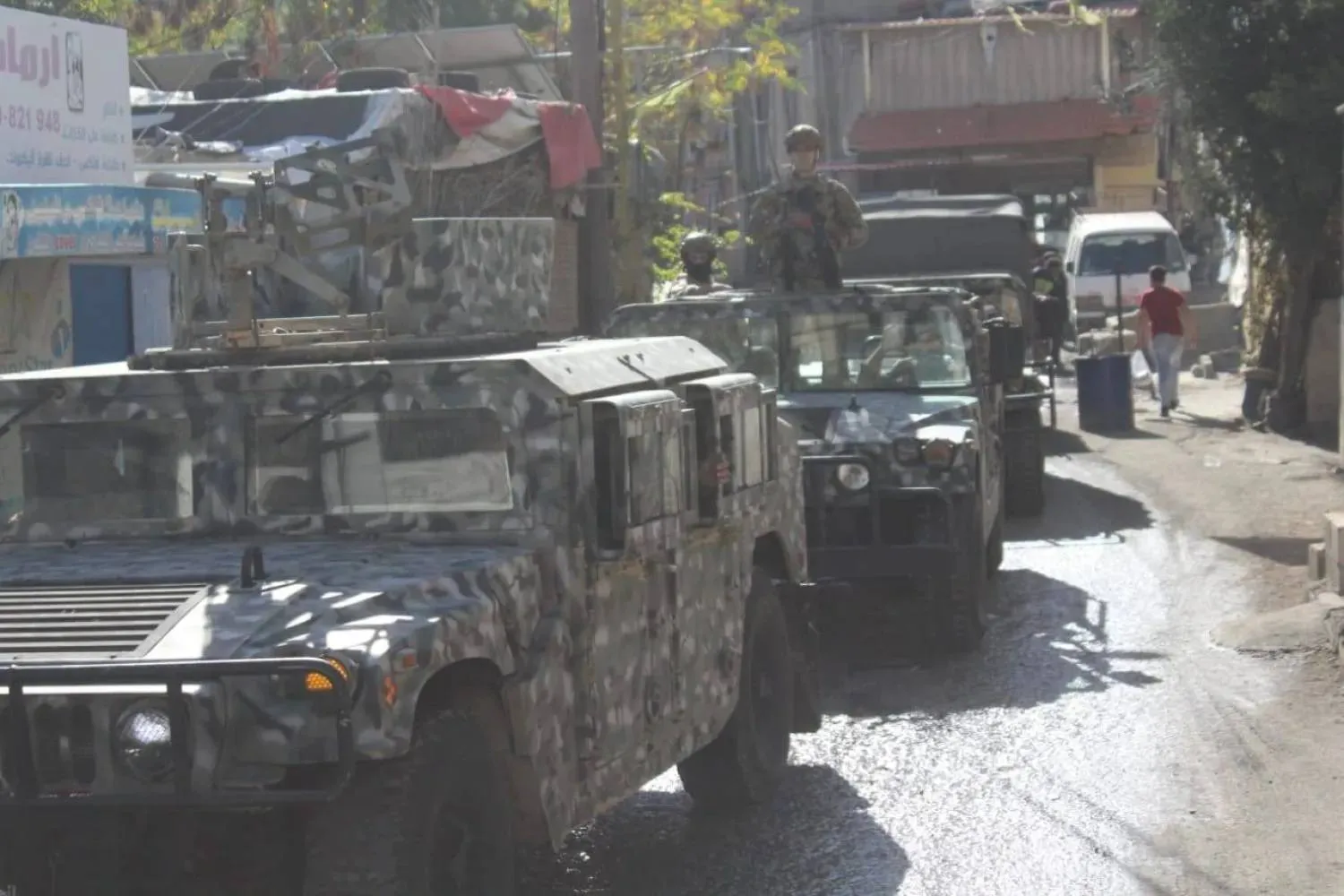
Lebanese army vehicles deployed at the scene of the clashes in Beirut’s southern suburbs. (Army Orientation Directorate)
TT

Lebanese Army Breaks Up Armed Clash in Hezbollah Stronghold

Lebanese army vehicles deployed at the scene of the clashes in Beirut’s southern suburbs. (Army Orientation Directorate)

The Lebanese army broke up an armed clash in the Kafaat area of Beirut's southern suburbs, a Hezbollah stronghold, that left several people wounded and sparked public anger over the gunfire, with residents calling on authorities to arrest those responsible.

The confrontation erupted between minibus drivers at the No. 4 bus stop in the Hay al-Jamaa neighborhood. Shots were fired, leaving several people wounded who were taken to the Lebanon Medical Center for treatment. The dispute later spread to the nearby Laylaki area, prompting residents to call on the army to intervene and put an end to the violence.

Videos circulating on social media showed individuals exchanging gunfire in Hay al-Jamaa, with one of the gunmen seen being struck by a bullet.

The area frequently sees armed clashes involving members of clans from eastern Lebanon’s Bekaa Valley who reside in the southern suburbs.

Army patrols swiftly deployed in force, driving the gunmen into hiding, field sources told Asharq Al-Awsat. The army sent reinforcements and began pursuing those involved in the shooting, the sources added.

Lebanon’s National News Agency (NNA) reported Thursday afternoon that a tense calm had returned to Hay al-Jamaa following the clashes between the minibus drivers.

Troops deployed across Kafaat, around Lebanon Medical Center and in Laylaki and Hay al-Jamaa to contain the violence and restore calm, the agency said.

The Lebanese Army Command later said an army unit had intervened to contain a personal dispute that escalated into an armed clash in Laylaki, carrying out raids that led to the arrest of four Lebanese nationals.

Security operations were ongoing to apprehend the remaining suspects, it added.

Armed clashes are a recurring problem in Beirut’s southern suburbs, where the widespread possession of firearms and machine guns among numerous groups has fueled confrontations that often leave people wounded and terrorize residents.

The violence has repeatedly drawn condemnation from residents frustrated by the persistent clashes and gunfire.

Kafaat residents said the problem was compounded by the presence of individuals who enjoy preferential treatment and protection.

“People here are demanding that the state put an end to uncontrolled weapons as a priority to protect residents. ... We can no longer endure the risks and intimidation,” one resident told Asharq Al-Awsat, pointing to disruptions to daily life and mounting risks to schoolchildren as clashes recur.

The Lebanese army pursues suspects wanted for gunfire offenses in the southern suburbs, as it does elsewhere in the country.

Last week, an army unit raided several homes of wanted suspects in the southern suburbs in pursuit of two individuals accused of opening fire on previous occasions, seizing weapons and military ammunition.

On Nov. 13, the Lebanese Army Command announced that its Intelligence Directorate had carried out a targeted security operation following close monitoring of weapons transportation and trafficking activities.

The operation involved a raid on a warehouse in Musharrafieh, in Beirut’s southern suburbs, where the army seized a large cache of weapons and military ammunition and arrested one person.


Lebanon’s Judiciary Becomes New Battleground Between State and Hezbollah

The Justice Palace in Beirut (circulating photo)
TT

Lebanon’s Judiciary Becomes New Battleground Between State and Hezbollah

The Justice Palace in Beirut (circulating photo)

Lebanon’s judiciary has emerged as a key battleground between the state and Hezbollah as prosecutions widen to target the group’s officials and members in the Dahr al-Baidar explosives case and the suspected cell in northern Lebanon.

The proceedings come amid mounting calls to refer the explosives case to the Judicial Council and demands by Hezbollah that the state release the detainees.

Judge Claude Ghanem, the government commissioner to the Military Court, issued three search notices on Wednesday for Hezbollah officials, including Bilal al-Asaad, after they failed to appear for questioning in the case involving the Bcharre and Batroun highlands.

Meanwhile, First Military Investigating Judge Ghada Abu Alwan issued in-person arrest warrants for the five suspects detained in northern Lebanon.

The five were arrested on Nov. 10 and charged with forming an armed group and recruiting, equipping and arming its members. Defense lawyers denied that they had carried out a security reconnaissance mission.

The prosecutions follow the government’s March 2 decision to ban Hezbollah’s military and security activities and restrict its role to politics. The charges have yet to be proven.

On Oct. 22, the cabinet deferred a decision on Justice Minister Adel Nassar’s request to refer the Dahr al-Baidar and Qasr explosives case to the Judicial Council pending further progress in the investigation, prompting Lebanese Forces ministers to walk out.

Under Article 355 of the Code of Criminal Procedure, cases are referred to the Judicial Council by a cabinet decree. A judicial investigator appointed by the justice minister with the approval of the Higher Judicial Council conducts the investigation. The council’s rulings cannot be challenged except through objections or retrials.

The embassies of the United States, Britain, Australia, Canada and Japan have called for swift and independent judicial proceedings in the Dahr al-Baidar case.

Hezbollah Secretary-General Naim Qassem, meanwhile, demanded the release of those detained in the Bcharre and Batroun case and defended the legality of the activities of those held in the Dahr al-Baidar case, warning that “patience in the face of injustice has its limits.”

Ending Hezbollah’s Exceptional Status

Lebanese MP Ibrahim Mneimneh described the judicial action against Hezbollah as a crucial step toward ending the exceptional status the group has enjoyed for years and ensuring equality before the law.

He said the state may have found in the judiciary a way to enforce its decisions on establishing a state monopoly on arms.

“This is the turning point we have been calling for: ensuring that all Lebanese are equal before the law,” Mneimneh told Asharq Al-Awsat.

“The exceptional status Hezbollah enjoyed under the ‘army, people and resistance’ formula is now history. The party must realize that it is subject to the law.”

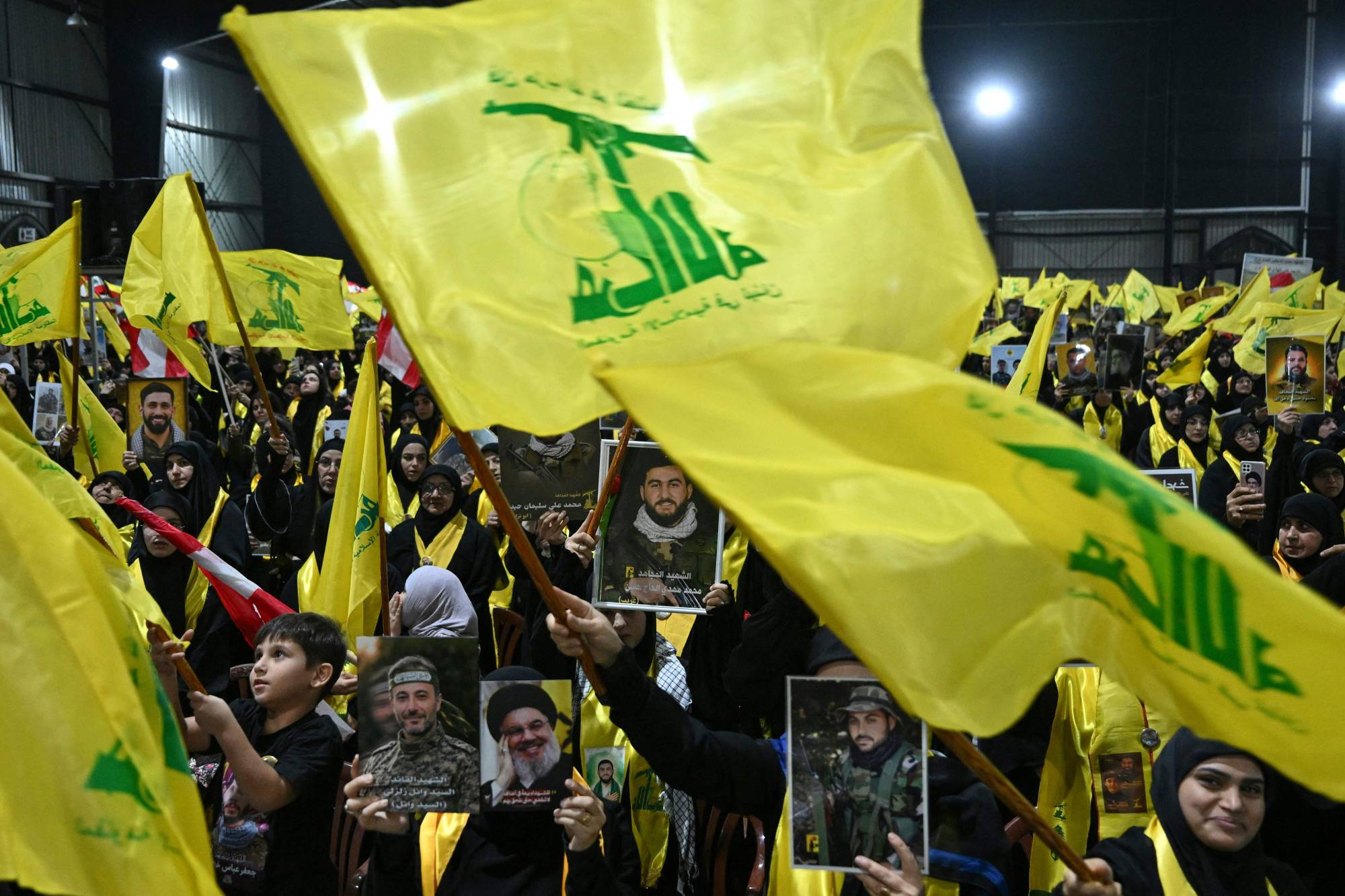
Hezbollah supporters wave flags of the group as they attend a ceremony commemorating the Iran-backed group's annual Martyrs' Day in Beirut's southern suburbs on November 11, 2026. (Photo by Joseph EID / AFP)

He said turning to the law, legal authorities and the Lebanese judiciary to deliver justice and reinforce the state’s monopoly on arms was “the right starting point.”

“Once the law and the judiciary become the ultimate authority, this will go beyond the weapons issue to encompass other matters that, in recent years, became exceptions to the law and undermined the very concept of the state,” he added.

Mneimneh stressed that the judiciary must be the authority to which both the Lebanese people and the state turn in dealing with Hezbollah.

“The Lebanese state is finally showing seriousness in addressing this issue and may have found the right way forward,” he said.

“Until recently, despite the government’s bold decisions, we sensed an inability to implement them. But the state appears to have found its way forward through the judiciary. This is a positive development that must be built upon and extended to all cases.”

Asked whether the Dahr al-Baidar truck case could be referred to the Judicial Council, Mneimneh said: “I don’t know whether that is possible, but it could be useful. Judicial action and the issuance of an arrest warrant are, in themselves, an achievement.”

“What matters is sustaining this process, not only in the Dahr al-Baidar truck case, important as it is, but also in upholding the rule of law against all violations across the country, foremost among them Hezbollah’s weapons, as well as anyone else bearing arms or breaking the law in other cases.”

He stressed that the supremacy of the law was fundamental to the very concept of the state and to building it.

Dual Authority

Constitutional expert Antoine Messarra said Lebanon’s judicial, administrative and security challenges were inseparable from its incomplete sovereignty and dual authority.

He stressed that the current judicial action, made possible by the positions taken by the president and prime minister, needed broad public support to gain traction.

“There are two types of occupation in Lebanon: a hostile Israeli occupation and a ‘brotherly occupation,’” Messarra told Asharq Al-Awsat, using the latter term to describe weapons held outside state control.

“All problems facing the administration, security institutions and judiciary must be understood in the context of occupation. No constitution or system of governance can function effectively under such conditions, even in Switzerland, France or Denmark,” he said.

Messarra said the country’s leadership and several judges were making tremendous efforts, but public support for the process remained sorely lacking.

He criticized a broad segment of Lebanese society for what he described as “political posturing, mutual deception, feigned cleverness and maintaining equal distance from all sides,” even on matters of national sovereignty.

Messarra noted that steps and positions once deemed impossible were now within reach. Lebanon, he said, was undergoing a “slow process” that still lacked broad-based public backing.
