UN Chief Says UNRWA Is ‘Backbone’ of Gaza Aid Responsehttps://english.aawsat.com/arab-world/4825616-un-chief-says-unrwa-%E2%80%98backbone%E2%80%99-gaza-aid-response
UN Chief Says UNRWA Is ‘Backbone’ of Gaza Aid Response
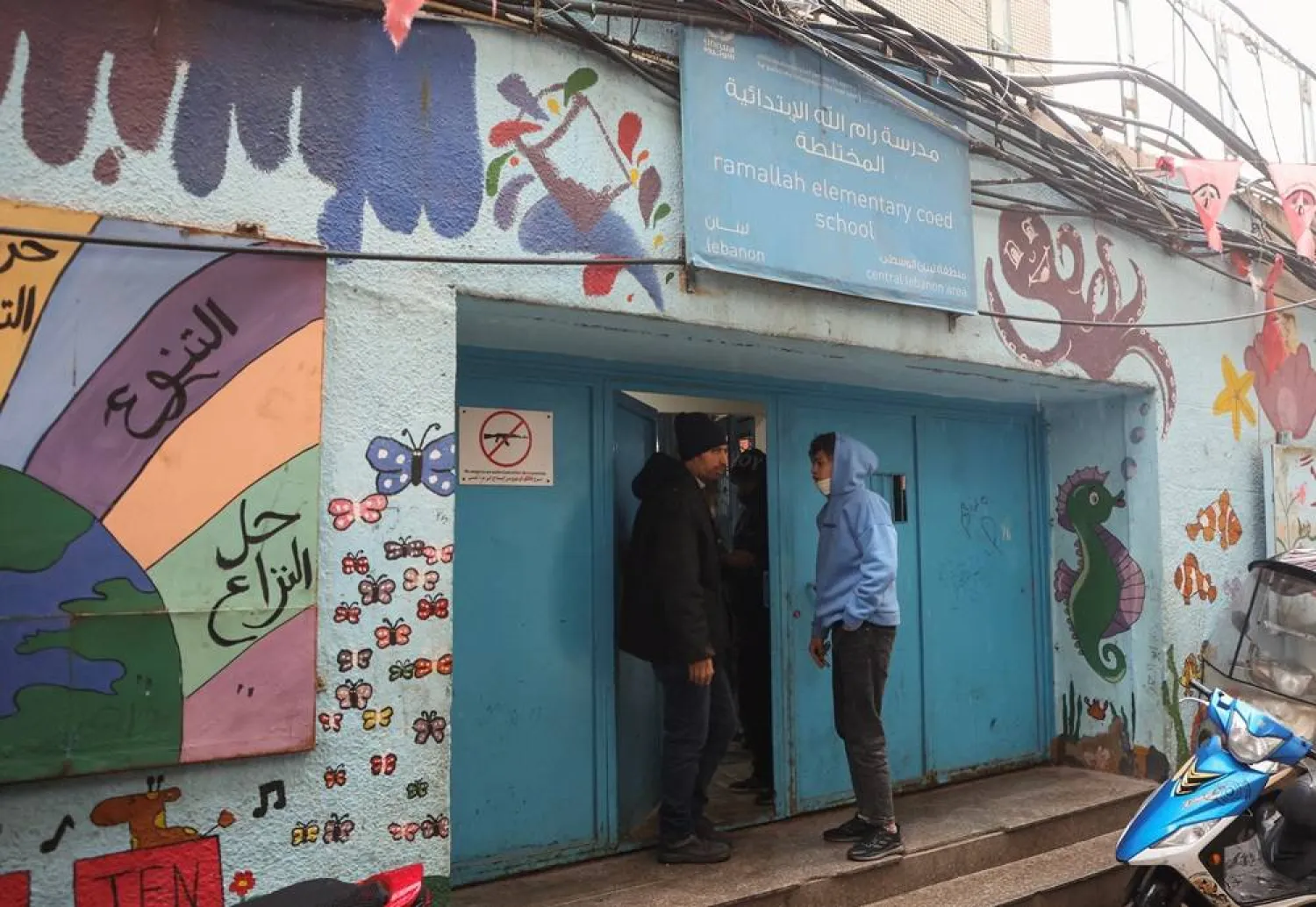
Palestinians stand outside a school run by United Nations Relief and Works Agency (UNRWA) at Shatila Palestinian refugee camp, in Beirut suburbs, Lebanon January 30, 2024. (Reuters)
TT
TT
UN Chief Says UNRWA Is ‘Backbone’ of Gaza Aid Response
Palestinians stand outside a school run by United Nations Relief and Works Agency (UNRWA) at Shatila Palestinian refugee camp, in Beirut suburbs, Lebanon January 30, 2024. (Reuters)
UN Secretary-General Antonio Guterres on Wednesday described the UN Palestinian refugee agency (UNRWA) as "the backbone of all humanitarian response in Gaza" and appealed to all countries to "guarantee the continuity of UNRWA's lifesaving work."
The United States is the biggest donor to the UN Relief and Works Agency for Palestine Refugees in the Near East and has temporarily paused its funding - along with several other countries - after Israel accused some agency staff of taking part in the Oct. 7 attack by Hamas militants.
"I was personally horrified by these accusations," Guterres told the UN Committee on the Exercise of the Inalienable Rights of the Palestinian People. "Yesterday, I met with donors to listen to their concerns and to outline the steps we are taking to address them."
The accusations became public on Friday when UNRWA announced it had fired some staff after Israel provided the agency with information. Guterres said on Sunday that of 12 people implicated nine were fired, one is dead, and the identity of the remaining two was being clarified.
At a meeting of the UN Security Council on Gaza on Wednesday, UN aid chief Martin Griffiths stressed the importance of UNRWA.
"To put it very simply and bluntly: our humanitarian response for the occupied Palestinian territory is dependent, completely dependent, on UNRWA being adequately funded and operational," Griffiths told the 15-member council.
"UNRWA's lifesaving services ... to over three quarters of Gaza's residents should not be jeopardized by the alleged actions of a few individuals. It is a matter of extraordinary disproportion," he said.
US Ambassador to the UN Linda Thomas-Greenfield told the council that Washington's decision to temporarily pause funding was made independently from other donors.
"Let me be clear, it was not a punitive measure. But it is a wake up call. We need to see fundamental changes at UNRWA to prevent this from happening again," she said.
An Israeli intelligence dossier, seen by Reuters on Monday, includes accusations that some UNRWA staff took part in abductions and killings during the Oct. 7 raid that sparked the Gaza war and alleges some 190 UNRWA employees have doubled as Hamas or Islamic Jihad militants.
The Palestinians have accused Israel of falsifying information to tarnish UNRWA.
UNRWA employs 13,000 people in Gaza, running schools, its primary healthcare clinics and other social services, and distributing humanitarian aid.
"The humanitarian system in Gaza is collapsing," Guterres said. "I am extremely concerned by the inhumane conditions faced by Gaza's 2.2 million people, as they struggle to survive without any of the basics."
Israeli Military Says Killed Armed Militant in South Lebanonhttps://english.aawsat.com/arab-world/5292233-israeli-military-says-killed-armed-militant-south-lebanon
This picture taken from a position in the Upper Galilee in northern Israel shows Israeli army tanks positioned along the Israel-Lebanon border, on July 1, 2026. (Photo by Jack GUEZ / AFP) /
Israeli Military Says Killed Armed Militant in South Lebanon
This picture taken from a position in the Upper Galilee in northern Israel shows Israeli army tanks positioned along the Israel-Lebanon border, on July 1, 2026. (Photo by Jack GUEZ / AFP) /
The Israeli military said on Saturday that it killed an armed militant in the "security zone" under its control in south Lebanon.
The military said in a statement on Saturday that Israeli soldiers “identified an armed terrorist operating inside the Security Zone, in the Majdal Zoun area in southern Lebanon," adding that troops "opened fire at the terrorist" and, after conducting "extensive searches", then "eliminated" him.
Lebanon's state-run National News Agency (NNA) said an Israeli helicopter carried out "a broad sweep operation on the outskirts" of Majdal Zoun and launched five missiles towards the village, without specifying a target or immediately reporting casualties.
The NNA also reported on Saturday that an Israeli strike on the village of Mansouri wounded one person, and reported Israeli artillery shelling elsewhere.
Hezbollah drew Lebanon into the Middle East war on March 2 with rocket fire at Israel to avenge the killing of Iran's supreme leader in US-Israeli strikes days earlier.
Israel responded with heavy airstrikes and a ground invasion of southern Lebanon, where its troops still occupy swathes of territory near the border.
At the end of June, Lebanon and Israel agreed to a US-backed framework aiming to pave the way for a permanent end to hostilities.
Why Is Hamas Once Again Displaying Its Flags and Threatening a 'New October 7'?https://english.aawsat.com/arab-world/5292065-why-hamas-once-again-displaying-its-flags-and-threatening-new-october-7
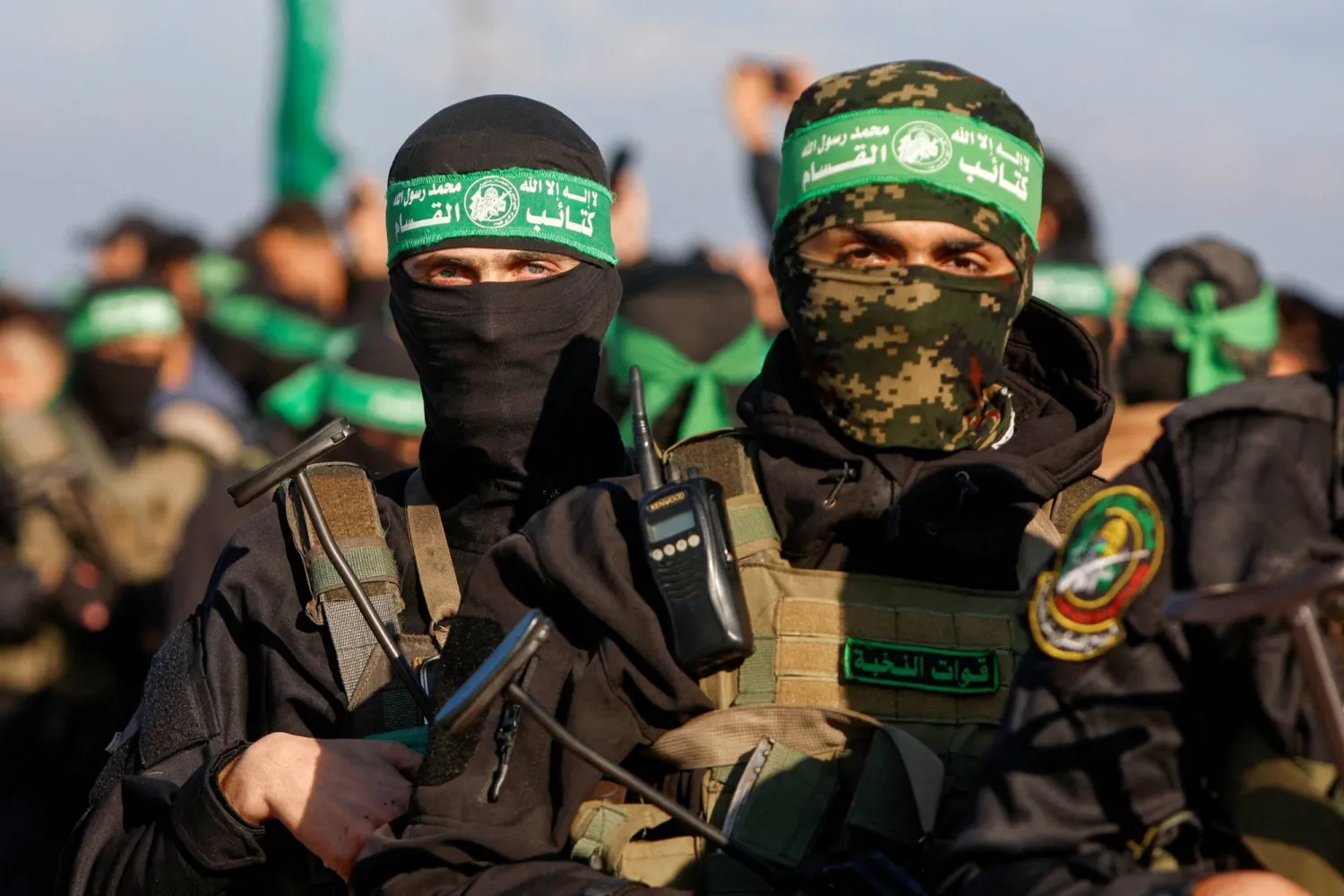
Palestinian Hamas militants stand guard on the day of the release of Keith Siegel, a US-Israeli dual national hostage held in Gaza since the deadly October 7, 2023 attack, as part of a ceasefire and a hostages-prisoners swap deal between Hamas and Israel, in Gaza City, February 1, 2025. REUTERS/Mohammed Salem
Why Is Hamas Once Again Displaying Its Flags and Threatening a 'New October 7'?
Palestinian Hamas militants stand guard on the day of the release of Keith Siegel, a US-Israeli dual national hostage held in Gaza since the deadly October 7, 2023 attack, as part of a ceasefire and a hostages-prisoners swap deal between Hamas and Israel, in Gaza City, February 1, 2025. REUTERS/Mohammed Salem
The reappearance of Hamas flags and those of its military wing, the Al-Qassam Brigades, during the funeral of a field commander killed by Israel after he was targeted while walking was no coincidence. Rather, it was part of a coordinated effort that surprised many observers after a prolonged period during which the movement had refrained from such displays.
The funeral was held for Walid Haniyeh, a field commander in the Al-Qassam Brigades and a relative of former Hamas leader Ismail Haniyeh, who was assassinated by Israel in Tehran in July 2024. It coincided with June 26, the day activists had called for mass protests against Hamas over the deteriorating humanitarian situation in Gaza. The movement paid close attention to the planned mobilization and worked extensively to thwart it, believing that "suspicious" actors were behind it, before the protests ultimately failed to attract significant participation.
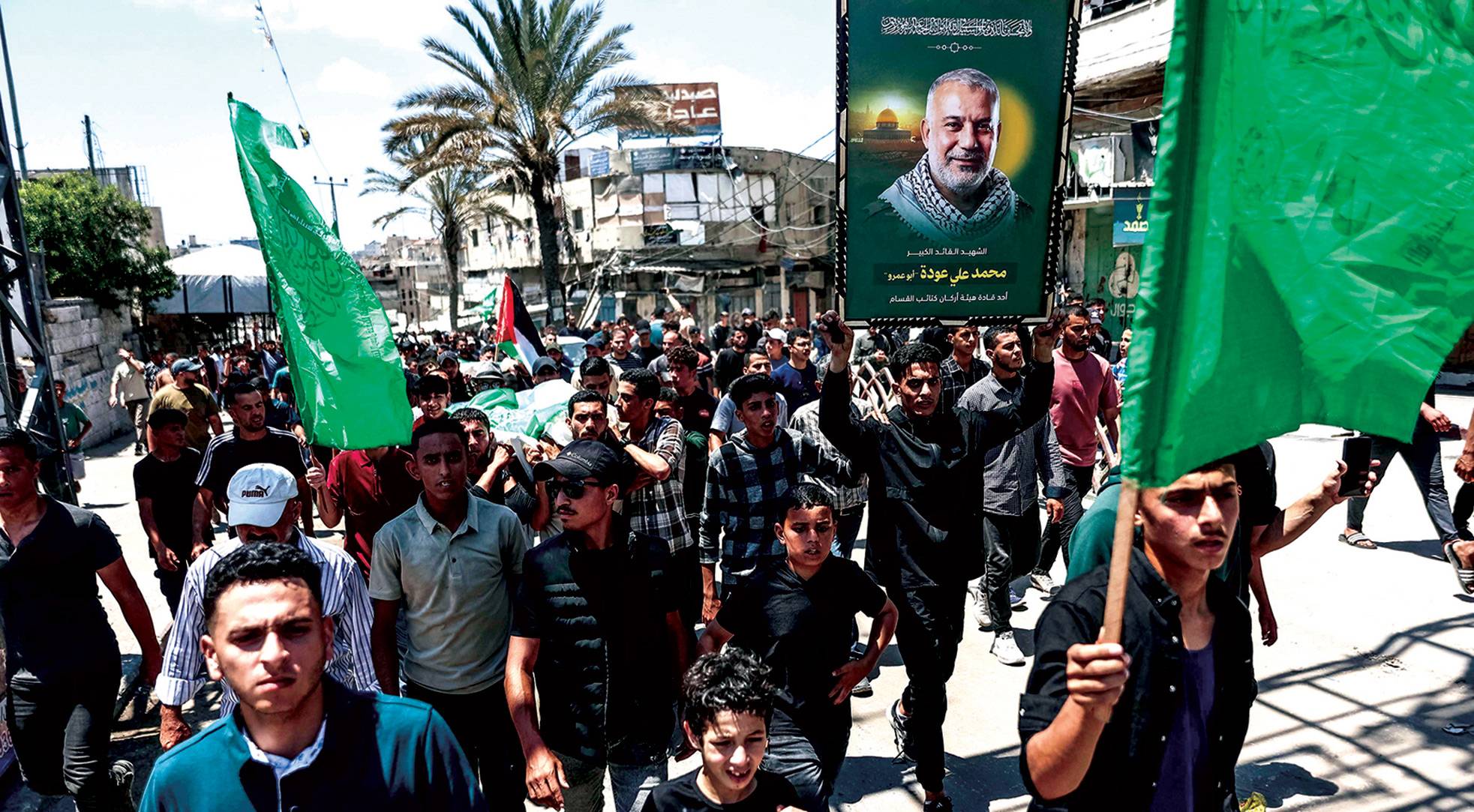
Palestinians carry the body of Mohammad Odeh, a commander in the military wing of Hamas, during his funeral in Gaza City on May 27, 2026 (AFP)
Following that funeral, Hamas continued displaying its flags at the funerals of members killed by Israel. Al-Qassam Brigades flags also reappeared, armed men attended the ceremonies, and participants chanted slogans including, "Khaybar, Khaybar, O Jews... October 7 will return." The displays drew the attention of Israeli media, which launched a fresh campaign of incitement against Hamas and the Gaza Strip.
The last time Hamas flags and armed members appeared publicly was during the handover of Israeli hostages under the second prisoner exchange agreement, which began in January 2025, before Israel resumed its military campaign in March of the same year. Israeli forces later used those events to identify Hamas leaders and members who were subsequently killed in a series of targeted assassinations and military operations.
With the scenes recurring recently, particularly as Israeli military operations continue on a smaller scale despite the declared ceasefire in October 2025, Asharq Al-Awsat asked four Hamas sources in the Gaza Strip about the reasons behind the return of flags, armed participants, and the draping of victims' bodies in Hamas and Al-Qassam Brigades flags. All four said the movement's leadership in Gaza had taken a decision, which was circulated across all areas, to resume displaying flags and chanting what they described as "jihadist" slogans at the funerals of members killed by Israel.
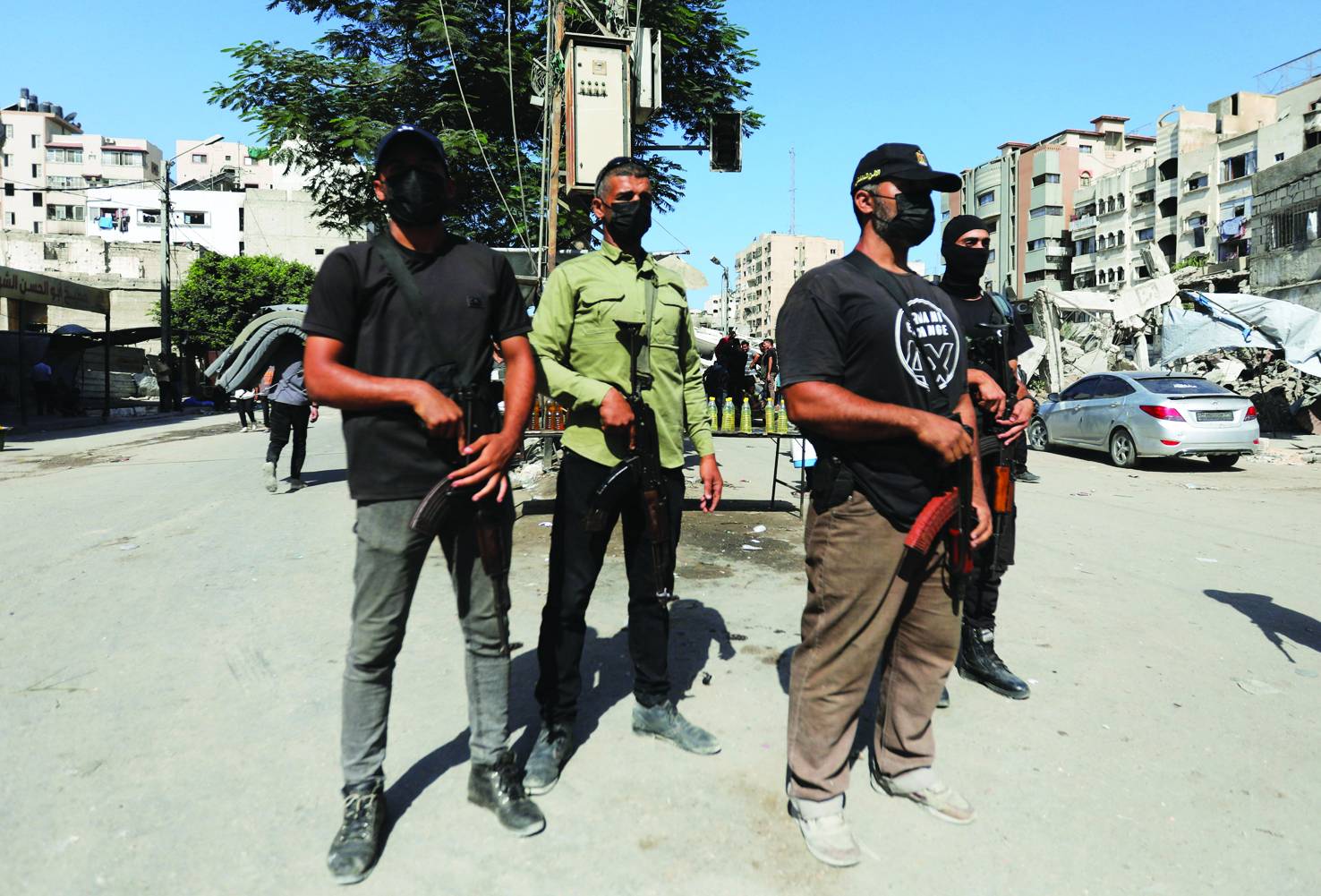
Hamas police officers stand guard, amid a ceasefire between Israel and Hamas, in Gaza City, October 11, 2025. REUTERS/Stringer
According to the four sources, each of whom spoke separately, the decision was intended to reaffirm the Hamas leadership's position that the movement remains present and strong, and cannot be defeated through military force or through any Israeli or US plans that bypass an agreement with Hamas over the future of the Gaza Strip and the Palestinian issue as a whole.
One source said one of the reasons behind the move was the calls for what became known as the June 26 public protests. According to the source, Hamas leaders believed there were attempts to create widespread unrest inside Gaza, and wanted the funeral of Walid Haniyeh, held hours before the planned demonstrations, to show that the movement remained strong and cohesive. The other three sources neither confirmed nor denied that account.
All four sources said the armed men appearing at recent funerals were relatives and friends of those killed, some of whom belong to Hamas, and that their participation was neither officially organized nor coordinated.
Regarding threats of repeating October 7 and other slogans described as "jihadist," the sources said such chants are largely spontaneous in their wording. However, an internal directive circulated among officials responsible for organizing local events, including funerals, instructed them to ensure that slogans emphasized the role of the "resistance" and conveyed that it remains active and present, just as it was before the war.
FILE PHOTO: Palestinian Hamas militants stand guard on the day of the handover of hostages held in Gaza since the deadly October 7 2023 attack, as part of a ceasefire and a hostages-prisoners swap deal between Hamas and Israel, in Rafah in the southern Gaza Strip, February 22, 2025. REUTERS/Hatem Khaled/File Photo
Some observers believe the move could provoke Israel and provide it with further justification for escalating military operations in Gaza. Hamas supporters inside and outside the enclave have called for an end to the display of flags and the chanting of such slogans, arguing that Israeli media had exploited them to intensify its campaign of incitement against Gaza, much as it did at the beginning of the war. They also warned that Israeli intelligence could use the funerals to identify field activists and later target them for assassination, as happened previously following prisoner exchanges and other events.
Two Hamas sources acknowledged that such concerns may be valid but argued that Israel does not need additional justifications. They said military operations have continued despite the declared ceasefire, with assassinations and other attacks persisting at varying levels of intensity. According to the sources, more than 1,060 Palestinians have been killed so far as a result of the continuing Israeli military operations.
A third source said: "The reality has certainly changed, and what worked before the war is no longer suited to the current circumstances. But that does not mean complete surrender. Assassinations have repeatedly shown that they do not weaken the movement. Instead, they strengthen its resolve to continue its course."
At the same time, several Israeli television channels and newspapers published reports citing official intelligence assessments submitted to the Israeli military's General Staff and political leadership. The reports claimed Hamas was rebuilding its capabilities in Gaza by manufacturing various types of weapons, restoring some tunnels, and possibly preparing attacks against Israeli forces. They also alleged that the movement continues to reject disarmament, maintain control over humanitarian aid, transfer funds from abroad to Gaza to pay its members, channel funds to its military wing to rebuild its ranks, and recruit new members.
According to the Israeli newspaper Israel Hayom, the Israeli military has intensified targeted assassinations in Gaza in an effort to hinder Hamas' attempts to consolidate its presence while rebuilding its military capabilities. The newspaper quoted a political source as saying: "We are accelerating the pace of assassinations, but remain below the threshold of international criticism. This will continue as long as Hamas is unwilling to disarm."
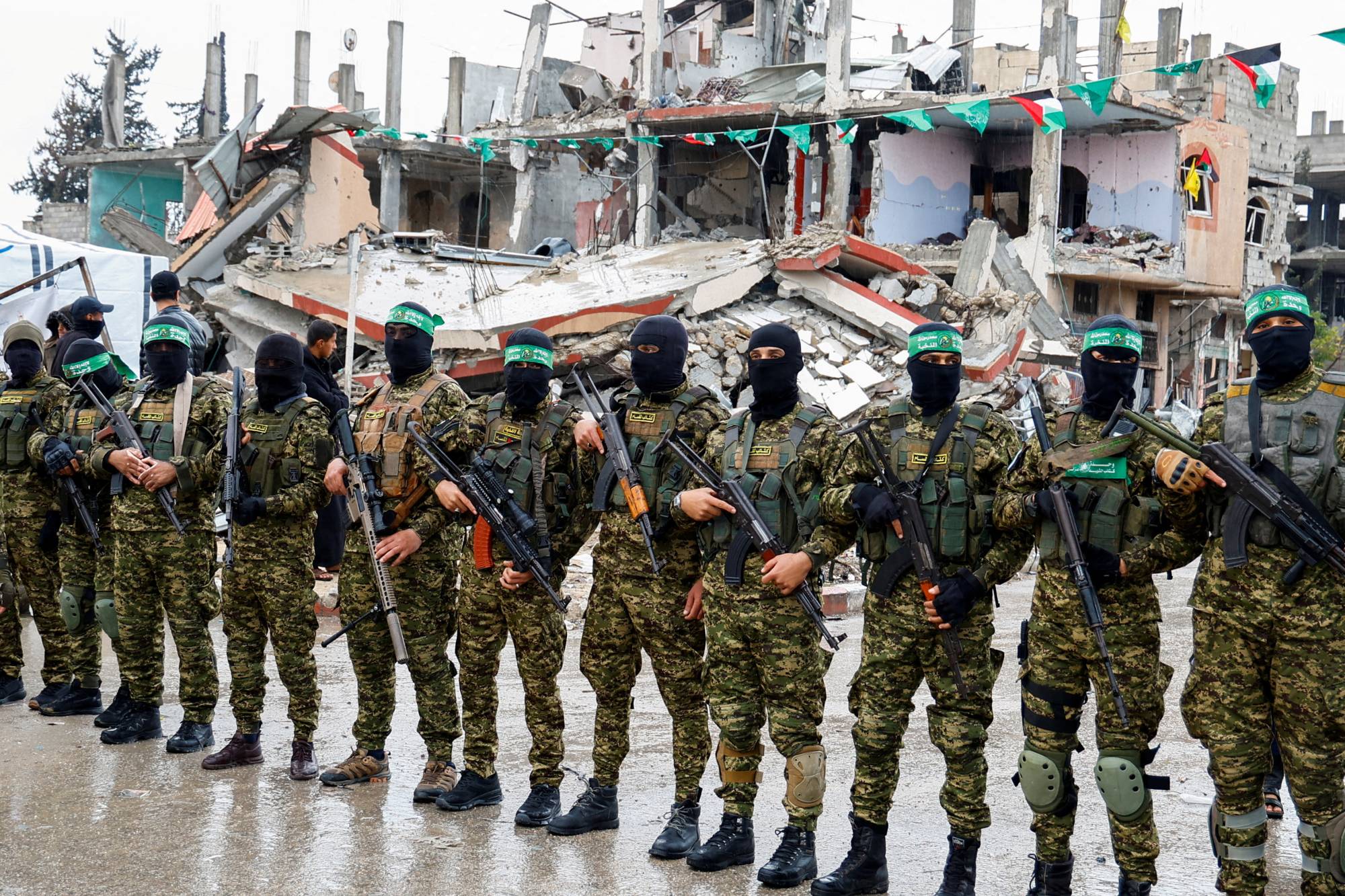
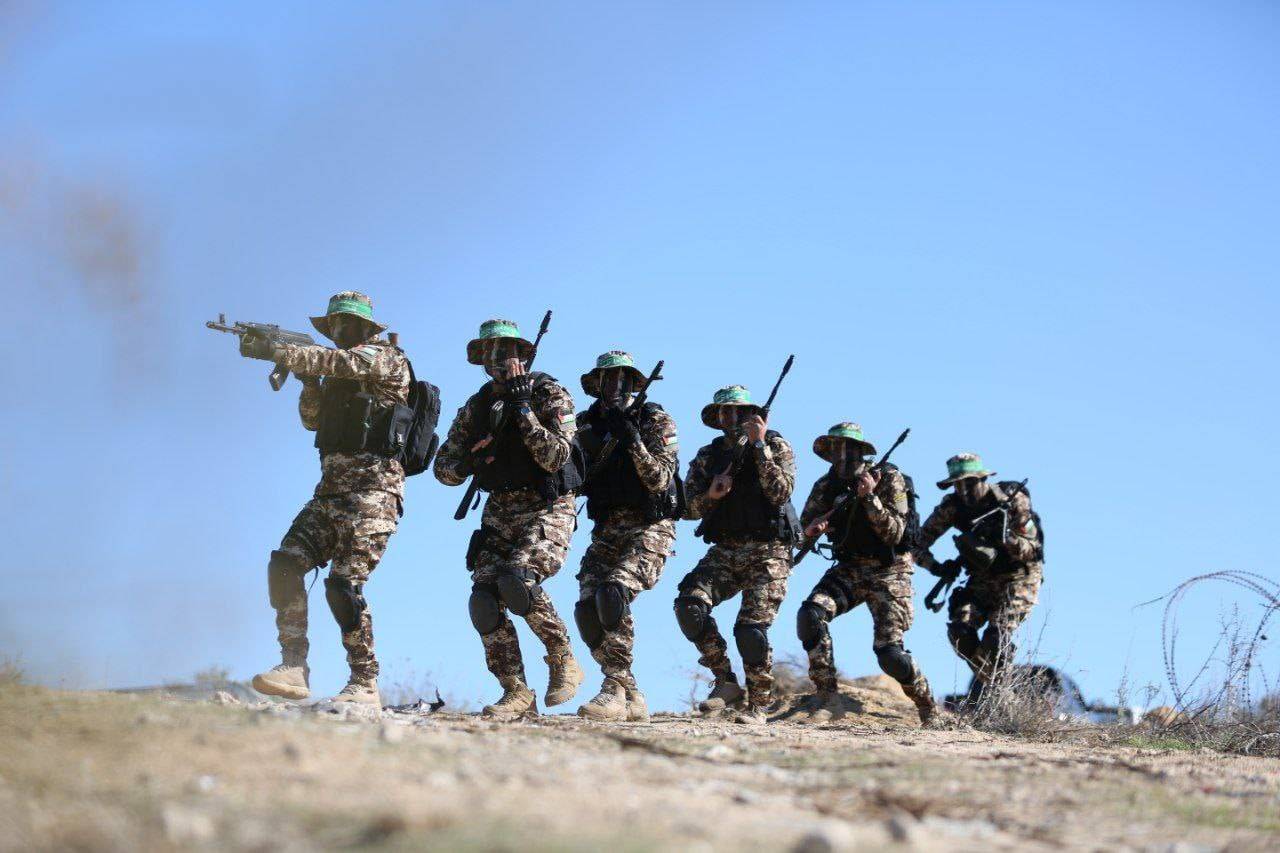
Fighters from Al-Qassam Brigades, affiliated with Hamas, in the Gaza Strip (Archive)
Meanwhile, Yedioth Ahronoth reported that Yaniv Asor, commander of the Israeli military's Southern Command, has for some time been trying to persuade the General Staff to resume large-scale fighting in Gaza. According to the newspaper, he has so far failed because the political leadership does not currently want to resume full-scale combat, given the constraints imposed by the United States.
The four Hamas sources told Asharq Al-Awsat that Israeli threats and reports in the Hebrew-language media form part of an ongoing campaign of incitement that predates the war, continued throughout it, and persists to this day.
Two of the sources said Hamas is making use of some of the capabilities available to it in preparation to defend Palestinians should Israel resume the war. However, they insisted that the movement does not intend to launch another attack similar to that of October 7, 2023, or any comparable operation. Instead, they said, its objective is to reach an agreement that guarantees Palestinian rights, brings the war to a complete end, ensures humanitarian relief for Gaza's residents, restores the basic necessities of life, and enables the reconstruction of their homes.
Lebanese President Urges US to 'Keep Standing' by Countryhttps://english.aawsat.com/arab-world/5292029-lebanese-president-urges-us-keep-standing-country
FILED - 17 January 2025, Lebanon, Baabda: FILE PHOTO - Lebanese President Joseph Aoun speaks during a press conference at Baabda Palace. Photo: Marwan Naamani/dpa
Lebanese President Urges US to 'Keep Standing' by Country
FILED - 17 January 2025, Lebanon, Baabda: FILE PHOTO - Lebanese President Joseph Aoun speaks during a press conference at Baabda Palace. Photo: Marwan Naamani/dpa
Lebanese President Joseph Aoun on Saturday urged the United States to stand by his country after a recent US-backed framework deal with Israel aiming to permanently end hostilities after the latest Israel-Hezbollah war.
The deal reached in Washington calls for the disarmament of Iran-backed militant group Hezbollah, a gradual Israeli withdrawal from southern Lebanon and the deployment of the Lebanese army there, starting with two "pilot" areas.
Hezbollah has rejected the deal, which does not set a timetable for an Israeli withdrawal.
In a congratulatory message to President Donald Trump marking the United States' 250th anniversary of independence, Aoun urged Washington to "keep always standing beside Lebanon's right and just causes, its institutions, army and people".
Aoun expressed hope that Lebanon could "turn the page on wars... and open a new page of hope, peace and stability".
In a message also marking the independence anniversary, the US embassy in Lebanon said on X that "it is with great pride that we stand with the people of Lebanon as they forge a brighter future -- one of peace, prosperity, and promise long overdue".
Hezbollah drew Lebanon into the Middle East war on March 2 with rocket fire at Israel to avenge the killing of Iran's supreme leader in US-Israeli strikes days earlier.
Israel responded with heavy airstrikes and a ground invasion of southern Lebanon, where its troops still occupy swathes of territory near the border, AFP reported.
An agreement signed by Tehran and Washington on ending the regional war last month also established a ceasefire in Lebanon, which took effect on June 21.
Days later, Lebanon and Israel agreed to the US-backed framework aiming to pave the way for a permanent end to hostilities.
The United Nations International Organization for Migration (IOM) said this week that more than 640,000 displaced people have returned home since June 22.
Lebanese authorities have said the war has killed some 4,300 people and displaced more than one million others.
But many residents are unable to return to towns and villages near the southern border where Israeli troops are still present and many of which have suffered massive destruction.
On a visit to the south on Saturday including the heavily damaged city of Nabatieh, Social Affairs Minister Haneen Sayed said authorities were working on a plan including for "prefabricated houses and rent assistance payments" to help people return home, or to areas nearby.
Israeli has kept up intermittent strikes on south Lebanon despite the ceasefire.
Lebanon's state-run National News Agency (NNA) said an Israeli strike on the village of Mansouri on Saturday wounded one person, also reporting Israeli artillery shelling elsewhere.
لم تشترك بعد
انشئ حساباً خاصاً بك لتحصل على أخبار مخصصة لك ولتتمتع بخاصية حفظ المقالات وتتلقى نشراتنا البريدية المتنوعة