


Sullivan: US Intends Further Strikes on Iran-Backed Groups

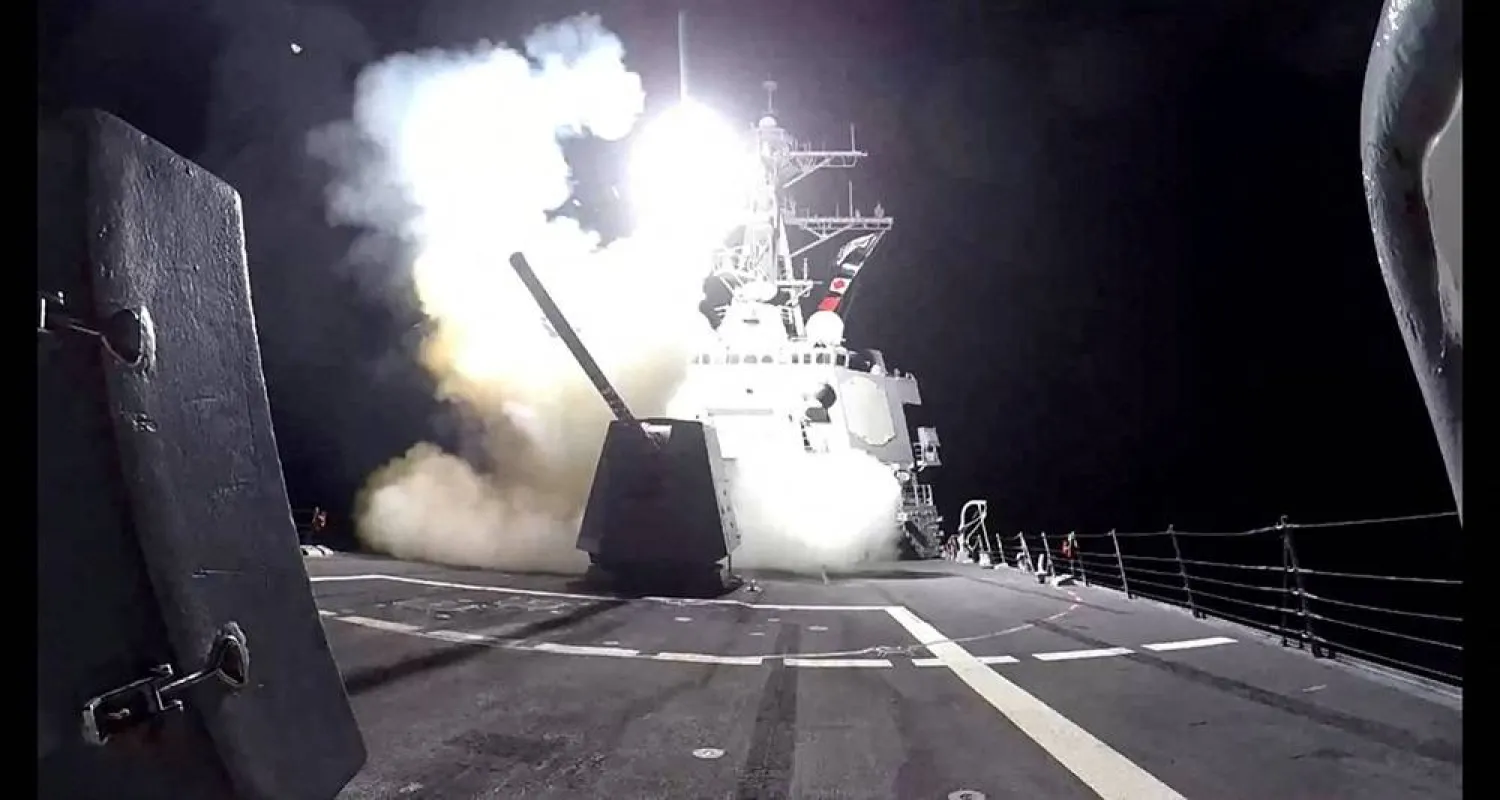
A Tomahawk land attack missile (TLAM) is launched from the US Navy Arleigh Burke-class guided missile destroyer USS Gravely against what the US military describe as Houthi targets in Yemen, February 3, 2024. (US Central Command/Handout via Reuters)
TT

Sullivan: US Intends Further Strikes on Iran-Backed Groups

A Tomahawk land attack missile (TLAM) is launched from the US Navy Arleigh Burke-class guided missile destroyer USS Gravely against what the US military describe as Houthi targets in Yemen, February 3, 2024. (US Central Command/Handout via Reuters)

The United States intends to launch further strikes at Iran-backed groups in the Middle East, the White House national security adviser said on Sunday, after hitting Tehran-aligned factions in Iraq, Syria and Yemen over the last two days.

The United States and Britain unleashed attacks against 36 Houthi targets in Yemen, a day after the U. military hit Tehran-backed groups in Iraq and Syria in retaliation for a deadly attack on US troops in Jordan.

"We intend to take additional strikes, and additional action, to continue to send a clear message that the United States will respond when our forces are attacked, when our people are killed," White House National Security Adviser Jake Sullivan told NBC’s "Meet the Press" program on Sunday.

The strikes are the latest blows in a conflict that has spread into the Middle East since Oct. 7, when the Iran-backed Palestinian militant group Hamas stormed Israel from the Gaza Strip, igniting war.

Tehran-backed groups declaring support for the Palestinians have entered the fray across the region: Hezbollah has fired at Israeli targets at the Lebanese-Israeli border, Iraqi militias have fired on US forces in Iraq and Syria, and the Houthis have fired on shipping in the Red Sea and at Israel itself.

Iran has so far avoided any direct role in the conflict, even as it backs those groups. The Pentagon has said it does not want war with Iran and does not believe Tehran wants war either.

Sullivan declined to be drawn on whether the United States might attack sites inside Iran, something the US military has been very careful to avoid.

Speaking to CBS' "Face the Nation" program moments earlier, he said Friday's strikes were "the beginning, not the end, of our response, and there will be more steps - some seen, some perhaps unseen".

"I would not describe it as some open-ended military campaign," he said.

Saturday's strikes in Yemen hit buried weapons storage facilities, missile systems, launchers and other capabilities the Houthis have used to attack Red Sea shipping, the Pentagon said, adding it targeted 13 locations.

The Houthi military spokesperson Yahya Sarea said the strikes "will not pass without a response and consequences".

Another Houthi spokesperson, Mohammed Abdulsalam, indicated the group would not be deterred, saying Yemen's decision to support Gaza would not be affected by any attack.

Residents described being shaken by powerful blasts. "The building I live in shook," said Fatimah, a resident of Houthi-controlled Sanaa, adding that it had been years since she had felt such blasts in a country that has suffered years of war.

The Houthis did not announce any casualties.

The Yemen strikes are running parallel to the unfolding US campaign of retaliation over the killing of three American soldiers in a drone strike by Iran-backed militants on an outpost near the Syrian-Jordanian border.

IRAN SEEN AVOIDING DIRECT CONFRONTATION

On Friday, the US carried out the first wave of that retaliation, striking in Iraq and Syria more than 85 targets linked to Iran's Revolutionary Guard Corps (IRGC) and militias it backs, reportedly killing nearly 40.

Mahjoob Zweiri, Director of the Gulf Studies Center at Qatar University, did not expect a change in Iran's approach even after the latest US strikes.

"They keep the enemy behind the borders, far away. They are not interested in any direct military confrontation which might lead to attacks on their cities or their homeland. They will maintain that status quo," he told Reuters.

Iran's foreign ministry said the latest attacks on Yemen were "a flagrant violation of international law by the United States and Britain", warning the continuation of such attacks was a "worrying threat to international peace and security".

Andreas Krieg, Associate Professor at King's College, London, noted that while US strikes in Iraq and Syria had marked an escalation in terms of their breadth and the amount of ordinance dropped, they had not hit targets in Iran or Iranians.

"The US has stepped away from that, because it would have led to further escalation," he said. "I think we will see a response by these militias or by Iran on US bases in Syria and Iraq, but that response will be measured as well," he said.

US Republicans have been putting pressure on President Joe Biden, a Democrat, to deal a blow to Iran directly.

BAGHDAD FUNERAL MARCH

While the Houthis say their attacks are in solidarity with Palestinians, the US and its allies characterize them as indiscriminate and a menace to global trade.

The US has carried out more than a dozen strikes against Houthi targets in the past several weeks.

Major shipping lines have largely abandoned Red Sea shipping lanes for longer routes around Africa. This has increased costs, feeding worries about global inflation while denying Egypt crucial foreign revenue from use of the Suez Canal.

The US strikes in Iraq were the deadliest in years.

Hundreds of people attended a Baghdad funeral procession for 17 members of the Popular Mobilization Forces (PMF) killed in the strikes. The PMF is a state security force containing several Iran-backed armed groups.

Hadi al-Ameri, a senior Iraqi politician close to Iran, said it was time to oust US forces, 2,500 of whom are in Iraq in a mission to help prevent a resurgence of ISIS. "Their presence is pure evil for the Iraqi people," he said.

Iraq and the United States last month initiated talks about ending the US-led coalition's presence in the country.



Hunger Worsens in Yemen’s Houthi-Controlled Areas, Ports Lose $ 1.4 Billion

According to the latest WFP-FAO Hunger Hotspots report, rates of severe food deprivation increased for the second consecutive month (UN)
TT

Hunger Worsens in Yemen’s Houthi-Controlled Areas, Ports Lose $ 1.4 Billion

According to the latest WFP-FAO Hunger Hotspots report, rates of severe food deprivation increased for the second consecutive month (UN)

A recent report by the World Food Programme and the Food and Agriculture Organization has said that household food consumption in Yemen continued to deteriorate for the second consecutive month, with 62 percent struggling to meet their minimum food needs in May 2026, including 36 percent facing severe food deprivation.

According to the latest WFP-FAO Hunger Hotspots report, rates of severe food deprivation increased for the second consecutive month, rising from 31 percent in April to 36 percent in May 2026, reflecting a gradually worsening trajectory.

Approximately 10 percent of households in Houthi-controlled (SBA) areas and eight percent in government (IRG) areas reported having at least one member going entire day and night without eating due to lack of food.

In Houthi areas, June data showed up to 13 percent increase in the prices of key food items in Sanaa City since February 2026, mainly reflecting global food price trends and higher shipping costs. This comes at a time when 70 percent of the population in SBA areas report reduced monthly income, highlighting a severe erosion of purchasing power.

The report said that in SBA areas, the economy continues to face severe challenges, including depleting foreign currency reserves, liquidity constraints, sanctions, the relocation of banks from Sanaa to Aden, and a slowdown in economic activity.

The degradation of Red Sea ports has further compounded revenue shortages, resulting in an estimated $ 1.4 billion in losses. Meanwhile, the Houthis have intensified taxation and seized assets, further undermining livelihoods.

Against a backdrop of economic hardship and reduced Red Sea port capacity, the closure of the Strait of Hormuz has amplified Yemen’s fuel supply challenges.

The latest Integrated Food Security Phase Classification (IPC) analysis for IRG-controlled areas projects further deterioration of food security situation toward the end of 2026, with an estimated 5.4 million people expected to face severe levels of acute food insecurity. Key drivers include the combined effects of the lean season, floods, and a curtailed humanitarian response.

The deterioration in food consumption gaps in Yemen has accelerated after humanitarian assistance was curtailed during 2024-2026, compared to 2021-2023 when large-scale food assistance was provided.

SBA areas exhibited a relatively sharper deterioration of inadequate food consumption following the loss of humanitarian operational space. The deterioration rate was 36 percent in SBA areas versus 27 percent in IRG areas, with severe food deprivation nearly doubling in SBA areas during the same periods.

The report added that while the market exchange rate in IRG areas has remained stable since August 2025, the customs dollar rate was notable increased from YER 750 to $1,550 in May 2026, raising concerns over the potential impact on imported commodity prices and household living costs.

Between January and May 2026, fuel imports via Houthi controlled ports dropped by 73 percent compared to the same period in 2025, and by 60 percent via government-controlled ports. Consequently, SBA areas are reporting increasing instances of low-quality fuel at fuel stations, adversely affecting vehicles, water pumps, power plants, and livelihoods.

Due to severe funding shortages, WFP started the implementation of its new TEFA program in IRG-controlled areas in mid-February 2026, reducing the caseload from 3.4 million in December 2025 to a prioritized 1.7 million people. As of mid-June 2026, WFP had completed two TEFA cycles, with the third cycle underway.

The post-distribution monitoring data in April–May 2026 demonstrate a significant improvement in the prevalence of severe food deprivation among TEFA beneficiaries (from 46 percent in February to an average of 25 percent in April-May 2026). Inadequate food consumption showed a similar trend, improving by 23 percentage points during the same period (from 75 to 52 percent).

Dietary diversity and quality have also improved, alongside better access to nutritious foods. The proportion of TEFA beneficiaries reporting low dietary diversity (consuming four or fewer food groups in the past week) decreased from 72 percent to 56 percent.

The consumption of protein-reach food items has improved by 18 percentage points, primarily driven by the inclusion of pulses in the TEFA ration.

The report added that to consolidate these gains and maximize impact, TEFA should be complemented by large-scale recovery interventions, including nutrition, livelihood, water, sanitation and hygiene (WASH), and multi-purpose cash programs.


Israel Tells Washington It Is Ready to Join War Against Iran Immediately

US Central Command commander Admiral Brad Cooper visits Israel on Sunday at the invitation of Israeli military Chief of Staff Eyal Zamir to strengthen military coordination and the defense partnership between the two sides. (Israeli military/X)
TT

Israel Tells Washington It Is Ready to Join War Against Iran Immediately

US Central Command commander Admiral Brad Cooper visits Israel on Sunday at the invitation of Israeli military Chief of Staff Eyal Zamir to strengthen military coordination and the defense partnership between the two sides. (Israeli military/X)

A military spokesperson in Tel Aviv said on Wednesday that the Israeli army was on high alert and ready to join the war alongside the US military against Iran as soon as it received orders from the government.

The Walla news site said the preparations had been in place since the first day of the ceasefire because Israel did not trust Iranian promises and viewed them as mere maneuvers.

“The Iranian leadership, intoxicated by an imagined victory, is not making the responsible calculations required of any government before going to war. It is acting arrogantly, as though it won the war, and is trying to blackmail the United States,” if added, noting that Israel had expected US President Donald Trump’s patience with Tehran to run out.

Walla also said the Israeli army had remained in close contact with US Central Command, or CENTCOM, to discuss what it described as the high likelihood of a resumption of the war, review the experience of the two previous wars in June 2025 and February 2026, and draw lessons from them to improve performance and prepare a new target bank for a third war that Israel sees as inevitable.

The most recent coordination meeting between the two commands was held at the end of last week in preparation for a scenario in which the confrontations resume.

Iranian actions had topped the agenda of a visit that US Defense Secretary Pete Hegseth had been scheduled to make on Wednesday before canceling it at the last minute, causing significant embarrassment in Tel Aviv. A senior political source close to Netanyahu said Hegseth had been due to meet Prime Minister Benjamin Netanyahu and his counterpart, Defense Minister Israel Katz.

According to the sources, one of the aims of the visit was to calm Israeli concerns over the possible sale of advanced F-35 stealth fighter jets to Türkiye. Israel is deeply concerned by the move, and some officials have begun mobilizing pressure in Congress to block its approval.

According to a report by Israel’s Channel 12, Israeli security agencies warn that Türkiye’s possession of advanced US stealth fighter jets, namely the F-35, could harm what Tel Aviv describes as the Israeli air force’s “qualitative edge” in the Middle East and restrict its ability to operate in arenas Israel considers central, including Iran, Syria, Lebanon and the wider eastern Mediterranean.

In an interview with CNN, Netanyahu said Turkish President Recep Tayyip Erdogan was “not exactly a model ally of the United States,” adding that he “threatens to destroy my country, the only Jewish state,” according to Netanyahu. Israel is currently the only country in the Middle East operating F-35 aircraft, the most advanced fighter jet in the US arsenal.

A report by Yedioth Ahronoth on Wednesday said friction between Israel and Türkiye was no longer limited to political or rhetorical disputes and now extended to four main arenas of concern to Israel’s security establishment.

The first arena is the negotiations with Iran, where Israel views Türkiye’s role as an attempt to prevent Tehran’s defeat in a way that would lead to wider Israeli dominance in the region.

The second arena relates to the Gaza Strip. The report points to Türkiye’s support for Hamas and claims that an arm of the movement operates from inside Türkiye and manages activities against Israel from there.

The third arena is Syria, where Israel is concerned by Turkish efforts to expand its influence after the changes the country has undergone.

According to Channel 12, the Israeli air force is working to prevent the consolidation of a Turkish foothold in Syria, including through repeated strikes on the T4 base. Israel is also seeking to prevent Ankara from arming the Syrian army with drones and air defense systems.

The fourth arena, which the report says is taking shape, is the eastern Mediterranean maritime front. Israel fears an expanding Turkish presence in an area Tel Aviv views as vital to its military and economic activity and to its relations with Greece and Cyprus.

According to the report, Türkiye is already developing advanced military industries, including defense systems and ballistic missiles, and is seeking to build its own stealth fighter, called Kaan.

But the project faces major difficulties, particularly over engines, as Türkiye does not yet have the independent capacity to develop an engine suitable for this type of aircraft, prompting it to request US-made F110 engines.

But the violation of the ceasefire between the United States and Iran has pushed this issue into the background, even for Israel.

It prefers to focus on what it has in common with the Americans, not on what divides it from them.

While Iran considered Israel’s continued military operations in Lebanon a violation of the US-Iranian agreement, Israel initiated a larger escalation in Lebanon in recent hours after Trump announced the cancellation of the ceasefire.

According to political sources in Tel Aviv, the escalation was not only a way to vent frustration over the anger caused by the halt to the war, but also a means of dragging the Revolutionary Guards leadership into the war and blowing up the negotiations entirely.


Could Qaani’s Brief Appearance Affect Al-Zaidi’s Washington Visit?

A still image taken from a video shows Esmail Qaani, right, believed to be at Najaf airport in Iraq. (Shafaq News)
TT

Could Qaani’s Brief Appearance Affect Al-Zaidi’s Washington Visit?

A still image taken from a video shows Esmail Qaani, right, believed to be at Najaf airport in Iraq. (Shafaq News)

The limited appearance of Esmail Qaani, commander of the Quds Force, during the funeral procession for Iran's Supreme Leader Ali Khamenei in the Iraqi city of Najaf on Wednesday has once again drawn attention to the complex nature of relations between Baghdad and Tehran.

The development comes as Iraqi Prime Minister Ali al-Zaidi prepares to visit Washington later this month, a trip that observers see as a fresh test of his government's ability to balance its relations with the United States and Iran.

Qaani appeared in Iraq in a short video clip that could not be independently verified. The footage, which lasted only a few minutes, showed him beside an Iranian aircraft on the tarmac at Najaf Airport.

The scene was marked by caution and brevity, in contrast to the presence of other Iranian officials at the funeral, including Mohsen Rezaei, an adviser to Iran's Supreme Leader, who were seen moving freely around the city.

Observers said the nature of Qaani's appearance may reflect an attempt to maintain a symbolic presence without displaying broad public engagement, given the sensitivity of Baghdad's current political moment.

Iraqi-Iranian tensions

Iraqi sources in recent days raised expectations about al-Zaidi’s planned visit to Washington, while other sources reported tensions at a meeting between him and Iranian Foreign Minister Abbas Araghchi during Araghchi’s visit to Baghdad last week.

Other sources said Baghdad had asked Tehran not to send Qaani to the funeral before images emerged showing him alongside other Iranian military officials.

The Iraqi request could not be independently confirmed. But Qaani’s appearance revived debate over the limits of Iranian influence in Iraq, especially as al-Zaidi’s government moves to reorganize internal files that touch on political forces and armed factions historically linked to Tehran.

Asharq al-Awsat previously reported, citing sources, that Iraq’s government had asked Tehran to use diplomatic channels to arrange visits by its officials and avoid secret trips.

Al-Zaidi’s Washington visit comes at a sensitive time.

Baghdad is trying to build a new relationship with the US administration as tensions persist between Washington and Tehran.

The two sides had been engaged in fragile de-escalation talks until those talks stopped and intermittent military strikes resumed.

Iraq now faces the challenge of preserving a delicate balance between the two sides and preventing the country from becoming a battlefield for rival allies.

Al-Zaidi, who came to office amid complex domestic calculations, is facing growing pressure from some parties in the Coordination Framework after his government moved on corruption-related files.

His supporters see the steps as an attempt to restore the authority of state institutions. His opponents see them as a potential shift in the balance of power inside Iraq’s political system.

Parties move to withdraw support

Particular attention is focused on the “Dawn Operation,” which has been linked to security and judicial measures against figures accused of corruption.

An Iraqi politician, who requested anonymity, said the operation had alarmed political parties that believed al-Zaidi’s selection, as a figure not fully aligned with any one side, would help contain disputes inside the Coordination Framework.

The politician told Asharq al-Awsat that the use of Counter-Terrorism Service units, partly trained by US forces, had deepened the sensitivity of the moment.

The service is viewed differently from the Popular Mobilization Forces, which retain ideological and organizational links with political forces and armed factions.

People close to al-Zaidi say the prime minister wants to arrive in Washington with domestic leverage, including what his supporters see as an early success in confronting corruption files.

But opposition from senior figures in the Coordination Framework, at least three of whom have boycotted government-linked meetings, suggests they are moving to withdraw support for the anti-corruption plan.

Iraqi analysts say the Washington visit could become a test of the country’s internal balance of power. Some believe al-Zaidi is trying to avoid a direct clash with forces close to Iran before the trip, while keeping wider options open if he secures US support.

Observers said Qaani’s presence at the funeral, despite the controversy surrounding it, does not necessarily indicate a direct confrontation between Baghdad and Tehran.

But it does signal a more delicate phase in managing relations between the two countries, as Iraq’s government tries to assert the independence of its political decision-making without severing regional ties.