


Lebanese FM to Asharq Al-Awsat: Hezbollah Did Not Oppose 'Full’ Deal to Implement Resolution 1701

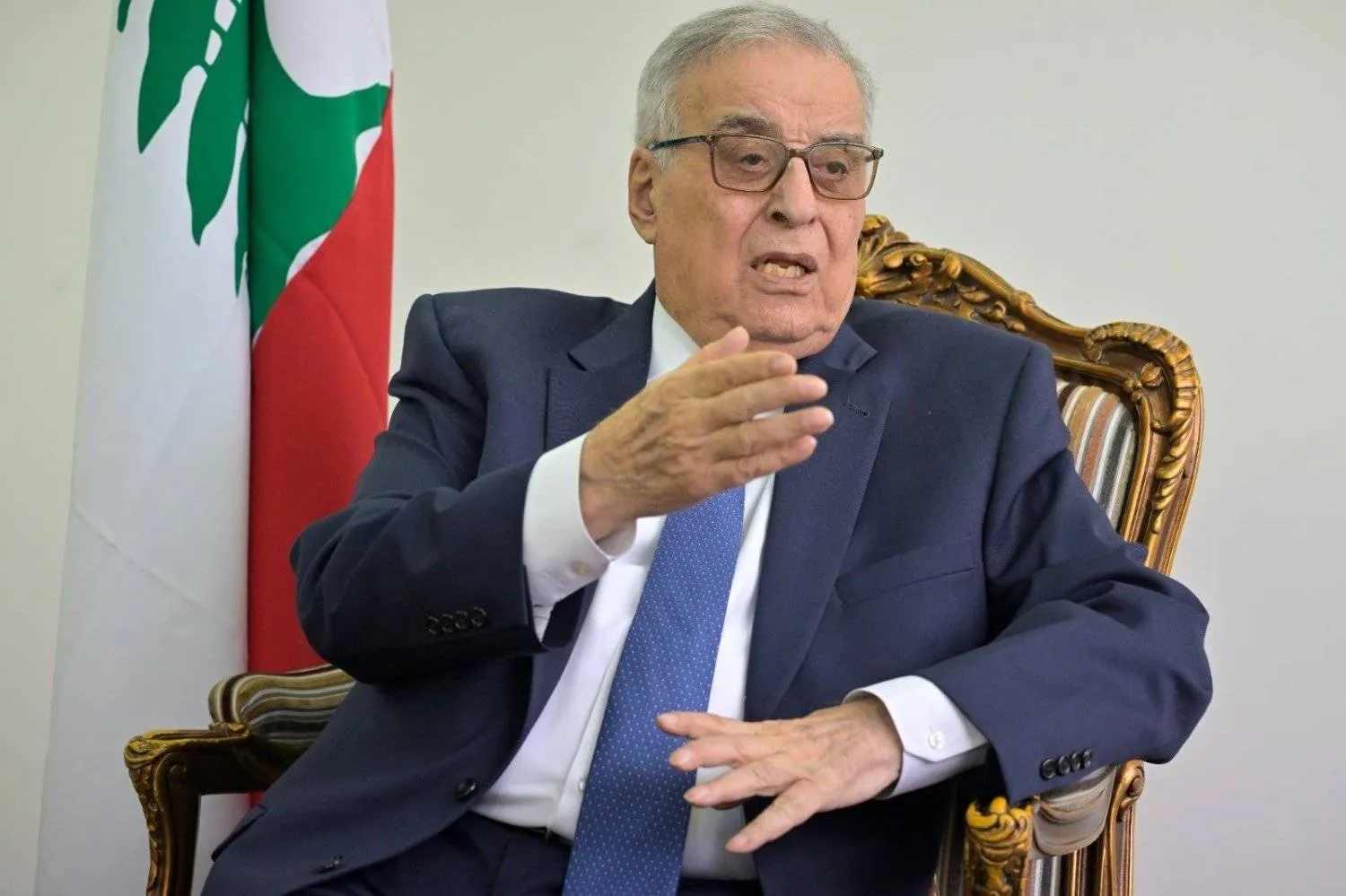
Lebanese caretaker Foreign Minister Abdallah Bou Habib speaks to Asharq Al-Awsat from his office in Beirut. (Asharq Al-Awsat)
TT

Lebanese FM to Asharq Al-Awsat: Hezbollah Did Not Oppose 'Full’ Deal to Implement Resolution 1701

Lebanese caretaker Foreign Minister Abdallah Bou Habib speaks to Asharq Al-Awsat from his office in Beirut. (Asharq Al-Awsat)

Lebanese caretaker Foreign Minister Abdallah Bou Habib stressed that Beirut is seeking the “full implementation” of United Nations Security Council resolution 170.

In an interview to Asharq Al-Awsat, he revealed that “no one in Lebanon, including Hezbollah, has opposed this proposal.”

He added that the majority of foreign proposals to resolve the crisis in southern Lebanon revolve around the withdrawal of Hezbollah fighters ten kilometers north so that the Israelis can return to their border villages and settlements.

Int’l proposals

Bou Habib denied that American officials have offered solutions to the crisis. “They have offered nothing and are still working on a plan,” he said.

British officials have, however, suggested that surveillance towers be set up in the South. Bou Habib said the idea doesn’t elaborate on which direction the cameras would be positioned.

Having them turned to Lebanon is not an option at the moment, he went on to say.

France suggested that the number of Lebanese troops deployed south of the Litani River be increased, to which the FM said: “Resolution 1701 calls for the deployment of 15,000 Lebanese soldiers along the border.”

“However, we are incapable of providing this number given the massive internal responsibilities the army has to deal with,” he explained.

“At the moment, we can only secure no more than 4,000 soldiers and they are indeed deployed on the border. At the same time, we are prepared to recruit 7,000 to 8,000 new soldiers if Lebanon is provided with enough assistance,” he continued.

“Without this assistance, Lebanon will be unable to secure the necessary funds to recruit them,” stated Bou Habib.

Moreover, he said Lebanon hasn’t yet started the negotiations phase. He acknowledged that official contacts are being held with Hezbollah. They are being carried out by himself, caretaker Prime Minister Najib Mikati and parliament Speaker Nabih Berri, “who is in constant contact with Hezbollah.”

“We - the three officials – are tasked with communicating with the outside at the moment. We agree over our positions. I am in touch with various influential political forces in Lebanon,” he added.

“There is a complete agreement over the need to implement resolution 1701, including the articles related to the Shebaa Farms and Kfar Shouba Hills,” he added.

Hezbollah’s complete withdrawal

Bou Habib said Israel had called for the withdrawal of Hezbollah fighters from the South back in October. The demand was echoed by European Union foreign policy chief Josep Borrell in Brussels where he met with Bou Habib.

The FM had relayed to the European official Lebanon’s demand for the full implementation of resolution 1701.

Israel is insistent on Hezbollah’s withdrawal from the South, while it refuses to pull out from the Shebaa Farms and Kfar Shouba.

Bou Habib explained that Hezbollah justifies its deployment by citing Israel’s occupation of Lebanese territories, which dates back to 2000. “Logically, if the international community wanted Hezbollah to pull out of the border regions, then Israel must withdraw from occupied Lebanese territory,” he explained.

“This is why we have been demanding a full agreement,” he stated.

Asked by Asharq Al-Awsat if Hezbollah supports a “full agreement” that leads to its withdrawal, the FM replied: “I believe if such an agreement is reached, then the party will pull out.”

“The reasons why it is in the South will be no more once the agreement is implemented. I believe it will accept this, as demonstrated by Hezbollah chief Hassan Nasrallah who said the war in Gaza was an opportunity to fully liberate occupied Lebanese territory,” he remarked.

“The Lebanese state is seeking the full implementation of resolution 1701. This means no Lebanese territories should remain occupied and Hezbollah or any other party should no longer maintain military presence in the South,” he added. “This is stipulated by resolution 1701 and Hezbollah has said it itself.”

No one in Lebanon is opposed to this demand, stressed the FM.

Negotiations amid the presidential vacuum

Bou Habib said Hezbollah is not discussing negotiations related to the South because it is aware that this issue falls under the state’s jurisdiction.

The negotiations themselves, which should be guided by the state, are tied to the election of a president. “No one but the president can sign off on the negotiations,” he declared.

So, discussions have been held over the possibility of the signing taking place the day a president is elected. “There can be no final agreement without a president,” said the FM.

Lebanon has been without a president since November 2022 when the term of Michel Aoun ended without the election of a successor. Ongoing political disputes between parties have so far thwarted the election of a head of state.

Furthermore, Bou Habib noted that Israel is the side that has been expanding the scope of its attacks, whether in Beirut, Nabatieh or Iqlim al-Kharroub. Hezbollah has respected the truce that took place months ago and led to the release of hostages from Gaza.

In addition, he said that should a ceasefire take hold in Gaza, then it would also encompass Lebanon, Yemen, Iraq and Syria.

He did express his concern over the possibility that the conflict could spill over into the region if Israel wages a widescale war on Lebanon. “However, we support security and stability, which is why we have been demanding resolving border disputes that will help us avoid a major war,” he added.

Internal differences

On the pressure the government is coming under over the withdrawal of Hezbollah from the border, Bou Habib said: “We will not take a single step that could lead to civil war should the party be forced to pull out from the border without an agreement.”

“This issue is out of the question to avoid an internal clash,” he stated.

“We would rather see a thousand regional wars than a single civil war,” he stressed.

Furthermore, Bou Habib noted that the majority of political forces, Christian and non-Christian, have accepted Hezbollah’s de facto military presence in the South regardless of whether they support it or not.

The FM, therefore, dismissed as “political debates” criticism related to this issue that are levelled against the government.

He also rejected Lebanese accusations that the government was working as a mediator between Hezbollah and the international community, declaring instead that there was no such mediation because the talks are being solely held by the state, not the party.



Official Contacts Aim to Keep Lebanon out of War on Iran as Israel Raises Readiness on Northern Front 

This photograph shows a memorial for slain Lebanese Hezbollah longtime leader Hassan Nasrallah at the entrance of the southern village of Qannarit on February 16, 2026. (AFP)
TT

Official Contacts Aim to Keep Lebanon out of War on Iran as Israel Raises Readiness on Northern Front 

This photograph shows a memorial for slain Lebanese Hezbollah longtime leader Hassan Nasrallah at the entrance of the southern village of Qannarit on February 16, 2026. (AFP)

Israel has raised the alert level of its military along the border with Lebanon, raising questions that Lebanon’s south may again be involved in a regional confrontation should the US attack Iran.

Given the heightened tensions between the US and Iran, questions have been asked over whether Hezbollah will become involved in a new war. Its Secretary-General Sheikh Naim Qassem had recently announced that the party will not remain on the side if Iran is attacked.

On the ground, Israel blew up houses in southern Lebanon border towns and carried out air strikes in the south. Israeli military spokesman Avichay Adraee said the raids targeted “Hezbollah infrastructure,” including arms caches and rocket launchers.

Their presence in the south is a violation of current agreements, he added.

Amid the high regional tensions, Israel’s Maariv quoted a military source as saying that the army has come up with plans, including a preemptive strike against Hezbollah, which would drag the south and the whole of Lebanon into a new war.

Ministerial sources told Asharq Al-Awsat that the presidency has been carrying out internal and foreign contacts since Thursday morning to keep Lebanon out of any escalation.

Hezbollah had launched a “support front” war against Israel a day after Hamas’ October 7, 2023 attack. In 2024, the war spiraled into an all-out conflict, with Israel decimating the Hezbollah leadership and severely weakening the party.

Israel believes that Hezbollah has been rebuilding its capabilities since the ceasefire that was struck in November 2024.

Kassim Kassir, a political analyst who is close to Hezbollah, told Asharq Al-Awsat: “No one knows what Hezbollah will do because the situation is tied the extent of the attack, should it happen.”

He noted that Qassem was ambiguous when he said the party will decide what to do when the time is right, but at any rate, he stressed that the party will not remain on the sidelines or abandon Iran.

“No one knows what Hezbollah’s abilities are, so everything is possible,” Kassir said.

Riad Kahwaji, a security and defense affairs expert, said he does not rule out the possibility that Hezbollah would join the war should the US attack Iran.

Speaking to Asharq Al-Awsat, he stressed that Iran is now the United States’ main target, when previously it used to confront its proxies.

It has now taken the fight directly to the heart of the problem, which is the Iranian regime, he remarked.

The extent of the military mobilization in the region and the frequent American statements about regime change all indicate that a major military operation may be imminent, he added.

Israel’s military also favors preemptive operations, so it is watching Hezbollah, which remains Iran’s most powerful regional proxy despite the blows it received in 2024 war, Kahwaji said.

Hezbollah still possesses a rocket arsenal that can threaten Israel, he remarked.

Israel’s high level of alert on the border with Lebanon could be in readiness for any development. Should Tel Aviv receive word from Washington that it intends to attack Iran, then it could launch operations against Hezbollah as part of preemptive strikes aimed at preventing the party from launching attacks against it, Kahwaji said.

“As long as Hezbollah possesses heavy weapons, such as rockets, and drones, that it has not handed over to the army, then Lebanon will continue to be vulnerable to attacks in the next confrontation. It will be exposed to Israeli strikes as long as this issue remains unresolved,” he added.


Israel Keen to Attack Iran’s Regional Proxies before they Can Join the War

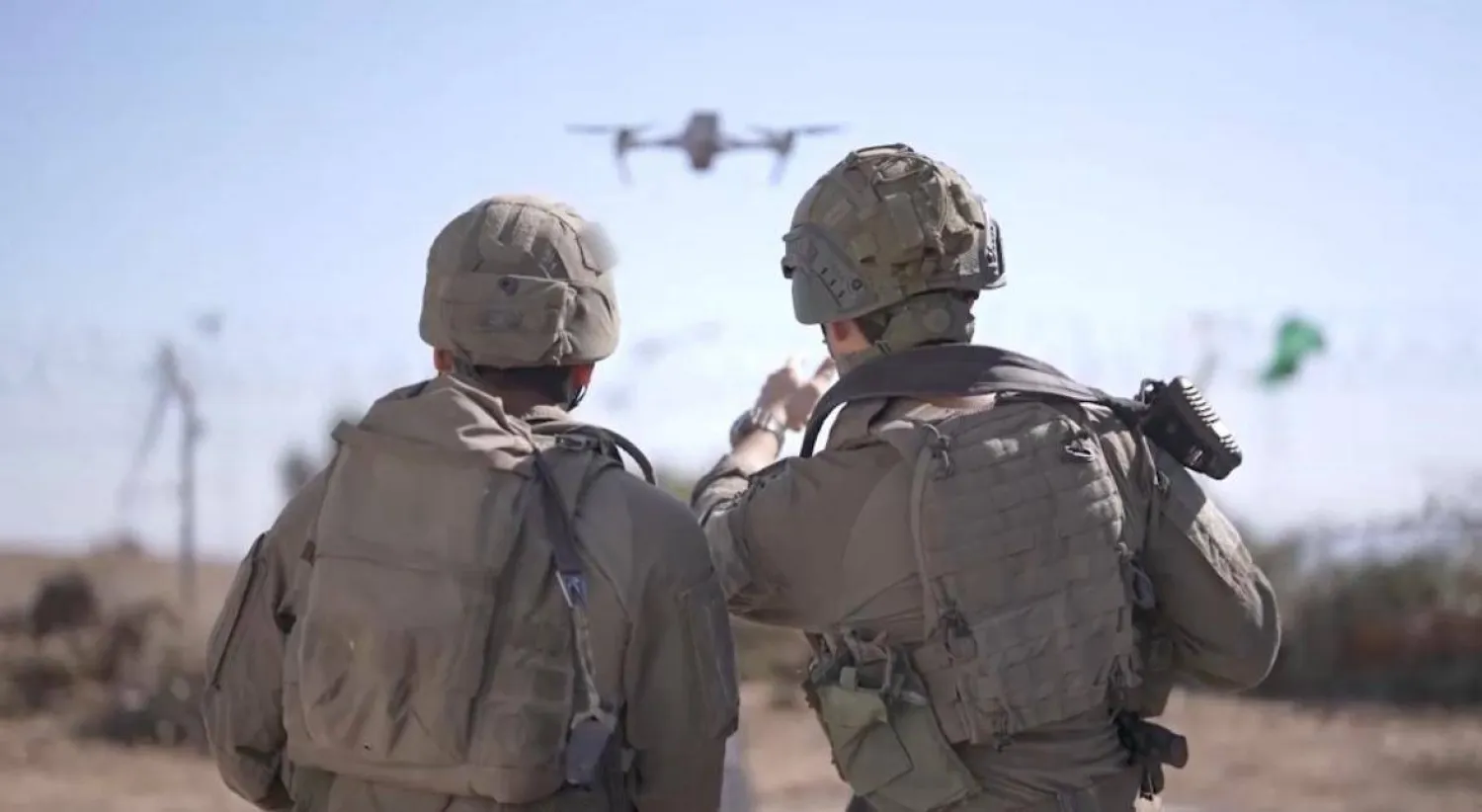
Two Israeli soldiers launch a drone. (Israeli Army)
TT

Israel Keen to Attack Iran’s Regional Proxies before they Can Join the War

Two Israeli soldiers launch a drone. (Israeli Army)

The Israeli army is preparing to carry out “massive and unprecedented” strikes against groups backed by Iran, including the Houthis in Yemen, Hezbollah in Lebanon and armed factions in Iraq, should they join a potential war in the region, revealed Israeli military sources.

Iran is applying great pressure on these groups to take part in any upcoming conflict because the regime in Tehran concluded that their staying on the sidelines during the 12-day June war in 2025 was a strategic error, the sources said according to Israeli estimates.

Israeli Prime Minister Benjamin Netanyahu had on Thursday warned Iran that his country is making its own preparations for possible Iranian missile strikes in response to any US action.

“We are prepared for any scenario,” he said, adding that if Iran attacks Israel, “they will experience a response they cannot even imagine.”

A military source said the Houthis pose a “direct threat not just to Israel, but to the whole world.” He accused the Houthis of impeding international trade in the Red Sea.

Even though the Houthis are not firing at all ships, they are still a threat to everyone, added the source. The militants are producing weapons and possess advanced technology, he warned, comparing them to a “dangerous ticking timebomb that must be swiftly neutralized.”

Israeli and foreign experts revealed that Iran is providing large financial support to its allied armed groups in the region in order for them to join a war should US President Donald Trump act on his threat to strike Iran.

In 2025, Iran allotted a billion dollars to these groups so that they can carry out rocket attacks against Israel.

It remains to be seen if these groups will respond to Iran’s pressure. Israeli estimates believe that the Kataib Hezbollah in Iraq are unlikely to join a war, while Hezbollah and the Houthis are more prepared to do so.

Israel has turned to mediators to warn these parties that any attack against it will be met with a “massive and unprecedented response.”

In Lebanon, the sources said that the military operations Israel is carrying out against Hezbollah and other armed groups are aimed at undermining the party’s efforts to bolster its combat abilities.

They acknowledged, however, that the Israeli military establishment senses that Hezbollah is rebuilding its capabilities at a faster pace than Israel’s operations at reining it in.

The Houthis, meanwhile, have a relatively greater margin of independence, but they are always ready to take part in any regional war to shift attention away from the situation inside Yemen, said Israeli estimates.

The Houthis are receiving Iranian funds to boost their military capabilities and produce more weapons. They also continue to smuggle weapons to Hamas in Gaza. Israel also accuses them of extorting several countries, whereby they pledge not to attack their ships in exchange for money.

The Houthis are ultimately fully supportive of Iran’s goals despite the blows they have been dealt by Israel. The Houthis are suffering from a drop in combat abilities. The pace of their training of fighters has also dropped, while their airports have been damaged in Israeli attacks and the Houthis are facing difficulties in rebuilding them.

Despite the losses, the Houthis are still a threat. They possess heavy long-range missiles and drones and still have the ability to shut Israel’s southern Eilat port.


Iraqi Confusion Over Allegations of US Warning of Sanctions

The Coordination Framework faces a dilemma after nominating Nouri al-Maliki for Prime Minister (INA)
TT

Iraqi Confusion Over Allegations of US Warning of Sanctions

The Coordination Framework faces a dilemma after nominating Nouri al-Maliki for Prime Minister (INA)

Iraqi Foreign Minister Fuad Hussein said that the authorities have received an oral message from Washington, “clearing and explicitly” hinting at possible sanctions if former prime minister Nouri al-Maliki was named to head the new government.

The Iraqi Ministry of Foreign Affairs said in a statement on Thursday that Hussein, who also serves as Deputy Prime Minister, had discussed in a televised interview the nature of cooperation and joint work with the US, particularly with regard to the formation of the upcoming government, without addressing the threat of sanctions, which led to “confusion in media coverage.”

The ministry stated that the US message included two main points. The first referred to the possibility of imposing sanctions on “certain individuals and institutions” if the largest bloc in parliament held onto its current nominee for the PM’s post, while the second addressed the standards for joint cooperation, mainly the nature of the upcoming government.

The ministry’s clarifications come amid increasing US warnings against selecting al-Maliki to head the government. The US State Department affirmed that Washington’s position is “firm and resolute,” and that his selection would force Washington to reassess its relationship with Iraq.

The Coordination Framework, which includes ruling Shiite parties, is divided over al-Maliki’s nomination, and attempts are being made to persuade him to withdraw his candidacy to preserve the unity of the alliance.

The Sunni Sovereignty Alliance, led by Khamis al-Khanjar, expects al-Maliki to take the initiative to withdraw his nomination to spare the country economic sanctions.

Fahd al-Rashed, a senior figure in the Sunni alliance, told Shafaq News that al-Maliki is expected to step aside given “his concern for the country’s interests.”

“We have no objection to al-Maliki personally,” al-Rashed added, “but we fear the repercussions of US reservations over the candidate, including threats of economic sanctions.”