


Allies Urge Israel to Show Restraint after Iranian Attack

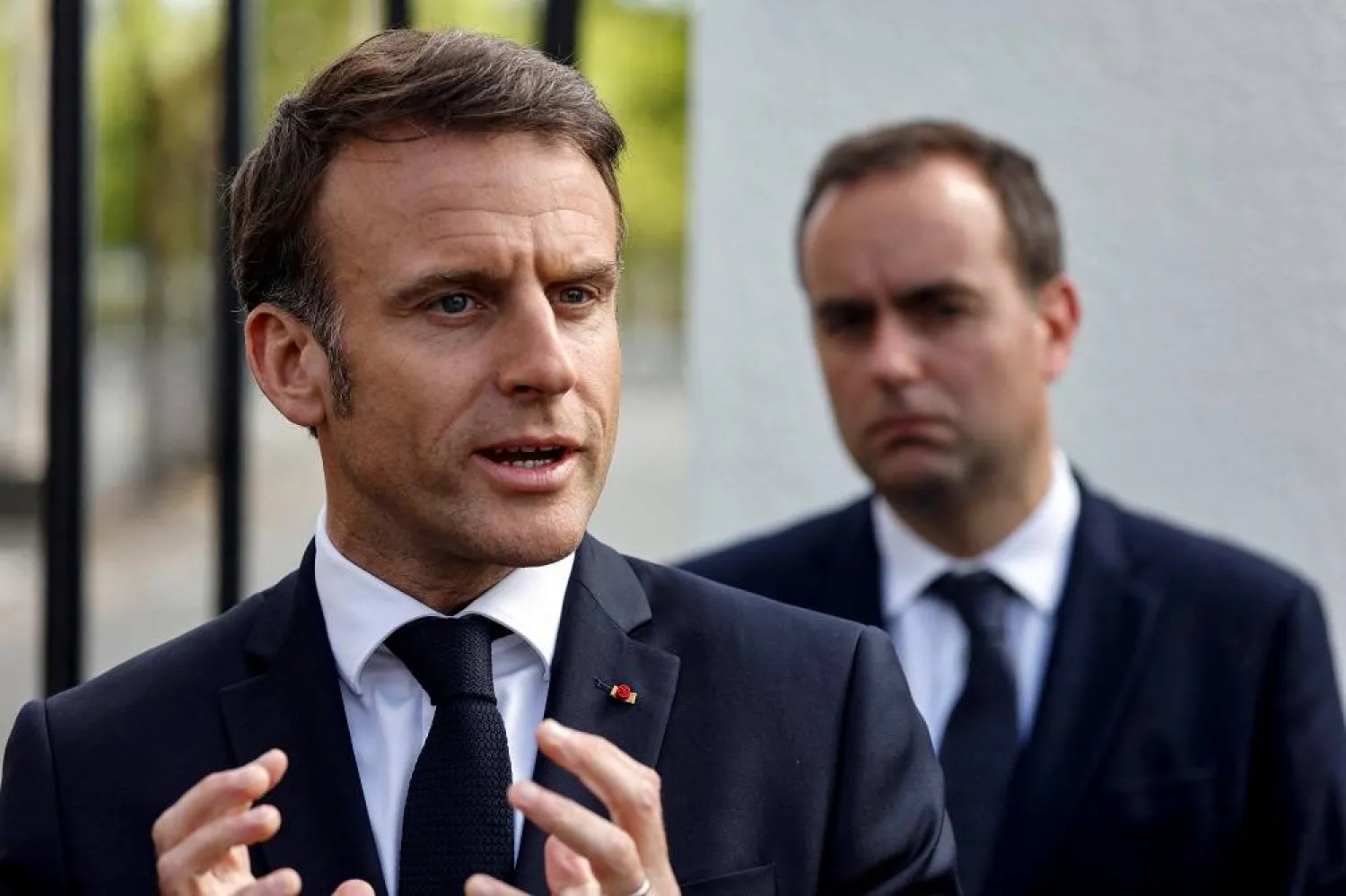
France's President Emmanuel Macron addresses the media as France's Minister for the Armed Forces Sebastien Lecornu listens during a visit to the powders and explosives company Eurenco plant in Bergerac, southwestern France, on April 11, 2024. (Reuters)
TT

Allies Urge Israel to Show Restraint after Iranian Attack

France's President Emmanuel Macron addresses the media as France's Minister for the Armed Forces Sebastien Lecornu listens during a visit to the powders and explosives company Eurenco plant in Bergerac, southwestern France, on April 11, 2024. (Reuters)

Israel faced growing pressure from allies on Monday to show restraint and avoid an escalation of conflict in the Middle East as it considered how to respond to Iran's weekend missile and drone attack.

Prime Minister Benjamin Netanyahu summoned his war cabinet for the second time in less than 24 hours, a government source said. Two top officials signaled on Sunday that retaliation was not imminent and Israel would not act alone, but the results of Monday's talks were not yet known.

Iran's attack has increased fears of open warfare between Israel and Iran, and heightened concerns that violence will spread further in the region. Wary of the dangers, President Joe Biden has told Netanyahu the United States will not take part in any Israeli counter-offensive against Iran.

Since the start of the war in Gaza on Oct. 7, clashes have erupted between Israel and Iran-aligned groups in Lebanon, Syria, Yemen and Iraq, and Israel said four of its soldiers were wounded hundreds of meters inside Lebanese territory overnight.

It appeared to be the first such incident to become known since the Gaza war erupted, leading to months of exchanges of fire between Israel and Lebanon's armed group Hezbollah.

"We're on the edge of the cliff and we have to move away from it," Josep Borrell, the EU's High Representative for Foreign Affairs and Security Policy, told Spanish radio station Onda Cero. "We have to step on the brakes and reverse gear."

French President Emmanuel Macron, German Chancellor Olaf Scholz and British Foreign Secretary David Cameron made similar appeals, all echoing calls for restraint by Washington and United Nations Secretary-General Antonio Guterres.

Countries including Belgium and Germany summoned the Iranian ambassadors.

Russia has refrained from criticizing its ally Iran in public over the strikes but expressed concern about the risk of escalation on Monday and also called for restraint.

"Further escalation is in no one's interests," Kremlin spokesman Dmitry Peskov said.

Iran launched the attack over a suspected Israeli airstrike on its embassy compound in Syria on April 1 that killed seven Iranian Revolutionary Guards officers including two senior commanders.

The weekend attack, involving more than 300 missiles and drones, caused only modest damage in Israel and no deaths. Most were shot down by Israel's Iron Dome defense system and with help from the US, Britain, France and Jordan.

Italy open to sanctions

Italy, which holds the rotating presidency of the Group of Seven major democracies, raised the possibility of the G7 discussing new sanctions against Iran following the attack.

In an interview with Reuters, Italian Foreign Minister Antonio Tajani said new sanctions would need the backing of all the G7, which includes Italy, France, Germany, Canada, Japan, Britain and the United States. He suggested any new measures would be focused on individuals rather than whole nations.

"If we need to have more sanctions for people clearly engaged against Israel, supporting for example terrorism, supporting Hamas, it is possible to do it. But we need to be very serious and to work all together," Tajani said.

Asian shares fell and gold prices rose on Monday as risk sentiment took a hit. But oil prices dipped and Israel's shekel rose against the dollar after the comments by two senior Israeli officials - Defense Minister Yoav Gallant and centrist minister Benny Gantz - suggesting an Israeli response was not imminent.

Iran's attack also caused travel disruption, with at least a dozen airlines cancelling or rerouting flights, and Europe's aviation regulator reaffirming advice to airlines to use caution in Israeli and Iranian airspace.

Israel remained on high alert, but authorities lifted some emergency measures that had included a ban on some school activities and caps on large gatherings.

Iranian Foreign Minister Hossein Amir-Abdollahian said Tehran had informed the United States that the attack on Israel would be limited and for self-defense, and that regional neighbors had been informed of the planned strikes 72 hours in advance.

Iranian Foreign Ministry spokesperson Nasser Kanaani said on Monday, however, that no pre-arranged agreement was made with any country prior to the weekend attack. US officials said Tehran had not warned Washington.

Iran's attack has drawn applause in Gaza, where Israel began a military campaign against Hamas after the Palestinian group's deadly attack on Israel, killing 1,200 and taking 253 hostages by Israeli tallies. Gaza's health ministry says over 33,000 Palestinians have been killed in the offensive and that the enclave faces a humanitarian catastrophe.

White House national security spokesman John Kirby said humanitarian aid getting into the Gaza Strip had increased by a large amount in the last few days, but many Gazans are still displaced by fighting and unable to return home.

"We can live in tents, we just want to return to our homes," displaced Gazan Souad Zayed said the Nuseirat refugee camp. "We're not crying over bricks and mortar, or money or trees or anything, what's important is that they let us return to our homes. There's a lot of people, we're exhausted."



7 Killed in Drone Strike on Hospital in Sudan's Kordofan

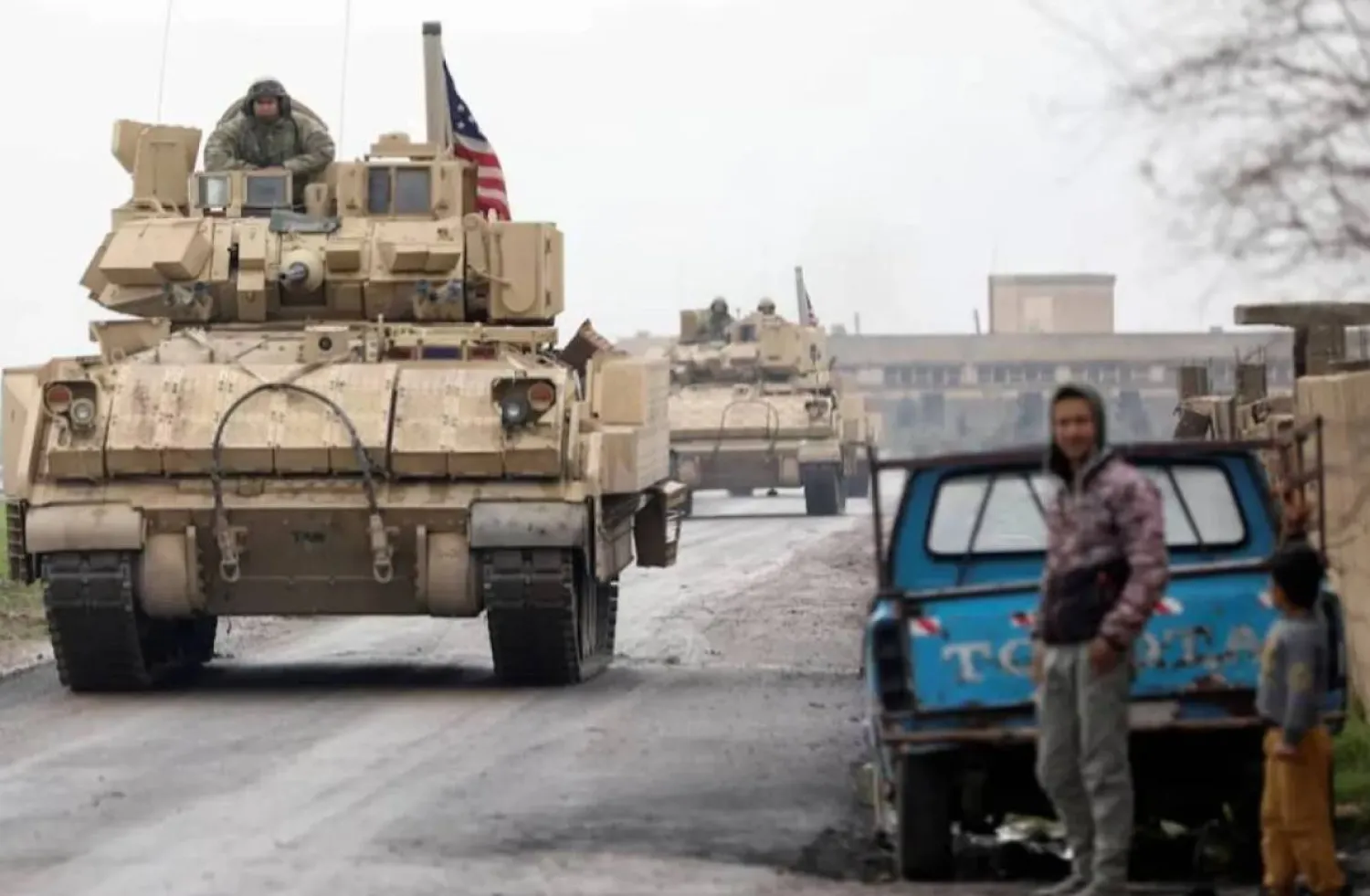
A Sudanese man rides his decorated bicycle as others (unseen) rally in support of the Sudanese armed forces. (Photo by Ebrahim Hamid / AFP)
TT

7 Killed in Drone Strike on Hospital in Sudan's Kordofan

A Sudanese man rides his decorated bicycle as others (unseen) rally in support of the Sudanese armed forces. (Photo by Ebrahim Hamid / AFP)

A drone strike Sunday on an army hospital in the besieged southern Sudan city of Dilling left "seven civilians dead and 12 injured", a health worker at the facility told AFP.

The victims included patients and their companions, the medic said on condition of anonymity, explaining that the army hospital "serves the residents of the city and its surroundings, in addition to military personnel".

Dilling, in the flashpoint state of South Kordofan, is controlled by the Sudanese army but is besieged by the Rapid Support Forces (RSF).

The greater Kordofan region is currently facing the fiercest fighting in Sudan's war between the army and the RSF, as both seek to wrest control of the massive southern region.

The UN has repeatedly warned the region is in danger of witnessing a repeat of the atrocities that unfolded in North Darfur state capital El-Fasher, including mass killing, abductions and sexual violence.


Iraq's Election Result Ratified by Supreme Federal Court as Premiership Remains up for Grabs

Election workers gather parliamentary election ballots after the polls closed in Baghdad, Iraq, Nov. 11, 2025. (AP Photo/Hadi Mizban, File)
TT

Iraq's Election Result Ratified by Supreme Federal Court as Premiership Remains up for Grabs

Election workers gather parliamentary election ballots after the polls closed in Baghdad, Iraq, Nov. 11, 2025. (AP Photo/Hadi Mizban, File)

The result of last month’s parliamentary elections in Iraq was ratified by the Supreme Federal Court on Sunday, confirming that the party of caretaker prime minister Mohammed Shia al-Sudani won the largest number of seats — but not enough to assure him a second term.

The court confirmed that the voting process met all constitutional and legal requirements and had no irregularities affecting its validity.

The Independent High Electoral Commission submitted the final results of the legislative elections to the Supreme Federal Court on Monday for official certification after resolving 853 complaints submitted regarding the election results, according to The AP news.

Al-Sudani's Reconstruction and Development Coalition won 46 seats in the 329-seat parliament. However, in past elections in Iraq, the bloc taking the largest number of seats has often been unable to impose its preferred candidate.

The coalition led by former Prime Minister Nouri al-Maliki won 29 seats, the Sadiqoun Bloc, which is led by the leader of the Asaib Ahl al-Haq militia, Qais al-Khazali, won 28 seats, and the Kurdistan Democratic Party, led by Masoud Barzani, one of the two main Kurdish parties in the country, won 27 seats.

The Taqaddum (Progress) party of ousted former Parliament Speaker Mohammed al-Halbousi also won 27 seats, setting the stage for a contest over the speaker's role.


Hamas Confirms the Death of a Top Commander in Gaza after Israeli Strike

Destroyed buildings, amid a ceasefire between Israel and Hamas, in Khan Younis in the southern Gaza Strip November 18, 2025. (Reuters)
TT

Hamas Confirms the Death of a Top Commander in Gaza after Israeli Strike

Destroyed buildings, amid a ceasefire between Israel and Hamas, in Khan Younis in the southern Gaza Strip November 18, 2025. (Reuters)

Hamas on Sunday confirmed the death of a top commander in Gaza, a day after Israel said it had killed Raed Saad in a strike outside Gaza City.

The Hamas statement described Saad as the commander of its military manufacturing unit. Israel had described him as an architect of the Oct. 7, 2023, attack that sparked the war in Gaza, and asserted that he had been “engaged in rebuilding the terrorist organization” in a violation of the ceasefire that took effect two months ago, The AP news reported.

Israel said it killed Saad after an explosive device detonated and wounded two soldiers in the territory’s south.

Hamas also said it had named a new commander but did not give details.

Saturday's strike west of Gaza City killed four people, according to an Associated Press journalist who saw their bodies arrive at Shifa Hospital. Another three were wounded, according to Al-Awda hospital. Hamas in its initial statement described the vehicle struck as a civilian one.

Israel and Hamas have repeatedly accused each other of truce violations.

Israeli airstrikes and shootings in Gaza have killed at least 391 Palestinians since the ceasefire took hold, according to Palestinian health officials. Israel has said recent strikes are in retaliation for militant attacks against its soldiers, and that troops have fired on Palestinians who approached the “Yellow Line” between the Israeli-controlled majority of Gaza and the rest of the territory.

Israel has demanded that Palestinian militants return the remains of the final hostage, Ran Gvili, from Gaza and called it a condition of moving to the second and more complicated phase of the ceasefire. That lays out a vision for ending Hamas’ rule and seeing the rebuilding of a demilitarized Gaza under international supervision.

Israel’s two-year campaign in Gaza has killed more than 70,660 Palestinians, roughly half of them women and children, according to the territory’s Health Ministry, which does not distinguish between militants and civilians in its count. The ministry, which operates under the Hamas-run government, is staffed by medical professionals and maintains detailed records viewed as generally reliable by the international community.