Lebanon’s Hotels Hit Hardest by War in the South, Businesses Mourn Lost Season

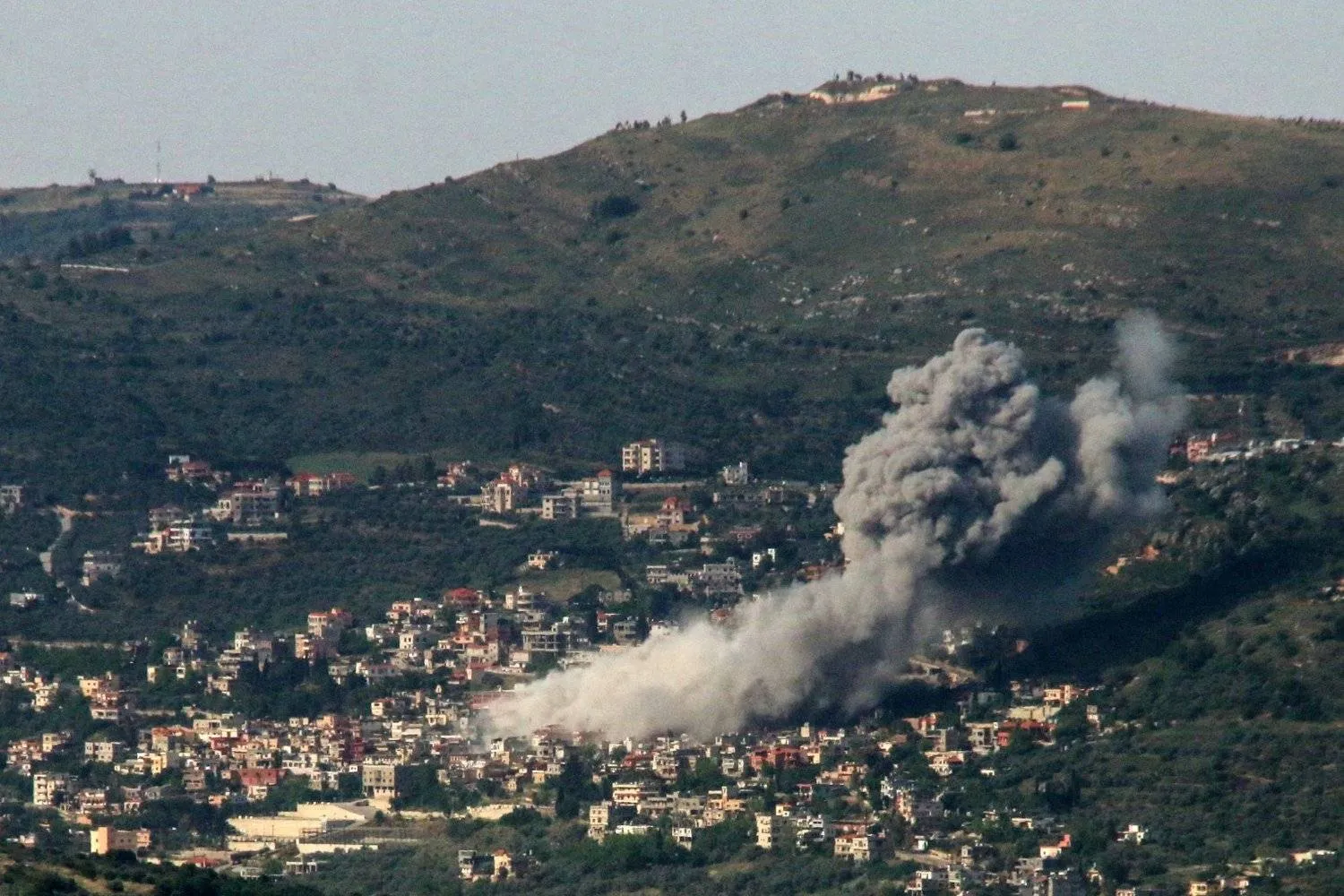
Smoke billows over the southern Lebanese village of Kfar Kila following Israeli bombardment on May 10, 2024, amid ongoing cross-border clashes between Israeli troops and Hezbollah fighters. (Photo by Rabih DAHER / AFP)
TT

Lebanon’s Hotels Hit Hardest by War in the South, Businesses Mourn Lost Season

Smoke billows over the southern Lebanese village of Kfar Kila following Israeli bombardment on May 10, 2024, amid ongoing cross-border clashes between Israeli troops and Hezbollah fighters. (Photo by Rabih DAHER / AFP)

The mood is somber in Lebanon's tourism industry as leaders look ahead to the summer season. Reflecting on the promising summer of 2023, which followed three years of setbacks, they are now losing hope for a rebound, especially with the threat of war in the south casting a shadow.

Israeli predictions suggest a hot summer ahead for Lebanon, adding to concern about tourism.

Pierre Ashkar, who heads the Hotel Owners Syndicate, says hotel bookings have been practically non-existent since October. He blames this on the expected heat and ongoing conflict in the south.

Ashkar noted that many hotels, especially in Beirut, are partially closed without official announcements. In Mount Lebanon, about 90% of hotels are mostly shut down, though their owners haven’t made it public. This has led to fewer staff, with uncertainty about what’s next.

Reflecting on last year’s summer season, Ashkar recalled it as “excellent” after years of struggle. He attributed this success to a significant influx of foreign tourists. However, he now acknowledged a bleak outlook due to embassy warnings against travel to Lebanon, which discourages potential visitors.

Ashkar stressed that a ceasefire announcement would quickly improve the situation.

“This and next month are crucial for Lebanon’s tourism. If the war stops, we'll see a surge in bookings. But if it continues, we’ll lose the summer season gradually,” he told Asharq Al-Awsat.

Highlighting Lebanon’s heavy reliance on tourism, which contributes 40% to the GDP, Ashkar warns of significant losses if the security situation in the south remains unstable or deteriorates due to war.

“Tourism drives Lebanon’s economy. If the season falters, it will hurt the flow of foreign currency, slow down spending, and lead to job losses, especially for young people,” warned economic expert Walid Abu Sleiman.

Assessing the losses, Abu Sleiman noted that direct tourism revenues last year reached about $3.5 billion. He estimated losses in the sector during the eight-month war at around $200 million, with restaurants and cafes hit hard, and hotels suffering the most.


Lebanese PM to Asharq Al-Awsat: 2nd Phase of Disarmament to Begin Soon Covering Regions between Litani, Awali

Prime Minister Nawaf Salam and ambassador Simon Karam meet on Saturday. (PM's office)
TT

Lebanese PM to Asharq Al-Awsat: 2nd Phase of Disarmament to Begin Soon Covering Regions between Litani, Awali

Prime Minister Nawaf Salam and ambassador Simon Karam meet on Saturday. (PM's office)

Lebanon would have completed the first phase of the army’s plan to impose state monopoly over arms, or the disarmament of Hezbollah, by the end of the year.

Prime Minister Nawaf Salam’s office confirmed on Saturday that the first phase was close to completion.

“The first phase of the weapons consolidation plan related to the area south of the Litani River is only days away from completion,” it said.

“The state is ready to move on to the second ‌phase - namely (confiscating weapons) north of the ‍Litani River - based on the ‍plan prepared by the Lebanese army pursuant to ‍a mandate from the government,” Salam added.

The cabinet will meet at the beginning of the new year after the first phase is completed.

Salam, meanwhile, told Asharq Al-Awsat that the second phase of the disarmament will cover the areas between the Litani and Awali Rivers to its north.

The third phase will cover Beirut and Mount Lebanon and the fourth covers the Bekaa followed by remaining regions.

Lebanese sources said the army has completed most of its report on its disarmament efforts south of the Litani. It has completed the confiscation and destruction of thousands of tons of ammunition and military gear. It has discovered around a hundred military tunnels in the region.

As it stands, the army is unlikely to ask for an extension of the deadline to complete the first phase by the end of the year. It may ask for a “technical” extension for a few weeks if necessary.

Salam refused to go into the details of the government’s next step after it receives the army’s detailed report on the disarmament south of the Litani.

“The military has succeeded in imposing complete state authority over the regions from south of the Litani to the southern border, except for the areas occupied by Israel and from where it should withdraw without delay,” the PM told Asharq Al-Awsat.

He confirmed that the government will convene at the beginning of the year to assess the first phase of the disarmament, stressing that Israel must take reciprocal steps, such as ceasing its violations of the ceasefire.

This will not prevent Lebanon from moving on to the second phase of implementing state monopoly over arms, he revealed.

Progress hinges of Hezbollah’s cooperation with Lebanon’s efforts to limit possession of weapons to the state and move towards activating state institutions in the South and kick off the reconstruction process with the help of Lebanon’s friends, he added.

“Imposing state monopoly over weapons is a Lebanese need before it is an international one,” he declared.

Everyone should be concerned with facilitating the process to end the cycle of violence, he urged.

Salam met on Saturday with Simon Karam, Lebanon's top civilian negotiator on the Mechanism committee overseeing the Hezbollah-Israel truce.

Karam briefed Salam on the latest meeting of the Mechanism.

Hezbollah continues to resist calls to disarm, saying the ceasefire with Israel does not cover areas north of the Litani. Party officials continue to tie disarmament to Israel’s withdrawal from regions it occupies in the South.


Israeli Military Says Detained Suspected ISIS Militant in Syria

FILE PHOTO: Israeli military vehicles manoeuvre along the Israel-Lebanon border, as seen from northern Israel, November 24, 2025. REUTERS/Shir Torem/File Photo
TT

Israeli Military Says Detained Suspected ISIS Militant in Syria

FILE PHOTO: Israeli military vehicles manoeuvre along the Israel-Lebanon border, as seen from northern Israel, November 24, 2025. REUTERS/Shir Torem/File Photo

The Israeli military said on Saturday its forces had arrested a suspected ISIS militant in Syria earlier this week and taken him back to Israel.

In a statement, the military said that on Wednesday "soldiers completed an operation in the area of Rafid in southern Syria to apprehend a suspected terrorist affiliated with ISIS.”

"The suspect was transferred for further processing in Israeli territory," the statement said.


Report: Colombian Mercenaries in Sudan ‘Recruited by UK-registered Firms’

(COMBO) This combination of satellite images released by Planet Labs PBC on December 19, 2025, shows from top left to bottom right:- the graves near the United Nations Children's Fund (UNICEF) headquarters in El-Fasher, taken on the following dates: on October 8, 2025, on October 27, 2025, on January 15, 2025, and on December 14, 2025. (Photo by Handout / Planet Labs / AFP)
TT

Report: Colombian Mercenaries in Sudan ‘Recruited by UK-registered Firms’

(COMBO) This combination of satellite images released by Planet Labs PBC on December 19, 2025, shows from top left to bottom right:- the graves near the United Nations Children's Fund (UNICEF) headquarters in El-Fasher, taken on the following dates: on October 8, 2025, on October 27, 2025, on January 15, 2025, and on December 14, 2025. (Photo by Handout / Planet Labs / AFP)

An exclusive investigation by UK’s The Guardian has found companies hiring hundreds of Colombian fighters for Sudan’s Rapid Support Forces.

A one-bedroom flat off north London’s Creighton Road in Tottenham is, according to UK government records, tied to a transnational network of companies involved in the mass recruitment of mercenaries to fight in Sudan alongside the RSF, said the report.

Colombian mercenaries were directly involved in the RSF’s seizure of the southwestern Sudanese city of El Fasher in late October, which prompted a killing frenzy that analysts say has cost at least 60,000 lives.

“The flat in Tottenham is registered to a company called Zeuz Global, set up by two individuals named and sanctioned last week by the US treasury for hiring Colombian mercenaries to fight for the RSF,” said The Guardian.

“Both figures – Colombian nationals in their 50s – are described in documents at Companies House, the government register of firms operating in the UK, as living in Britain,” it said.

“The day after the US treasury announced sanctions on those behind the Colombian mercenary operation –December 9 – Zeuz Global abruptly moved its operation to the very heart of London. On 10 December the firm shared “new address details” Its new postcode matches One Aldwych, a five-star hotel in Covent Garden,” the report added.

Yet the first line of Zeuz Global’s new address is, confusingly, “4dd Aldwych,” which corresponds to the Waldorf Hilton hotel 100 meters away, according to The Guardian.

Both hotels said they had no link to Zeuz Global and had no idea why the firm had used their postcodes.

“It is of major concern that the key individuals the US government claims are directing this mercenary supply have been able to set up a UK company operating from a flat in north London, and even to claim that they’re resident in the UK,” said Mike Lewis, a researcher and former member of the UN panel of experts on Sudan.

When Companies House was asked if it had any knowledge of what Zeuz Global actually did, or is doing, it did not respond. The government agency would also not confirm whether the sanctioned individuals were, in fact, resident in the UK.

Contacting Zeuz proved fruitless; its website, set up in May, was labelled as “under construction” with no contact details provided.