Erdogan: Türkiye Stands with Lebanon Amid Tensions with Israel

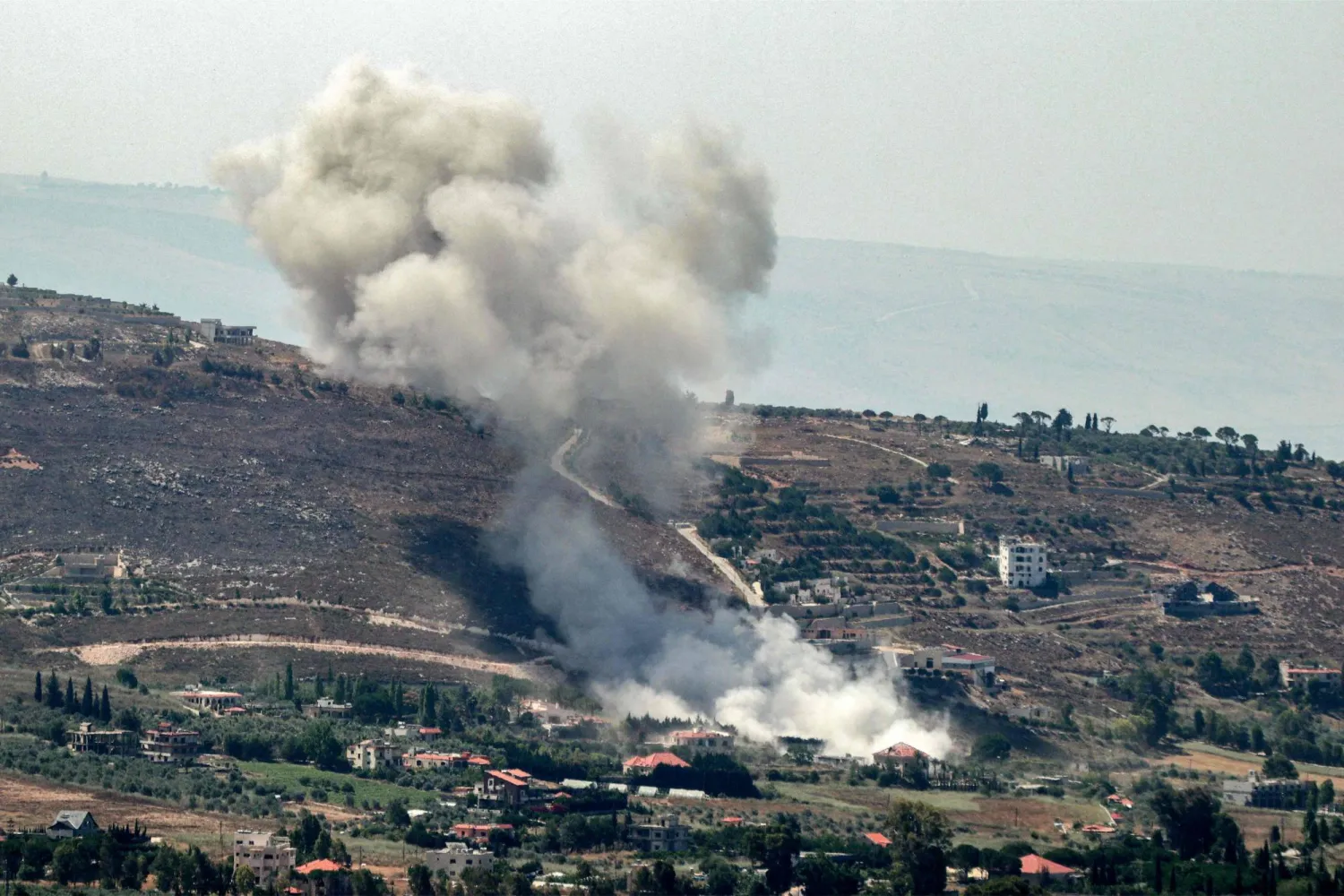
A smoke plume billows during Israeli bombardment on the village of Khiam in south Lebanon near the border with Israel on June 26, 2024. (Photo by Rabih DAHER / AFP)
TT

Erdogan: Türkiye Stands with Lebanon Amid Tensions with Israel

A smoke plume billows during Israeli bombardment on the village of Khiam in south Lebanon near the border with Israel on June 26, 2024. (Photo by Rabih DAHER / AFP)

President Recep Tayyip Erdogan said on Wednesday that Türkiye stood in solidarity with Lebanon in light of growing tensions with Israel, and called on regional countries to also support Beirut.

Speaking in parliament, Erdogan said Israeli Prime Minister Benjamin Netanyahu planned to spread the Gaza war to the region and that this would lead to a "catastrophe", adding the Western support for Israel was "pitiful.”

Israel’s low-level conflict with Lebanon’s Hezbollah has escalated in recent weeks, raising fears of an all-out war.

A senior Israeli official said Tuesday Israel and the United States will devote an unspecified number of weeks to trying to reach a new arrangement with Hezbollah before resorting to other means to bring calm to the Israel-Lebanon border.

“We will now dedicate long weeks ... in an attempt to reach an arrangement” along the border, National Security Adviser Tzachi Hanegbi said.

Hezbollah began attacking northern Israel in solidarity with Hamas shortly after the Palestinian militants’ Oct. 7 attack triggered the war in Gaza. Israel has responded with airstrikes.


Lebanon War Leaves a Classroom of Children Hurt or Dead Every Day, UN Says

 A displaced girl from Majdal Zoun in southern Lebanon looks on inside Al-Jaafareya High School, being used as a shelter for displaced families, following an escalation between Hezbollah and Israel, amid the US-Israeli conflict with Iran, after they arrive in Tyre, Lebanon, March 17, 2026. (Reuters)
A displaced girl from Majdal Zoun in southern Lebanon looks on inside Al-Jaafareya High School, being used as a shelter for displaced families, following an escalation between Hezbollah and Israel, amid the US-Israeli conflict with Iran, after they arrive in Tyre, Lebanon, March 17, 2026. (Reuters)
TT

Lebanon War Leaves a Classroom of Children Hurt or Dead Every Day, UN Says

 A displaced girl from Majdal Zoun in southern Lebanon looks on inside Al-Jaafareya High School, being used as a shelter for displaced families, following an escalation between Hezbollah and Israel, amid the US-Israeli conflict with Iran, after they arrive in Tyre, Lebanon, March 17, 2026. (Reuters)
A displaced girl from Majdal Zoun in southern Lebanon looks on inside Al-Jaafareya High School, being used as a shelter for displaced families, following an escalation between Hezbollah and Israel, amid the US-Israeli conflict with Iran, after they arrive in Tyre, Lebanon, March 17, 2026. (Reuters)

War in Lebanon has wounded or killed the equivalent of one classroom of children daily and robbed the remainder of their sense of normalcy since it began two weeks ago, a top official of the UN children's agency said.

According to Lebanese health ministry figures, at least 111 children have been killed and 334 wounded in Israeli strikes on Lebanon since March 2, when Lebanese armed group Hezbollah joined the regional war by firing into Israeli territory. That equals nearly 30 children a day.

"That's a classroom of children every day since the beginning of the war that's either killed or injured in Lebanon," UNICEF Deputy Executive Director Ted Chaiban said in an interview on Tuesday.

Lebanon's child deaths are ‌among 1,200 children ‌killed across the region in recent weeks - nearly 200 in Iran, four ‌in Israel ⁠and one in ⁠Kuwait.

"They've paid a terrible price. And the first thing we're calling for is a de-escalation, a political way forward to this war," Chaiban told Reuters in Beirut.

Israel says it does not deliberately target civilians and that its warnings give civilians enough time to leave before strikes take place.

STUDENTS MISSING SCHOOL

Israeli strikes have killed more than 900 people in Lebanon since March 2, according to Lebanese data, and the Israeli military's sweeping evacuation orders have displaced more than 1 million people.

Among those are 350,000 children. "It's completely disrupting children's lives. ⁠No home, no school, no sense of normalcy," Chaiban said.

Some children have ‌sheltered with their families in the same public schools where they ‌stayed in 2024, during the last war between Hezbollah and Israel.

Children who have attended school for more ‌than five years have already had their learning disrupted by Lebanon's financial collapse in 2019 and the ‌Beirut port explosion and the COVID-19 pandemic the following year.

Chaiban said it was key to find a way to keep up students' learning - both the displaced and those whose schools had been transformed into shelters.

Fatima Mohammad Basharush, a 41-year-old woman displaced from southern Lebanon to a school in Beirut, said her three children loved school but ‌were now getting only a partial education.

"They're not getting the curriculum as they should. They're not getting all the subjects. A child in fifth ⁠grade is getting a first ⁠grade curriculum. The curriculums are going backwards. We should be doing the opposite - strengthening the curriculum during these circumstances," she said.

UN URGES CIVILIAN INFRASTRUCTURE BE PROTECTED

Many displaced families interviewed by Reuters in recent days said shelters had limited electricity, no heating and not enough bathrooms or running water.

Chaiban said UNICEF was providing water, sanitation kits, warm clothes and blankets to families.

UNICEF has also sent aid to families who have stayed in southern Lebanon, an area the Israeli military has declared a no-go zone and bombed heavily.

Chaiban urged warring parties not to target civilian infrastructure and said the humanitarian notification system, in which aid organizations identify locations of their staff and operations so they are not targeted, was essential.

At least 38 health workers have been killed in Israeli strikes since March 2, according to Lebanon's health ministry. The Israeli military struck a bridge in southern Lebanon last week.

"There is no place for attacking health infrastructure, water infrastructure, schools. They all need to be places that are protected," Chaiban said.


Israel Military Says Its Tank Fire Hit UN Lebanon Base, Regrets Incident

United Nations peacekeepers with the UN Interim Force in Lebanon (UNIFIL) drive past a destroyed healthcare center building in the aftermath of an Israeli strike in the southern Lebanese town of Burj Qalawiya on March 14, 2026. (AFP)
TT

Israel Military Says Its Tank Fire Hit UN Lebanon Base, Regrets Incident

United Nations peacekeepers with the UN Interim Force in Lebanon (UNIFIL) drive past a destroyed healthcare center building in the aftermath of an Israeli strike in the southern Lebanese town of Burj Qalawiya on March 14, 2026. (AFP)

Israel's military on Wednesday acknowledged that its tank fire hit a UN position in southern Lebanon on March 6, wounding Ghanaian peacekeepers, an incident that underscores the growing risks as Israeli operations expand.

Initial findings by an internal UN inquiry had suggested Israel was behind the attack, a Western military source had told Reuters on Tuesday.

The UN peacekeeping mission known as UNIFIL is stationed in southern Lebanon to monitor hostilities along the demarcation line with Israel - an area that is at the heart of clashes between Israeli troops and Iran-backed Hezbollah fighters.

The mission, which will be halted at the end of 2026, has been sporadically caught in the crosshairs of both Israel and Hezbollah over the last couple of years, but with Israel considering a broader ground operation, the risks could be greater in the coming weeks.

In a statement to Reuters, Israel's military acknowledged its troops were behind the incident, but said they had responded to ‌anti-tank missile fire ‌from Hezbollah, which had moderately wounded two of its soldiers.

"A comprehensive investigation concluded in ‌recent ⁠days determined that the ⁠fire that hit the UNIFIL personnel was mistakenly carried out by the Israeli troops that misidentified the UNIFIL troops as the source of the anti-tank fire moments earlier," it said.

"The Israeli army regrets the incident and has conveyed its apologies through the appropriate channels to Ghana and the United Nations. The findings of the investigations have been disseminated within the army to prevent recurrence of similar incidents."

Lebanon was pulled into the war in the Middle East when Hezbollah fired rockets at Israel that ignited a new Israeli offensive against the group.

THREE SHELLS FIRED FROM ISRAELI TANK

According to the Western source, the preliminary conclusions led by UNIFIL’s Force Commander Reserve with support ⁠from explosive ordnance disposal specialists indicated that three strikes at the al-Qawzah base were direct ‌hits from the main gun of an Israeli battle tank.

They were fired using ‌120-mm M339 HE-MP-T shells, the source said.

"Israeli involvement in the attack against UNIFIL is undeniable, given that these munitions are manufactured by Israel ‌Military Industries (IMI)," the source said.

The findings of UNIFIL's probe have not been previously reported. UNIFIL had said on March ‌6 that Ghanaian peacekeepers were wounded amid heavy firing and called the incident "unacceptable," but did not say at the time who was responsible.

"That investigation is not yet complete. Once it is finalized, it will be shared with the parties, per usual practice," said UNIFIL spokesperson Kandice Ardiel.

"Nonetheless, we reiterate the obligation of all actors to ensure the safety and security of peacekeepers and avoid harm to civilians. Any ‌deliberate attack on peacekeepers is a grave violation of international humanitarian law and a violation of resolution 1701."

The Lebanese prime minister's office did not immediately respond to a request ⁠for comment.

Highlighting the concerns surrounding ⁠UN peacekeepers, UNIFIL said on Sunday that another group of peacekeepers were likely fired upon earlier that day on three separate occasions in southern Lebanon, "likely by non-state armed groups." It said no peacekeepers were injured.

UNIFIL ABILITY TO CARRY OUT MISSION TESTED

The M339 HE-MP-T round can be used in anti-personnel, anti-helicopter, anti-materiel, anti-armor and anti-structure roles.

The shots were fired within a five-minute window, indicating repeated fire rather than a single stray round, the source said, adding that the base’s location and coordinates were well known to all parties operating in the area, raising serious concerns over the safety of UN personnel.

Three Ghanaian soldiers were wounded, according to the Ghanaian army.

"This escalation, far from being isolated, is part of a worrying dynamic, severely testing UNIFIL’s ability to carry out its peacekeeping mission," the source said.

The Israeli military occupies five posts within Lebanon and despite a ceasefire last year had frequently carried out airstrikes in the country's south that it says are targeting Iran-backed group Hezbollah.

UN Security Council Resolution 1701, among other provisions, states that no armed forces should be operating in southern Lebanon except the UN peacekeepers and the Lebanese military.

Israel has repeatedly accused Hezbollah of trying to rearm and the Lebanese armed forces of failing to disarm the group.



Iraqi Security Official Says Drone Hits US Embassy in Baghdad

Smoke and fire rise during reported drone and rocket strikes at the US embassy, according to Iraqi security sources, in Baghdad, Iraq, in this still image obtained from a social media video released March 17, 2026. Social Media via REUTERS
TT

Iraqi Security Official Says Drone Hits US Embassy in Baghdad

Smoke and fire rise during reported drone and rocket strikes at the US embassy, according to Iraqi security sources, in Baghdad, Iraq, in this still image obtained from a social media video released March 17, 2026. Social Media via REUTERS

An explosion was heard in Baghdad early Wednesday, an AFP journalist said, as Iraqi officials reported a drone and rocket attack targeting the US embassy.

The latest explosion came hours after multiple blasts were heard across the Iraqi capital, where a witness told AFP he saw detonations likely caused by air defenses intercepting projectiles over the embassy.

Diners at a restaurant in the city seemed undisturbed by the initial sounds of the blasts.

Another witness saw a fire on the edge of the embassy grounds from her balcony, and a security official said the blaze was caused by a drone.

"The embassy was the target of a drone and rocket attack," the official said, speaking on condition of anonymity.

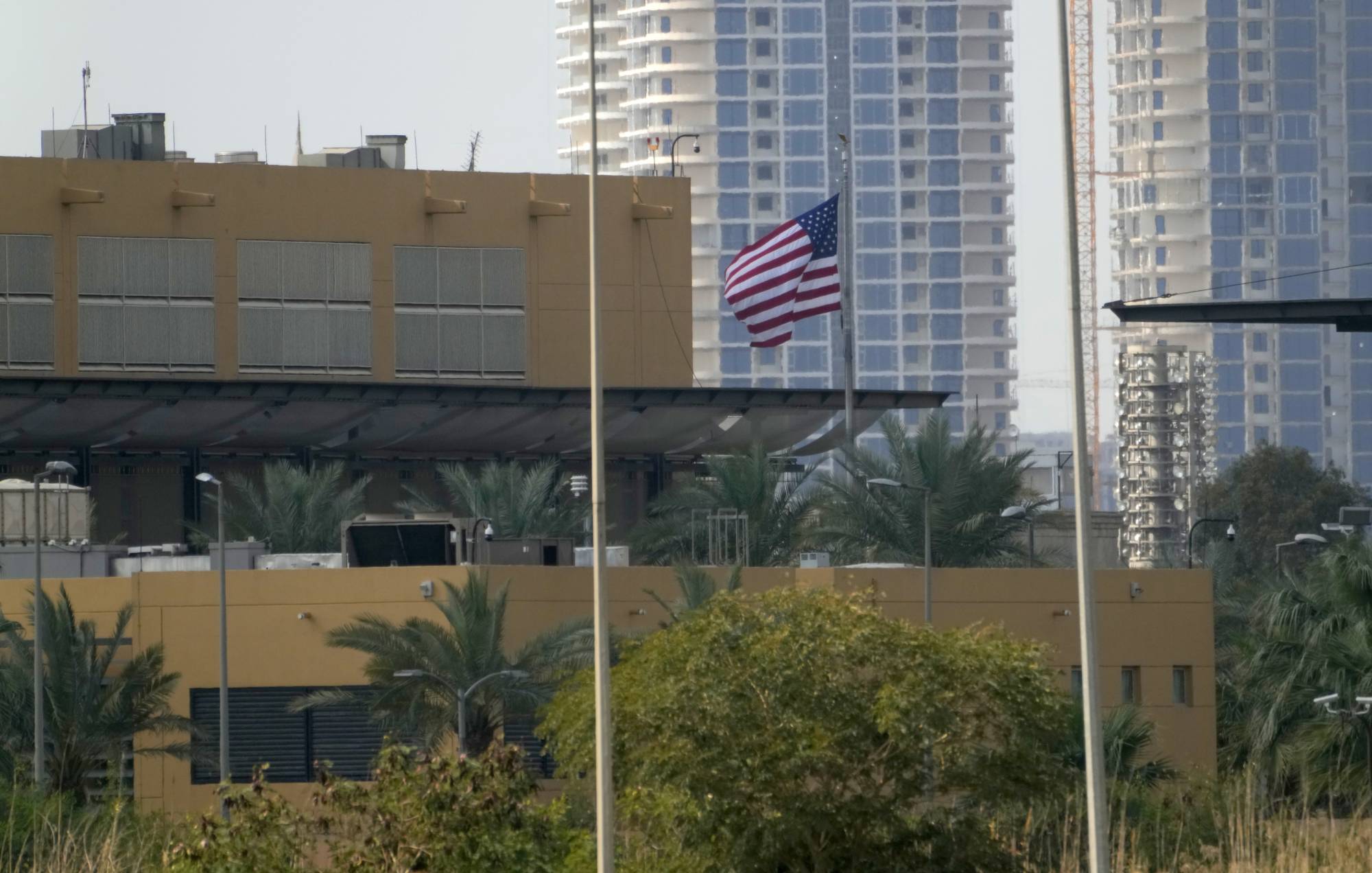
A general view of the US embassy in the Green Zone of Baghdad, Iraq, 17 March 2026. EPA/Ceerwan Aziz

Another drone, targeting a US diplomatic and logistics center at Baghdad's airport, was shot down, according to another security official.

Hours later, an AFP journalist heard another explosion, with a security official saying "a drone directly hit the embassy".
The official did not specify whether there had been any casualties or damage.