Palestinian Death Toll from Israel-Hamas War Surges Past 38,000

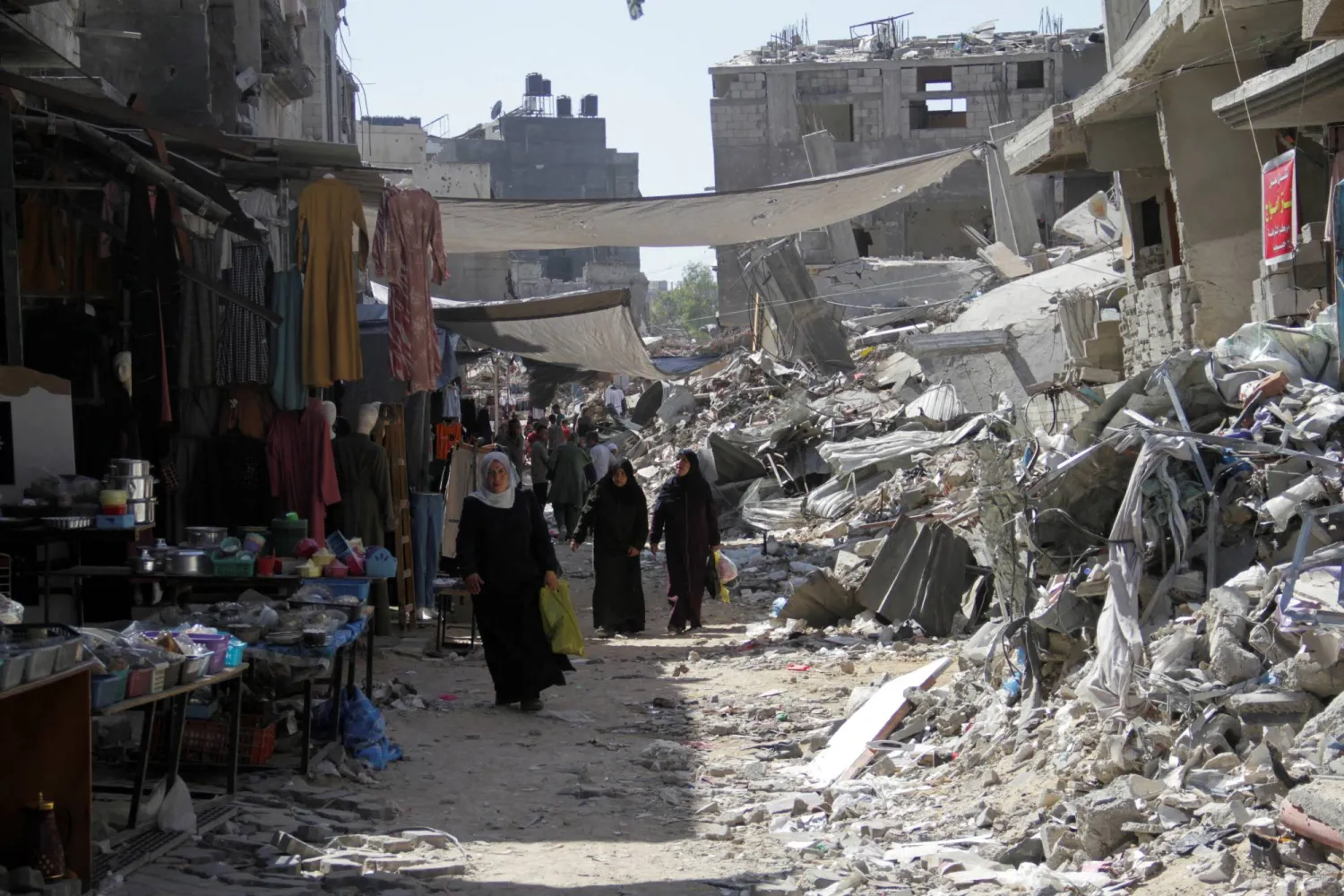
FILE PHOTO: Palestinians walk near houses destroyed in the Israeli military offensive as they struggle with food scarcity, basic necessities amid the conflict between Israel and Hamas continues, in Jabalia refugee camp, in the northern Gaza Strip, June 19, 2024. REUTERS/Mahmoud Issa/File Photo
TT

Palestinian Death Toll from Israel-Hamas War Surges Past 38,000

FILE PHOTO: Palestinians walk near houses destroyed in the Israeli military offensive as they struggle with food scarcity, basic necessities amid the conflict between Israel and Hamas continues, in Jabalia refugee camp, in the northern Gaza Strip, June 19, 2024. REUTERS/Mahmoud Issa/File Photo

The Health Ministry in Hamas-run Gaza said Thursday that the Palestinian death toll from nearly nine months of war has surged past 38,000.
The ministry said that in the last 24 hours, the bodies of 58 people had been brought to hospitals, bringing the overall death toll to 38,011, the Associated Press reported.
It said more than 87,000 people have been wounded in the fighting.
The ministry does not distinguish between fighters and noncombatants in its count, but many of the dead are said to be women and children.

The war began when Hamas-led group launched a surprise attack on Oct. 7 into southern Israel, attacking multiple army bases and farming communities and killing around 1,200 people, mostly civilians. They abducted another 250 people, more than 100 of whom were released during a weeklong cease-fire in November. Hamas is still holding around 80 hostages and the remains of 40 others.
Israel launched a major offensive in response to the Oct. 7 attack that has killed more than 37,900 Palestinians, according to health officials in Gaza, who don't say how many were civilians or militants.

The war has caused vast destruction across the territory, displaced most of its population of 2.3 million — often multiple times — caused widespread hunger and raised fears of famine.


Taiz under Siege, Health Sector on Verge of Collapse

Smoke billows from a site that was targeted during battles between Yemeni government fighters and Yemen's Iran-backed Houthis at the Jabal Han front, west of the city of Taiz, on October 21, 2026. (AFP)
TT

Taiz under Siege, Health Sector on Verge of Collapse

Smoke billows from a site that was targeted during battles between Yemeni government fighters and Yemen's Iran-backed Houthis at the Jabal Han front, west of the city of Taiz, on October 21, 2026. (AFP)

Clashes persisted across the fronts of the Yemeni city of Taiz on Monday, marked by continuous Houthi shelling of residential areas and a tightening of the siege, though no territorial advances were made. Concurrently, airstrikes targeted the group's reinforcements, command centers, and supply lines, even as humanitarian and health crises worsen for millions of residents.

While the government's Giants Brigades and National Shield forces continue to secure their positions in the Kahbub mountains and the vicinity of Bab al-Mandeb, an escalation in Houthi missile attacks has introduced a new threat to displaced persons and civilians within areas controlled by the Yemeni government.

The Yemeni Armed Forces announced that 753 precise, direct strikes were carried out over the past 24 hours under Operation "Dawn of Yemen," targeting Houthi military capabilities, according to the military's official spokesperson, Colonel Mahed Al-Nuzaili.

The operations struck field command and control centers, commanding terrain, fortifications, and firing positions, alongside troop concentrations, reinforcements, and transport and supply assets, he added.

The operations helped disrupt the militants' efforts to deploy fighters into battle while supporting government operations across various fronts, he explained.

Al-Nuzaili said that the strikes neutralized approximately 218 Houthi members and field commanders, and destroyed or disabled 78 vehicles, pieces of machinery, and military transports, in addition to heavy and medium weaponry.

Operations will continue to target the Houthis' capacity to mobilize and reorganize, while maintaining all necessary precautions to protect civilians and civilian objects, he vowed.

Meanwhile, the Yemeni Network for Rights and Freedoms documented 42 crimes and violations committed by the Houthis in Taiz governorate over a 48-hour period, coinciding with the firing of approximately 369 projectiles at residential areas.

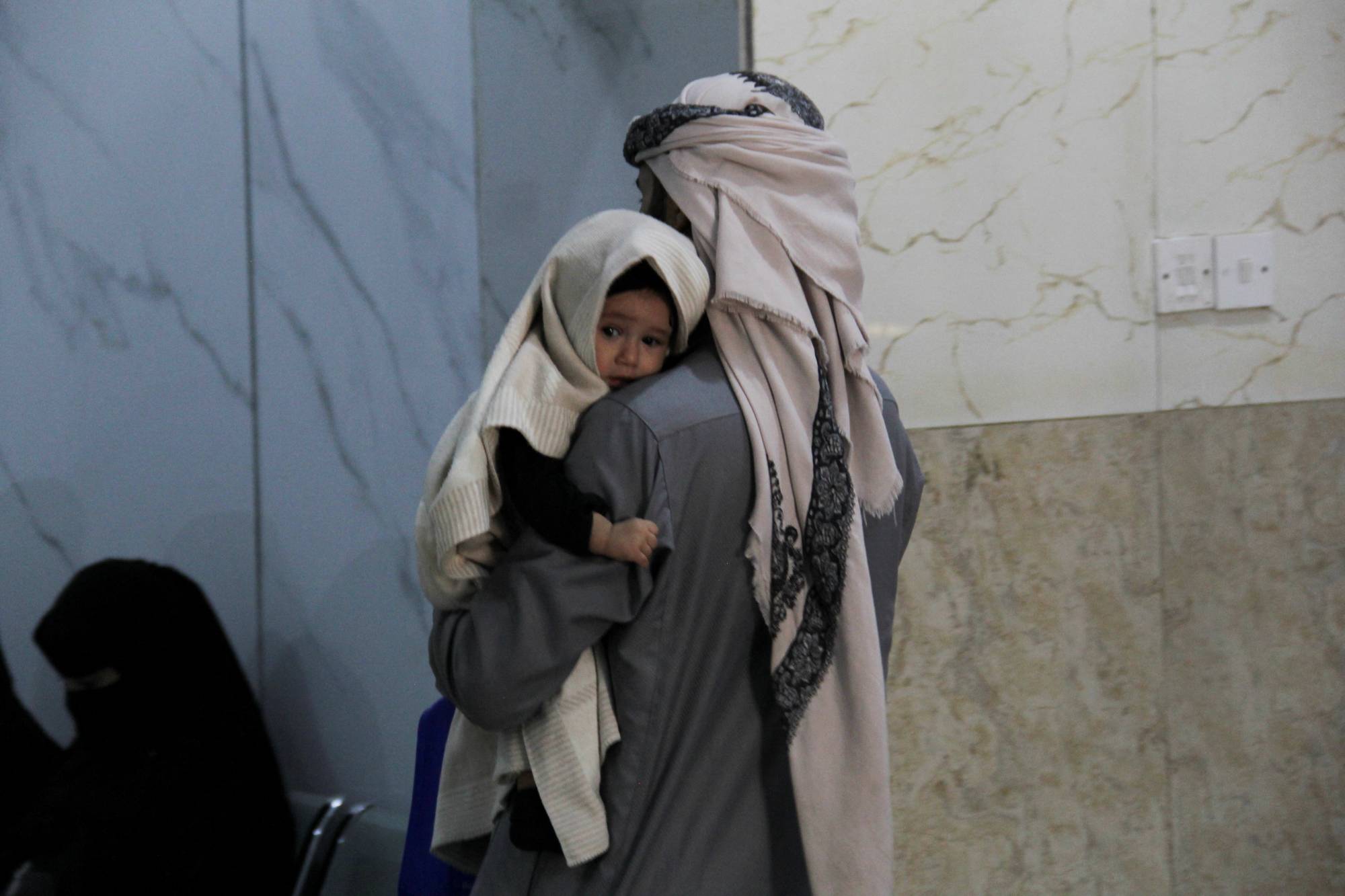
A man carries a boy at a hospital in the southwestern city of Taiz, Yemen, October 25, 2026. (Reuters)

According to a report Monday, the network said the attacks resulted in the deaths of four civilians and injuries to seven others, including two 14-year-old girls.

The network reported that the violations included the abduction of his citizens from their homes. The report also highlighted raids, intimidation, and pressure to recruit dozens of local residents, alongside the looting of eight homes and assaults on residences.

The repercussions of the Houthi shelling and siege extend beyond direct casualties; the rights network stated that restrictions on movement and supplies hamper the access of patients and the wounded to hospitals, while limiting the capacity of health facilities to operate amid shortages of medicine, fuel, and medical supplies.

The network warned that the health sector in Taiz faces mounting pressures that threaten the continuity of essential services, noting that approximately 1,280 kidney failure patients are at risk of having their treatment interrupted due to a shortage of dialysis supplies.

Furthermore, the shortage of fuel and medical supplies threatens the lives of 192 patients in intensive care units and 154 infants in incubators.

The report stated that two hospitals, four medical centers, and three medical storehouses sustained damage, including Al-Safwa Hospital, which serves over 50,000 patients.

It noted that 42 health facilities face acute supply shortages, and that hospitals and ambulances require more than 156,000 liters of fuel per month to ensure service continuity amid generator failures and public power grid outages.


Arab Interior Ministers Council Condemns Houthi Attacks Targeting Makkah and Madinah Regions

Arab Interior Ministers Council Condemns Houthi Attacks Targeting Makkah and Madinah Regions
TT

Arab Interior Ministers Council Condemns Houthi Attacks Targeting Makkah and Madinah Regions

Arab Interior Ministers Council Condemns Houthi Attacks Targeting Makkah and Madinah Regions

The General Secretariat of the Council of Arab Interior Ministers has strongly condemned the terrorist attacks carried out by the Houthi militia using missiles and UAVs against civilians, civilian objects, and holy sites in Saudi Arabia.

In a statement issued from its headquarters in Tunis, the secretariat also condemned the militia's recent attempt to target Makkah and Madinah regions with ballistic missiles, which were intercepted and destroyed by Saudi air defenses, SPA reported.

The secretariat said the attacks constituted a flagrant violation of international law, a grave breach of the sanctity of holy sites, and an affront to the sentiments of Muslims worldwide.

It added that the attacks reflected the militia's continued efforts to undermine regional security and stability.

The secretariat reaffirmed its full solidarity with Saudi Arabia and its support for all measures taken by the Kingdom to protect its territory and holy sites, maintain its security and stability, and safeguard the lives and safety of citizens and residents.


Hamas Tells Mediators It Is Not Planning Attacks, Awaits Israeli Election Results

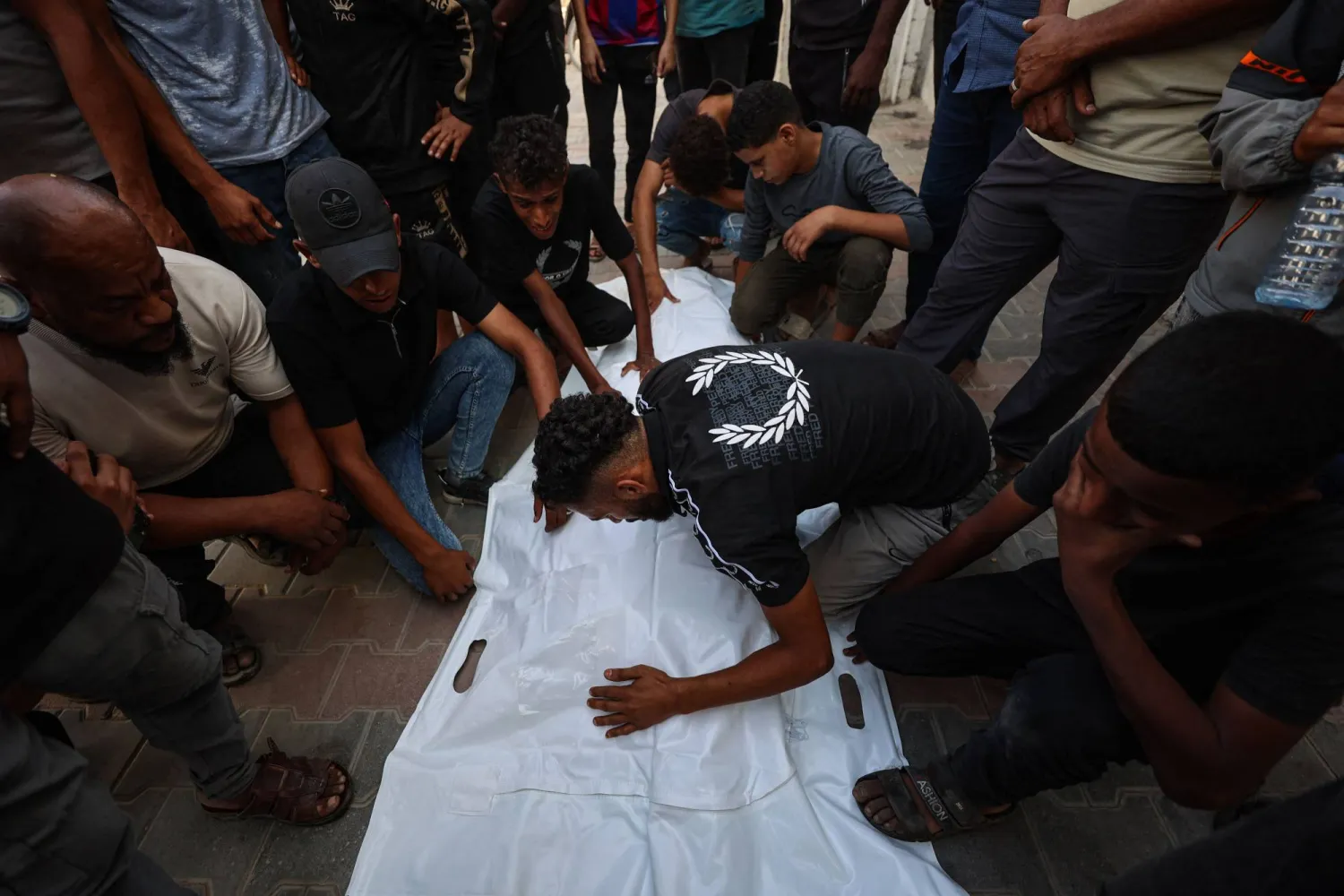
Mourners grieve over the bodies of three Palestinians during their funeral at Al Shifa Hospital in Gaza City on October 25, 2026, after they were killed in an Israeli strike on the Islamic University building. (Photo by Omar AL-QATTAA / AFP)
TT

Hamas Tells Mediators It Is Not Planning Attacks, Awaits Israeli Election Results

Mourners grieve over the bodies of three Palestinians during their funeral at Al Shifa Hospital in Gaza City on October 25, 2026, after they were killed in an Israeli strike on the Islamic University building. (Photo by Omar AL-QATTAA / AFP)

Hamas has shown keen interest in Tuesday's Israeli parliamentary elections, hoping they could mark the beginning of an end to the impasse over implementing US President Donald Trump's Gaza ceasefire plan, particularly regarding reconstruction and the transfer of authority in the territory to the National Committee for the Administration of Gaza.

Two Hamas sources told Asharq Al-Awsat that the movement's leadership had sent a message to mediators and the Board of Peace, as part of its regular communications concerning Israeli violations, expressing hope that "implementation of the US president's plan, as well as the roadmap agreed upon months ago in Cairo, would move forward after the Knesset elections."

Since the announcement of the supposed Gaza ceasefire agreement in October 2025, Israel has refused to withdraw from the positions it occupies in the territory and has carried out daily airstrikes that have killed more than 1,600 Palestinians.

Hamas appears to be counting on the defeat of incumbent Israeli Prime Minister Benjamin Netanyahu, whom it accuses of obstructing the implementation of previously reached agreements while continuing the war in Gaza through daily assassinations, killings, bombardment and destruction.

One of the sources said Hamas regularly sends messages to mediators and representatives of the Board of Peace regarding Israeli violations in Gaza, seeking to demonstrate that Netanyahu's government is failing to honor the agreements and evading their implementation.

The source explained that the latest message reaffirmed Hamas' commitment to fully implementing the agreements reached, including the roadmap presented by Nikolay Mladenov, the Board of Peace's High Representative for Gaza, which was agreed upon following a series of amendments.

The second source said in a separate statement that Hamas had strongly denied in its latest message Israeli allegations that it intended to carry out new attacks comparable to those of October 7, 2023.

The movement also denied having conveyed any such threats through a UN official or other parties monitoring developments in Gaza.

Israeli media had reported allegations that Hamas officials threatened to repeat the October 7 attack during a meeting with a UN official in Gaza. The movement publicly denied the claims.

The source said Hamas had emphasized that recent repeated visits by UN officials to the territory were solely intended to monitor the humanitarian situation and assess residents' living conditions and needs amid aid shortages and Israel's failure to allow the regular entry of sufficient supplies to meet humanitarian requirements.

According to both sources, Hamas reaffirmed in its message that it and other Palestinian factions remain committed to the ceasefire agreement and the full implementation of Trump's plan and the roadmap.

This would allow the National Committee for the Administration of Gaza to enter the territory and assume its responsibilities, while moving forward with the process of registering and accounting for weapons, securing Israel's complete withdrawal from Gaza, reopening border crossings, allowing heavy equipment into the territory, beginning reconstruction without conditions and launching a comprehensive political process addressing the Palestinian issue.

On the eve of the Israeli elections, military escalation continued in the Gaza Strip.

Three Palestinians were killed in a series of attacks targeting the al-Iqlimi area of Mawasi, west of Khan Younis in southern Gaza, after members of an armed gang attempted to infiltrate tents housing displaced people but encountered an ambush set by Hamas security personnel.

Among the three victims was a child killed in intense airstrikes that shook the area early Monday. More than six people were wounded in Israeli bombardment intended to provide cover for the armed gang's withdrawal.

Another Palestinian was killed and several others wounded shortly before noon Monday in an Israeli airstrike targeting a tent in Mawasi, Khan Younis.

Others were wounded, including one person critically, in a separate strike on a tent west of Gaza City.

Early Monday, drones set fire to tents housing displaced Palestinians near the Shujaiya neighborhood intersection in eastern Gaza City, forcing more than 800 Palestinians, most of them women and children, to flee amid heavy Israeli artillery bombardment.

Armed gangs had entered the area two days earlier and set several tents ablaze.

Meanwhile, the Israeli military announced that it had intercepted a drone overnight using technological means as it was heading into the Gaza Strip.

Israel's Channel 12 reported that the drone was carrying a large quantity of drugs.

The channel's military correspondent said the aircraft was a DJI FlyCart drone capable of carrying 80 kilograms.

He questioned what could happen if such a drone fell into the hands of Hamas members, who could repurpose it by loading it with explosives and directing it toward Israeli military positions or communities and towns near the Gaza border, potentially causing casualties.

The correspondent said the Israeli military investigation was focusing on the drone itself and the party operating it, rather than the quantity of drugs it was carrying.