Taiz under Siege, Health Sector on Verge of Collapse

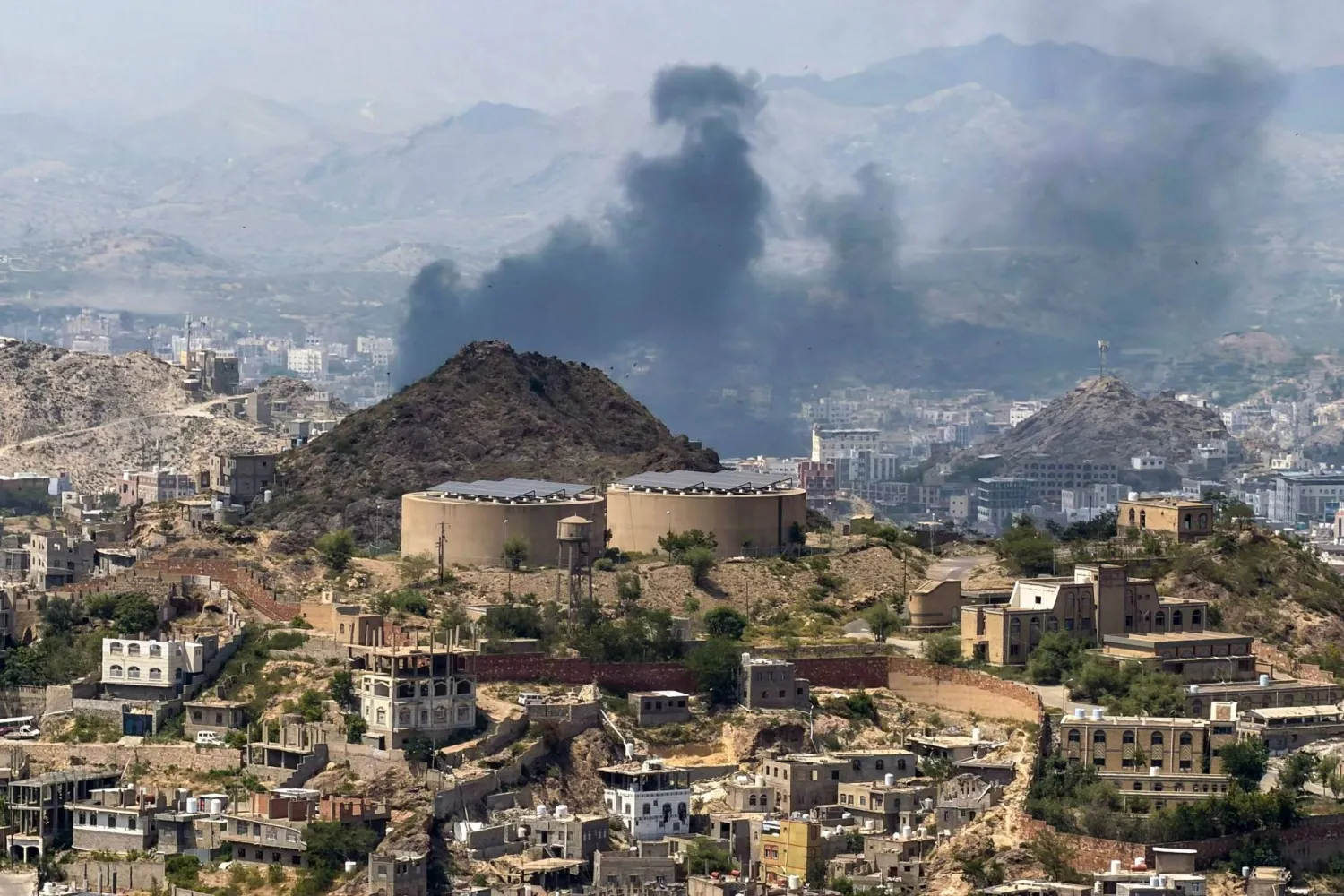
Smoke billows from a site that was targeted during battles between Yemeni government fighters and Yemen's Iran-backed Houthis at the Jabal Han front, west of the city of Taiz, on October 21, 2026. (AFP)
TT

Taiz under Siege, Health Sector on Verge of Collapse

Smoke billows from a site that was targeted during battles between Yemeni government fighters and Yemen's Iran-backed Houthis at the Jabal Han front, west of the city of Taiz, on October 21, 2026. (AFP)

Clashes persisted across the fronts of the Yemeni city of Taiz on Monday, marked by continuous Houthi shelling of residential areas and a tightening of the siege, though no territorial advances were made. Meanwhile, airstrikes targeted the Iran-backed group's reinforcements, command centers, and supply lines, even as humanitarian and health crises worsen for millions of residents.

While the government's Giants Brigades and National Shield forces continue to secure their positions in the Kahbub mountains and the vicinity of Bab al-Mandeb, an escalation in Houthi missile attacks has introduced a new threat to displaced persons and civilians within areas controlled by the Yemeni government.

The Yemeni Armed Forces announced that 753 precise, direct strikes were carried out over the past 24 hours under Operation "Dawn of Yemen," targeting Houthi military capabilities, according to the military's official spokesperson, Colonel Majed Al-Nuzaili.

The operations struck field command and control centers, commanding terrain, fortifications, and firing positions, alongside troop concentrations, reinforcements, and transport and supply assets, he added.

The operations helped disrupt the militants' efforts to deploy fighters into battle while supporting government operations across various fronts, he explained.

Al-Nuzaili said that the strikes neutralized 218 Houthi members and field commanders, and destroyed or disabled 78 vehicles, pieces of machinery, and military transports, in addition to heavy and medium weaponry.

Operations will continue to target the Houthis' capacity to mobilize and reorganize, while maintaining all necessary precautions to protect civilians and civilian objects, he vowed.

Meanwhile, the Yemeni Network for Rights and Freedoms documented 42 crimes and violations committed by the Houthis in Taiz governorate over a 48-hour period, coinciding with the firing of approximately 369 projectiles at residential areas.
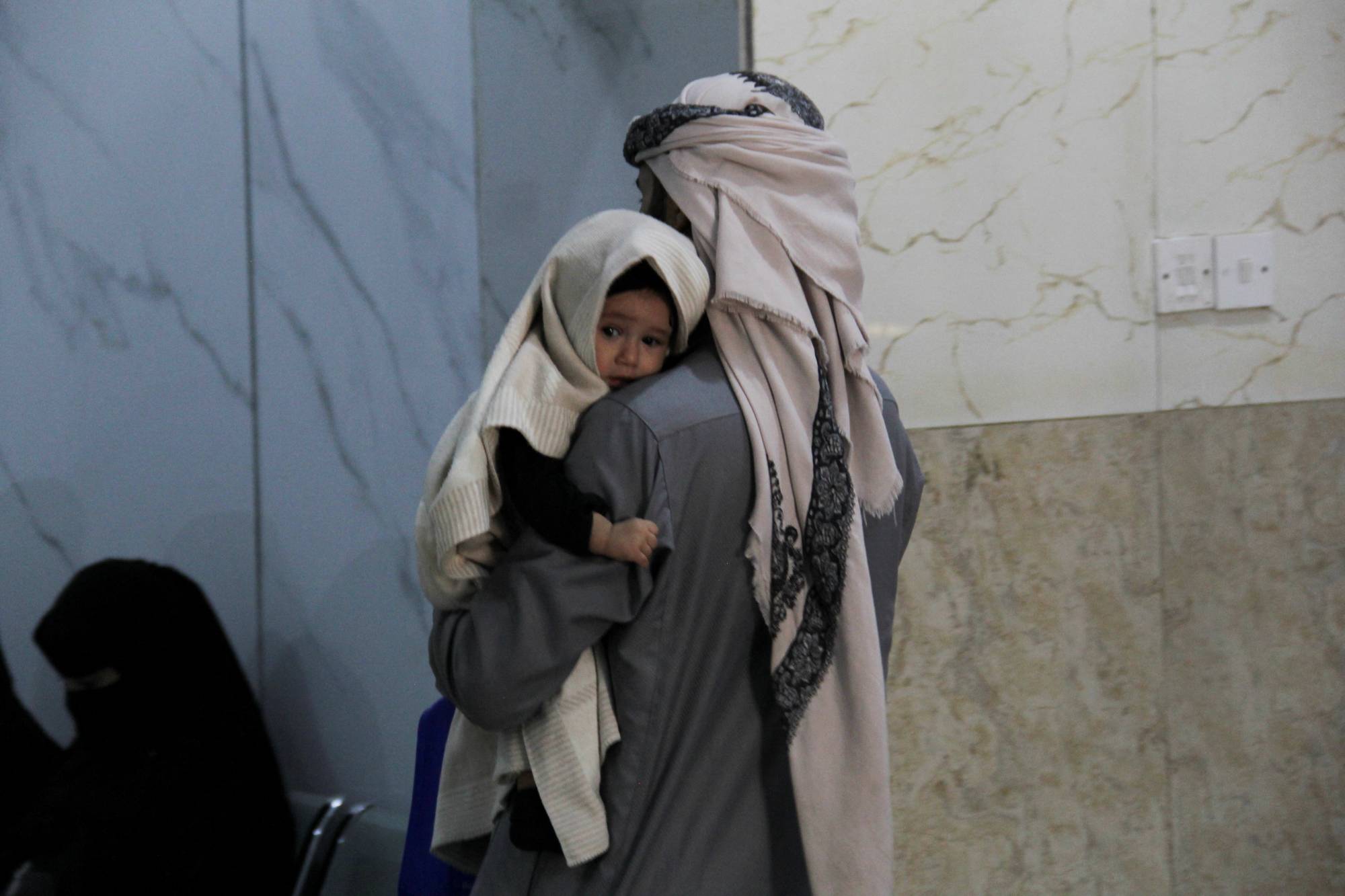
A man carries a boy at a hospital in the southwestern city of Taiz, Yemen, October 25, 2026. (Reuters)

According to a report Monday, the network said the attacks resulted in the deaths of four civilians and injuries to seven others, including two 14-year-old girls.

The network reported that the violations included the abduction of citizens from their homes. The report also highlighted raids, intimidation, and pressure to recruit dozens of local residents, alongside the looting of eight homes and assaults on residences.

The repercussions of the Houthi shelling and siege extend beyond direct casualties; the rights network stated that restrictions on movement and supplies hamper the access of patients and the wounded to hospitals, while limiting the capacity of health facilities to operate amid shortages of medicine, fuel, and medical supplies.

The network warned that the health sector in Taiz faces mounting pressures that threaten the continuity of essential services, noting that some 1,280 kidney failure patients are at risk of having their treatment interrupted due to a shortage of dialysis supplies.

Furthermore, the shortage of fuel and medical supplies threatens the lives of 192 patients in intensive care units and 154 infants in incubators.

The report stated that two hospitals, four medical centers, and three medical storehouses sustained damage, including Al-Safwa Hospital, which serves over 50,000 patients.

It noted that 42 health facilities face acute supply shortages, and that hospitals and ambulances require more than 156,000 liters of fuel per month to ensure service continuity amid generator failures and public power grid outages.


‘No Fuel to Keep Babies Warm’: Shortages Push Hospitals in Yemen’s Taiz to Brink

A nurse attends to a newborn baby inside an incubator at a hospital in the southwestern city of Taiz, Yemen, October 23, 2026. (Reuters)
TT

‘No Fuel to Keep Babies Warm’: Shortages Push Hospitals in Yemen’s Taiz to Brink

A nurse attends to a newborn baby inside an incubator at a hospital in the southwestern city of Taiz, Yemen, October 23, 2026. (Reuters)

Fuel shortages in Yemen's besieged city of Taiz have forced one hospital to cut the number of incubators it can operate from 40 to 10, putting newborn babies at risk as weeks of fighting choke off vital supplies and deepen a humanitarian crisis affecting hundreds of thousands of people.

"There's no oxygen, there's no fuel to run the incubators, to keep the babies warm," said Nada Ahmed, a nurse in the neonatal unit of the Yemeni-Swedish Hospital for Maternity and Childhood.

Nawal Najeeb, a supervisor in the neonatal unit, warned the facility could be forced to halt operations if fuel supplies do not arrive.

"It will be a catastrophe for the babies, a catastrophe of deaths ‌and disabilities."

Taiz has ‌been largely isolated since October 3, with fighting preventing humanitarian supplies ‌from ⁠entering and civilians from ⁠leaving, following an escalation in clashes between the legitimate government and the Iran-aligned Houthi group.

FUEL PRICES SURGE

Key supply routes, including the Taiz-Aden corridor, have been blocked by Houthi forces, worsening shortages of water, food and fuel. The city hosts nearly half of the 250,000 people displaced by the latest fighting, according to the United Nations.

In Taiz city, 42 health facilities are reporting acute shortages of fuel, oxygen, medicines and medical supplies, WHO spokesperson Christian Lindmeier said.

Fuel prices have surged to 2,000 Yemeni rials per liter, driver Abdullah ⁠al-Radfani told Reuters.

Oxfam Yemen's policy, advocacy and media manager, Fatma Jaffar Shotah, ‌described one dialysis patient who has to spend two nights ‌at a healthcare center rather than traveling home between sessions because regular journeys have become unaffordable, the cost ‌rising from half a dollar to around $10.

"Fuel shortage inside the city is having catastrophic impacts ‌on people's lives," she said.

The strain is being felt beyond Taiz. Aid group Médecins Sans Frontières (MSF) said fuel shortages were causing power outages at hospitals and primary healthcare centers in the southern governorates of Aden and Lahj, affecting operating theatres and intensive care units.

HUNGER AND MALNUTRITION

UN agencies and aid groups also warned of worsening ‌hunger and malnutrition. The World Food Program says that more than 800,000 people have been cut off from food assistance in Taiz and surrounding ⁠areas.

UNICEF spokesperson Ricardo Pires ⁠said 52,000 of the 168,000 children screened in Taiz so far this year are acutely malnourished, including more than 11,500 suffering from severe acute malnutrition.

Although UNICEF has put in place nearly 8,000 cartons of life-saving therapeutic food, enough to sustain treatment services for around three months, Pires warned that worsening insecurity and movement restrictions could hamper future deliveries and prevent families from reaching treatment centers.

MSF said growing displacement was aggravating child malnutrition in southern Yemen, an area which has already faced a long-standing hunger crisis, as families flee fighting in the north and along the west coast.

Between September 15 and October 22, MSF screened 299 children under 5 at its mobile clinics in Aden and Lahj. Forty-four children, or 14.7%, were suffering from moderate acute malnutrition, while 28 children, or 9.4%, were severely malnourished and in need of hospital care.

"In each location we go, on a daily basis, we see at least one or two children who are in severe acute malnutrition," said MSF's mobile health activity manager, Sara Ghanem.


Deadly Blast in Car on Syria Highway

Syrian security forces in Aleppo in January. (Reuters)
TT

Deadly Blast in Car on Syria Highway

Syrian security forces in Aleppo in January. (Reuters)

An unidentified explosion in a vehicle on Syria's Damascus-Homs highway on Monday caused casualties, state media reported, while a government source told AFP that three people were killed.

State news agency SANA said that "an explosion took place inside a car on the Damascus-Homs road in the Al-Qastal area", adding that emergency workers removed "the bodies of victims", while authorities launched an investigation.

A government source told AFP on condition of anonymity that three people were killed.


UN Raises ‘Ethnic Cleansing’ Concerns Over Israel’s Operation in Hebron

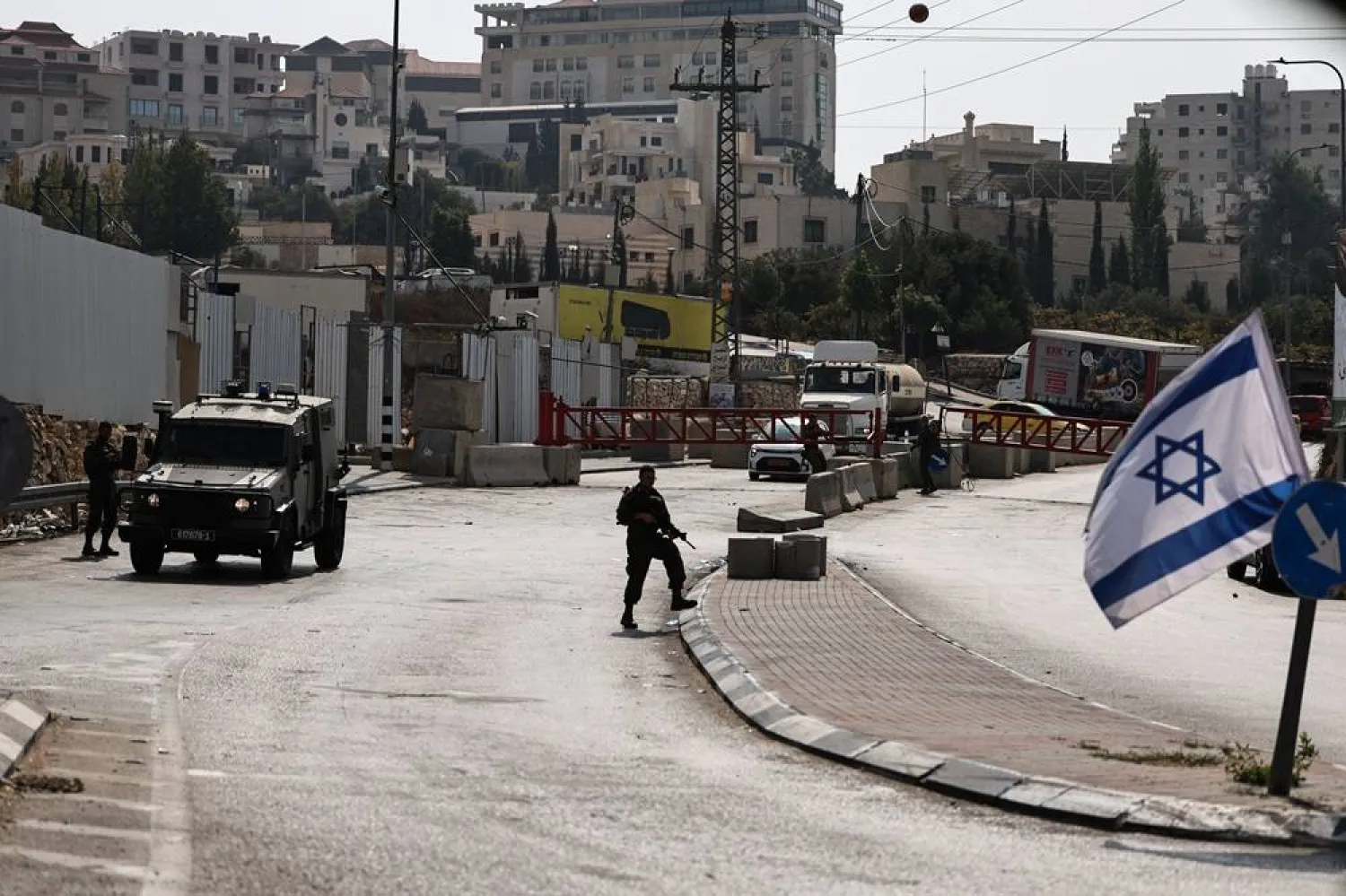
Israeli soldiers stand guard at a closed military gate at an entrance to the West Bank city of Hebron, 25 October 2026, as the military enforced a closure on the city and surrounding villages for a third consecutive day. (EPA)
TT

UN Raises ‘Ethnic Cleansing’ Concerns Over Israel’s Operation in Hebron

Israeli soldiers stand guard at a closed military gate at an entrance to the West Bank city of Hebron, 25 October 2026, as the military enforced a closure on the city and surrounding villages for a third consecutive day. (EPA)

Israeli military operation in the occupied West Bank city of Hebron, launched after a deadly attack by Palestinian gunmen, raises serious concerns of "ethnic cleansing", the United Nations warned Monday.

"Collective punishment is a grave violation of international law. Threats to empty and erase entire neighborhoods also raise serious concerns of ethnic cleansing," UN rights chief Volker Turk said in a statement.

UN Secretary-General António Guterres said Monday that he was “deeply alarmed” by surging Israeli settler violence and settlement expansion in the West Bank. 

Speaking in Cairo on one of his final trips as UN chief, Guterres said Israeli restrictions on humanitarian aid to Gaza must be lifted and obstacles to the Security Council’s peace plan must be removed with “the specter of ethnic cleansing looming ever larger.” 

He said lasting peace in the region depends on Palestinians’ right to self-determination, and that a two-state solution, with Jerusalem as the capital of both, is the only viable path.