


Israeli Strikes in Southern, Central Gaza Kill More than 60 Palestinians, Including in ‘Safe Zone’

 Palestinians gather near the bodies of their relatives killed in the Israeli bombardment of the Gaza Strip, at a hospital morgue in Deir al-Balah, Tuesday, July 16, 2024. (AP)
Palestinians gather near the bodies of their relatives killed in the Israeli bombardment of the Gaza Strip, at a hospital morgue in Deir al-Balah, Tuesday, July 16, 2024. (AP)
TT

Israeli Strikes in Southern, Central Gaza Kill More than 60 Palestinians, Including in ‘Safe Zone’

 Palestinians gather near the bodies of their relatives killed in the Israeli bombardment of the Gaza Strip, at a hospital morgue in Deir al-Balah, Tuesday, July 16, 2024. (AP)
Palestinians gather near the bodies of their relatives killed in the Israeli bombardment of the Gaza Strip, at a hospital morgue in Deir al-Balah, Tuesday, July 16, 2024. (AP)

Israeli airstrikes killed more than 60 Palestinians in southern and central Gaza overnight and into Tuesday, including one that struck an Israeli-declared “safe zone” crowded with thousands of displaced people.

Airstrikes in recent days have brought a constant drumbeat of deaths of Palestinians in the Gaza Strip, even as Israel has pulled back or scaled down major ground offensives in the north and south.

Almost daily strikes have hit the “safe zone” covering some 60 square kilometers (23 square miles) along the Mediterranean coast, where Israel told fleeing Palestinians to take refuge to escape ground assaults. Israel has said it is pursuing Hamas fighters who are hiding among civilians after offensives uprooted underground tunnel networks.

Tuesday's deadliest strike hit a main street lined with market stalls outside the southern city of Khan Younis in Muwasi, at the heart of the zone that is packed with tent camps. Officials at Khan Younis’ Nasser Hospital said 17 people were killed.

Apparently referring to the strike, the Israeli military said in a statement that it targeted a commander in Islamic Jihad’s naval unit west of Khan Younis. It said it was looking into reports that civilians were killed.

The attack hit about a kilometer (0.6 miles) from a compound that Israel struck on Saturday, saying it was targeting Hamas’ top military commander, Mohammed Deif. That blast, in an area also surrounded by tents, killed more than 90 Palestinians, including children, according to Gaza health officials. It is still not known if Deif was killed in the strike.

The new airstrikes came as Israel and Hamas continued to weigh the latest ceasefire proposal. Hamas has said talks meant to wind down the nine-month-long war would continue, even after Israel targeted Deif. International mediators are working to push Israel and Hamas toward a deal that would halt the fighting and free about 120 hostages held by the militant group in Gaza.

Israeli forces have repeatedly had to launch new offensives to combat Hamas fighters they say have been regrouping in parts of Gaza that the military has previously invaded. Still, the military has sounded increasingly confident that it has severely damaged the militants' organization and infrastructure in its 9-month-old campaign.

The military said Tuesday that it has eliminated half of the leadership of Hamas' military wing and that some 14,000 militants have been killed or detained. It said it killed six brigade commanders, over 20 battalion commanders, and approximately 150 company commanders from Hamas' ranks, and that over the course of the war, it has hit 37,000 targets from the air within the Gaza Strip, including more than 25,000 terrorist infrastructure and launch sites.

The figures could not be independently confirmed.

Israel's ground campaigns have focused on northern Gaza and the southern cities of Khan Younis and Rafah, where it says it has destroyed extensive Hamas tunnel networks. The offensives have left entire neighborhoods flattened. While ground operations continue in Rafah, airstrikes now appear to be hitting heavily in the areas untouched by previous offensives in the center and the coastal “safe zone.”

Strikes late Monday and on Tuesday hit the Nuseirat and Zawaida refugee camps in central Gaza. Strikes on four houses killed at least 24 people, including 10 women and four children, according to officials at Al Aqsa hospital in the nearby town of Deir al-Balah.

Another hit a UN school in Nuseirat where families were sheltering, killing at least nine people. AP footage showed the school's yard covered in rubble and twisted metal from a structure that was hit. Workers carried bodies wrapped in blankets, as women and children watched from the classrooms where they have been living.

Israel's military said Hamas fighters were operating from the school to plan attacks. Its claim could not be independently confirmed.

Other strikes in Khan Younis and Rafah killed 12 people, according to medical officials and AP journalists. An AP journalist counted the bodies at the hospital before a funeral was held at its gates.

The military said air force planes struck some 40 targets in Gaza over the past day, among them observation posts, Hamas military structures and explosives-rigged buildings. Israel blames Hamas for civilian casualties because the militants operate in densely populated areas.

The Israeli military said Tuesday that it would begin sending draft notices to Jewish ultra-Orthodox men next week — a step that could destabilize Prime Minister Benjamin Netanyahu’s government and trigger more large protests in the community. Under long-standing political arrangements, ultra-Orthodox men had been exempt from the draft, which is compulsory for most Jewish men — an exemption that created resentment among the general public in Israel.

The war in Gaza, which was sparked by Hamas’ Oct. 7 attack on southern Israel, has killed more than 38,600 people, according to the territory's Health Ministry, which does not distinguish between combatants and civilians in its count. The war has created a humanitarian catastrophe in the coastal Palestinian territory, displaced most of its 2.3 million population and triggered widespread hunger.

Hamas’ October attack killed 1,200 people, mostly civilians, and fighters took about 250 hostage. About 120 remain in captivity, with about a third of them believed to be dead, according to Israeli authorities.

Violence has also surged in the West Bank. On Tuesday a Palestinian stabbed an Israeli policeman, wounding him lightly, before another officer opened fire, killing the assailant who was identified as a 19-year-old from Gaza.



Egypt Urges All Parties to Show Restraint before Gaza's Rafah Crossing Reopens

Israeli forces are due to allow the Rafah crossing between Egypt and Gaza to reopen on Sunday - AFP
TT

Egypt Urges All Parties to Show Restraint before Gaza's Rafah Crossing Reopens

Israeli forces are due to allow the Rafah crossing between Egypt and Gaza to reopen on Sunday - AFP

Egypt condemned Israel's latest strikes in Gaza on Saturday and urged all parties to respect a fragile US-brokered ceasefire ahead of the long-awaited reopening of the territory's Rafah border crossing, AFP reported.

In a statement from its foreign ministry, Egypt condemned Israel's "repeated violations" of the truce and demanded all parties "exercise the utmost restraint", after Gaza's civil defense agency said Israeli strikes killed 28 people on Saturday.

Israeli forces are due to allow the Rafah crossing between Egypt and Gaza to reopen on Sunday on a trial basis and to allow only the "limited movement of people", not aid shipments.


NGOs: Türkiye Blocks Aid Convoy to Syria's Kobane

Members of Kurdish-led Syrian Democratic Forces (SDF) arrive in Kobane on January 23, 2026, after withdrawing from areas in eastern Syria. © AFP
TT

NGOs: Türkiye Blocks Aid Convoy to Syria's Kobane

Members of Kurdish-led Syrian Democratic Forces (SDF) arrive in Kobane on January 23, 2026, after withdrawing from areas in eastern Syria. © AFP

Turkish authorities have blocked a convoy carrying aid to Kobane, a predominantly Kurdish town in northern Syria encircled by the Syrian army, NGOs and a Turkish MP said on Saturday.

They said the aid was blocked before it reached the Türkiye -Syria border, despite an agreement announced on Friday between the Syrian government and the country's Kurdish minority to gradually integrate the Kurds' military and civilian institutions into the state.

Twenty-five lorries containing water, milk, baby formula and blankets collected in Diyarbakir, the main city in Türkiye's predominantly Kurdish southeast, "were prevented from crossing the border", said the Diyarbakir Solidarity and Protection Platform, which organized the aid campaign, AFP reported.

"Blocking humanitarian aid trucks carrying basic necessities is unacceptable, both from the point of view of humanitarian law and from the point of view of moral responsibility," said the platform, which brings together several NGOs.

Earlier this week, residents of Kobane told AFP they were running out of food, water and electricity because the city was overwhelmed with people fleeing the advance of the Syrian army.

Kurdish forces accused the Syrian army of imposing a siege on Kobane, also known as Ain al-Arab in Arabic.

"The trucks are still waiting in a depot on the highway," said Adalet Kaya, an MP from Türkiye's pro-Kurdish DEM party who was accompanying the convoy.

"We will continue negotiations today. We hope they will be able to cross at the Mursitpinar border post," he told AFP.

Mursitpinar is located on the Turkish side of the border, across from Kobane.

Turkish authorities have kept the border crossing closed since 2016, while occasionally opening it briefly to allow humanitarian aid to pass through.

DEM and Türkiye's main opposition CHP called this week for Mursitpinar to be opened "to avoid a humanitarian tragedy".

Turkish authorities said aid convoys should use the Oncupinar border crossing, 180 kilometres (110 miles) away.

"It's not just a question of distance. We want to be sure the aid reaches Kobane and is not redirected elsewhere by Damascus, which has imposed a siege," said Kaya.

After months of deadlock and fighting, Damascus and the Syrian Kurds announced an agreement on Friday that would see the forces and administration of Syria's Kurdish autonomous region gradually integrated into the Syrian state.

Kobane is around 200 kilometres from the Kurds' stronghold in Syria's far northeast.

Kurdish forces liberated the city from a lengthy siege by the ISIS group in 2015 and it took on symbolic value as their first major victory against the militants.

Kobane is hemmed in by the Turkish border to the north and government forces on all sides, pending the entry into the force of Friday's agreement.


Lebanon's Government Approves a Deal to Transfer Syrian Prisoners Back to Syria

The main Homs prison was emptied when Assad fell in December 2024. But a year on, its wards are among those in Syria's prisons and lockups that are filling again with security detainees. REUTERS/John Davison
TT

Lebanon's Government Approves a Deal to Transfer Syrian Prisoners Back to Syria

The main Homs prison was emptied when Assad fell in December 2024. But a year on, its wards are among those in Syria's prisons and lockups that are filling again with security detainees. REUTERS/John Davison

Lebanon’s Cabinet approved an agreement to transfer Syrian prisoners serving their sentences in Lebanon back to their home country.

The issue of prisoners has been a sore point as the neighboring countries seek to recalibrate their relations following the ouster of former Syrian President Bashar Assad.

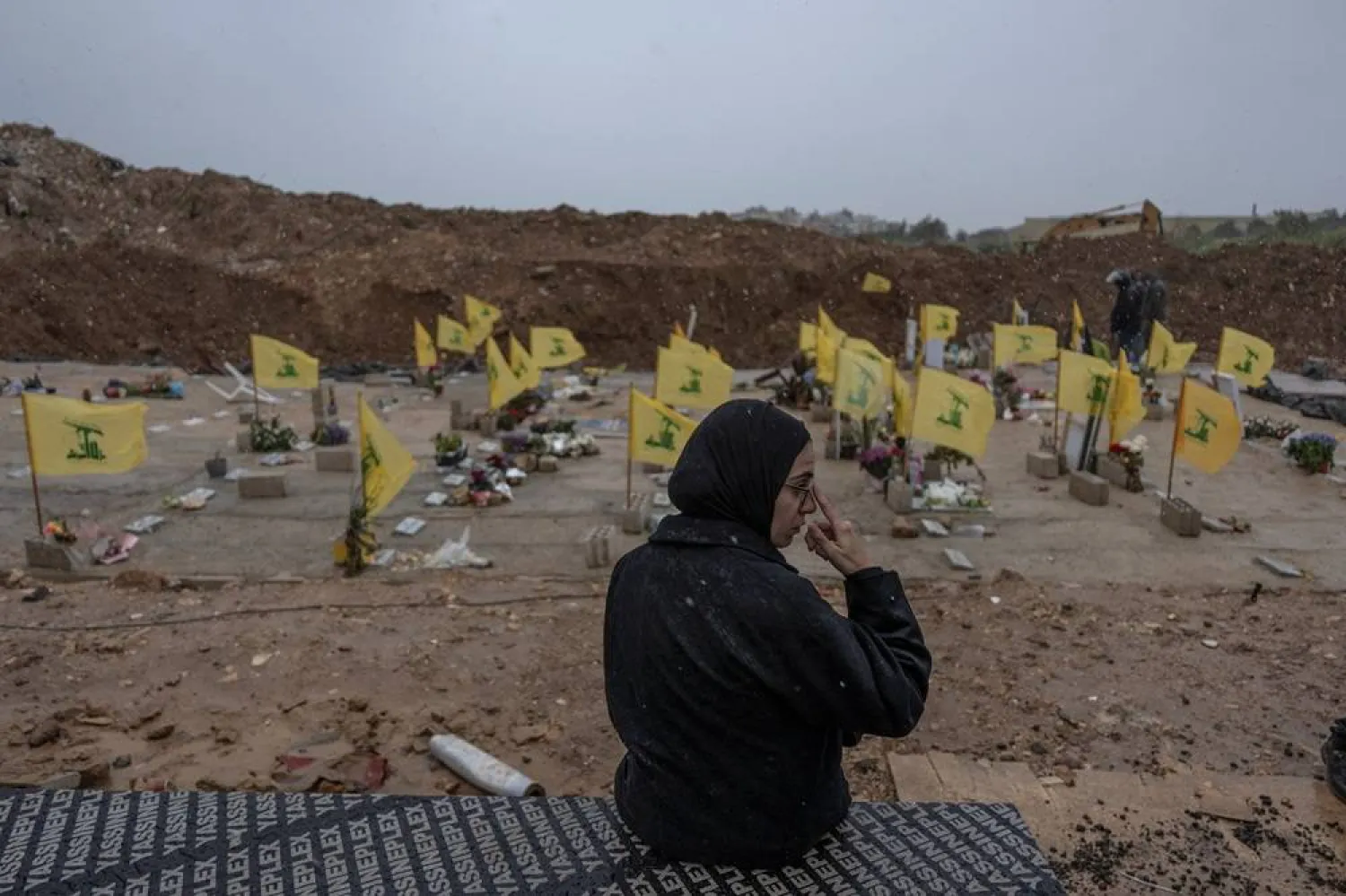
Lebanon and Syria have a complicated history with grievances on both sides. Many Lebanese resent the decades-long occupation of their country by Syrian forces that ended in 2005. Many Syrians resent the role played by the Lebanese militant group Hezbollah when it entered Syria’s civil war in defense of Assad’s government.

A key obstacle to warming relations has been the fate of about 2,000 Syrians in Lebanese prisons, including some 800 held over attacks and shootings, many without trial. Damascus had asked Beirut to hand them over to continue their prison terms in Syria, but Lebanese judicial officials said Beirut would not release any attackers and that each must be studied and resolved separately.

The deal approved late Friday appeared to resolve that tension. Lebanese Information Minister Paul Morcos said other issues remain to be resolved between the two countries, including the fate of Lebanese believed to have been disappeared into Syrian prisons during Assad’s rule and the demarcation of the border between the two countries.

Lebanon’s Deputy Prime Minister Tarek Mitri told reporters after the Cabinet meeting that about 300 prisoners would be transferred as a result of the agreement.

Protesters gathered in a square below the government palace in downtown Beirut ahead of the Cabinet vote to call for amnesty for Lebanese prisoners, including some who joined militant groups fighting against Assad in Syria. Some of the protesters called for the release of cleric Ahmad al-Assir, imprisoned for his role in 2013 clashes that killed 18 Lebanese army soldiers.

“The state found solutions for the Syrian youth who are heroes and belong to the Syrian revolution who have been imprisoned for 12 years,” said protester Khaled Al- Bobbo. “But in the same files there are also Lebanese detainees. ... We demand that just as they found solutions for the Syrians, they must also find solutions for the people of this country.”