

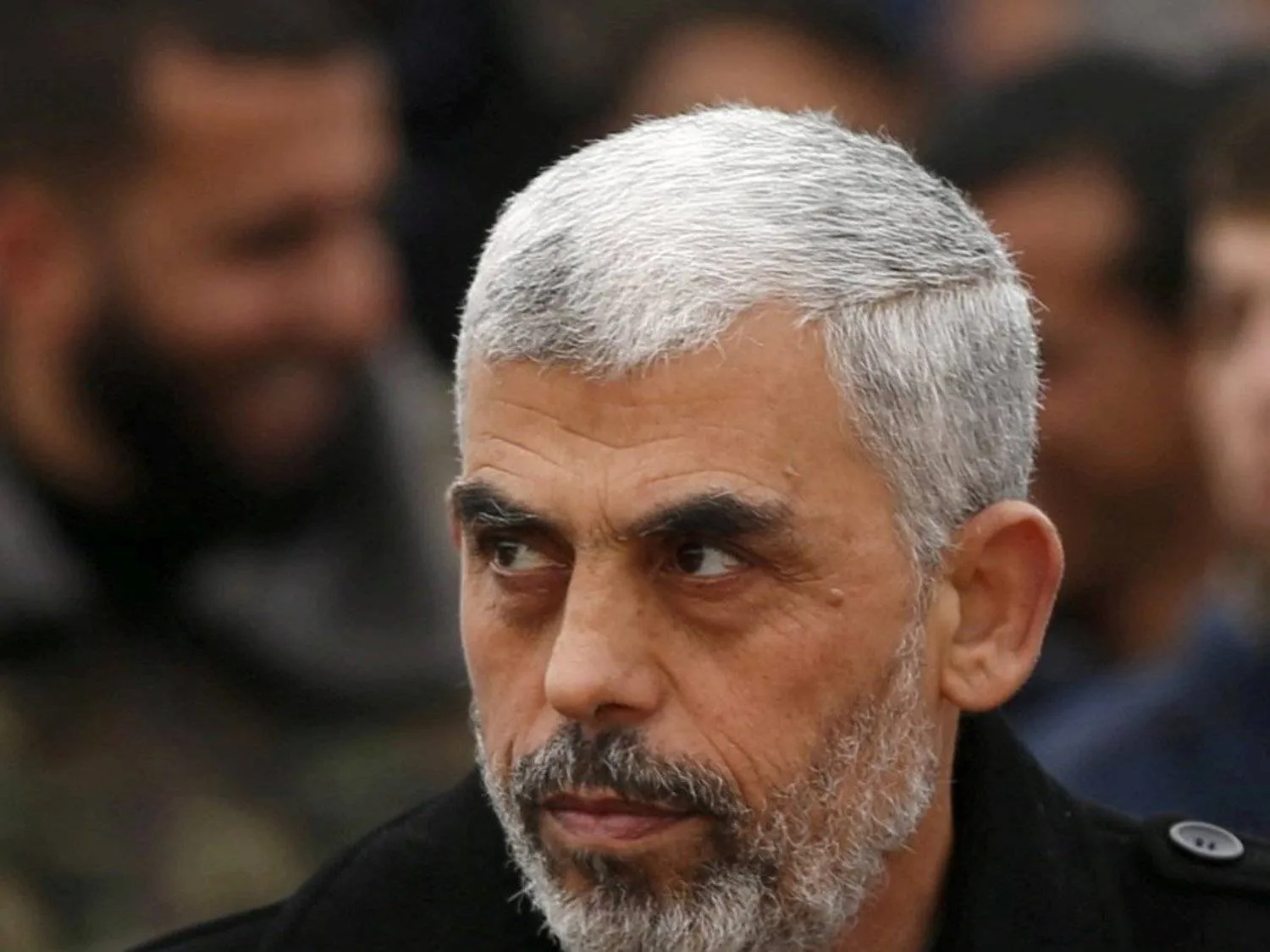

CIA Director: Sinwar Facing Growing Pressure to End Gaza War

The leader of Hamas in Gaza, Yahya Sinwar (Reuters)
TT

CIA Director: Sinwar Facing Growing Pressure to End Gaza War

The leader of Hamas in Gaza, Yahya Sinwar (Reuters)

The CIA has assessed that the leader of Hamas in Gaza, Yahya Sinwar, is coming under increased pressure from his own military commanders to accept a ceasefire deal and end the war with Israel, CIA Director Bill Burns told a closed-door conference on Saturday, according to a source who attended.

Sinwar, the key architect of the October 7 attack in Israel, is not “concerned with his mortality” but is facing pressure about being blamed for the enormity of the suffering in Gaza, Burns said at the conference, the source said.

Burns – who for months has conducted feverish negotiations as the Biden administration’s point person – said it was incumbent on both the Israeli government and Hamas to take advantage of this moment, more than nine months since the war started, to reach a ceasefire.

But the internal pressure Sinwar is now facing is new in the past two weeks, including the calls from his own senior commanders who are tiring of the fight, Burns said, according to the attendee who was granted anonymity to discuss the off-the-record conference.

The CIA director was speaking at the annual Allen & Company summer retreat in Sun Valley, Idaho, sometimes called a “summer camp for billionaires” because of its glitzy guest list of tech moguls, media titans and senior government officials who are invited to the secretive week-long event.

The increased pressure on Sinwar comes as Hamas and Israel have agreed to a framework deal that that President Joe Biden laid out at the end of May. That’s what US officials have said is being used as the basis to an agreement to end the fighting.

Burns had just returned from his latest trip last week to the Middle East to try to further the negotiations over a Gaza ceasefire and hostage deal, meeting with mediator counterparts from Qatar and Egypt, as well as Israel’s head of foreign intelligence.

On Saturday Burns said that there is a “fragile possibility before us” and that the chances of a ceasefire being agreed are greater than they have been, months after a brief temporary truce saw dozens of hostages freed in November. But, according to CNN, he emphasized that the final stage of negotiations is always difficult.

The renewed push comes after the previous discussions fell apart in May following a similar flurry of meetings and travel by Burns in the region.

Israeli Prime Minister Benjamin Netanyahu is also facing immense domestic pressure to strike a deal that would bring home the remaining hostages held in Gaza. Thousands of Israeli protesters regularly take to the streets of Tel Aviv demanding the government focus on the return of the hostages rather than the military campaign.

“There are still gaps to close, but we’re making progress, the trend is positive,” Biden said on Thursday, “and I’m determined to get this deal done and bring an end to this war, which should end now.”

Israel’s campaign in Gaza has killed more than 38,000 Palestinians, according to Gaza’s Ministry of Health. Thousands are believed missing under the rubble and hundreds of thousands more face disease, famine and lack of shelter, according to aid organizations.

Beyond the enormous amount of detail being hashed out in the potential agreement, talks are routinely slowed by the difficulties of getting messages to and from Sinwar as Israel tries to hunt him down.

Of the three most senior Hamas leaders in Gaza, Israel is believed to have found and killed just one: Marwan Issa, the second in command of the military wing. Its military chief, Mohammed Deif, was targeted by Israel in a bombing on Saturday that killed almost 100 Palestinians and wounded hundreds more, according to Palestinian health officials.

Neither Israel nor the US has determined whether Deif was successfully targeted.

US officials believe that Sinwar no longer wants to rule Gaza and both Israel and Hamas have signed on to an “interim governance” plan that would begin in the second phase of a ceasefire in which neither of them would control Gaza, a US official told CNN.

Qatar has also made clear they would kick out Hamas’ political leadership from their longtime external base if the militant group doesn’t sign on to the plan, US officials say.

In Hamas communications seen and reported recently by The Associated Press, senior Hamas leaders inside Gaza called on external figures from the group to accept Biden’s ceasefire proposal, citing heavy losses and dire conditions in Gaza.

Perhaps an indication of their eagerness to end the fighting, Hamas recently backed off their key demand that a ceasefire agreement include assurances it would then lead to a permanent ceasefire, long a sticking point in the talks that Israel had refused.

Netanyahu then insisted that any deal must allow Israel to return to fighting until its war objectives are met.

That means a pause in the fighting could start, which would see both some Israeli hostages and Palestinian prisoners released, before Israel re-launches military operations, according to CNN.

The framework Biden proposed says that a permanent ceasefire would be negotiated during the first phase of a pause in the fighting, which would continue as long as negotiations do.

On the same day that Burns was speaking, Netanyahu said at a news conference that he would not move “one millimeter” from the framework laid out by Biden while claiming Hamas had requested 29 changes to the proposal, but he refused to make any.



Israel Military Says Soldier Killed in Gaza 

A drone view shows the destruction in a residential neighborhood, after the withdrawal of the Israeli forces from the area, amid a ceasefire between Israel and Hamas in Gaza, in Gaza City, October 21, 2025. (Reuters)
TT

Israel Military Says Soldier Killed in Gaza 

A drone view shows the destruction in a residential neighborhood, after the withdrawal of the Israeli forces from the area, amid a ceasefire between Israel and Hamas in Gaza, in Gaza City, October 21, 2025. (Reuters)

The Israeli military announced that one of its soldiers had been killed in combat in southern Gaza on Wednesday, but a security source said the death appeared to have been caused by "friendly fire".

"Staff Sergeant Ofri Yafe, aged 21, from HaYogev, a soldier in the Paratroopers Reconnaissance Unit, fell during combat in the southern Gaza Strip," the military said in a statement.

A security source, however, told AFP that the soldier appeared to have been "killed by friendly fire", without providing further details.

"The incident is still under investigation," the source added.

The death brings to five the number of Israeli soldiers killed in Gaza since a ceasefire took effect on October 10.


Syria: SDF’s Mazloum Abdi Says Implementation of Integration Deal May Take Time

People sit outdoors surrounded by nature, with the Tigris river flowing in the background, following a long atmospheric depression, near the Syrian-Turkish border in Derik, Syria, February 16, 2026 REUTERS/Orhan Qereman
TT

Syria: SDF’s Mazloum Abdi Says Implementation of Integration Deal May Take Time

People sit outdoors surrounded by nature, with the Tigris river flowing in the background, following a long atmospheric depression, near the Syrian-Turkish border in Derik, Syria, February 16, 2026 REUTERS/Orhan Qereman

Mazloum Abdi, commander of the Syrian Democratic Forces, said the process of merging the SDF with Syrian government forces “may take some time,” despite expressing confidence in the eventual success of the agreement.

His remarks came after earlier comments in which he acknowledged differences with Damascus over the concept of “decentralization.”

Speaking at a tribal conference in the northeastern city of Hasakah on Tuesday, Abdi said the issue of integration would not be resolved quickly, but stressed that the agreement remains on track.

He said the deal reached last month stipulates that three Syrian army brigades will be created out of the SDF.

Abdi added that all SDF military units have withdrawn to their barracks in an effort to preserve stability and continue implementing the announced integration agreement with the Syrian state.

He also emphasized the need for armed forces to withdraw from the vicinity of the city of Ayn al-Arab (Kobani), to be replaced by security forces tasked with maintaining order.


Israeli Far-Right Minister to Push for ‘Migration’ of West Bank, Gaza Palestinians 

A Palestinian man checks leather belts as people prepare for Ramadan, in the old city of Hebron in the Israeli-occupied West Bank, February 17,2026. (Reuters)
TT

Israeli Far-Right Minister to Push for ‘Migration’ of West Bank, Gaza Palestinians 

A Palestinian man checks leather belts as people prepare for Ramadan, in the old city of Hebron in the Israeli-occupied West Bank, February 17,2026. (Reuters)

Israel's far-right Finance Minister Bezalel Smotrich said he would pursue a policy of "encouraging the migration" of Palestinians from the occupied West Bank and Gaza Strip, Israeli media reported Wednesday.

"We will eliminate the idea of an Arab terror state," said Smotrich, speaking at an event organized by his Religious Zionism Party late on Tuesday.

"We will finally, formally, and in practical terms nullify the cursed Oslo Accords and embark on a path toward sovereignty, while encouraging emigration from both Gaza and Judea and Samaria.

"There is no other long-term solution," added Smotrich, who himself lives in a settlement in the West Bank.

Since last week, Israel has approved a series of measures backed by far-right ministers to tighten control over the West Bank, including in areas administered by the Palestinian Authority under the Oslo Accords, in place since the 1990s.

The measures include a process to register land in the West Bank as "state property" and facilitate direct purchases of land by Jewish Israelis.

The measures have triggered widespread international outrage.

On Tuesday, the UN missions of 85 countries condemned the measures, which critics say amount to de facto annexation of the Palestinian territory.

"We strongly condemn unilateral Israeli decisions and measures aimed at expanding Israel's unlawful presence in the West Bank," they said in a statement.

"Such decisions are contrary to Israel's obligations under international law and must be immediately reversed.

"We underline in this regard our strong opposition to any form of annexation."

UN Secretary-General Antonio Guterres on Monday called on Israel to reverse its land registration policy, calling it "destabilizing" and "unlawful".

The West Bank would form the largest part of any future Palestinian state. Many on Israel's religious right view it as Israeli land.

Israeli NGOs have also raised the alarm over a settlement plan signed by the government which they say would mark the first expansion of Jerusalem's borders into the occupied West Bank since 1967.

The planned development, announced by Israel's Ministry of Construction and Housing, is formally a westward expansion of the Geva Binyamin, or Adam, settlement situated northeast of Jerusalem in the West Bank.

The current Israeli government has fast-tracked settlement expansion, approving a record 52 settlements in 2025.

Excluding Israeli-annexed east Jerusalem, more than 500,000 Israelis live in West Bank settlements and outposts, which are illegal under international law.