


Israeli Officials Say They Want to Avoid All-Out War in Lebanon Retaliation

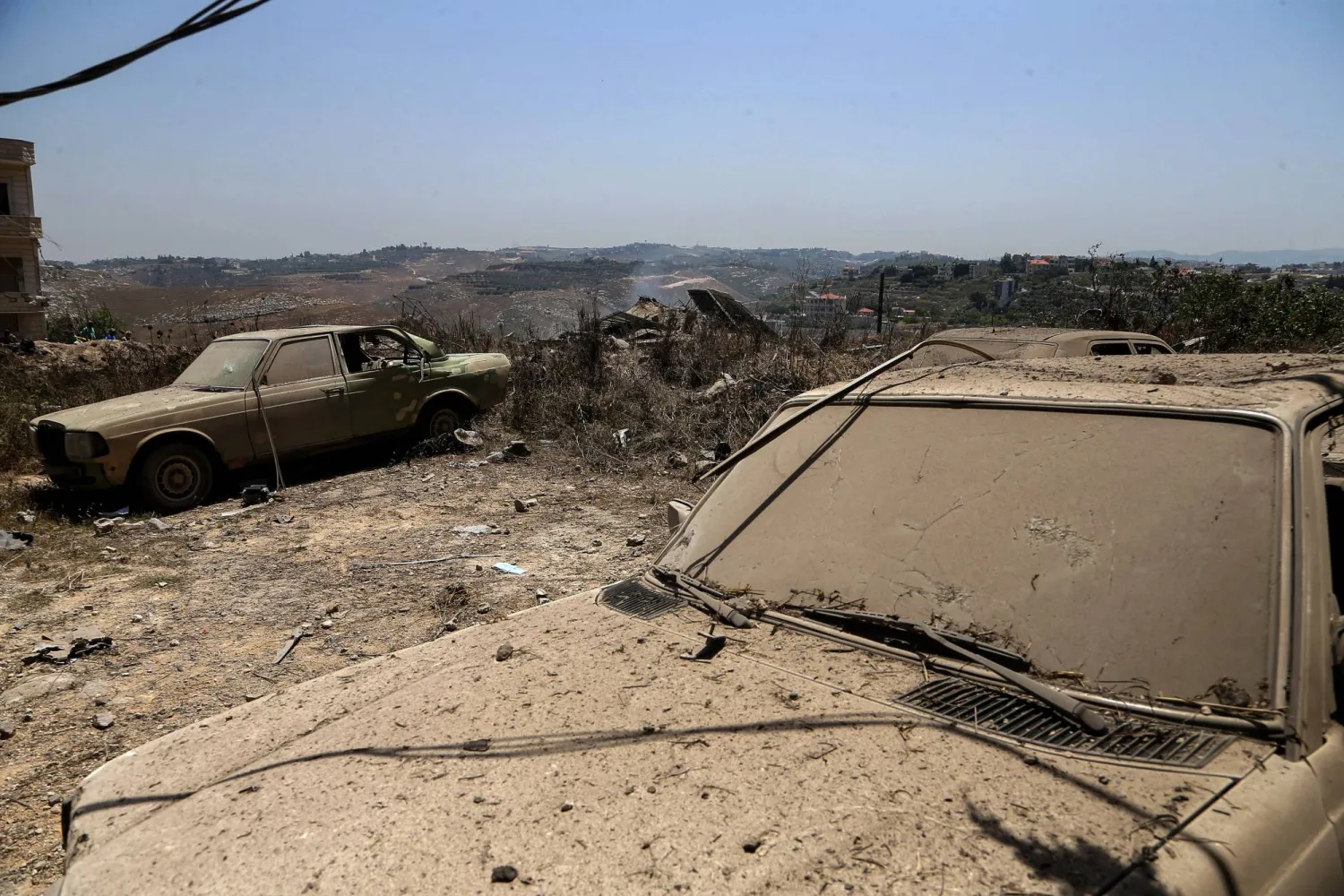
FILED - 14 June 2024, Lebanon, Janta: A view of destroyed cars in front of a Hezbollah three-story building that was demolished in an Israeli overnight air raid in the southern Lebanese village of Janata. Photo: Marwan Naamani/dpa
TT

Israeli Officials Say They Want to Avoid All-Out War in Lebanon Retaliation

FILED - 14 June 2024, Lebanon, Janta: A view of destroyed cars in front of a Hezbollah three-story building that was demolished in an Israeli overnight air raid in the southern Lebanese village of Janata. Photo: Marwan Naamani/dpa

Israel wants to hurt Hezbollah but not drag the Middle East into all-out war, two Israeli officials said on Monday, as Lebanon braced for retaliation after a rocket strike that killed 12 children and teenagers in the Israeli-occupied Golan Heights.

Two other Israeli officials said Israel was preparing for the possibility of a few days of fighting following Saturday's rocket strike at a sports field in a Druze town that it blamed on the Iranian-backed Lebanese group Hezbollah.

Hezbollah has denied any connection with the incident.

Iran's President Masoud Pezeshkian said any Israeli attack on Lebanon would have "serious consequences" for Israel, Iranian state media quoted him on Monday as telling French President Emmanuel Macron in a phone call. Pezeshkian did not elaborate.

All four Israeli officials, who included a senior defense official and a diplomatic source, spoke to Reuters on condition of anonymity and gave no further information about Israel's plans for retaliation.

"The estimation is that the response will not lead to an all-out war," said the diplomatic source. "That would not be in our interest at this point."

The incident has increased concerns that months of cross-border hostilities between Israel and the heavily armed Hezbollah could spiral into a broader, more destructive war.

An Israeli drone strike killed two Hezbollah fighters in south Lebanon on Monday, security sources said. They were the first fatalities in Lebanon since Saturday's incident. Three other people including an infant were wounded in that strike, according to an official in the Lebanese civil defense.

The Israeli military said its air defenses downed a drone that crossed from Lebanon into the Western Galilee area on Monday.

'LIMITED' RESPONSE FLAGGED

Israel's security cabinet has authorized Prime Minister Benjamin Netanyahu and Defense Minister Yoav Gallant to decide on the manner and timing of a response to Saturday's strike in the Golan town of Majdal Shams.

Israel's Yedioth Ahronoth newspaper quoted unidentified officials as saying the response would be "limited but significant".

The report said options ranged from a limited attack on infrastructure, including bridges, power plants and ports, to hitting Hezbollah arms depots or targeting Hezbollah commanders.

In a statement issued by his office on Monday after he visited Majdal Shams, Netanyahu said: "The state of Israel will not and cannot let this pass. Our response will come and it will be harsh."

Prompted by the Gaza war, the hostilities between Israel and Hezbollah have been their worst since they went to war in 2006.

Hezbollah, an ally of Palestinian armed group Hamas, has said its campaign of rocket and drone attacks on Israel has aimed to support the Palestinians, and indicated it will only cease fire when Israel's offensive on Gaza stops.

The conflict at the Israel-Lebanon border has forced tens of thousands of people to leave their homes on both sides.

US Secretary of State Antony Blinken, in a phone call with Israeli President Isaac Herzog on Monday, emphasized the importance of preventing escalation of the conflict, the US State Department said.

They discussed efforts to reach a diplomatic solution to allow citizens on both sides of the border to return home.

Washington has also blamed Hezbollah for the rocket strike.

The White House later reiterated its stance that Israel has every right to respond to Hezbollah following Saturday's attack.

White House national security spokesman John Kirby also said the Golan incident should not affect ongoing negotiations to clinch a ceasefire in Gaza and secure the release of hostages held there by Hamas.

The UNIFIL peacekeeping mission in south Lebanon said it had intensified contacts with Israel and Lebanese authorities to dial down tensions. "Nobody wants to start a wider conflict, but a miscalculation could trigger one. There is still space for a diplomatic solution," UNIFIL spokesperson Andrea Tenenti said.

Lebanese caretaker Foreign Minister Abdullah Bou Habib stressed the need for "self-restraint to avoid a regional war" during talks with the UN Special Coordinator for Lebanon, Jeanine Hennis-Plasschaert.

Flights at Beirut's international airport have been cancelled or delayed. Jordan's flag carrier Royal Jordanian has suspended flights to Beirut on Monday and Tuesday, Jordanian TV reported, citing a statement from the airline.

Both Israel and Hezbollah have appeared at pains to avoid a full-scale war since they began trading blows in October.

Hezbollah has denied firing the rocket that killed the youngsters. It said on Saturday it had fired a missile against a military target on the Golan, a border region Israel seized from Syria after the 1967 Middle East war and has since annexed in a move not generally recognized internationally.

Israeli strikes have killed around 350 Hezbollah fighters in Lebanon and more than 100 civilians, including medics, children and journalists, according to security and medical sources and a Reuters tally of Hezbollah death notifications.

Israel says 23 civilians have been killed in Hezbollah attacks since October, along with at least 17 soldiers.



Reports: US to Withdraw All Troops from Syria

A US Army patrol in the Syrian city of Qamishli (Reuters file photo)
TT

Reports: US to Withdraw All Troops from Syria

A US Army patrol in the Syrian city of Qamishli (Reuters file photo)

The United States is planning to withdraw all of its 1,000 troops from Syria over the next two months, according to US media reports.

Washington will end its presence in the country after the Syrian government extended its control over the country and the Kurdish-led Syrian Democratic Forces once key to fighting ISIS pledged to integrate into the state, the Wall Street Journal reported.

Television network CBS also reported on the plan, citing unnamed US officials.

The decision comes after US forces recently withdrew from some bases
in Syria including Al-Tanf and Al-Shadadi, which were used in the US-led international coalition's fight against ISIS, AFP reported.

The US is building up its military capabilities near Iran, where officials have vowed to respond to any attack by laying siege to American military outposts in the region.

US media reported Wednesday that Washington will be ready to launch strikes against Iran as early as this weekend, though Trump has reportedly not made a final decision yet.

The Pentagon did not immediately respond to a request for comment.


Canada Eases Sanctions on Syria

13 February 2026, Bavaria, Munich: Anita Anand, Minister of Foreign Affairs of Canada, arrives at the Bavarian Hof for the 62nd Munich Security Conference. Photo: Felix Hörhager/dpa
TT

Canada Eases Sanctions on Syria

13 February 2026, Bavaria, Munich: Anita Anand, Minister of Foreign Affairs of Canada, arrives at the Bavarian Hof for the 62nd Munich Security Conference. Photo: Felix Hörhager/dpa

Canadian Minister of Foreign Affairs Anita Anand said on Wednesday that Canada had amended its economic sanctions on Syria ‌to ease ‌restrictions related ‌to the ⁠import and export ⁠of goods, investment activities and the provision of financial and other ⁠services, according to Reuters.

"The amendments also ‌remove ‌24 entities and ‌one individual from ‌the Syria Regulations to reduce barriers to economic activity and ‌to enable transactions with state-affiliated entities ⁠in ⁠key sectors critical to Syria’s recovery," Anand said in a statement.


Tetteh: Despite UN Engagement, No Progress in Libya Roadmap

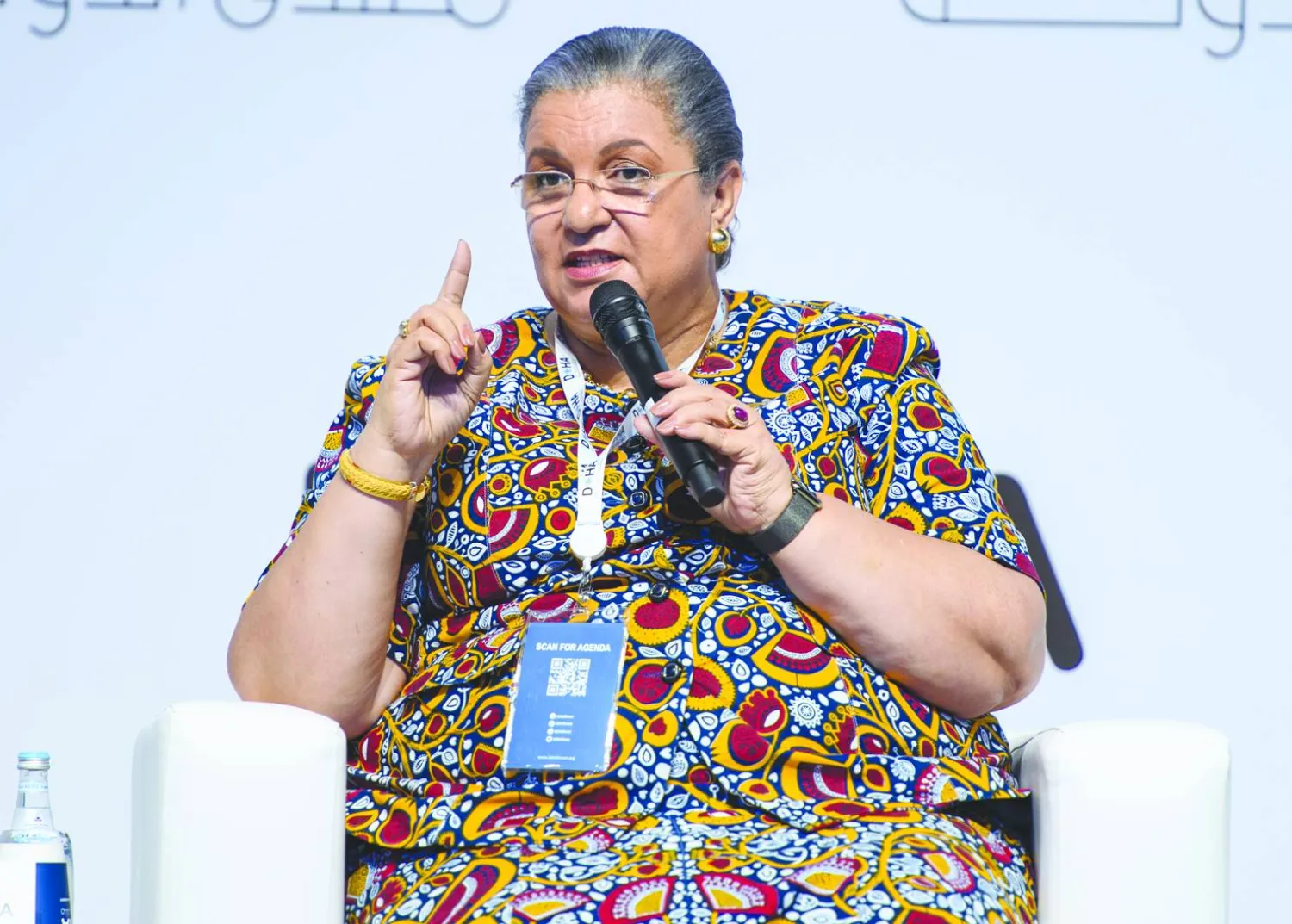
Head of the United Nations Support Mission in Libya Hanna Tetteh Getty)
TT

Tetteh: Despite UN Engagement, No Progress in Libya Roadmap

Head of the United Nations Support Mission in Libya Hanna Tetteh Getty)

The UN’s top envoy for Libya, Hanna Tetteh, has informed the Security Council that despite active United Nations engagement, the Libyan House of Representatives and the High Council of State have failed to make progress on the first steps of the agreed political roadmap, including establishing a mechanism to select the board of the High National Elections Commission (HNEC) and advancing electoral legislation.

Briefing the Council in New York on Wednesday, the Special Representative of the Secretary-General said: “Their inability to use their agreed mechanism and follow-on unilateral actions has further eroded their credibility."

Tetteh added that Libyan public perceptions reflect a growing belief that the bodies are “unable or unwilling” to deliver.

She told Council members that she has begun consultations with key actors on an alternative two-step approach aimed at restoring momentum. Should a smaller group of Libyan representatives fail to agree on the roadmap’s milestones, she warned, a broader convening would be required. “We cannot wait indefinitely,” she emphasized.

The UN envoy also issued a stark warning about escalating tensions within Libya’s judicial system.

She said “contradictory, parallel judicial decisions put into jeopardy the unity of the legal and judicial systems,” cautioning that the situation “is a red line that if crossed can undermine the unity of the state.”

She urged Libyan leaders to refrain from further escalatory steps and called on the Council to hold accountable those taking actions that threaten to fracture the judiciary.

Tetteh also warned that transnational criminal networks continue to expand, turning Libya into a major transit hub for drug trafficking and sustaining illicit economies linked to corruption and armed groups.