Lebanese Front’s Tunnels Used for Defense, Attack and Launching Missiles

In 2019, Israeli forces searched for attack tunnels dug in southern Lebanon that extend into Israel (Israeli Ministry of Defense)
TT

Lebanese Front’s Tunnels Used for Defense, Attack and Launching Missiles

In 2019, Israeli forces searched for attack tunnels dug in southern Lebanon that extend into Israel (Israeli Ministry of Defense)

Lebanon’s Iran-backed Hezbollah group faces Israeli air superiority and technological capabilities by going underground. The group has built a massive and complex network of tunnels in the South, the southern suburbs of Beirut, and the Bekaa regions.
The ongoing clashes between Hezbollah and the Israeli army on the southern Lebanese border, which erupted in October, has brought back the spotlight on these tunnels, which have been shown to be divided into 3 types.
The first are defensive tunnels that allow the party’s fighters to take shelter from aircraft raids. The second are offensive tunnels that the Israeli army said it destroyed in 2019, and the third group consists of small tunnels to hide rocket launchers and which appeared in one of the video clips broadcast by Hezbollah’s military media last month.
According to Israeli reports, Hezbollah started digging tunnels in the 1980s and 1990s, but those remained far from the border with Israel. However, in 2006, the Israeli media showed a tunnel that the Israeli army discovered during the July war inside Lebanese territory, and quoted officials as saying that the party’s construction of cross-border tunnels began before the start of the Second Lebanon War in 2006.
Concerned about tunnels extending into Israeli territory, Israeli authorities launched a campaign in 2018 to destroy this infrastructure, and announced in 2019, the end of its operation to raze all of Hezbollah’s cross-border attack tunnels.
The last tunnel that Israel destroyed stretched along 800 meters. The Israeli army said the tunnel extended over dozens of meters into Israel, and was dug to a depth of 55 meters, making it the deepest tunnel discovered by the army. The tunnel was equipped with electricity, had a railway to transport equipment and waste, exit stairs and other elements that made it more advanced than other passageways that were uncovered.
In 2020, the Israeli Ministry of Foreign Affairs, with the participation of the Israeli army, organized a field tour for 12 diplomats from UN Security Council member states, to show them the tunnel on the northern border with Lebanon.
Since the eruption of war on Oct. 8, Lebanese sources have confirmed that the Israeli army used bunker-piercing bombs to destroy tunnels suspected of being built by the party in the border area.
A report issued by the Alma-Israel Research Center said that after the 2006 Lebanon War, the party established a defensive plan to confront any possible Israeli invasion, with dozens of operations centers equipped with local underground networks and tunnels.
In addition to the previous two types of tunnels, Hezbollah media revealed a third category. Last month, the party’s media presented a report on the party’s artillery and weapons, and one of the clips showed a rocket launcher rising from the ground and launching a missile, indicating that the party hides these platforms underground.



US Says New Round of Lebanon-Israel Talks in Rome in September

A photograph taken from the southern Lebanese village of Chaqra shows destruction in the border village of Houla, and behind it is what is known as the “Abbad Israeli outpost” on August 11, 2026. (AFP)
TT

US Says New Round of Lebanon-Israel Talks in Rome in September

A photograph taken from the southern Lebanese village of Chaqra shows destruction in the border village of Houla, and behind it is what is known as the “Abbad Israeli outpost” on August 11, 2026. (AFP)

The United States will sponsor a new round of talks between Lebanon and Israel in early September in Rome, a State Department official announced Tuesday.

"The political track will reconvene in Rome in early September, and conversations will continue in Beirut, Jerusalem, and Washington in the interim," the official said on condition of anonymity. "We feel good about the trajectory."

The United States has been sponsoring talks between Lebanon and Israel aimed at putting an end to hostilities between them, with Beirut seeking Israel's phased withdrawal from the south.

In June, Lebanon and Israel agreed to a framework deal that involves the disarmament of Hezbollah, a gradual withdrawal of Israeli forces from Lebanon's south and the deployment of the Lebanese army to the region, starting in test areas known as "pilot zones."

Talks last week in Rome were the seventh round since Hezbollah drew Lebanon into the Middle East war in March with rocket fire at Israel in support of its backer Iran.

Israel responded with heavy airstrikes and a ground invasion that Lebanon says have killed more than 4,300 people.

The US official speaking Tuesday gave an update on the last round of talks in Rome.

"The framework is being implemented, the first zones are live, and the working groups have aligned their language, maps, and procedures," the official said.

Hezbollah has repeatedly rejected the direct talks between Lebanon and Israel and refuses to surrender its weapons.

Violence in Lebanon has decreased since the Lebanon-Israel deal and the signing in June of a preliminary US-Iran agreement on the Middle East war.

But Lebanon has continued to report intermittent Israeli strikes and shelling, as well as detonations and demolitions in southern villages.

At the next round of technical talks, the US official said: "Lebanon will present detailed roadmaps for securing new areas as implementation proceeds in the current zones."


Pakistan Condemns Houthi Strike That Killed 3 of Its Citizens

Pakistani Foreign Minister Mohammad Ishaq Dar speaks with Russian Foreign Minister Sergei Lavrov during their meeting at the Russian Foreign Ministry headquarters in Moscow, Russia, Nov. 18, 2025. (Shamil Zhumatov/Pool Photo via AP, File)
TT

Pakistan Condemns Houthi Strike That Killed 3 of Its Citizens

Pakistani Foreign Minister Mohammad Ishaq Dar speaks with Russian Foreign Minister Sergei Lavrov during their meeting at the Russian Foreign Ministry headquarters in Moscow, Russia, Nov. 18, 2025. (Shamil Zhumatov/Pool Photo via AP, File)

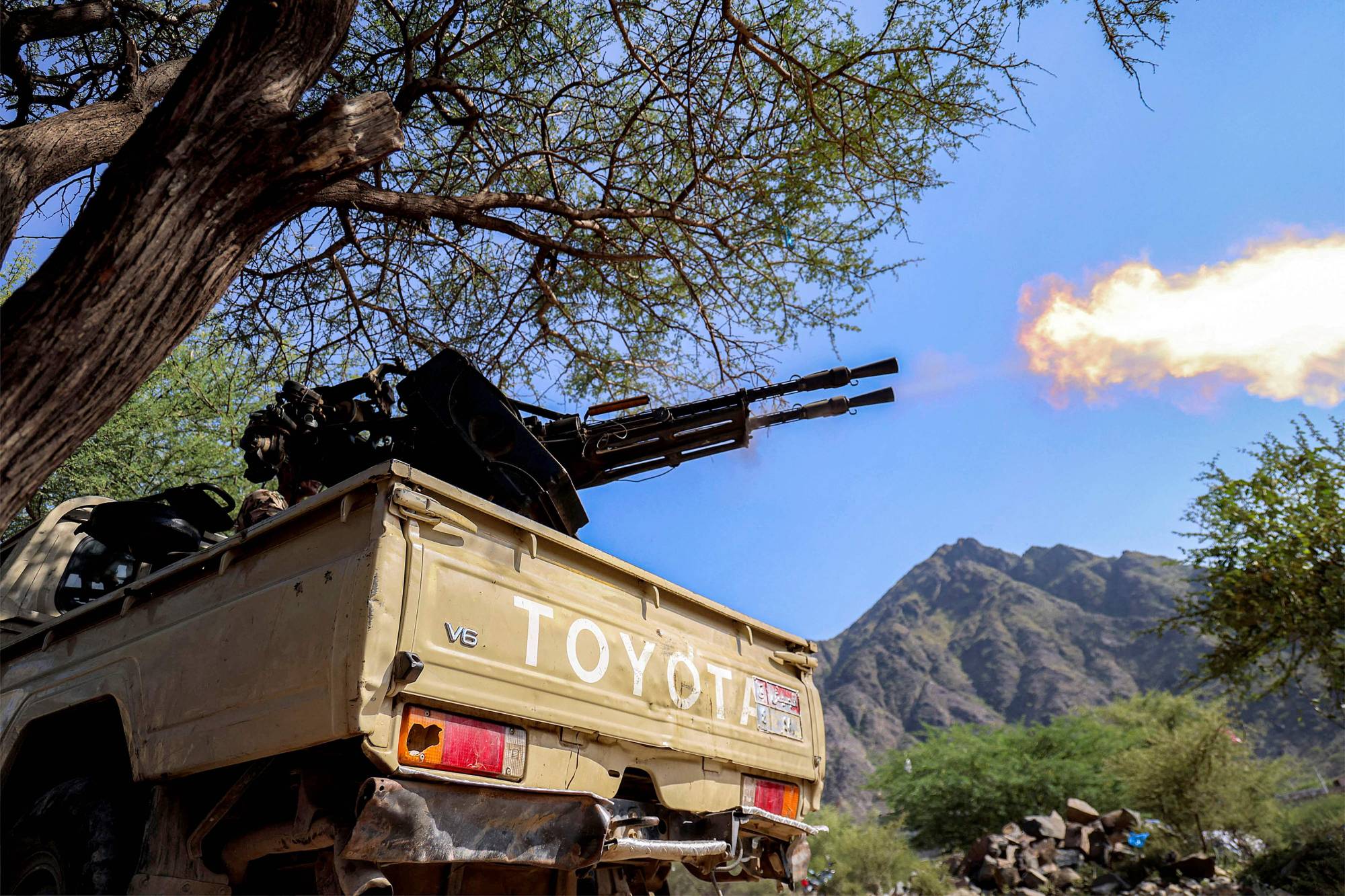
Pakistan denounced on Wednesday an attack by Houthi militants in Yemen on a vessel in the Red Sea in which three of its citizens were killed.

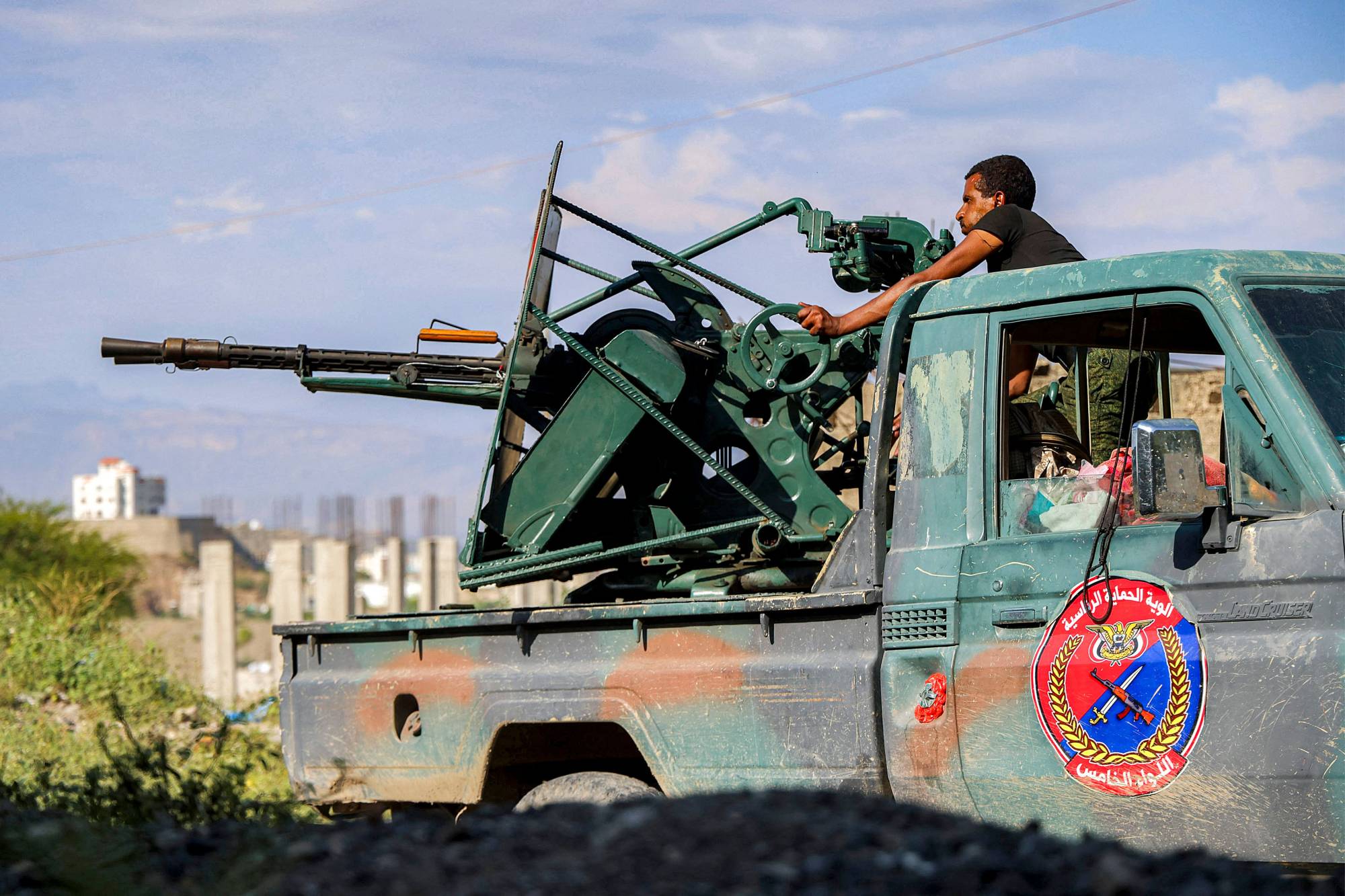
Yemen's coastguard said Tuesday a strike by the Iran-backed militants on a vessel left six dead, including Pakistanis and an Indonesian citizen.

There has been no official comment from the Houthis about the incident.

"I have learnt with deep concern about the unfortunate incident," Pakistan Foreign Minister Ishaq Dar posted on X, confirming three Pakistanis had been killed and one wounded in the attack.

"Pakistan strongly condemns the Houthi attack on a non-combatant commercial vessel," Dar added.

"We are in contact with the relevant Saudi authorities, as well as the internationally recognized Government of Yemen, to ascertain further details of the incident and the circumstances surrounding it," Dar said.

Pakistan's interior minister, Mohsin Naqvi, is currently in Iran to discuss regional security, Pakistan's foreign office said on Wednesday.


Iraqi, Jordanian, Syrian Military Officials Meet in Amman to Bolster Readiness

Iraqi Defense Ministry spokesman Yahya Rasool. (Government media)
TT

Iraqi, Jordanian, Syrian Military Officials Meet in Amman to Bolster Readiness

Iraqi Defense Ministry spokesman Yahya Rasool. (Government media)

Senior Iraqi, Jordanian and Syrian military officials agreed Tuesday to step up coordination, information-sharing and joint military readiness to address current and future security challenges in the region, said Iraq’s Defense Ministry.

Yahya Rasool, the ministry’s spokesman, said Iraqi Army Chief of Staff Gen. Abdul Amir Rashid Yarallah attended a high-level meeting in Amman with Jordan’s chairman of the Joint Chiefs of Staff and Syria’s chief of the General Staff. The Kurdistan Regional Government’s Peshmerga affairs minister and Peshmerga chief of staff also took part.

The talks focused on strengthening military ties and cooperation amid rapidly evolving regional developments and security challenges.

Participants discussed regional security, border protection and cross-border threats, stressed closer coordination and greater exchanges of information and expertise. They agreed on the need to strengthen joint capabilities and operational readiness.

The military leaders said that rapidly changing conditions in the region required coordinated efforts and continued communication among military and security institutions to protect borders, safeguard national sovereignty and confront threats effectively.

They underscored the importance of expanding existing military cooperation and sharing expertise to bolster defense capabilities, operational readiness and regional stability.

Rasool said the meeting reflected Iraq’s commitment to strengthening military ties with countries in the region and expanding coordination to address security challenges and protect borders.

On the sidelines of the meeting, Yarallah met the commander of US Central Command to discuss military cooperation and coordination, the latest regional security developments and ways to strengthen joint efforts in support of security and stability.