


Lice, Scabies, Rashes Plague Palestinian Children as Skin Disease Runs Rampant in Gaza’s Tent Camps 

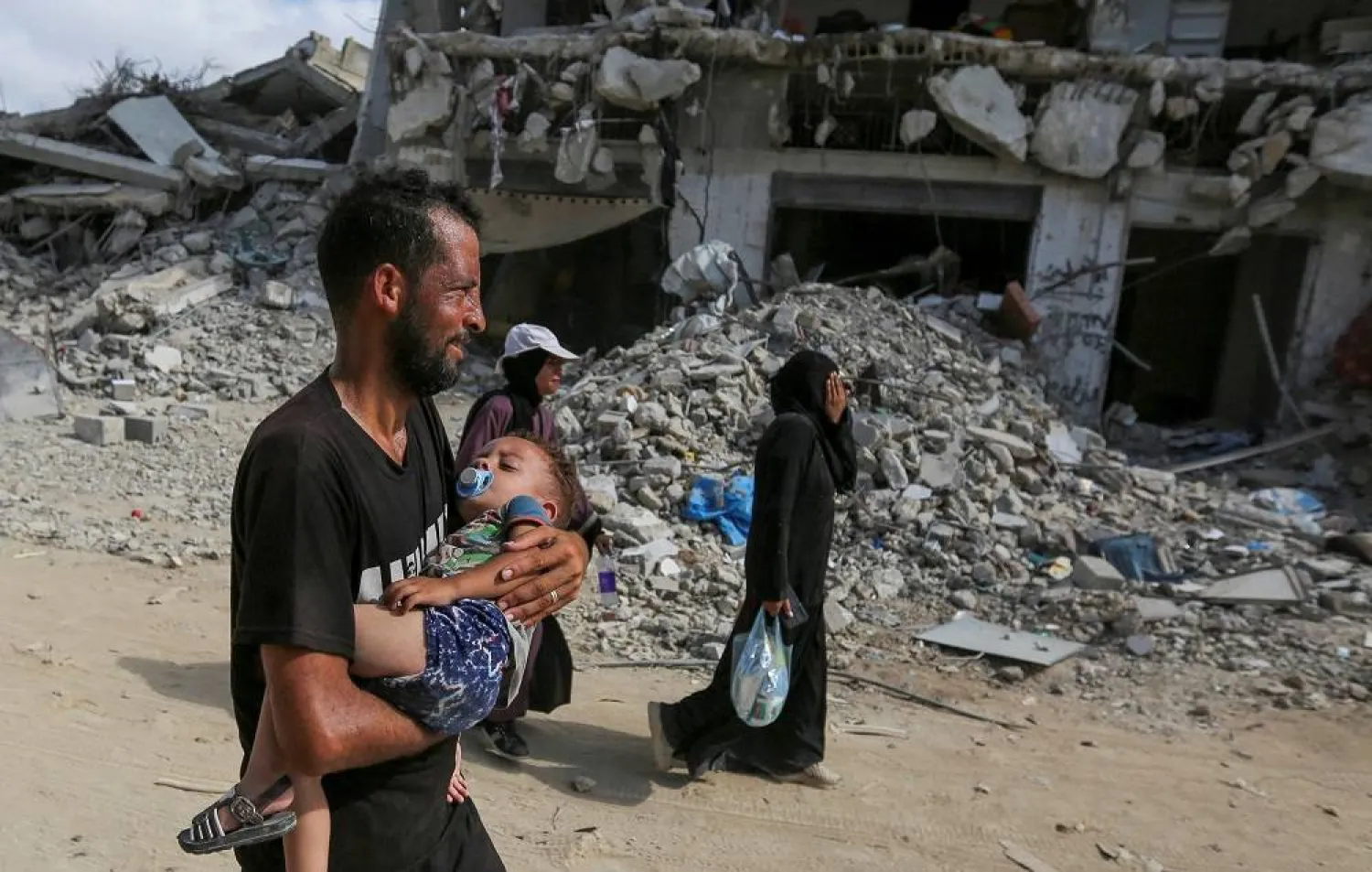
A Palestinian man carries a child, as Palestinians make their way to return to the eastern side of Khan Younis after Israeli forces pulled out from the area following a raid, amid the Israel-Hamas conflict, in Khan Younis, in the southern Gaza Strip July 30, 2024. (Reuters)
TT

Lice, Scabies, Rashes Plague Palestinian Children as Skin Disease Runs Rampant in Gaza’s Tent Camps 

A Palestinian man carries a child, as Palestinians make their way to return to the eastern side of Khan Younis after Israeli forces pulled out from the area following a raid, amid the Israel-Hamas conflict, in Khan Younis, in the southern Gaza Strip July 30, 2024. (Reuters)

A steady stream of miserable children and worried parents flowed into the dermatology office at Nasser Hospital in central Gaza.

A toddler with a blue hair bow sobbed as her mother showed how the red and white spots covering her face have spread to her neck and chest. Another woman lifted her little boy's clothes to reveal the rashes on his back, butt, thighs and stomach. On his wrists, he had open sores from scratching. A father stood his daughter on the desk so the doctor could examine the lesions on her calves.

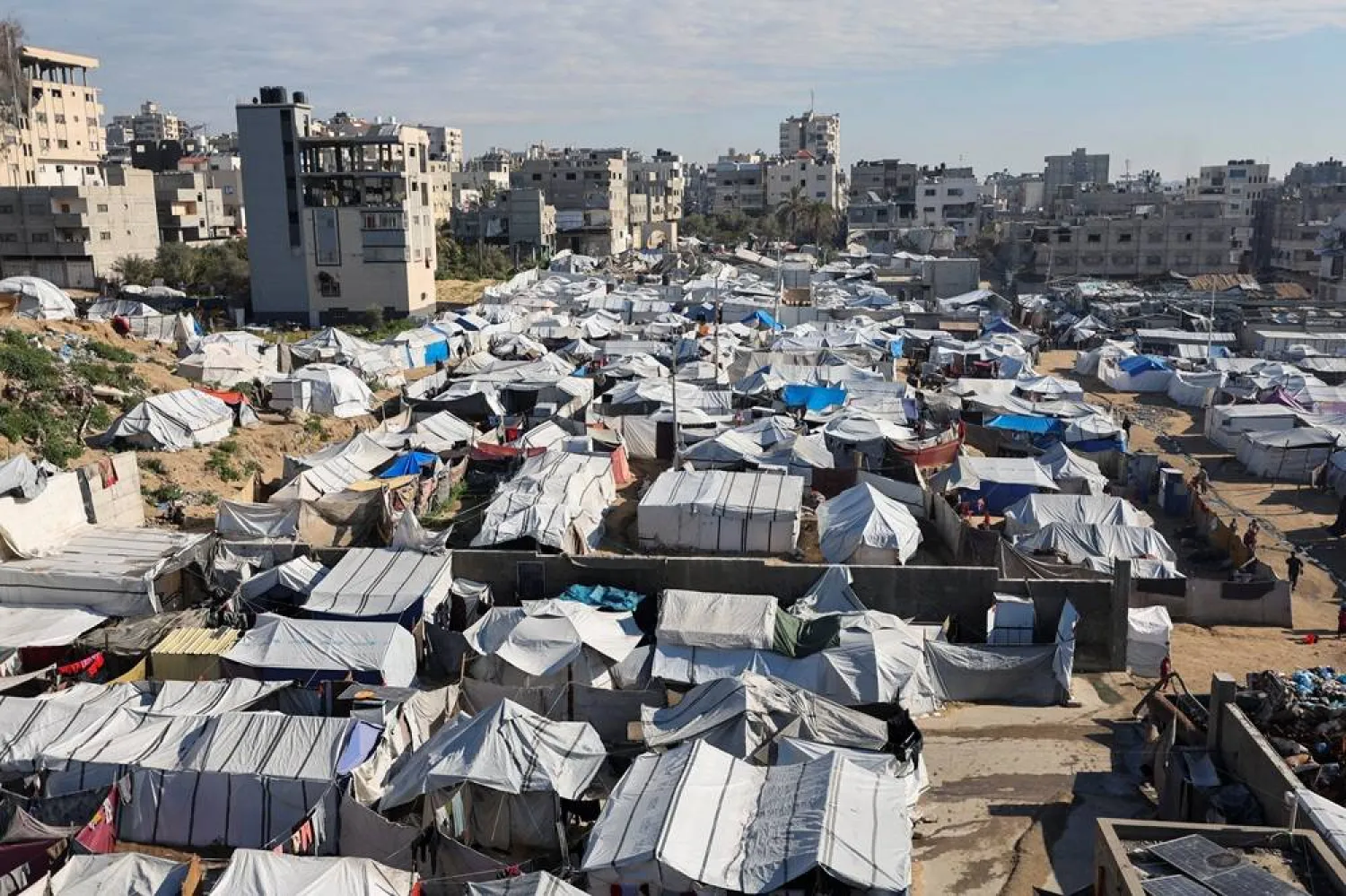
Skin diseases are running rampant in Gaza, health officials say. The cause, they say, is the appalling conditions in overcrowded tent camps housing hundreds of thousands of Palestinians driven from their homes, along with the summer heat and the collapse of sanitation that has left pools of open sewage amid 10 months of Israel's bombardment and offensives in the territory.

Doctors are wrestling with more than 103,000 cases of lice and scabies and 65,000 cases of skin rashes, according to the World Health Organization. In Gaza's population of some 2.3 million, more than 1 million cases of acute respiratory infections have been recorded since the war began, along with more than half a million of acute diarrhea and more than 100,000 cases of jaundice, according to the United Nations Development Program.

Cleanliness is impossible in the ramshackle tents, basically wood frames hung with blankets or plastic sheets, crammed side by side over wide stretches, Palestinians say.

"There's no shampoo, no soap," said Munira al-Nahhal, living in a tent in the dunes outside the southern city of Khan Younis. "The water is dirty. Everything is sand and insects and garbage."

Her family's tent was crammed with her grandchildren, many of whom had rashes. One little boy stood scratching the red patches on his belly. "One child gets it, and it spreads to all of them," al-Nahhal said.

Palestinians in the camp said clean water was almost impossible to get. Some wash their children in salt water from the nearby Mediterranean. People have to wear the same clothes day after day until they're able to wash them, then they wear them again immediately. Flies are everywhere. Children play in garbage-strewn sand.

"First it was spots on her face. Then it spread to her stomach and arms, all over her forehead. And it hurts. It itches. And there's no treatment. Or if there is we can't afford it," said Shaima Marshoud, sitting next to her little daughter in a cinder block structure they'd settled in among the tents.

More than 1.8 million of Gaza's 2.3 million people have been driven from their homes, often moving multiple times over the past months to get away from Israeli ground assaults or bombardment. The vast majority are now crowded into a 50-square-kilometer (20-square-mile) area of dunes and fields on the coast with almost no sewage system and little water.

The distribution of humanitarian supplies, including soap, shampoo and medicines, has slowed to a trickle, UN officials say, because Israeli military operations and general lawlessness in Gaza make it too dangerous for relief trucks to move.

Israel launched its campaign vowing to destroy Hamas after its Oct. 7 attack on southern Israel, in which some 1,200 people were killed and 350 abducted. Israel's assault has killed more than 39,000 people, according to Gaza health authorities.

"The solid waste management system has collapsed," said Chitose Noguchi, the deputy special representative of the UN Development Program's Program of Assistance to the Palestinian People.

In a report released Tuesday, the UNDP said Gaza's two pre-war landfills were unreachable amid the fighting and it had set up 10 temporary sites. But Noguchi said there were more than 140 informal dumping sites that have cropped up. Some of them are giant pools of human waste and garbage.

"People are having tents and living next to dumping sites, which is really, really critical situation in terms of the health crisis," Noguchi said.

Nassim Basala, a dermatologist at Nasser Hospital, said they get 300 to 500 people a day coming in with skin diseases. After the most recent Israeli evacuation orders, more people have crowded into agricultural fields outside the city of Khan Younis, where insects are rife in the summer.

Scabies and lice are at epidemic proportions, he said, but other fungal, bacterial and viral infections and parasites are also running wild.

With the flood of patients, even simple cases can because dangerous.

For example, Basala said, impetigo is a simple bacterial infection treatable with creams. But sometimes by the time the patient gets to a doctor, "the bacteria have spread and affected the kidneys," he said. "We've had cases of kidney failure" as a result. Scratched rashes get infected in the pervasive dirt.

He said creams and ointments were in short supply at the hospital.

Children are the most affected. But adults suffer as well. At the hospital's dermatology office, one man untied his dirt-covered shoes to show the painful looking sores on the tops of his feet and ankles where his rash had rubbed open. A woman held up her hands, chapped raw and red.

Mohammed al-Rayan, several of whose children in a tent outside Khan Younis, have rashes or spots, said he has taken them to doctors.

"They give us creams, but it's no use when you don't have anything to wash with," he said. "You put a cream and it gets better but then the next day it's back the same."

Parents are left struggling to comfort children with painful conditions that won't go away.

Manar al-Hessi's toddler cried as she spread cream on her forehead and chest, covered in scabs, sores and spots.

"It's horrible," al-Hessi said. "There are always flies on her face. She goes in the toilet or the garbage, and it gets in her hands. The filth is huge."


Israeli Defense Minister Says Lebanon's Hezbollah Chief is Now 'Target for Elimination'

Supporters watch a televised speech by Hezbollah chief Naim Qassem during a rally to show their solidarity with Iran, in the southern suburb of Beirut on January 26, 2026. (Photo by Anwar AMRO / AFP)
TT

Israeli Defense Minister Says Lebanon's Hezbollah Chief is Now 'Target for Elimination'

Supporters watch a televised speech by Hezbollah chief Naim Qassem during a rally to show their solidarity with Iran, in the southern suburb of Beirut on January 26, 2026. (Photo by Anwar AMRO / AFP)

Israeli Defense Minister Israel Katz said ‌on ‌Monday that ‌Hezbollah ⁠chief Naim Qassem ⁠was now a "target for ⁠elimination", after ‌the ‌Iran-aligned militant group ‌fired ‌at Israel in ‌retaliation for the killing ⁠of ⁠Iran's Supreme Leader Ali Khamenei.

On Sunday, Qassem said in a statement: “We will undertake our duty of confronting the aggression," adding that his movement would not leave "the field of honor and resistance".

Israeli strikes on Lebanon killed at least 31 people on Monday, authorities said, following rocket fire from Tehran-backed militant group Hezbollah after the killing of Khamenei.

Israel's military vowed to intensify its attacks on the country and make Hezbollah pay a "heavy price" after launching several strikes on Beirut's southern suburbs and south Lebanon, areas where Hezbollah holds sway.

Lebanese authorities, who have been trying to spare the country from any repercussions of the US-Israeli attack on Iran, said Hezbollah's rocket fire gave Israel "excuses" to ramp up its attacks.

Lebanese President Joseph Aoun said attacks from the country's territory risked drawing the country into regional conflict.

Lebanese Prime Minister Nawaf Salam, whose government has pushed for Hezbollah's disarmament, called Monday's rocket fire "irresponsible".

He vowed to "stop the perpetrators and protect the Lebanese people".


Israel Army Chief Says Lebanon Fighting Could Take 'Many' Days

TOPSHOT - A man walks past a building damaged after an Israeli airstrike in Beirut's southern suburb neighborhood of Haret Hreik on March 2, 2026. (Photo by Ibrahim AMRO / AFP)
TT

Israel Army Chief Says Lebanon Fighting Could Take 'Many' Days

TOPSHOT - A man walks past a building damaged after an Israeli airstrike in Beirut's southern suburb neighborhood of Haret Hreik on March 2, 2026. (Photo by Ibrahim AMRO / AFP)

Israel's military chief Eyal Zamir said fighting against Lebanese militant group Hezbollah, which began early Monday, could take "many" more days.

"We have launched an offensive campaign against Hezbollah," Zamir said in a video shared by the military on Monday, hours after rocket fire claimed by Hezbollah prompted a wave of Israeli strikes on Lebanon. "We must be prepared for several days of fighting, many."

Israel carried out the airstrikes in Lebanon after Hezbollah launched missiles and drones towards Israel to avenge the killing of Iran's Supreme Leader Ali Khamenei.

More than a dozen explosions rocked Beirut, in the most intensive strikes on the southern suburbs since a war between Israel and Hezbollah in 2024.

People fled on foot and by car, clogging the roads, after the series of strikes began around 2:40 a.m. (0040 GMT).

The Israeli military said it had begun striking Hezbollah targets across Lebanon, including ⁠senior Hezbollah members ⁠in Beirut’s southern suburbs.


Iran War Spreads Across Region

Smoke rises after Israeli strikes in Beirut's southern suburbs, Lebanon, March 2, 2026. REUTERS/Mohamed Azakir
TT

Iran War Spreads Across Region

Smoke rises after Israeli strikes in Beirut's southern suburbs, Lebanon, March 2, 2026. REUTERS/Mohamed Azakir

Israel bombarded Lebanon on Monday, expanding conflict across the region after the massive Israel-US attack on Iran.

Israeli forces pounded targets across Lebanon, including Beirut’s southern suburbs, after Hezbollah fired rockets towards Israel in retaliation for the killing of Iran's supreme leader Ali Khamenei.

US President Donald Trump and Israeli Prime Minister Benjamin Netanyahu have urged Iranians to overthrow the government in Iran.

In a video address, Trump urged Iranian security forces "to lay down your arms and receive full immunity or face certain death."

"It will be certain death," he repeated. "It won't be pretty."

In this image provided by US Central Command, an F/A-18E Super Hornet aircraft, attached to Strike Fighter Squadron 37, lands on the flight deck of the world's largest aircraft carrier, USS Gerald R. Ford (CVN 78), while operating in support of Operation Epic Fury, on March 1, 2026. (US Navy via AP)

As the American and Israeli airstrikes kept hitting the country, top Iranian security official Ali Larijani said on X: “We will not negotiate with the United States.”

Iran's first retaliatory strikes on Saturday hit all the Gulf states apart from mediator Oman.

On Sunday, Oman's commercial port of Duqm was hit by two drones, injuring a foreign worker, the Oman News Agency said.

Three ships were also attacked in the Strait of Hormuz on Sunday after Iran had previously declared the strategic waterway was closed, sending global oil prices spiking.

The Revolutionary Guards claimed to strike the aircraft carrier USS Abraham Lincoln, but the Pentagon said the "missiles launched didn't even come close."

Trump said that US military strikes had sunk nine Iranian naval vessels and partially destroyed its navy headquarters.

Iran's retaliatory strikes in the Gulf have killed at least four people and wounded dozens of others.

More than 200 people have been killed since the start of the strikes that killed Khamenei and other senior leaders, Iranian leaders have said.