


UN Chief Calls for Israel to Re-Open Gaza Crossings amid Fuel Shortage

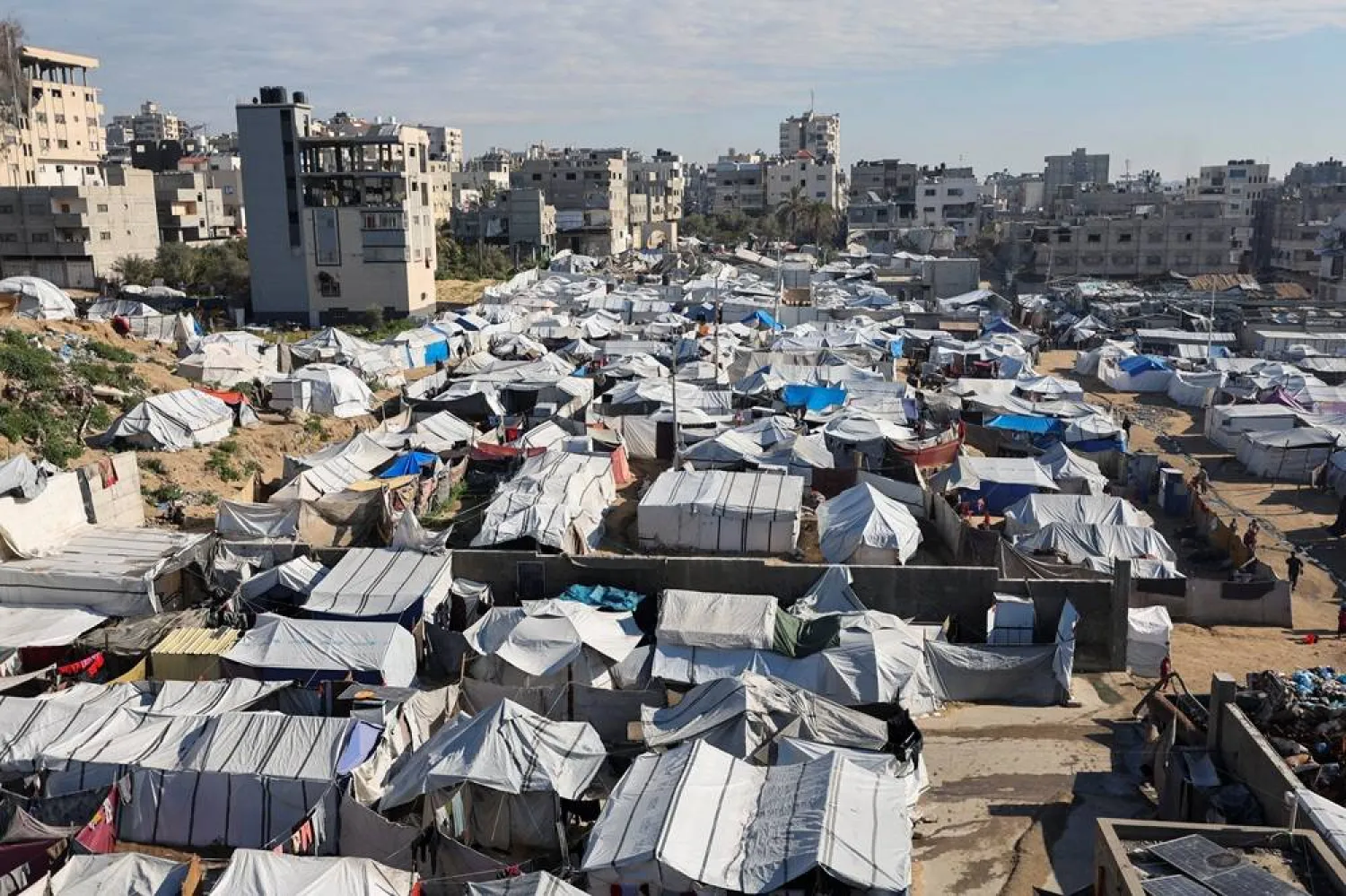
Palestinians displaced during the two-year Israeli offensive, shelter at a tent camp in Gaza City, March 1, 2026. (Reuters)
TT

UN Chief Calls for Israel to Re-Open Gaza Crossings amid Fuel Shortage

Palestinians displaced during the two-year Israeli offensive, shelter at a tent camp in Gaza City, March 1, 2026. (Reuters)

UN Secretary-General Antonio Guterres called Monday for Israel to re-open border crossings into Gaza to allow aid to flow into the war-ravaged territory, his spokesman said.

"Israeli authorities have closed all crossings, including Rafah, and have suspended humanitarian movements in and near areas where Israeli troops remain deployed in Gaza," said spokesman Stephane Dujarric.

"It is imperative that all crossings be reopened... as soon as possible."

Gaza is rapidly running out of its limited fuel supply and stocks of food staples may become tight, officials say, after Israel blocked the entry of fuel and goods into the war-shattered territory, citing fighting with Iran. 

Israel's military closed all Gaza border crossings on Saturday after announcing air strikes on Iran carried out jointly with the United States. Israeli authorities say the crossings cannot be operated safely during war and have not said how long they would be shut. 

FEW DAYS' ‌WORTH OF SUPPLIES 

Gaza ‌is wholly dependent on fuel brought in ‌by ⁠trucks from Israel and ⁠Egypt and a lack of fresh supplies would put hospital operations at risk and threaten water and sanitation services, local officials say. Most Palestinians in Gaza are internally displaced after Israel's two-year war with Hamas. 

"I expect we have maybe a couple of days' running time," said Karuna Herrmann, the Jerusalem director of United Nations Office ⁠for Project Services (UNOPS), which manages fuel distribution in ‌Gaza. 

Amjad Al-Shawa, a Palestinian aid leader ‌in Gaza, who works with the UN and NGOs, estimated fuel supplies ‌could last three or four days, while stocks of vegetables, flour, ‌and other essentials could also soon run out if the crossings remain shut. 

Reuters was unable to independently verify those estimates. 

Israel's COGAT military agency, which controls access to Gaza, said that enough food had been delivered ‌to the territory since the start of an October truce to provide for the population. 

"(The) existing stock ⁠is expected ⁠to suffice for an extended period," COGAT said, without elaborating. It declined to comment on potential fuel shortages. 

The truce was part of broader US-backed plan to end the war that involves reopening the Rafah border crossing with Egypt, increasing the flow of aid into the enclave, and rebuilding it. 

Hamada Abu Laila, a displaced Palestinian in Gaza, said the closures were stoking fear of a return of famine, which gripped parts of the enclave last year after Israel blocked aid deliveries for 11 weeks. 

"Why is it our fault, in Gaza, with regional wars between Israel, Iran, and America? It is not our fault," Abu Laila said. 


Israeli Strikes Pound South, East Lebanon

 Plumes of smoke billow from southern Lebanon following Israeli strikes, as seen from Marjeyoun, Lebanon May 24, 2026. (Reuters)
Plumes of smoke billow from southern Lebanon following Israeli strikes, as seen from Marjeyoun, Lebanon May 24, 2026. (Reuters)
TT

Israeli Strikes Pound South, East Lebanon

 Plumes of smoke billow from southern Lebanon following Israeli strikes, as seen from Marjeyoun, Lebanon May 24, 2026. (Reuters)
Plumes of smoke billow from southern Lebanon following Israeli strikes, as seen from Marjeyoun, Lebanon May 24, 2026. (Reuters)

Israeli strikes hit south and east Lebanon on Sunday, state media reported, a day after 11 people were killed in a single raid on the south despite a ceasefire in the Israel-Hezbollah war.

Saturday's strike in Sir al-Gharbiyeh "resulted in a massacre whose final toll is 11 dead including a child and six women, and nine wounded including four children and a woman," Lebanon's health ministry said in a statement.

Israel's military has continued to strike what it says are Hezbollah targets in Lebanon despite a ceasefire that began on April 17 and that was recently extended for several weeks.

The Iran-backed group has also maintained attacks on Israeli targets in southern Lebanon and across the border, including firing rockets on Sunday at Israeli troops operating on Lebanese territory.

Lebanon's official National News Agency reported Israeli strikes on multiple locations in south and east Lebanon on Sunday, in some cases causing casualties.

Some of the raids came before the Israeli military issued two evacuation warnings covering more than a dozen villages in Lebanon's south and the eastern Bekaa valley.

An AFP correspondent saw large clouds of smoke rising after strikes on the south's Nabatieh and Zawtar al-Sharqiyah.

Lebanon's civil defense agency said early on Sunday that its regional facility in Nabatieh had been destroyed by an overnight Israeli strike.

An AFP photographer saw civil defense personnel recovering equipment and using a stretcher to remove oxygen bottles from the rubble.

The Israeli army did not immediately provide any comment on the strike in response to an inquiry from AFP's Jerusalem bureau.

- Iran -

Hezbollah lawmaker Hassan Fadlallah, whom the US sanctioned this week, said Sunday that "major transformations are taking place in the region", amid anticipation that a US-Iranian agreement to end the Middle East war was close.

Iran "has made its agreement with the United States conditional on stopping the war in Lebanon", he said, according to a statement.

On Saturday, Hezbollah said its chief Naim Qassem had received a message from Iran's Foreign Minister Abbas Araghchi, saying Iran's latest proposal through Pakistani mediators emphasized "the demand to include Lebanon" in the broader ceasefire.

Fadlallah said that "the war will not just stop in Iran, but across the whole region, particularly in Lebanon", urging Lebanese authorities to "take advantage of this regional umbrella... which will have repercussions on us".

Lebanese authorities recently began landmark direct talks with Israel under US auspices, and have insisted the discussions must be independent from the Iran-US negotiations.

Hezbollah drew Lebanon into the Middle East war on March 2 with rocket fire at Israel in retaliation for the killing of Iran's supreme leader in US-Israeli strikes.

Under the terms of the ceasefire published by Washington, Israel reserves the right to act against "planned, imminent or ongoing attacks".

Israeli troops who invaded Lebanon are also operating inside an Israeli-occupied "yellow line" running around 10 kilometers (six miles) deep along Lebanon's southern border.


Gaza Hospital Says Child among Three Killed in Israeli Strike

Residents inspect the rubble of a building that belongs to the Palestinian family of Abu Saif and was destroyed by an Israeli airstrike in Nuseirat, central Gaza Strip, Saturday, May 23, 2026. (AP Photo/Abdel Kareem Hana)
TT

Gaza Hospital Says Child among Three Killed in Israeli Strike

Residents inspect the rubble of a building that belongs to the Palestinian family of Abu Saif and was destroyed by an Israeli airstrike in Nuseirat, central Gaza Strip, Saturday, May 23, 2026. (AP Photo/Abdel Kareem Hana)

A pre-dawn Israeli airstrike killed three members of a Palestinian family, including a one-year-old child, in central Gaza on Sunday, a hospital said.

Gaza remains gripped with daily violence despite a formal ceasefire in place since October, with both the Israeli military and Hamas accusing one another of violating the truce, says AFP.

Al-Aqsa Martyrs hospital in Deir el-Balah said it had received the bodies of a couple and their infant after an Israeli strike hit a residential apartment in the Al-Nuseirat camp before dawn.

The hospital said around 10 people were wounded.

There was no immediate comment from the Israeli military about the three deaths, though it said it had struck three Hamas weapons storage facilities in central Gaza over the preceding 24 hours.

A ceasefire has been in place in Gaza since October, but Israel reserves the right to strike targets it deems a threat.

At least 890 Palestinians have been killed since the October 10 ceasefire, according to Gaza's health ministry, which operates under Hamas authority and whose figures are considered reliable by the UN.

The Israeli military says five of its soldiers have also been hit during the same period.

Media restrictions and limited access in Gaza have prevented AFP from independently verifying casualty figures or freely covering the fighting.


Iraq’s Nujaba Movement Warns against ‘US Plot’ to Integrate PMF in New Security Ministry

Slain Iranian Supreme Leader Ali Khamanei (R) and Nujaba Movement leader Akram al-Kaabi in Tehran in December 2018. (Supreme leader’s website)
TT

Iraq’s Nujaba Movement Warns against ‘US Plot’ to Integrate PMF in New Security Ministry

Slain Iranian Supreme Leader Ali Khamanei (R) and Nujaba Movement leader Akram al-Kaabi in Tehran in December 2018. (Supreme leader’s website)

The Iran-aligned Nujaba Movement in Iraq warned on Saturday against an “American plot” to merge the pro-Iran Popular Mobilization Forces (PMF) in state institutions, presenting new Prime Minister Ali al-Zaidi with his first test in imposing state monopoly over arms.

It made its warning in wake of a visit to Iraq earlier this week by former US Central Command Commander David Petraeus, who also previously led US forces stationed in Iraq.

The new Iraqi government appears to be a taking a tougher stance against the Iran-aligned armed factions in the country in wake of attacks launched from Iraq against Saudi Arabia and the United Arab Emirates.

Riyadh and Abu Dhabi have said the attacks were launched from Iraqi territory. Zaidi has slammed the attacks as “criminal acts”.

Spokesperson for the Commander-in-Chief of the Iraqi Armed Forces Sabah al-Numan said the committee probing the attacks will cooperate with Riyadh and Abu Dhabi to uncover the perpetrators.

“The official statements are not up for debate: the security of our brothers is a read line and there can be no replacing the rule of law,” he said in statements carried by the official state news agency INA.

Any party found responsible for the attacks will face judicial and military measures, he vowed, adding that the attacks were a “threat to Iraq’s national security and flagrant violation of its sovereignty”.

On the state monopoly over arms, al-Numan said the decision “is not a mere political slogan, but a security strategy that must be implemented.”

“The success of the government will be measured by how much it establishes itself as the sole party that holds power over weapons,” he stressed.

Prominent armed factions, such as the Kataib Hezbollah and Kataib Sayyid al-Shuhada, have not made any statements over the recent developments.

The Nujaba Movement, however, has openly defied the state’s decision to impose monopoly over weapons.

The party, which is seen as the most hardline, has also rejected attempts to restructure the PMF.

Deputy head of the movement’s executive council Hussein al-Saeedi said: “The resistance’s weapons are not open to compromise.”

“Stripping the factions of their weapons will leave society exposed to the ongoing threats,” he declared from Basra.

He also slammed as an “American plot” the alleged plan to merge the PMF with the federal police and other forces as part of a new “federal security ministry”.

He said such efforts are “futile” and “impossible to execute”, warning that insisting on forging ahead with the plan will have “political and popular implications.”
