


US Warns Sudan Famine on Pace to be Deadliest in Decades

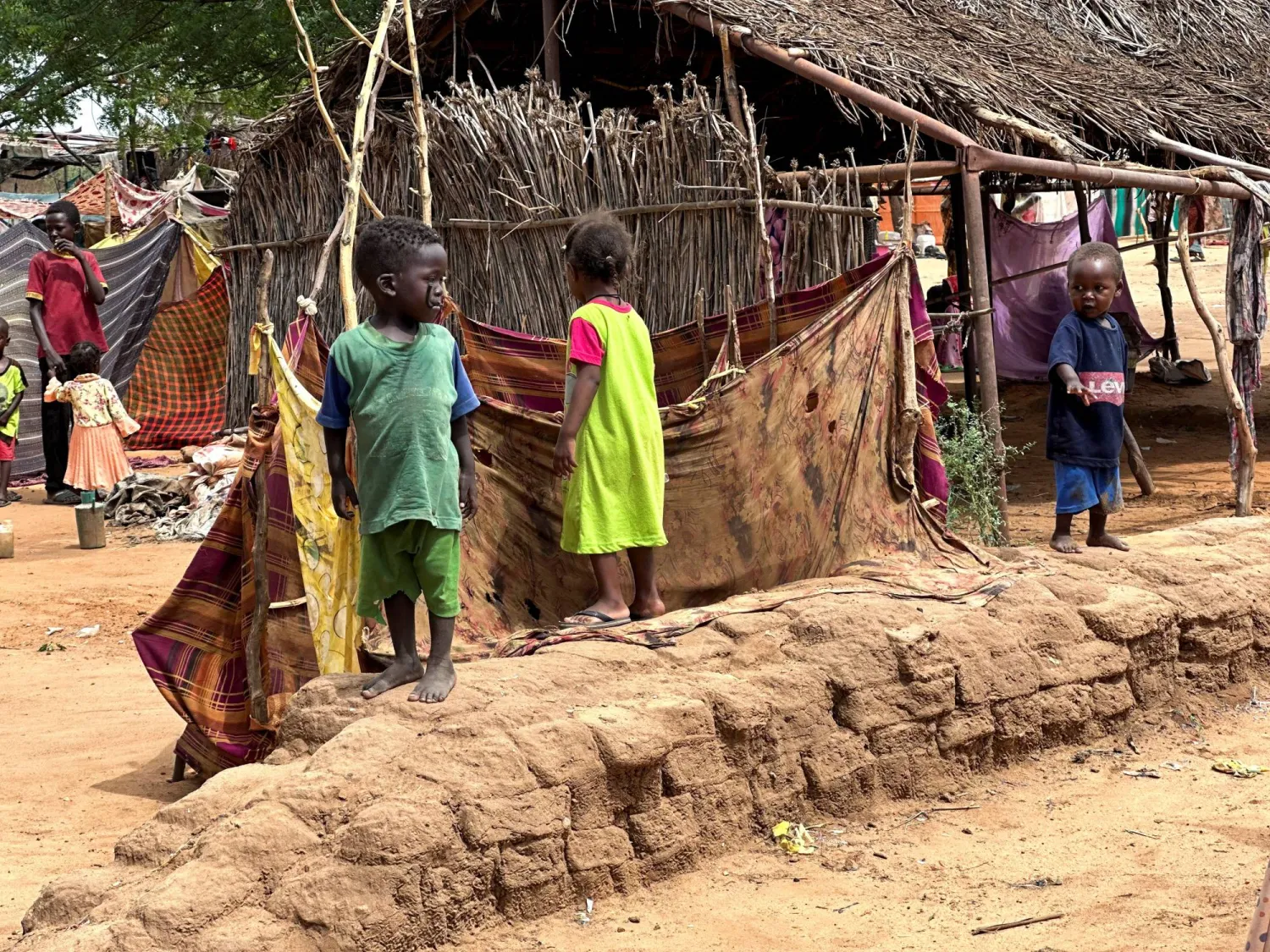
Displaced Sudanese children stand at Zamzam camp, in North Darfur, Sudan, August 1, 2024. REUTERS/Mohamed Jamal Jebrel
TT

US Warns Sudan Famine on Pace to be Deadliest in Decades

Displaced Sudanese children stand at Zamzam camp, in North Darfur, Sudan, August 1, 2024. REUTERS/Mohamed Jamal Jebrel

The newly confirmed famine at one of the sprawling camps for war-displaced people in Sudan’s Darfur region is growing uncontrolled as the country's combatants block aid, and it threatens to grow bigger and deadlier than the world’s last major famine 13 years ago, US officials warned on Friday.

The US Agency for International Development, the UN World Food Program and other independent and government humanitarian agencies were intensifying calls for a cease-fire and aid access across Sudan. That's after international experts in the Famine Review Committee formally confirmed Thursday that the starvation in at least one of three giant makeshift camps, holding up to 600,000 people displaced by Sudan's more than yearlong war, had grown into a full famine, The Associated Press reported.

Two US officials briefed reporters on their analysis of the crisis on Friday following the famine finding, which is only the third in the 20-year history of the Famine Review Committee. The US officials spoke on the condition of anonymity as the ground rules for their general briefing.

The last major famine, in Somalia, was estimated to have killed a quarter of a million people in 2011, half of them children under 5 years old.

The blocks that Sudan’s warring sides are putting on food and other aid for the civilians trapped in the Zamzam camp are realizing “the worst fears of the humanitarian community,” one of the US officials said.

War in the northern African country erupted in April 2023.

As most of the world paid attention to conflicts in Ukraine and Gaza and the larger Middle East, the Sudanese war quickly grew into the world's largest humanitarian crisis, with 11 million displaced. Unlike the earlier war, acute hunger is almost countrywide.

Aid workers were last able to get humanitarian relief to the trapped civilians at the camps in Darfur in April. The Rapid Support Forces have the area under siege and is accused of attacking hospitals, camps and other civilian targets.

World Food Program director Cindy McCain urged the international community in a statement after the famine declaration to work for a cease-fire. “It is the only way we will reverse a humanitarian catastrophe that is destabilizing this entire region of Africa,” she said.
USAID Director Samantha Power stressed the famine was entirely man-made. Both sides, “enabled by external patrons, are using starvation as a weapon of war,” she said in a statement.
The US officials Friday pointed to Washington as the largest source of aid — the little that gets through — for Sudan. They countered questions about why the Biden administration was not using air drops or any of the other direct interventions by the US military to get food to people in Darfur that they were in Gaza, saying the terrain in Sudan was different.



Israel Begins Demolishing 25 Residential Buildings in West Bank Camp

An Israeli army excavator demolishes buildings during a military operation in Nur Shams refugee camp, near the West Bank city of Tulkarem, 31 December 2025. (EPA)
TT

Israel Begins Demolishing 25 Residential Buildings in West Bank Camp

An Israeli army excavator demolishes buildings during a military operation in Nur Shams refugee camp, near the West Bank city of Tulkarem, 31 December 2025. (EPA)

Israeli bulldozers began demolishing 25 buildings housing Palestinians in a refugee camp on Wednesday, in what the military said was an effort to root out armed groups in northern areas of the occupied West Bank.

The buildings, home to some 100 families, are in the Nur Shams camp, a frequent site of clashes between Palestinian gunmen and Israeli forces.

Israeli military bulldozers and cranes tore through the structures early Wednesday, sending thick plumes of dust into the air, an AFP journalist reported. Many residents watched from a distance.

The military said the demolitions were part of an operation against gunmen.

"Following ongoing counterterrorism activity by Israeli security forces in the area of Nur Shams in northern Samaria, the commander of the Central Command, Major General Avi Bluth, ordered the demolition of several structures due to a clear and necessary operational need," the military told AFP in a statement.

"Areas in northern Samaria have become a significant center of terrorist activity, operating from within densely populated civilian areas."

Earlier this year, the military launched an operation it said was aimed at dismantling Palestinian armed groups from camps in northern West Bank -- including Nur Shams, Tulkarem and Jenin.

"Even a year after the beginning of military operations in the area, forces continue to locate ammunition, weapons, and explosive devices used by terrorist organizations, which endanger soldiers and impair operational freedom of action," the military said on Wednesday.

Earlier in December, AFP reported residents of the targeted buildings retrieving their belongings, with many saying they had nowhere to go.

The demolitions form part of a broader Israeli strategy aimed at easing access for military vehicles within the densely built refugee camps of the West Bank.

Israel has occupied the Palestinian territory since 1967.

Nur Shams, along with other refugee camps in the West Bank, was established after the creation of Israel in 1948, when hundreds of thousands of Palestinians were displaced from their homes in what is now Israel.

With time, the camps they established inside the West Bank became dense neighborhoods not under their adjacent cities' authority. Residents pass on their refugee status from one generation to the next.

Many residents believe Israel is seeking to destroy the idea of the camps themselves, turning them into regular neighborhoods of the cities they flank, in order to eliminate the refugee issue.


UN Makes First Visit to Sudan’s El-Fasher Since Its Fall, Finding Dire Conditions

Sudanese displaced from the Heglig area in western Sudan wait to receive humanitarian aid at the Abu al-Naga displacement Camp in the in Gedaref State, some 420km east of the capital Khartoum on December 30, 2025.(AFP)
TT

UN Makes First Visit to Sudan’s El-Fasher Since Its Fall, Finding Dire Conditions

Sudanese displaced from the Heglig area in western Sudan wait to receive humanitarian aid at the Abu al-Naga displacement Camp in the in Gedaref State, some 420km east of the capital Khartoum on December 30, 2025.(AFP)

A UN humanitarian team visited el-Fasher in Sudan’s Darfur region for the first time since a paramilitary force overran the city in October, carrying out a rampage that is believed to have killed hundreds of people and sent most of the population fleeing.

The hours-long visit gave the UN its first glimpse into the city, which remains under control of the Rapid Support Forces. The team found hundreds of people still living there, lacking adequate access to food, medical supplies and proper shelter, the UN said Wednesday.

“It was a tense mission because we’re going into what we don’t know ... into a massive crime scene,” Denise Brown, the UN humanitarian coordinator for Sudan, said of Friday’s visit.

For the past two months, el-Fasher has been nearly entirely cut off from the outside world, leaving aid groups unsure over how many people remained there and their situation. The death toll from the RSF takeover, which came after a more than a year-long siege, remains unknown.

Survivors among the more than 100,000 people who fled el-Fasher reported RSF fighters gunning down civilians in homes and in the streets, leaving the city littered with bodies. Satellite photos have since appeared to show RSF disposing of bodies in mass graves or by burning them.

Brown said “a lot of cleaning up" appeared to have taken place in the city over the past two months. The UN team visited the Saudi Hospital, where RSF fighters reportedly killed 460 patients and their companions during the takeover.

“The building is there, it’s clearly been cleaned up,” Brown said of the hospital. “But that doesn’t mean by any stretch of the imagination that this story has been wiped clean because the people who fled, fled with that story.”

El-Fasher lacks shelters and supplies

El-Fasher, the capital of North Darfur state, had been the last stronghold of the Sudanese military in the Darfur region until the RSF seized it. The RSF and the military have been at war since 2023 in a conflict that has seen multiple atrocities and pushed Sudan into one of the world’s worst humanitarian crises.

The UN team visiting el-Fasher focused on identifying safe routes for humanitarian workers and conducted only an initial assessment on the situation on the ground, with more teams expected to enter, Brown said.

“Villages around el-Fasher appeared to be completely abandoned. We still believe that people are being detained and that there are people who are injured who need to be medically evacuated,” said Brown, citing the initial U.N. findings.

The exact number of people still living in the city is hard to determine, but Brown said they’re in the hundreds and they lack supplies, social services, some medications, education and enough food.

They are living in deserted buildings and in shelters they erected using plastic sheets, blankets and other items grabbed from their destroyed homes. Those places lack visible toilets and access to clean drinking water.

The first charity kitchen to operate since the city’s fall opened Tuesday in a school-turned- shelter, according to the Nyala branch of the local aid initiative Emergency Response Rooms (ERR). The charity kitchen will be operated by ERR Nyala, serving daily meals, food baskets, and shelter supplies. More community kitchens are expected to open across 16 displacement centers, sheltering at least 100 people.

The UN team found a small open market operating while they were in the city, selling limited local produce such as tomatoes and onions. Other food items were either unavailable or expensive, with the price of one kilogram (2.2 pounds) of rice reaching as high as $100, Brown said.

‘Paralyzed’ health care system

Mohamed Elsheikh, spokesperson for the Sudan Doctors Network, told The Associated Press Wednesday that medical facilities and hospitals in el-Fasher are not operating in full capacity.

“El-Fasher has no sign of life, the healthcare system there is completely paralyzed. Hospitals barely have access to any medical aid or supplies,” he added.

Brown described the situation in el-Fasher as part of a “pattern of atrocities” in this war that is likely to continue in different areas.

The United States has accused the RSF of committing genocide in Darfur during the war, and rights groups said the paramilitaries committed war crimes during the siege and takeover of el-Fasher, as well as in the capture of other cities in Darfur. The military has also been accused of rights violations.


Israel to Ban 37 Aid Groups Operating in Gaza

Palestinians walk along streets past tent camps for displaced people in Gaza City, Wednesday, Dec. 31, 2025. (AP)
TT

Israel to Ban 37 Aid Groups Operating in Gaza

Palestinians walk along streets past tent camps for displaced people in Gaza City, Wednesday, Dec. 31, 2025. (AP)

Israel plans to ban 37 aid organizations from operating in Gaza from Thursday unless they hand over detailed information on their Palestinian staff, despite mounting criticism from the United Nations and the European Union. 

Several NGOs have told AFP the new rules will have a major impact on food and medical shipments to Gaza, and humanitarian groups warn there is already not enough aid to cover the devastated territory's needs. 

Israel's deadline for NGOs to provide the details expires at midnight on Wednesday. 

"They refuse to provide lists of their Palestinian employees because they know, just as we know, that some of them are involved in terrorism or linked to Hamas," spokesman for the Ministry of Diaspora Affairs and Combating Antisemitism, Gilad Zwick, told AFP, naming 37 NGOs that had so far failed to meet the new requirements. 

"I highly doubt that what they haven't done for 10 months, they will suddenly do in less than 12 hours," Zwick said. "We certainly won't accept any cooperation that is just for show, simply to get an extension." 

For its part, Hamas, the armed Palestinian group which still controls part of Gaza, branded the Israeli decision "criminal behavior" and urged the United Nations and broader international community to condemn it. 

Israel says the new regulation aims to prevent bodies it accuses of supporting terrorism from operating in the Palestinian territories. 

A fragile ceasefire has been in place in Gaza since October, following a deadly war waged by Israel in response to Hamas's unprecedented attack on Israeli territory on October 7, 2023. 

On Tuesday, Israel specified that "acts of de-legitimizing Israel" or denial of events surrounding Hamas's October 7 attack would be "grounds for license withdrawal". 

Israel has singled out international medical charity Doctors Without Borders (MSF), alleging that it had two employees who were members of Palestinian groups Islamic Jihad and Hamas. 

"We continue to seek reassurances and clarity over a concerning request to share a staff list, which may be in violation of Israel's obligations under international humanitarian law and of our humanitarian principles," MSF said, urging Israel to allow it to operate. 

"We will be exploring all possible avenues to alter the outcomes of this decision." 

Apart from MSF, some of the 37 NGOs to be hit with the ban are the Norwegian Refugee Council, World Vision International, CARE and Oxfam, according to the list given by Zwick. 

- 'Guarantee access' - 

On Wednesday, United Nations rights chief Volker Turk described Israel's decision as "outrageous", calling on states to urgently insist Israel shift course. 

"Such arbitrary suspensions make an already intolerable situation even worse for the people of Gaza," he said. 

The European Union warned that Israel's decision would block "life-saving" assistance from reaching Gazans. 

"The EU has been clear: the NGO registration law cannot be implemented in its current form," EU humanitarian chief Hadja Lahbib posted on X. 

UN Palestinian refugee agency chief Philippe Lazzarini said the move sets a "dangerous precedent". 

"Failing to push back against attempts to control the work of aid organizations will further undermine the basic humanitarian principles of neutrality, independence, impartiality and humanity underpinning aid work across the world," he said on X. 

UNRWA itself has faced the ire of Israeli authorities since last year, with Lazzarini declared persona non grata by Israel. 

Israel had accused UNRWA of providing cover for Hamas, claiming that some of the agency's employees took part in the October 7, 2023 attack. 

A series of investigations found some "neutrality-related issues" at UNRWA, the agency says, but insists Israel had not provided evidence for its headline allegation. 

On Tuesday, the foreign ministers of 10 countries, including France and the United Kingdom, had already urged Israel to "guarantee access" to aid in the Gaza Strip, where they said the humanitarian situation remains "catastrophic". 

In a territory with 2.2 million inhabitants, "1.3 million people still require urgent shelter support", the ministers of Britain, Canada, Denmark, Finland, France, Iceland, Japan, Norway, Sweden and Switzerland said. 

While a deal for a ceasefire that started on October 10 stipulated the entry of 600 trucks per day, only 100 to 300 are carrying humanitarian aid, aid groups say. 

COGAT, the Israeli defense ministry body responsible for Palestinian civilian affairs, said last week that on average 4,200 aid trucks enter Gaza weekly, which corresponds to around 600 daily. 

Israel's ambassador to Belgium and Luxembourg, Idit Rosenzweig-Abu, said that 104 aid organizations had filed for registration according to the new guidelines. 

Nine were rejected, while 37 did not complete the procedures, she said on X, insisting the registration process "intended to prevent the exploitation of aid by Hamas".